Nothing disrupts your day like a dead hearing aid battery, especially when you're in a meeting or enjoying family time. AAAA batteries (also known as size 10) power many behind-the-ear and mini-RIC hearing aids, but mismatched ones can cause poor sound, short life, or device damage. This guide solves that pain by walking you through matching the right batteries step-by-step.
You'll learn how to identify your hearing aid's needs, choose compatible AAAA batteries, and install them correctly. No technical jargon—just simple actions for beginners. The whole process takes under 15 minutes, with most time spent shopping once you know what to buy.
By the end, your hearing aid will hum with fresh power, and you'll avoid wasting money on wrong batteries.
▸What You'll Need
- •Your hearing aid device
- •Hearing aid user manual or model number (check the device or box)
- •Battery compartment access (usually on the bottom)
- •Smartphone or computer for online shopping (optional but recommended)
- •Magnifying glass (optional for small markings)
Estimated Time: 10-15 minutes
Difficulty: beginner
▸Step-by-Step Instructions
Step 1: Identify Your Hearing Aid Model
Start by locating the model number on your hearing aid. Flip the device over and look for engraved text like 'Model XYZ' or a serial number near the battery door. If unavailable, check the original box, receipt, or manufacturer's app/website using the serial number.
Why it matters: Every hearing aid specifies exact battery size and type. Most AAAA use is for size 10 (yellow-coded). Expect to see something like '10A' or a color sticker.
Success looks like: You have the full model name, e.g., 'Phonak Audéo Paradise P10'.
💡 Tips:
- •Take a photo of the markings for easy reference.
Step 2: Open and Check Battery Compartment
Gently slide or press the battery door to open it. Note the shape (round or tabbed), size markings (e.g., '10', 'A10', 'PR10'), and any color code inside (yellow for 1.45V zinc-air).
This confirms it's AAAA size—about 8mm diameter, slimmer than AAA. Why? Wrong size won't fit, risking damage.
Expect a tiny empty slot if batteries are out. Close gently if testing.
💡 Tips:
- •Clean lint from the door with a dry cloth.
⚠️ Warnings:
- •Don't force the door—seek audiologist help if stuck.
Step 3: Consult Your Manual or Manufacturer
Search online for '[your model] battery type' or check the manual's 'specifications' section. Look for 'Size 10', 'AAAA', voltage (usually 1.4-1.45V), and chemistry (zinc-air most common).
Why? Some aids need low-drain or high-power variants. Success: Confirmation like 'Uses yellow A10 zinc-air batteries'. Note shelf life (3-4 years unopened).
💡 Tips:
- •Use manufacturer site like Phonak or ReSound for PDFs.
Step 4: Understand AAAA Battery Types
Yellow (1.45V zinc-air): Standard for 80% of aids—activate by air exposure.
Blue/Red (specialty): For high-drain or saltwater-resistant aids.
Avoid alkaline AAAA (for pens)—they're higher voltage and leak. Match color code exactly.
Success: You know your aid's color, e.g., yellow.
💡 Tips:
- •Zinc-air lasts 5-14 days in use.
Step 5: Select and Buy Compatible Batteries
Shop for 'Size 10 [color] hearing aid batteries' (e.g., yellow A10). Buy packs of 30-60 from trusted brands. Check reviews for longevity.
Test fit with one pair. Online: Amazon or pharmacy sites.
Success: Batteries match size/color, arrive sealed.
💡 Tips:
- •Buy in bulk for savings; store unopened in fridge.
⚠️ Warnings:
- •Skip 'universal' batteries—stick to hearing aid specific.
Step 6: Activate and Insert Battery
Wait 1-2 minutes after peeling tab (silver side up). Insert + side (flat) first into compartment.
Close door firmly. Turn on aid—expect 'beep' or lights.
Why? Proper polarity prevents shorts.
💡 Tips:
- •Use right pinky nail for tab.
Step 7: Test for Proper Function
Wear aid; adjust volume. Listen for clear sound, no feedback whistle.
Success: Full volume, balanced audio for 30 seconds.
⚠️ Warnings:
- •If weak, wait 5 mins more or replace.
▸Pro Tips
- •Always note your model's battery color on your phone for quick reorders.
- •Remove batteries from aids at night to extend life by 20%.
- •Buy batteries with date codes—fresher = longer use.
- •Use a battery tester tool for $5 to check voltage before insert.
- •Stock 2-3 packs; rotate oldest first.
- •For travel, get slim cases to carry extras safely.
- •Fridge storage (not freezer) keeps unopened packs viable 4+ years.
▸Common Mistakes to Avoid
- •Using non-hearing aid AAAA batteries (e.g., toy ones)—they leak acid and damage devices; always buy 'hearing aid' labeled.
- •Ignoring color code—wrong voltage causes weak sound or no power; double-check markings.
- •Inserting backwards—flattens wrong side; align + properly.
- •Not waiting post-activation—battery needs 2 mins to power up; leads to false dead battery.
- •Storing opened batteries—they die in days; seal extras in ziplock.
▸Troubleshooting
Problem: Battery doesn't fit or door won't close
Solution: Confirm size 10; clean compartment. If persists, wrong size—consult audiologist.
Problem: Aid powers on but sound is muffled
Solution: Wait 5 mins for activation; replace if old. Check wax filter.
Problem: Short battery life (under 3 days)
Solution: Switch brands; reduce volume. High-drain aid may need specialty batteries.
Problem: No power at all
Solution: Polarity wrong—reinsert. Battery dead; try new one. Seek pro if door damaged.
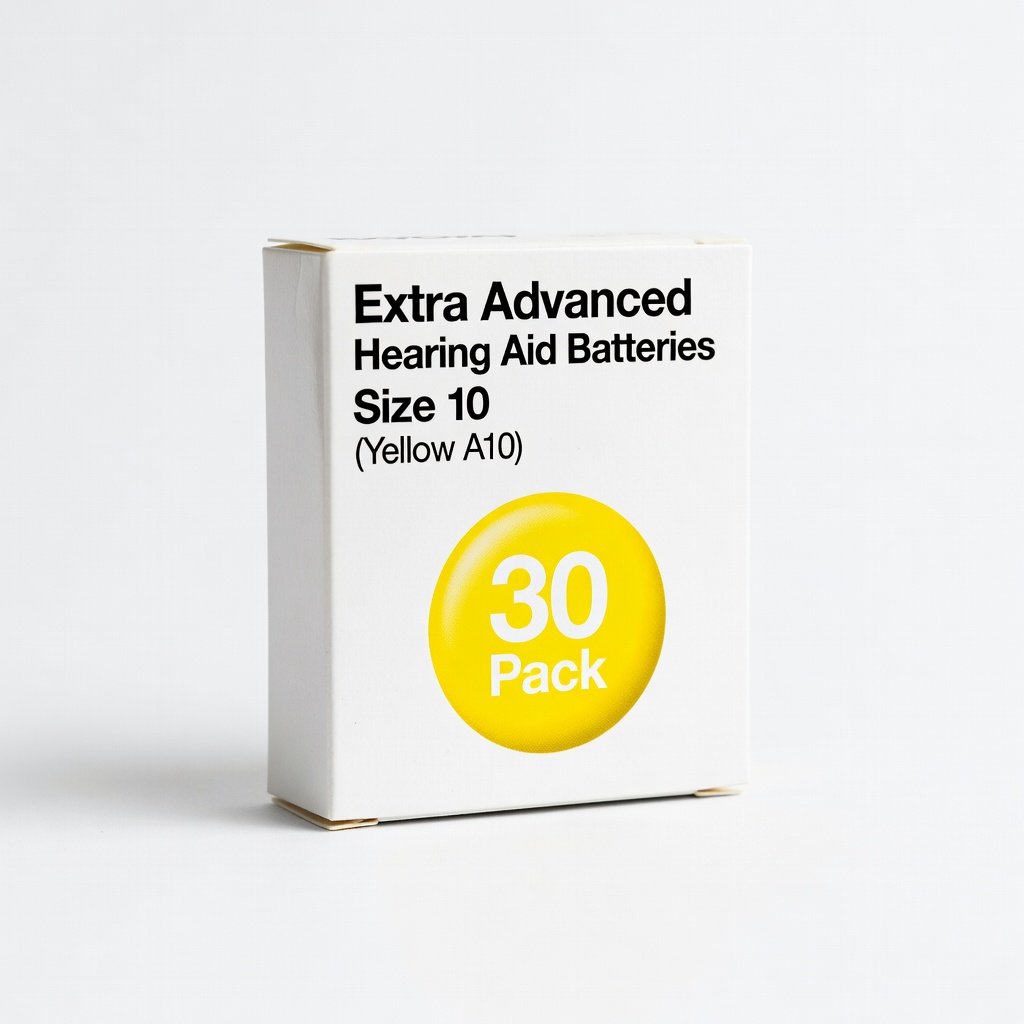
Rayovac Extra Advanced Hearing Aid Batteries, Size 10 (Yellow A10), 30 Pack
Top-rated for longest life (up to 14 days) and reliable zinc-air tech; mercury-free.
Best for: Daily use in standard AAAA-compatible aids like Phonak or Oticon.
Price Range: $12.99
Energizer Eveready Hearing Aid Batteries Size 10 (AAAA Yellow), 30 Count
Trusted brand with advanced sealing to prevent leaks; consistent power output.
Best for: Budget-friendly for beginners needing quick replacements.
Price Range: $14.99
Power One High Performance Size 10 Yellow Zinc Air Hearing Aid Batteries, 60 Pack
Audiologist-recommended for high-drain aids; Swiss-made quality lasts longer.
Best for: Heavy users or premium aids wanting max value.
Price Range: $24.99
ZENEAR Battery Tester for Hearing Aids (Sizes 10/13/312/335/40/70)
Tests voltage instantly to verify battery health before install.
Best for: Troubleshoot dud batteries without wasting them.
Price Range: $9.99