
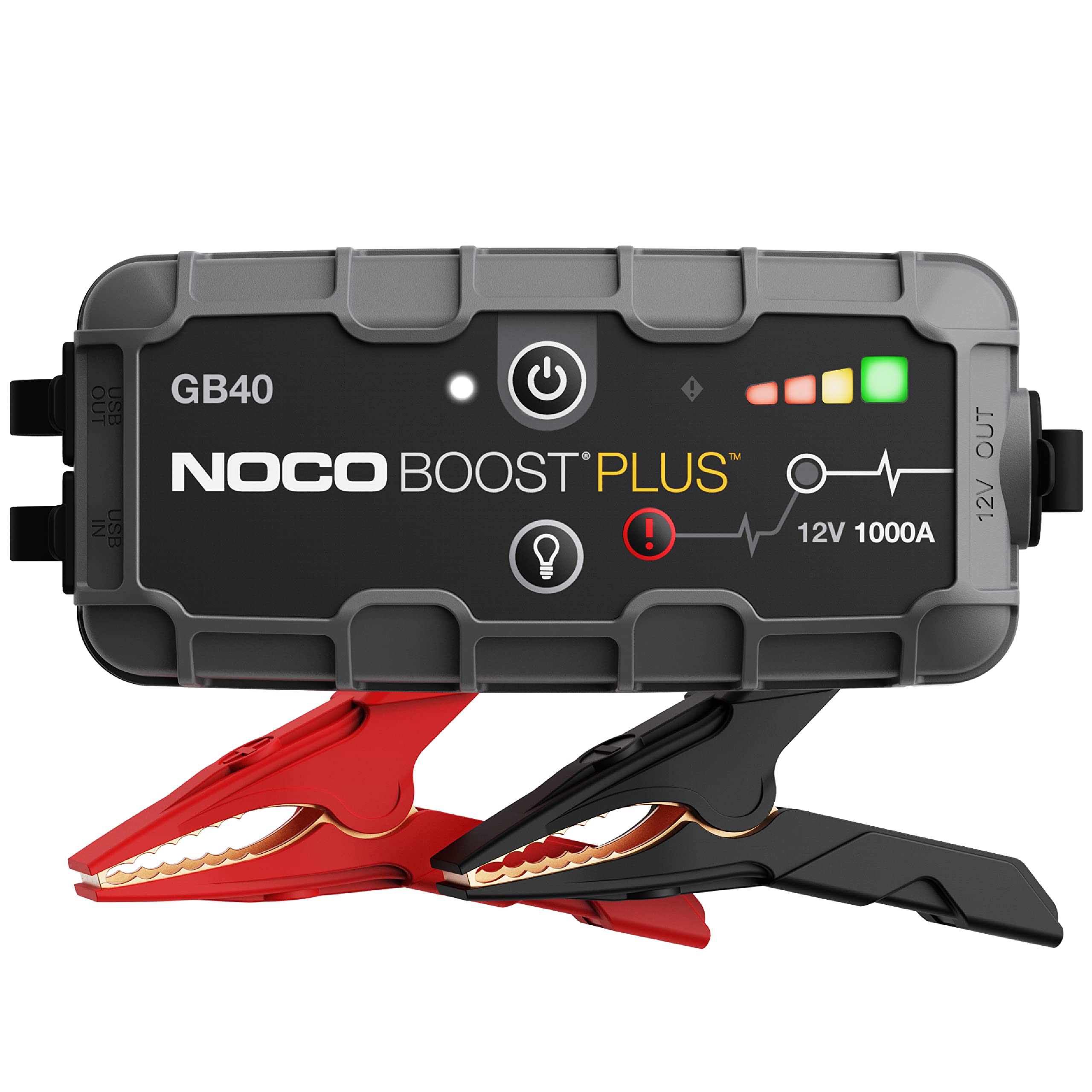
NOCO Boost Plus GB40 (ASIN: B01MZD7Z3S)
Daily drivers, sedans/SUVs up to 6L engines; emergency trunk essential.
$124.95
NOCO Boost Plus GB40 (ASIN: B01MZD7Z3S) Top-rated for reliability, 1000A peaks for most cars, waterproof, holds charge 1 year.
Get the App
Better experience on mobile
Safely revive your dead car battery in under 15 minutes using a portable 12V booster pack—no second car required.
Imagine being stranded in a parking lot or on the roadside with a dead battery, late for work or an important event. Dead car batteries are one of the most common vehicle issues, affecting millions annually. But with a 12V battery booster pack, you can jump start your car quickly and independently, avoiding the hassle of finding another vehicle with jumper cables.
This beginner-friendly guide walks you through the entire process step-by-step. You'll learn essential safety precautions, precise connection methods, and post-jump care to ensure success. The whole procedure takes just 10-15 minutes and requires no prior mechanical experience—just follow along carefully.
Expect a straightforward fix that gets your engine running smoothly. We'll cover what to do if it doesn't work and recommend top booster packs for reliability.
Estimated Time: 10-15 minutes Difficulty: beginner
Park your car in a flat, well-ventilated area away from traffic. Engage the parking brake and turn off the ignition, headlights, radio, and all accessories. Remove the key from the ignition.
Why it matters: This prevents electrical shorts, accidental starts, or exhaust buildup in enclosed spaces.
Expect the car to be completely powered down—no dashboard lights.
💡 Tips:
⚠️ Warnings:
Inspect your booster pack for damage and confirm it's fully charged (check the LED indicator). Read the user manual for your specific model to note amp rating and any vehicle size limits (e.g., suitable for up to 6.0L gas engines).
Why it matters: A low-charge booster won't provide enough power, leading to failure.
Power on the booster if it has a manual switch, but most auto-activate on connection. Expect green lights indicating readiness.
💡 Tips:
⚠️ Warnings:
Open the hood and prop it securely. Use your owner's manual to find the battery (often front-left in engine bay). Clean any corrosion from terminals with a brush if needed, and remove plastic covers.
Why it matters: Clear access ensures secure connections.
Expect to see red (+) and black (-) terminals clearly marked.
💡 Tips:
⚠️ Warnings:
Attach the red (positive, +) clamp firmly to the battery's positive terminal. Ensure a tight connection without forcing it.
Why it matters: Positive first minimizes spark risk on the safer terminal.
Listen for a click; the booster may beep or light up. No sparks should occur here.
💡 Tips:
⚠️ Warnings:
Clip the black (negative, -) clamp to an unpainted metal ground point on the engine block or frame, away from the battery (or directly to negative terminal if specified). Avoid the carburetor or fuel lines.
Why it matters: Grounding reduces spark near battery gases.
Expect secure hold; booster may now show 'boost mode' active.
💡 Tips:
⚠️ Warnings:
Wait 30 seconds for power transfer, then insert key and start the car (crank no longer than 5 seconds per try). If it cranks slowly, wait 1-2 minutes before retrying.
Why it matters: Gives capacitors time to charge.
Success: Engine turns over and idles smoothly.
💡 Tips:
⚠️ Warnings:
With engine running, remove black clamp first, then red. Secure clamps on booster and power it off.
Why it matters: Reverse order prevents arcs.
Expect engine to continue running steadily.
💡 Tips:
⚠️ Warnings:
Drive for at least 20-30 minutes at highway speeds to recharge the battery fully. Turn on lights/AC to test alternator.
Why it matters: Temporary jump doesn't fix weak battery.
Success: No warning lights, steady voltage (check if multimeter available).
💡 Tips:
⚠️ Warnings:
Problem: Car cranks but won't start
Solution: Check connections for tightness; retry after 2-min cool down. Test booster charge or try different ground.
Problem: Booster won't activate
Solution: Recharge booster fully; ensure clamps not touching. Consult manual for error lights.
Problem: Sparks or smoke
Solution: Disconnect immediately, check polarity. Do not proceed—inspect for damage.
Problem: Engine starts but dies quickly
Solution: Likely bad alternator/battery—drive to shop or call tow.
Problem: No power at all
Solution: Verify booster compatibility with vehicle size; seek professional jump.
Top-rated for reliability, 1000A peaks for most cars, waterproof, holds charge 1 year.
Best for: Daily drivers, sedans/SUVs up to 6L engines; emergency trunk essential.
Price Range: $124.95
2000A power for trucks, built-in flashlight/USB ports, budget-friendly value.
Best for: Larger vehicles or multi-use (phone charging during wait).
Price Range: $99.99
800A jump + 120PSI air compressor, versatile for tires too.
Best for: Jump + flat tire scenarios; great all-in-one roadside kit.
Price Range: $69.99
600A compact design, affordable entry-level for small cars.
Best for: Budget beginners or motorcycles/hybrids.
Price Range: $39.99
Daily drivers, sedans/SUVs up to 6L engines; emergency trunk essential.
NOCO Boost Plus GB40 (ASIN: B01MZD7Z3S) Top-rated for reliability, 1000A peaks for most cars, waterproof, holds charge 1 year.
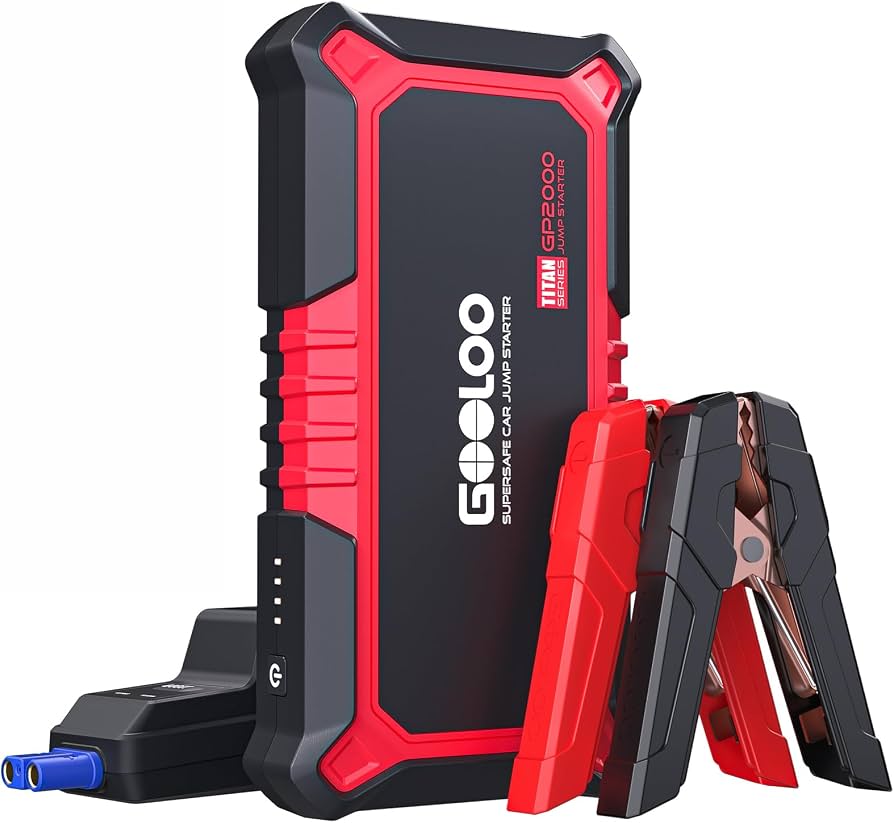
Larger vehicles or multi-use (phone charging during wait).
GOOLOO GP2000 (ASIN: B07RF25G9D) 2000A power for trucks, built-in flashlight/USB ports, budget-friendly value.

Jump + flat tire scenarios; great all-in-one roadside kit.
Stanley J5C09 (ASIN: B00CD2KGNE) 800A jump + 120PSI air compressor, versatile for tires too.
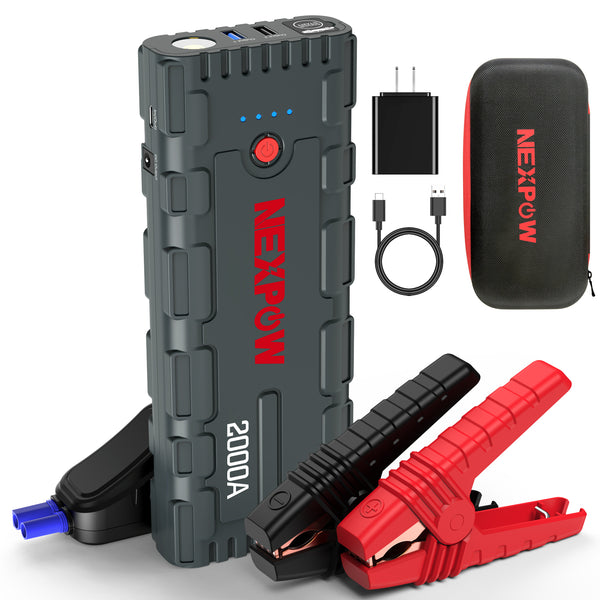
Budget beginners or motorcycles/hybrids.
Nexpow G17 (ASIN: B07ZVFYVNF) 600A compact design, affordable entry-level for small cars.