
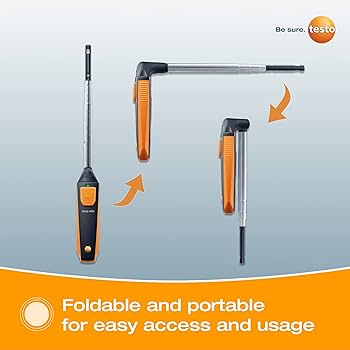
Testo 405i Hot Wire Anemometer
Ideal for quick supply/return traverses in residential HVAC.
$120-$140
Testo 405i Hot Wire Anemometer Bluetooth-enabled for wireless logging; accurate ±3% velocity for grilles/ducts.
Get the App
Better experience on mobile
Learn advanced techniques to measure airflow, identify restrictions, and optimize HVAC performance using precise airflow meters for efficient diagnostics.
Struggling with uneven cooling, high energy bills, or poor indoor air quality? These symptoms often stem from airflow issues in HVAC systems, which can reduce efficiency by up to 30% and lead to costly repairs if undiagnosed. Advanced technicians know that airflow meters are essential for pinpointing problems like dirty filters, duct leaks, or undersized blowers.
In this guide, you'll master a step-by-step process to diagnose HVAC airflow using anemometers and manometers. You'll learn to measure CFM at returns and supplies, calculate static pressure drops, and interpret data against manufacturer specs. By the end, you'll confidently identify and resolve issues, saving time and money.
Expect 1-2 hours per system, depending on size. This advanced tutorial assumes familiarity with HVAC basics like duct sizing and psychrometrics—no beginner fluff here.
Estimated Time: 1-2 hours per system Difficulty: advanced
Before any measurements, ensure the HVAC system is powered off at the breaker. Use a non-contact voltage tester to confirm no live wires. Don safety gear to protect against dust, fiberglass, and potential shocks.
Review the unit's model specs for nominal CFM (typically 350-450 CFM per ton of cooling). Note duct sizes, filter location, and coil positions. This baseline prevents misdiagnosis.
Success looks like: Zero voltage confirmed, specs noted, and access points clear.
💡 Tips:
⚠️ Warnings:
Remove and inspect the air filter for clogs (delta-P >0.5" WC indicates restriction). Check evaporator/condenser coils for dirt buildup, which reduces airflow by 20-50%.
Why it matters: Visual checks catch 80% of issues before metering. Clean or replace as needed, then reinstall.
Success: Filters clean (<0.25" WC drop), coils free of debris.
💡 Tips:
⚠️ Warnings:
Power on the system in fan-only mode. Position the anemometer at the return grille or filter bank. Measure air velocity (FPM) across multiple points using a traverse method (9-point grid for accuracy).
Calculate CFM: Velocity (FPM) × Duct Area (sq ft) = CFM. Average readings for total return CFM.
Success: Return CFM matches 80-90% of nominal (e.g., 1200 CFM for 3-ton unit). Expect 400-600 FPM.
💡 Tips:
Traverse each supply register similarly. Sum total supply CFM. Compare to return—should be within 10% balance.
Why critical: Undersized supply indicates coil or duct restrictions.
Success: Total supply CFM ≈ return CFM ±5-10%; individual registers 75-125 CFM per grille.
💡 Tips:
⚠️ Warnings:
Insert manometer tubes: one before blower (return side), one after (supply side). Run system at cooling speed. ESP = Supply PS - Return PS (normal: 0.5" WC max).
High ESP (>0.8" WC) signals restrictions.
Success: ESP <0.5" WC; filter drop <0.25" WC.
💡 Tips:
Measure blower amps/voltage with multimeter against nameplate (e.g., < full load amps). Calculate temp rise/drop (supply-return temp: 15-20°F cooling).
Low airflow + normal ESP = blower issue.
Success: Amps correct, temp split ideal.
💡 Tips:
Compare all readings to specs:
Success: Root cause pinpointed (e.g., 'Filter restriction: 30% low CFM').
💡 Tips:
⚠️ Warnings:
Address issues (clean, adjust belts, seal ducts). Retest all metrics.
Document before/after for reports.
Success: CFM/ESP normalized, system balanced.
Problem: Erratic anemometer readings
Solution: Check batteries, clean probe, avoid turbulence >10ft from bends.
Problem: High ESP but good CFM
Solution: Blower over-spinning; check capacitors or speed taps.
Problem: No airflow detected
Solution: Verify fan rotation, belt tension; call pro if motor seized.
Problem: Readings don't match specs
Solution: Confirm unit tonnage; recheck duct area math.
Bluetooth-enabled for wireless logging; accurate ±3% velocity for grilles/ducts.
Best for: Ideal for quick supply/return traverses in residential HVAC.
Price Range: $120-$140
Rugged, precise ±0.01" WC; holds static pressure indefinitely.
Best for: ESP testing on any HVAC system; app integration.
Price Range: $140-$160
Compact vane anemometer with direct CFM calc; affordable pro tool.
Best for: Field diagnostics on smaller ducts/registers.
Price Range: $150-$180
True RMS for motors; measures microamps for flame sensors too.
Best for: Blower amp checks during airflow diagnosis.
Price Range: $60-$80
Budget option with CFM/FPM; good for entry-advanced use.
Best for: Basic velocity traverses without breaking bank.
Price Range: $40-$60
Ideal for quick supply/return traverses in residential HVAC.
Testo 405i Hot Wire Anemometer Bluetooth-enabled for wireless logging; accurate ±3% velocity for grilles/ducts.
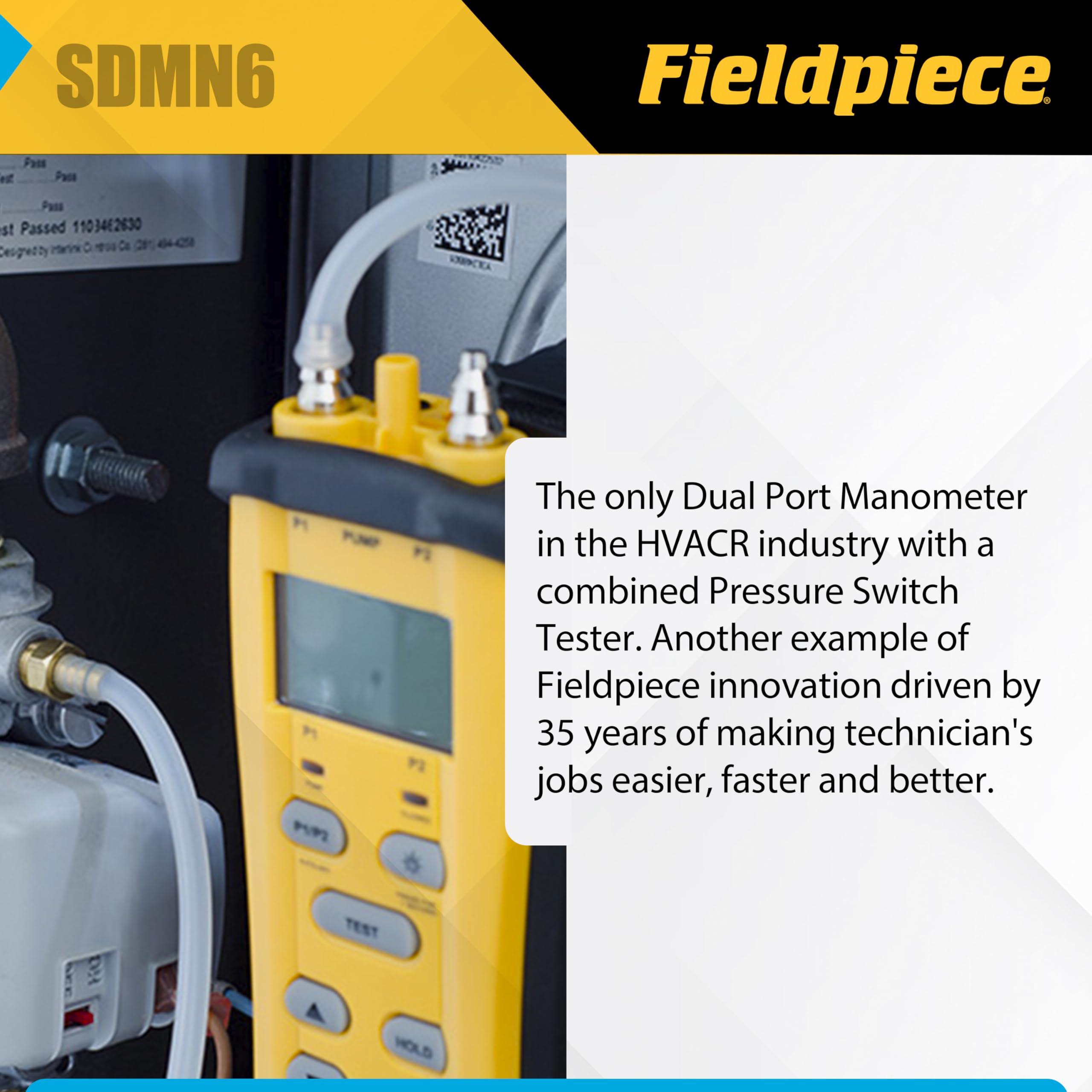
ESP testing on any HVAC system; app integration.
Fieldpiece SDMN6 Dual Port Manometer Rugged, precise ±0.01" WC; holds static pressure indefinitely.

Field diagnostics on smaller ducts/registers.
Extech AN100 CFM Airflow Meter Compact vane anemometer with direct CFM calc; affordable pro tool.
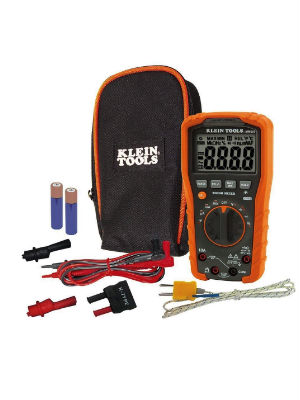
Blower amp checks during airflow diagnosis.
Klein Tools MM700 HVAC Multimeter True RMS for motors; measures microamps for flame sensors too.
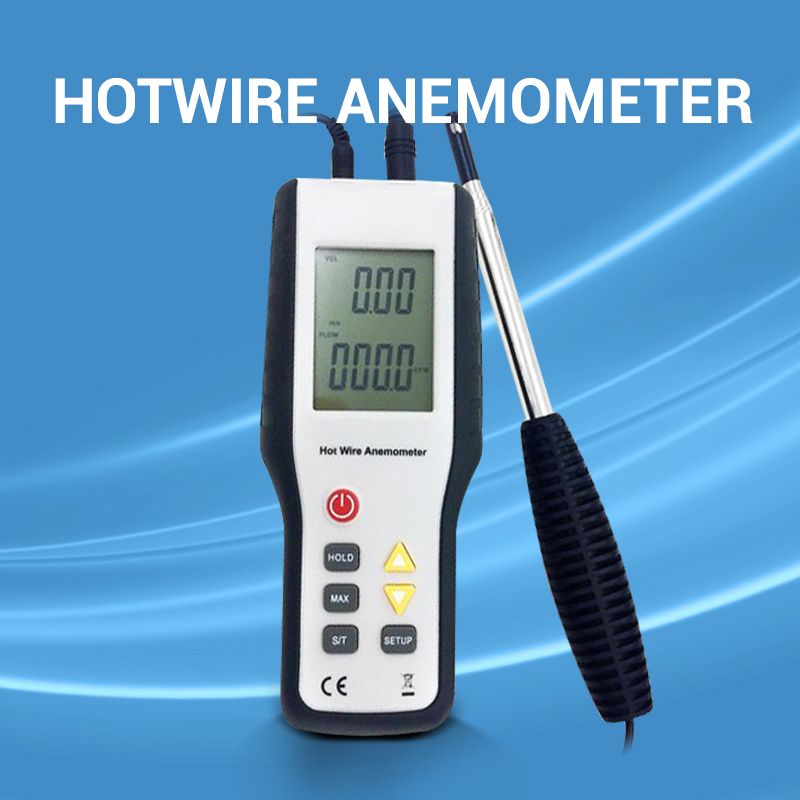
Basic velocity traverses without breaking bank.
PerfectPrime ARMF37 Vane Anemometer Budget option with CFM/FPM; good for entry-advanced use.