
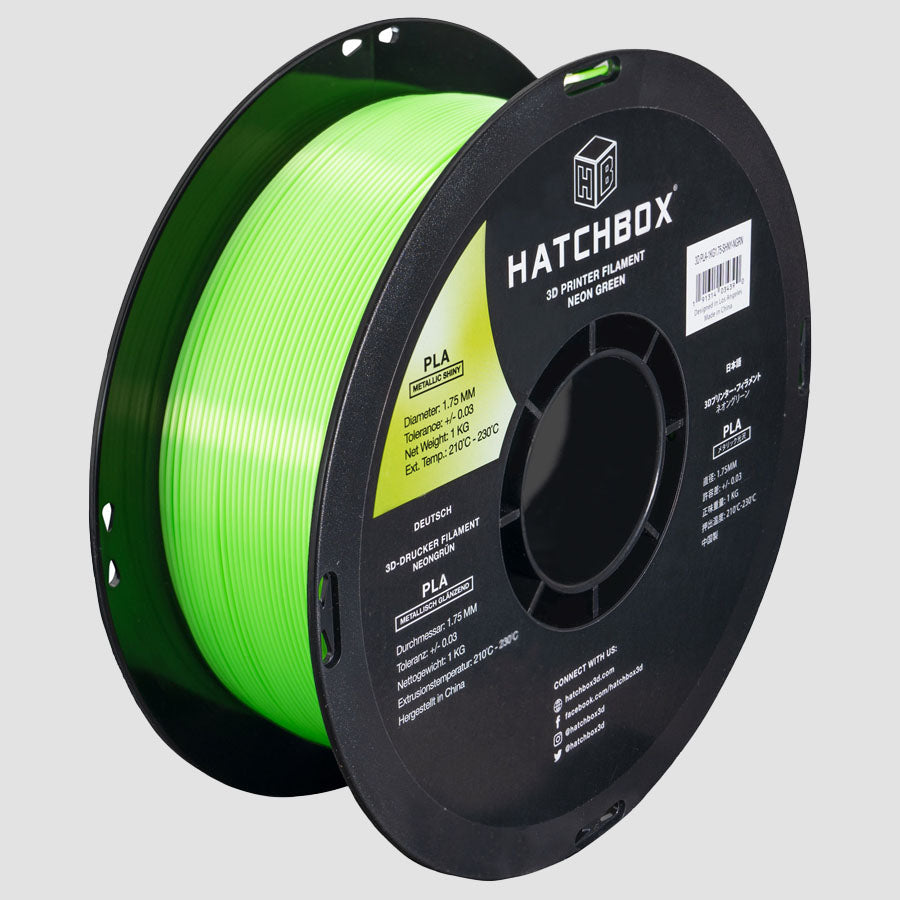
HATCHBOX PLA 1.75mm 1KG Spool
Everyday prototypes and models on any FDM printer.
$24.99
HATCHBOX PLA 1.75mm 1KG Spool Top-rated for beginners: precise diameter, vibrant colors, reliable extrusion.
Get the App
Better experience on mobile
Learn to pick the perfect filament for flawless prints, saving time and money on your 3D printing projects as a beginner.
Choosing the wrong filament can lead to failed prints, clogged nozzles, and wasted material—frustrating issues that plague many 3D printing beginners. The good news? With a simple process, you can match filament to your printer and projects for consistent, professional results every time.
In this guide, you'll learn the key factors to consider, from material types to compatibility checks. By the end, you'll confidently select filament that delivers strong, detailed prints without guesswork. Expect to spend 20-30 minutes researching your first choice—easy for beginners with no prior experience needed.
We'll break it down into clear steps: understanding basics, assessing your setup, matching to needs, and testing. Follow along to avoid common pitfalls and get printing success.
Estimated Time: 20-30 minutes Difficulty: beginner
Start by understanding common filaments. PLA is beginner-friendly, easy to print, and great for prototypes—low temp (190-220°C nozzle), no enclosure needed. ABS is tougher, heat-resistant, but warps easily (230-250°C, needs enclosure). PETG offers strength and clarity like a mix of both (220-250°C). TPU is flexible for rubber-like parts.
Why it matters: Each type has unique properties affecting print success. Expect PLA for 80% of beginner projects.
Image description: Infographic chart comparing PLA, ABS, PETG, TPU with icons for strength, ease, temp.
💡 Tips:
⚠️ Warnings:
Review your printer manual for nozzle size (usually 0.4mm), max temps (nozzle/bed), and diameter support (mostly 1.75mm now). Note if it has a heated enclosure or PEI bed.
Match filament: PLA needs 50-60°C bed; PETG 70-80°C. Success looks like confirmed compatibility—no risk of melting parts or poor adhesion.
This prevents jams and failures from the start.
💡 Tips:
List project goals: Decorative (PLA), functional/strong (PETG/ABS), flexible (TPU), outdoor/heat-resistant (PETG+).
Consider layer adhesion, UV resistance, food-safety. Expect to narrow to 1-2 types—e.g., PLA for toys, PETG for tools.
Why? Wrong choice leads to brittle or warping prints.
💡 Tips:
⚠️ Warnings:
Most printers use 1.75mm; check yours (rare 3mm). Look for ±0.02mm tolerance on specs for smooth flow.
Choose reputable brands with dry-packed spools to avoid moisture issues. Success: Precise diameter prevents under-extrusion.
💡 Tips:
Compare reviews on Amazon/Reddit for consistency. Budget $20-25/kg for quality PLA. Pick colors for your project (white/black versatile).
Read datasheets for exact temps. Expect top sellers like Hatchbox for reliability.
💡 Tips:
Scan recent Amazon reviews for 'consistent diameter' and 'no jams.' Look for RoHS/REACH certs for safety.
Success: 4.5+ stars, low defect reports.
⚠️ Warnings:
Buy 1 spool, load it (heat nozzle to 200°C for PLA), print a calibration cube.
Inspect: Smooth layers? Good bed adhesion? Adjust if needed. Success: Perfect test print confirms choice.
Problem: Stringing or oozing
Solution: Lower print temp by 5-10°C or increase retraction distance.
Problem: Poor bed adhesion
Solution: Clean bed with IPA, add glue stick or hairspray; level bed.
Problem: Brittle prints
Solution: Filament absorbed moisture—dry it and print slower.
Problem: Nozzle clogs
Solution: Use correct diameter; cold pull to clean (heat to 220°C, pull nylon filament).
Top-rated for beginners: precise diameter, vibrant colors, reliable extrusion.
Best for: Everyday prototypes and models on any FDM printer.
Price Range: $24.99
Excellent strength/transparency balance, low warping, food-safe options.
Best for: Functional parts needing durability like tools or enclosures.
Price Range: $21.99
Tougher than standard PLA, impact-resistant, great value.
Best for: Projects requiring more strength without switching to PETG.
Price Range: $19.99
Best flexible filament: Shore 85A hardness, high elongation.
Best for: Gaskets, phone cases, wearables.
Price Range: $29.99
Everyday prototypes and models on any FDM printer.
HATCHBOX PLA 1.75mm 1KG Spool Top-rated for beginners: precise diameter, vibrant colors, reliable extrusion.

Functional parts needing durability like tools or enclosures.
OVERTURE PETG 1.75mm 1KG Excellent strength/transparency balance, low warping, food-safe options.
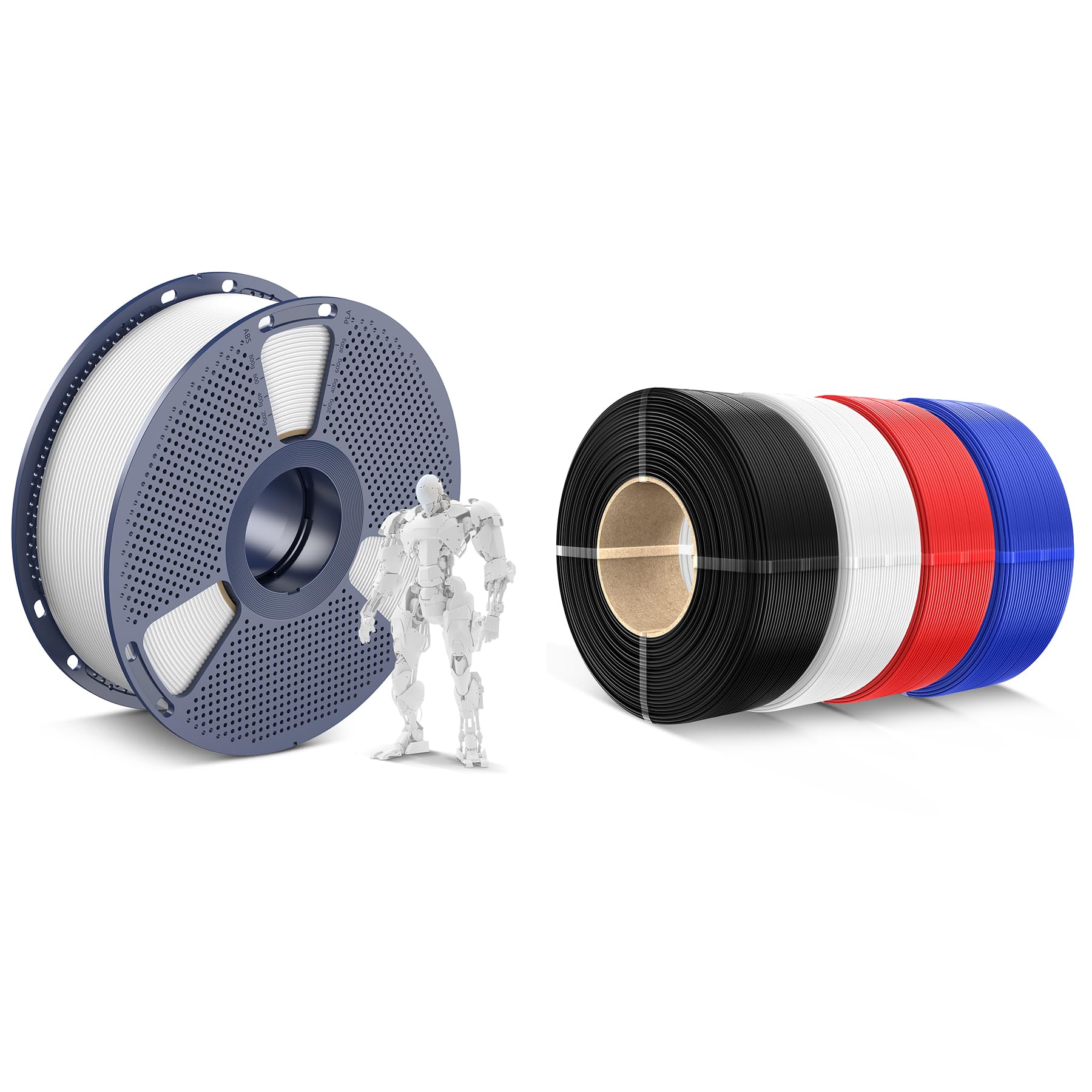
Projects requiring more strength without switching to PETG.
SUNLU PLA+ 1.75mm 1KG Tougher than standard PLA, impact-resistant, great value.
Gaskets, phone cases, wearables.
NinjaFlex TPU 1.75mm 0.5KG Best flexible filament: Shore 85A hardness, high elongation.