Do you know the difference between an H7 and a 9006? Many car owners don’t, and that’s why the wrong replacement bulb can cost you time, money, and safety. Choosing the right bulb isn’t just about screwing it into the socket – you need to match the size, type, and electrical specs to your car’s original equipment to get a good beam pattern and avoid warning lights.
In this guide, you’ll learn how to identify your vehicle’s bulb codes, evaluate halogen, HID, and LED technology, and compare brightness, color temperature, and legality. We’ll also look at the common pitfalls and tell you how to pick a reliable product. By the end, you’ll be able to purchase the correct bulbs with confidence and even install them yourself if you’re willing to spend half an hour on the job.
▸What You'll Need
- •Owner's manual (printed or PDF)
- •Your existing bulbs (burnt out is fine) to read the codes
- •Smartphone or computer for online fitment lookup
- •A notepad or notes app to record the bulb numbers
- •A flashlight and gloves (optional but handy)
Estimated Time: 30 minutes for research and ordering; 30-60 minutes for DIY installation if you choose to install yourself.
Difficulty: intermediate
▸Step-by-Step Instructions
Step 1: Find Your Car's Bulb Map in the Owner's Manual
Start with the simplest and most accurate resource: your vehicle's owner's manual. Look for the 'Bulb Replacement' or 'Light Bulbs' section, which lists the exact bulb type code for every exterior and interior light. Codes like H7, H11, 9005, 9006, or 3157 are industry standard and are the only reliable way to match a bulb.
If you don't have a printed manual, most manufacturers provide a free PDF on their website or in owner support portals. You can also search 'owner's manual PDF' with your car's year, make, and model. Record the codes for low beam, high beam, fog lights, and any other fixture you plan to replace. This step prevents you from guessing and makes every later step much easier.
💡 Tips:
- •Bookmark or take a photo of the bulb code page for easy reference at the store or when ordering online.
⚠️ Warnings:
- •Never rely on the car model year alone – mid-cycle changes can affect bulb type; the manual is always accurate.
Step 2: Decode the Numbers on Your Old Bulb
If you don't have the manual or want a second confirmation, remove a burnt bulb from the vehicle and inspect its base. The bulb code is stamped on the metal base or glass envelope – for example, H7 12V 55W or 9005. Write it down or photograph it. The voltage and wattage are also helpful to know; they indicate the electrical load.
Remove bulbs carefully. If it's a halogen bulb, don't touch the glass with your bare fingers – the oil from your skin creates a hot spot that can cause the glass to burst. Use a tissue or nitrile glove to handle it. Set it aside and use it as a size reference.
💡 Tips:
- •Use a magnifying glass to read the code if it's worn – it's often engraved on the metal collar.
⚠️ Warnings:
- •Do not attempt to force any new bulb into the socket; if it doesn't slide in easily, the code you have is wrong.
Step 3: Decide Which Lights You Are Upgrading
Identify exactly which bulbs you need to replace or upgrade. Low beams are used the most and are the most important for nighttime driving. High beams are for open roads. Fog lights have different requirements and often benefit from a lower color temperature to cut through fog. Turn signals and brake lights have their own sizes and may need resistors to prevent rapid flashing.
If you're replacing a burned-out bulb, you only need one, but it's wise to replace the opposite side too for consistent output. If you're upgrading to LED, think about whether you want to change all the exterior lights or just the headlights; mixing technologies on the same car can affect the appearance and electrical load.
💡 Tips:
- •If your car has projector headlights, LED bulbs usually work better because the projector lens shapes the beam; in reflectors, use LEDs only if they are designed with a chip placement similar to the original filament.
⚠️ Warnings:
- •Don't use high beam bulbs in low beam sockets even if they share the same base – the optical patterns differ and you will blind others.
Step 4: Understand Halogen, HID, and LED Technologies
These three main types of car bulbs serve different priorities:
- •Halogen – the traditional bulb. Cheap, widely available, and easy to replace. It produces a yellowish light and has a lifespan of about 450–1,000 hours. It's still the standard in many cars and always a reliable fallback.
- •HID (High-Intensity Discharge) – uses an arc instead of a filament. Brighter and bluer than halogen, but requires a ballast to operate. HID kits are mostly for performance enthusiasts; they may be illegal in certain housings and can take a few seconds to warm up.
- •LED (Light-Emitting Diode) – uses semiconductor chips. They light up instantly, consume about half the power of halogen, and can last 10,000+ hours. However, their compact design generates heat that must be dissipated, and their beam pattern may not match the original halogen reflector, causing glare.
Your choice should balance legality, visibility, lifespan, and cost. For pure convenience, many drivers upgrade to a quality LED kit. But if you're on a strict budget or drive a classic car, a high-quality halogen is the simplest and safest route.
💡 Tips:
- •If you're going LED, choose one that is designed for retrofit and has minimal scattered light; review photos from buyers who own your car.
⚠️ Warnings:
- •Be aware that in many countries, aftermarket HID and LED headlight bulbs are not ECE or DOT approved for road use unless the entire headlight assembly is designed for them.
Step 5: Match Bulb Size and Connector Type to Your Vehicle
Once you know the code (e.g., H11) and technology, you must check physical dimensions. LED bulbs are sometimes longer or have a larger heat sink than the halogen bulb they replace. In many cars, the headlight housing has a dust cover that must fit over the new bulb's base. If the bulb is too long or thick, the cover won't close, exposing the wiring to moisture.
The connector type is standardized; if the base matches your old bulb, it will plug in. However, some bulbs marketed as fitting many cars use a slim internal driver or a removable collar to improve compatibility. Read the product description and search for your vehicle model in the reviews to see if other owners found it easy to install.
💡 Tips:
- •Check the total length of the bulb and compare it to your old bulb. If you're buying LED, look for 'slim' or 'mini' drivers if clearance is tight.
⚠️ Warnings:
- •Do not use a hacksaw to modify a bulb base or housing – it can compromise the seal and void the product warranty. Instead, look for a specific version that fits your model.
Step 6: Choose the Right Brightness and Color Temperature
Brightness is expressed in lumens. Halogen bulbs typically produce 1,500–3,000 lumens per pair. A premium LED will produce 4,000–8,000 lumens per pair. But brighter isn't always better; if you put a 10,000-lumen bulb into a housing designed for 2,000, you'll create a lot of glare and might not get a good beam pattern. For a safe upgrade, aim for 4,500 to 6,000 lumens per pair unless you have a projector that can handle the output.
Color temperature, in Kelvin (K), determines the shade of light: 3,000K is yellow, 4,300K is warm white, 5,500K is pure white, and 6,000K is white with a hint of blue. For asphalt and rain, 5,000K–6,000K offers a crisp, modern look. If you regularly drive in fog, consider 3,000K yellow fog lights – the warm tone reduces backscatter. Avoid anything above 6,500K, which is very blue and reduces your ability to see contrast at night.
💡 Tips:
- •On the product page, look for a beam pattern photo showing the chip layout to match the original halogen filament location as closely as possible.
⚠️ Warnings:
- •Some states prohibit headlights that emit blue light; check the limit on Kelvin to avoid failing inspection.
Step 7: Assess Electrical Compatibility and Heat Sinks
Modern cars use a body control module that monitors bulb power draw. Halogen bulbs draw about 55 watts; LED bulbs draw only 10–20 watts. The computer may interpret this as a burned-out bulb and trigger a warning message on the dash or cause your turn signals to hyperflash. To prevent this, choose LED bulbs with a built-in resistor or a CAN bus decoder. You can also purchase a separate resistor kit that connects to the socket.
The second critical aspect is heat. LED chips are efficient, but the driver electronics generate heat. Without a sturdy aluminum heat sink or a quiet fan, the bulb will overheat and quickly lose brightness or fail. If your bulb has a fan, ensure the fan is positioned so it doesn't collide with the housing. Some bulbs have an external driver box that can be mounted away from the socket, which is helpful for tight spaces.
💡 Tips:
- •Read user reviews for your specific year and model; they often mention whether a particular LED bulb triggers error codes.
⚠️ Warnings:
- •Don't install an LED that lacks adequate cooling into a sealed headlight with no airflow – you will see premature failure.
Step 8: Research Brands, Prices, and Warranty
You have now narrowed the choice. Spend a few minutes comparing brands and prices. Established names like Philips, Osram/Sylvania, and Koito provide proven build quality and usually offer better beam patterns. Budget Chinese brands like Auxbeam, SEALIGHT, and Cougar Motor often offer good performance at lower prices, but you should read reviews carefully and look for an advertised lifespan.
Check the warranty length – many reputable LED bulbs have a 1- to 2-year warranty compared to 3 months for cheap ones. Also check the seller's return policy. Buy from the official brand store or an authorized seller on Amazon to avoid counterfeits. Always order a pair for headlights, even if only one bulb is burnt out, to keep the beam and color balanced.
💡 Tips:
- •If you use a price comparison tool, factor in shipping and potential import fees if ordering from overseas.
⚠️ Warnings:
- •Be wary of products with extremely inflated lumen claims (e.g., 30,000 lumens per bulb) – they are often fake or will overheat the housing.
Step 9: Purchase the Right Bulbs and Verify Fitment at Home
After you've placed the order, wait for the delivery and do a visual check before installing. Lay the new bulb next to the old bulb. The base and connector should be identical, and the light-emitting part should be in the same relative position. If you bought an LED, verify that the connector orientation matches – some bulbs can be rotated to adjust the beam angle, and you may need to set the correct angle for low beam.
Plug the bulb into its connector (with the car ignition off) to test if it lights. Some bulbs have a polarity-specific connector; if it doesn't light, flip it 180 degrees. If you see a very weak light, that's a sign of insufficient ground connection. Read the manual – many LED bulbs have a removable positioning ring that you can twist to match the mounting surface. Test both the low and high beams if your bulb is a dual function bulb.
💡 Tips:
- •Keep the original bulb in the glovebox as an emergency spare.
⚠️ Warnings:
- •Don't force a connector – the terminals are easily bent; if it doesn't seat, check for a physical obstruction.
Step 10: Install the Bulbs Securely and Test Everything
For headlight bulbs, make sure the car is off and the headlight switch is in the off position. For most cars, you'll access the bulb from behind the headlight housing – you may need to remove a rubber cover or access panel. Remove the old bulb by turning it counterclockwise and pulling it out. Insert the new bulb; push it straight in and turn it clockwise to lock. Reattach the rubber cover or access panel securely.
If you're replacing brake light bulbs, they may require a push-and-twist stroke, and the lenses are usually secured by screws or clips. Test all functions: low beam, high beam, fog lights, turn signals, brake lights, and any lamp-out indicator. If the new bulbs are significantly brighter or have a different beam pattern, check that they are aimed correctly. You can use a simple wall test: park on level ground 25 feet from a wall and adjust the vertical cut-off to match the manufacturer's specs.
💡 Tips:
- •Wear clean gloves when installing halogen bulbs; never touch the glass.
⚠️ Warnings:
- •If you see water droplets inside the headlight lens after installation, the rubber boot isn't sealed or you used a bulb that doesn't fit the housing properly. Fix it to avoid corrosion and early failure.
▸Pro Tips
- •Use an online bulb finder such as the Sylvania Replacement Guide to double-check your bulb code and see which LED bulbs are known to fit your car.
- •Select bulbs with a wide voltage range (9–16V) to prevent flickering during cold starts or when the alternator voltage fluctuates.
- •Buy bulbs as a pair for headlights – the opposite side will often fail soon after the first.
- •When buying LED bulbs, look for a chip layout that mimics the halogen filament position (e.g., a 360° or side-emitting design) for a proper beam pattern.
- •If you drive in winter climates, apply a thin coat of dielectric grease to the bulb's connector pins to prevent corrosion.
- •For DOT-approved headlights, look for the official DOT mark or a statement that the bulb is designed to comply with FMVSS 108 standards.
- •Read customer reviews sorted by 'most recent' to catch any issues with quality control or recent product revisions.
- •Keep your purchase receipt and warranty card – many brands require proof of purchase for a claim.
▸Common Mistakes to Avoid
- •Buying based on 'fits your car model' instead of the code number – the same car can have different bulbs depending on trim or region.
- •Assuming that all LED bulbs are the same size – many are longer and won't fit in sealed beam housings.
- •Selecting an extremely high color temperature (7000K+) because it looks 'cool' – it actually reduces visibility and is illegal in many places.
- •Handling halogen bulbs with bare fingers, leaving behind oils that shorten their life.
- •Ignoring the need for a CAN bus decoder, which leads to persistent error messages or rapid-blinking turn signals.
- •Going for the cheapest bulb on Amazon – they often have poor beam patterns and fail within months.
▸Troubleshooting
Problem: New LED headlights flicker when the engine is running or when the auto-start-stop engages.
Solution: This is usually a CAN bus issue. Install a CAN bus decoder/resistor that is specific to your bulb code. If that doesn't work, check your vehicle's settings – some cars allow you to disable LED bulb-error monitoring via a diagnostics tool.
Problem: The new bulb doesn't fit or the dust cover won't close.
Solution: The bulb is probably too long with a thick heat sink. Look for a 'slim' version or one with an external driver that can be tucked inside the housing. Do not modify the dust cover – it protects your wiring from moisture.
Problem: Headlight output is very bright directly ahead but poor on the sides (or vice versa).
Solution: Your LED bulb might have a different beam angle than the housing was designed for. Look for an adjustable collar or mount. Some LED bulbs allow you to rotate the chip to point in the correct direction. Aim your headlights manually using a screwdriver – standard aiming instructions are often printed under the hood.
Problem: The bulb lights up, but after a few minutes it dims or turns off.
Solution: This indicates overheating. When the LED chip gets too hot, the driver reduces power to protect it. Check for sufficient airflow or install a larger heat sink. Also ensure the bulb is not being used in a sealed housing with high ambient temperatures.
Problem: A 'bulb out' warning remains on even after replacing a halogen bulb correctly.
Solution: The new bulb may be a different wattage or a poor connection. Check the bulb is seated firmly and the contacts are clean. If the warning still appears, the socket's grounding may be corroded; have a mechanic inspect the wiring.
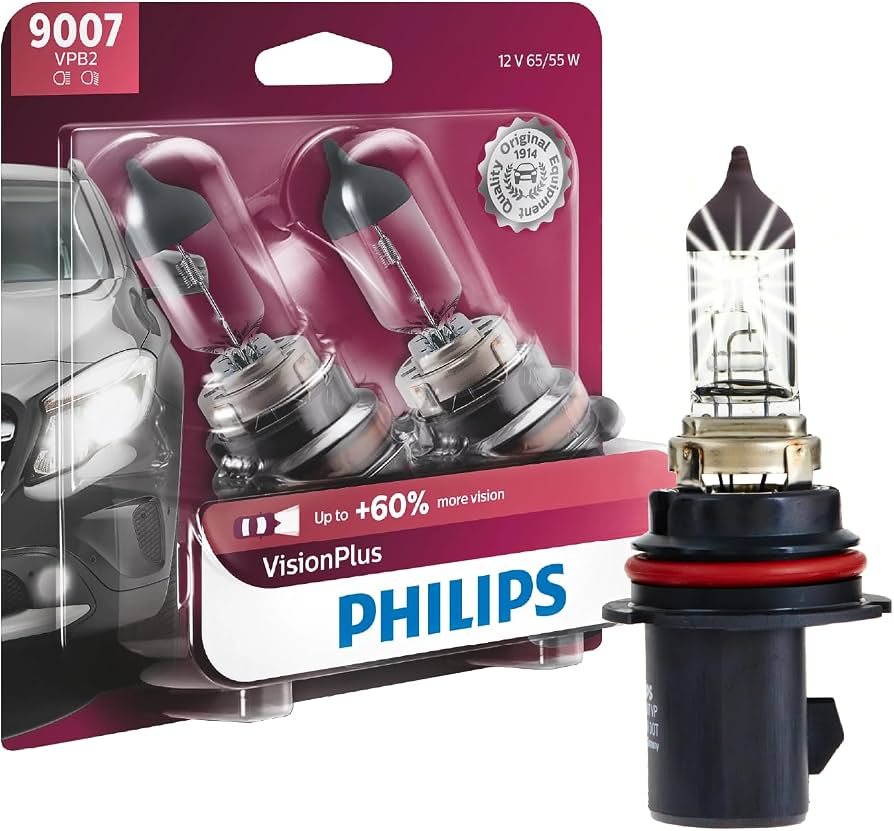
Philips H7 VisionPlus Halogen Headlight Bulbs (Pair)
A well-known, high-quality halogen upgrade from a trusted manufacturer. Philips designed these to emit up to 60% more light on the road while staying fully highway-legal, making them a safe choice when you want a bit more punch without changing technology.
Best for: Ideal for drivers who prefer a direct halogen replacement, want to stay 100% legal, or drive older vehicles with sensitive wiring.
Price Range: $12–$20 per pair
Philips Ultinon Pro6000 LED Headlight Bulbs (Pair)
Philips' premium LED retrofit with a built-in cooling fan and an informed beam pattern that works with many factory housings. It's one of the few LED bulbs explicitly advertised for aftermarket use with proper beam cutoff.
Best for: A top-tier LED upgrade for drivers who want a clean, white light and are willing to pay more for reliability and warranty support.
Price Range: $80–$120 per pair
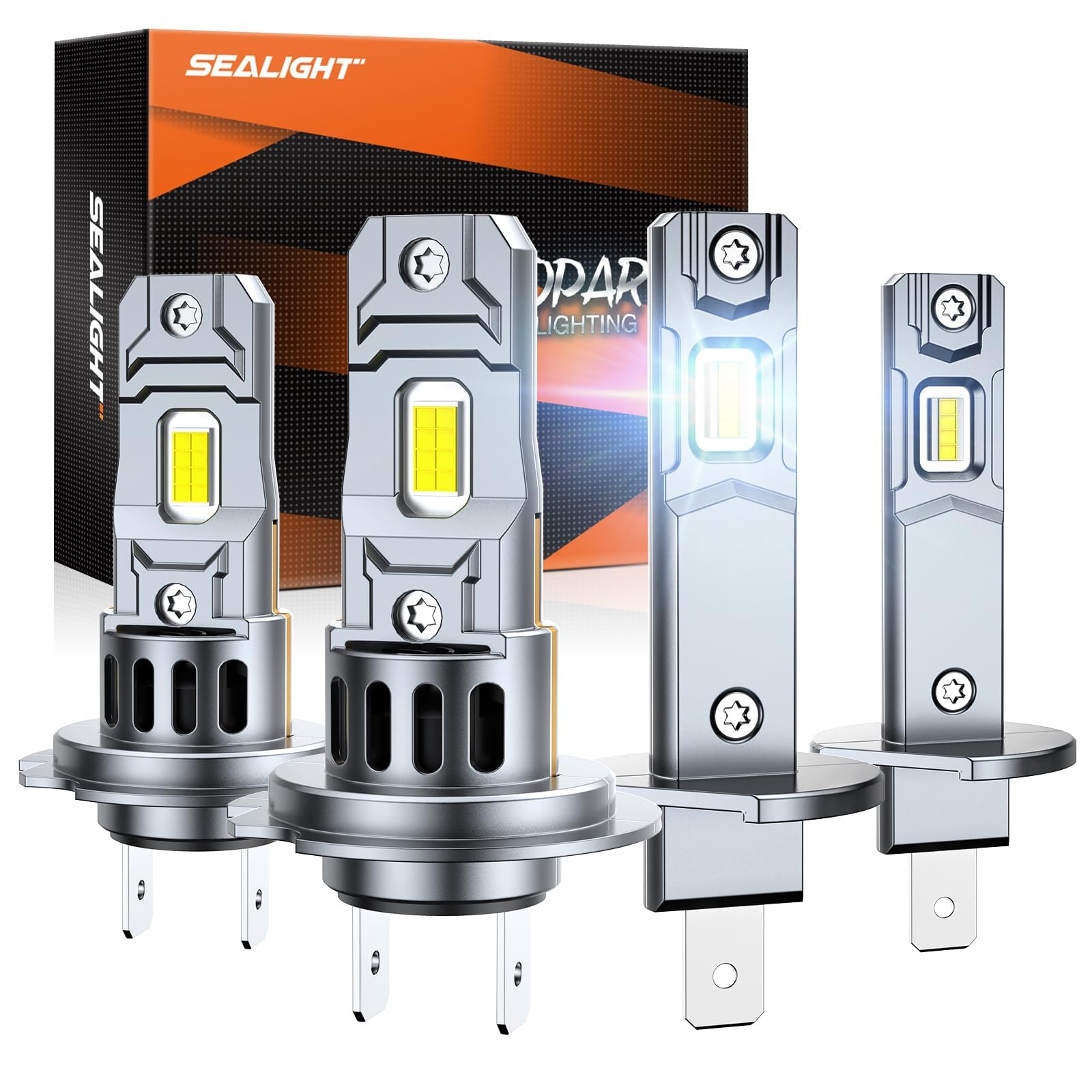
SEALIGHT H7 LED Headlight Bulbs (Pair)
One of the best-selling LED headlight bulbs on Amazon with tens of thousands of positive reviews. It features a compact design, built-in fan cooling, and an adjustable beam to suit your housing.
Best for: A budget-conscious LED upgrade that fits most H7/H1/H11 sockets and offers a dramatic improvement over halogen without breaking the bank.
Price Range: $35–$60 per pair
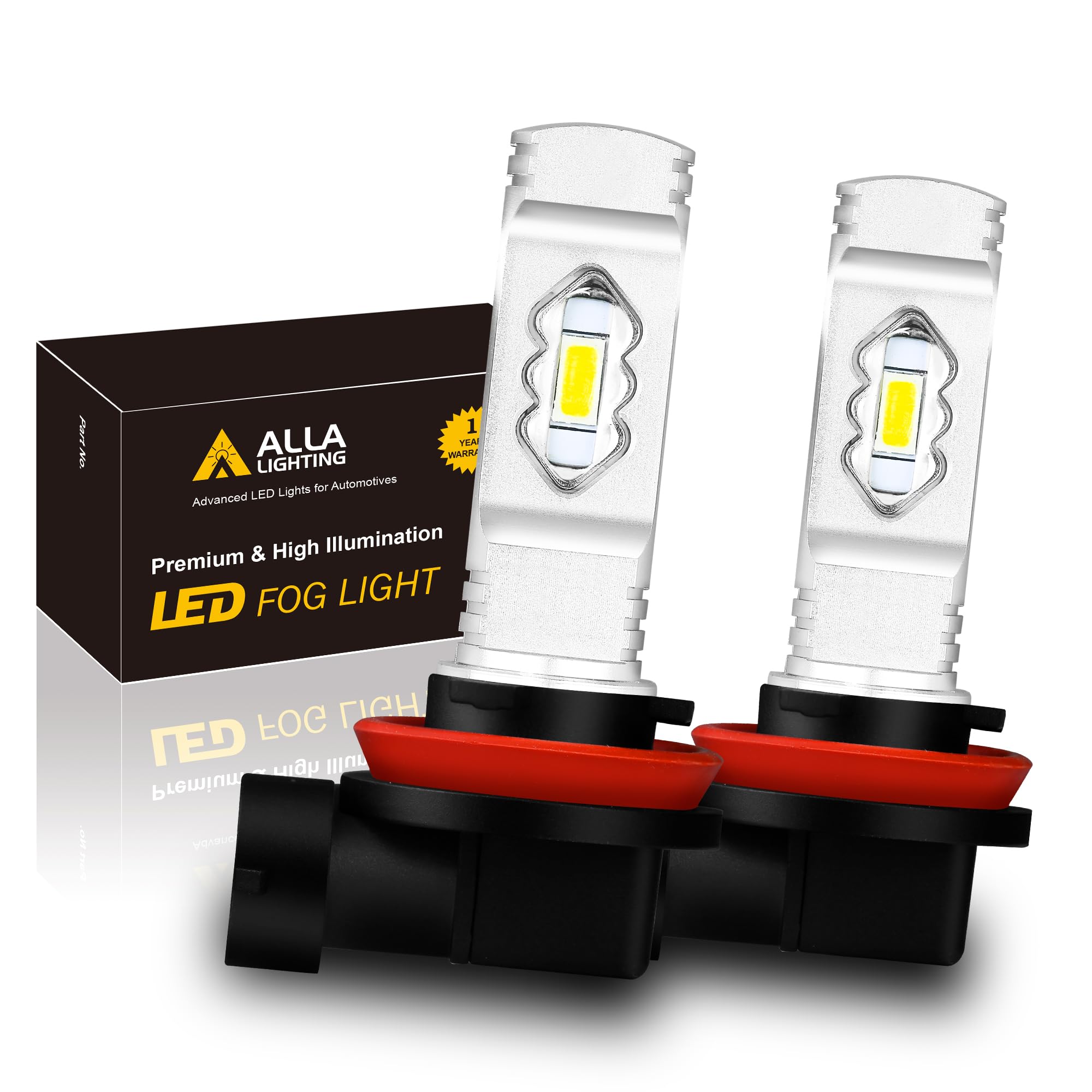
Alla Lighting H11/H8 LED Fog Light Bulbs, 3000K Yellow (Pair)
Specifically designed for fog lights, with a yellow color temperature that cuts through water particles better than white light. It has a compact driver and a shorter overall length, making installation easier.
Best for: Perfect for replacing your original fog light bulbs with LED for improved visibility in rain or snow while keeping the classic yellow look.
Price Range: $25–$45 per pair
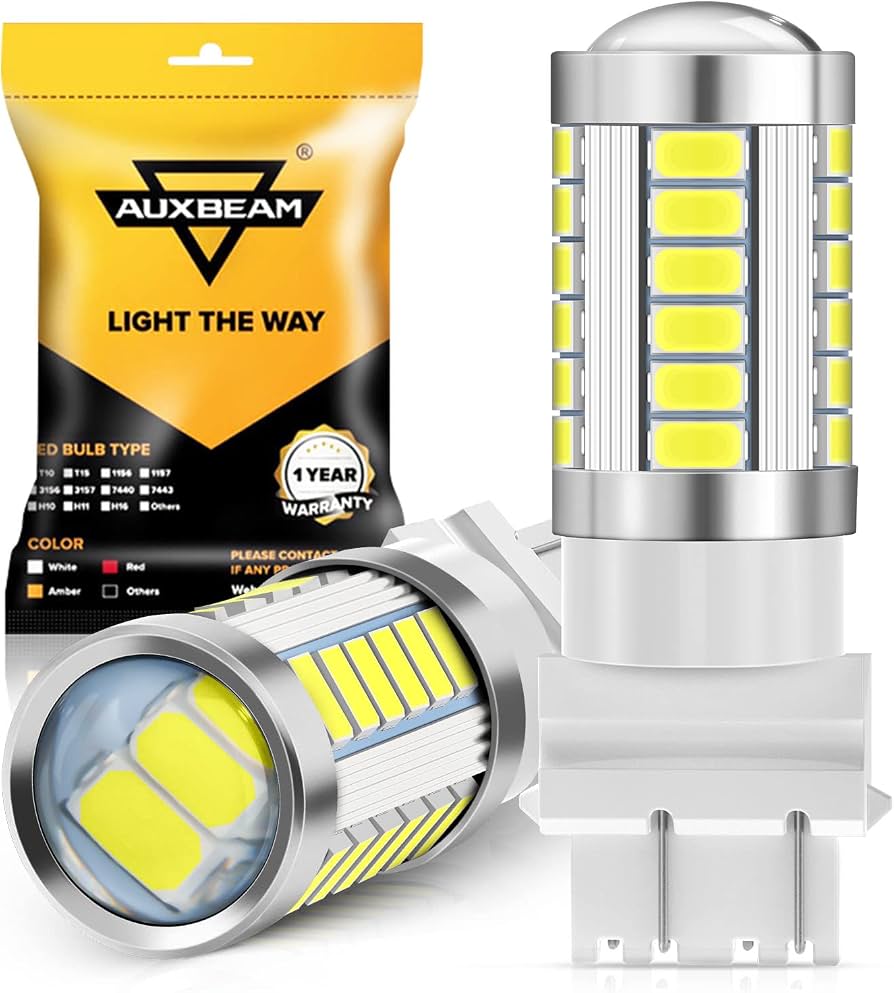
Auxbeam 3157/3057 LED Brake Lights with Resistors (Pair)
Auxbeam's 3157 bulbs for brake and turn signals include a built-in resistor to prevent hyperflash and bulb-out errors. They are available in cool white, Amber, or red, and have a strong aluminum body for heat dissipation.
Best for: Great for upgrading your tail lights, brake lights, or rear turn signals to LED, especially if your car is sensitive to LED load resistance.
Price Range: $20–$35 per pair