If you're a side sleeper with back pain, you know the struggle of waking up stiff and sore. The right mattress can make all the difference by providing pressure relief where you need it most—at your shoulders and hips—while keeping your spine aligned. But with so many options, it's easy to get overwhelmed. This guide will walk you through the key factors to consider: firmness, material, support, and special features. By the end, you'll know exactly what to look for and which mattresses are best for your needs.
▸What You'll Need
- •Understanding of your sleep position and pain points
- •Knowledge of mattress types (memory foam, latex, hybrid, innerspring)
- •A budget range in mind
- •Willingness to use trial periods to test at home
Estimated Time: 10-15 minutes reading time (plus 30-90 days for trial testing)
Difficulty: beginner
▸Step-by-Step Instructions
Step 1: Understand Why Side Sleepers Need Different Support
When you sleep on your side, your shoulders and hips sink into the mattress. If the mattress is too firm, these pressure points create pain and restrict circulation. If it's too soft, your spine sags out of alignment, leading to back pain. The ideal mattress for a side sleeper with back pain balances pressure relief (cushioning) and support (spinal alignment). Think of a mattress as a dynamic surface that should contour to your body while keeping your spine straight from head to pelvis.
💡 Tips:
- •Pay attention to your current mattress: where do you feel the most pressure?
⚠️ Warnings:
- •Avoid ultra-soft mattresses that don't provide enough support for your lower back.
Step 2: Choose the Right Firmness Level
Firmness is measured on a scale from 1 (very soft) to 10 (very firm). Most side sleepers with back pain need a medium to medium-soft mattress (around 4–6 on the firmness scale). The exact ideal depends on your weight and body shape. Lighter individuals (<130 lbs) often need softer mattresses (3–5) to allow enough sinkage. Heavier individuals (>230 lbs) may prefer medium-firm (5–7) to avoid excessive sinking that causes misalignment. A good rule: your body should sleep in a straight line when viewed from behind.
💡 Tips:
- •Use the 'fist test' – a mattress that allows your fist to sink about 1–2 inches is often right for side sleepers.
⚠️ Warnings:
- •Don't choose based on a single store test; use the trial period to sleep on it for at least 30 days.
Step 3: Select the Best Mattress Material for Pressure Relief
Different materials offer different levels of pressure relief and support. Memory foam is the most common choice for side sleepers because it hugs the body and distributes weight evenly. However, it can trap heat and feel slow to respond. Latex is more responsive and cooler but can be pricier and slightly firmer. Hybrid mattresses combine foam or latex with pocketed coils, offering a balance of contouring and bounce. Innerspring mattresses generally lack pressure relief unless they have a thick pillow top. For back pain, memory foam or hybrid with enhanced lumbar support are often recommended.
💡 Tips:
- •Look for a mattress with a dense support core (e.g., high-density polyfoam or pocketed coils) for durability.
⚠️ Warnings:
- •Avoid cheap foam that may sag quickly, causing back pain to worsen.
Step 4: Check for Lumbar Support Features
Back pain often originates from the lower back (lumbar region). Many modern mattresses include zoned support: firmer foam or reinforced coils in the middle third of the mattress to prevent the hips from sinking too deep. This helps maintain the natural S-curve of your spine. For side sleepers, zoned support can be a game-changer because it keeps the hips lifted while allowing shoulders to sink softly. Look for terms like 'lumbar support', 'zoned support', or 'tri-zoned' in product descriptions.
💡 Tips:
- •If you have lower back pain, prioritize mattresses with explicit lumbar support zones.
⚠️ Warnings:
- •If you have upper back or neck pain, make sure your pillow also aligns your cervical spine.
Step 5: Consider Temperature Regulation
Side sleepers often curl up, which can trap body heat. If you sleep hot, choose a mattress with cooling features. Memory foam typically retains heat unless infused with gel, copper, or phase-change materials. Latex is naturally cooler. Hybrids with coil layers allow airflow. Some mattresses have breathable covers or cooling covers. Overheating can disrupt sleep and exacerbate pain, so temperature regulation is important for overall comfort.
💡 Tips:
- •For hot sleepers, look for 'open-cell' foam or 'gel-infused memory foam'.
⚠️ Warnings:
- •Avoid all-foam mattresses without cooling technology if you tend to overheat.
Step 6: Evaluate Motion Isolation and Edge Support
Motion isolation is important if you share the bed with a partner who moves – a good foam or hybrid mattress can absorb movement so you aren't disturbed. Edge support is also crucial: reinforced edges prevent you from rolling off when sleeping near the edge and make the entire surface usable. Strong edge support also helps with getting in and out of bed. If you have back pain, a stable edge is beneficial because you may need to sit on the edge to get up.
💡 Tips:
- •Test motion isolation by having your partner move on one side while you lie on the other.
⚠️ Warnings:
- •Some mattresses have poor edge support; check for coil density or foam encasement.
Step 7: Check Trial Periods, Warranty, and Return Policies
Since mattress choice is subjective, especially for back pain, you need a long trial period to ensure the mattress works for you. Most quality brands offer 90–120 night trials. Use the first few weeks to adapt, as your body may need time to adjust. After that, evaluate your pain levels. Also look for warranties of at least 10 years covering defects like sagging (over 1 inch) and broken foam/coils. Good return policies allow full refunds or exchanges, often with no or low fees.
💡 Tips:
- •Keep the mattress on a supportive foundation during the trial to avoid voiding the warranty.
⚠️ Warnings:
- •Some companies require a break-in period of 30 days before you can return; read the fine print.
Step 8: Read Verified Customer Reviews for Side Sleepers with Back Pain
Product descriptions can be misleading. Go to review sections specifically for side sleepers and back pain. Look for reviews that mention similar body weight and pain type. Pay attention to comments about pressure relief, support, and durability over time. Verified purchases from Amazon or brand websites are more reliable. Note any common complaints about sagging or heating.
💡 Tips:
- •Filter reviews by 'side sleep' and 'back pain' if possible.
⚠️ Warnings:
- •Be cautious of overly positive reviews; look for balanced feedback.
Step 9: Test the Mattress with Your Pillow
Your pillow is just as important as your mattress for back pain. A side sleeper's pillow must fill the gap between the ear and shoulder to keep the neck aligned. A pillow that's too high or too low can strain the upper back. When testing a mattress, use your usual pillow first, but consider upgrading if your neck still hurts. Some mattress brands also sell adjustable or contoured pillows designed for side sleepers.
💡 Tips:
- •Test the combination by lying on your side and having someone check if your head is parallel to the mattress.
⚠️ Warnings:
- •Don't switch both pillow and mattress simultaneously; change one at a time to know what helps.
Step 10: Decide if You Need an Adjustable Base
An adjustable base can elevate your head or feet, which may relieve back pain by reducing pressure on the spine. For side sleepers, slight elevation of the head can also help with acid reflux or snoring. Some mattresses are specifically designed to work with adjustable bases. However, not all mattresses are compatible (e.g., some foam mattresses may not flex well). Check if your chosen mattress is adjustable-base compatible.
💡 Tips:
- •If you have back pain that worsens when lying flat, an adjustable base might be a worthwhile investment.
⚠️ Warnings:
- •Some low-cost foam mattresses can void warranty if used with an adjustable base.
▸Pro Tips
- •Always use a mattress protector to keep your mattress clean and maintain warranty.
- •Give your body 30 days to adapt to a new mattress before deciding – initial discomfort may fade.
- •Consider a mattress topper (e.g., memory foam or latex) to adjust firmness of an existing bed.
- •If you share a bed, look for a mattress with good motion isolation to avoid disturbances from partner movements.
- •Check the mattress weight and delivery method – heavier mattresses may need two people to set up.
- •Look for CertiPUR-US certification to ensure foams are low in VOCs and safe to breathe.
▸Common Mistakes to Avoid
- •Choosing a mattress that is too soft because it feels comfortable initially but causes back pain due to lack of support.
- •Ignoring your own weight category – firmness needs vary greatly between light and heavy individuals.
- •Buying a mattress based on price alone without considering materials and construction quality.
- •Not using the trial period properly – return it if pain persists after a month, don't force yourself to like it.
- •Forgetting to check the foundation – using the wrong box spring can void warranty and affect performance.
▸Troubleshooting
Problem: I wake up with shoulder pain after sleeping on my side.
Solution: Your mattress may be too firm for your shoulder. Try adding a soft mattress topper or consider a softer mattress. Also check if you're using a suitable pillow.
Problem: My lower back hurts after sleeping on a new mattress.
Solution: The mattress might be too soft, causing your hips to sink and your spine to curve. Look for a mattress with zoned lumbar support or a firmer model.
Problem: I feel too hot on my memory foam mattress.
Solution: Use a cooling mattress pad or protector. Consider swapping to a latex or hybrid mattress that sleeps cooler.
Problem: The mattress sags after a few months.
Solution: Check if you're using proper support (slatted base or flat foundation). If it's a defect, contact the manufacturer for warranty replacement.
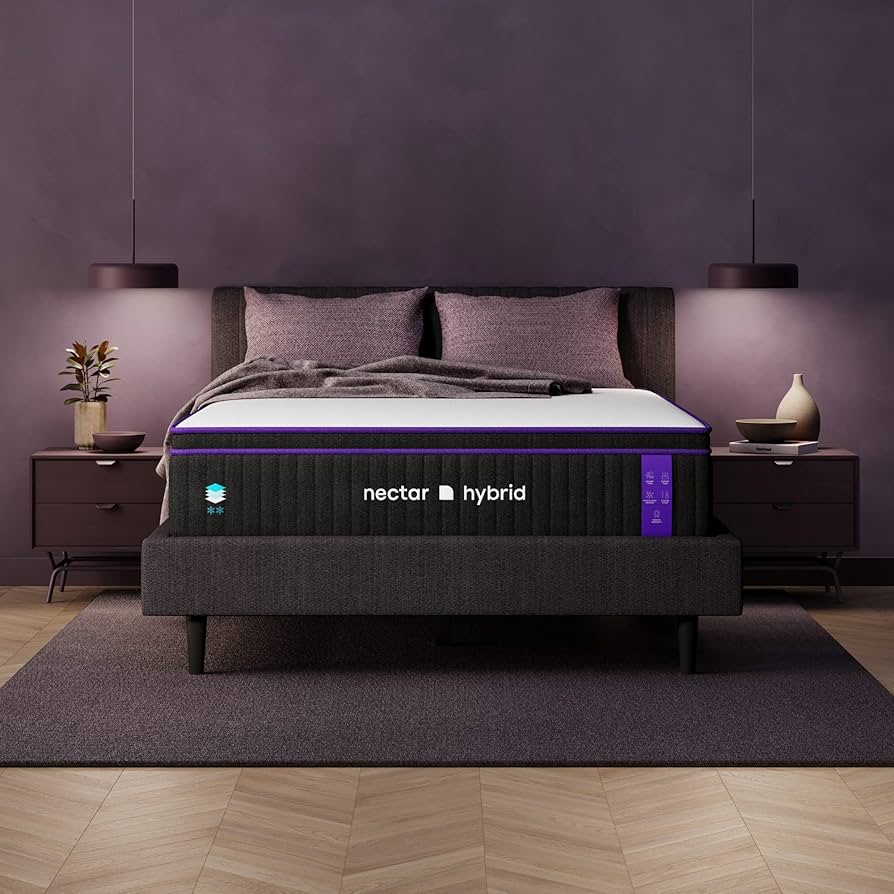
Nectar Premier Copper Memory Foam Mattress
Medium-firm feel (6.5/10) with a quilted cooling cover, ideal for side sleepers with back pain who want pressure relief and temperature regulation.
Best for: Side sleepers who prefer a classic memory foam feel with good pressure relief and cooling technology.
Price Range: $1,200 – $1,800 (queen)
Saatva Classic Hybrid Mattress
Offers three firmness options (Plush Soft is great for side sleepers) and has a zoned lumbar support coil system for spinal alignment.
Best for: Side sleepers with back pain who want a hybrid with bounce, strong edge support, and multiple comfort choices.
Price Range: $1,600 – $2,200 (queen)
Avocado Green Mattress (Latex Hybrid)
Natural latex and coils provide responsive support and pressure relief, with optional zoned support for lumbar area. Eco-friendly.
Best for: Side sleepers with back pain who prefer organic materials and a more buoyant feel than memory foam.
Price Range: $1,400 – $2,000 (queen)
Tempur-Pedic TEMPUR-ProBreeze Mattress Topper (3 inches)
Adds pressure-relieving memory foam to your existing mattress, making it softer and alleviating shoulder/hip pain.
Best for: Side sleepers who already have a mattress that's too firm or want to adjust firmness without buying a new bed.
Price Range: $250 – $400 (queen)
Leggett & Platt Prodigy 2.0 Adjustable Base
Allows head and foot elevation to reduce back strain and improve circulation – compatible with most mattresses.
Best for: Side sleepers with chronic back pain who want to customize their sleep position and elevate legs or head.
Price Range: $800 – $1,500 (queen)