
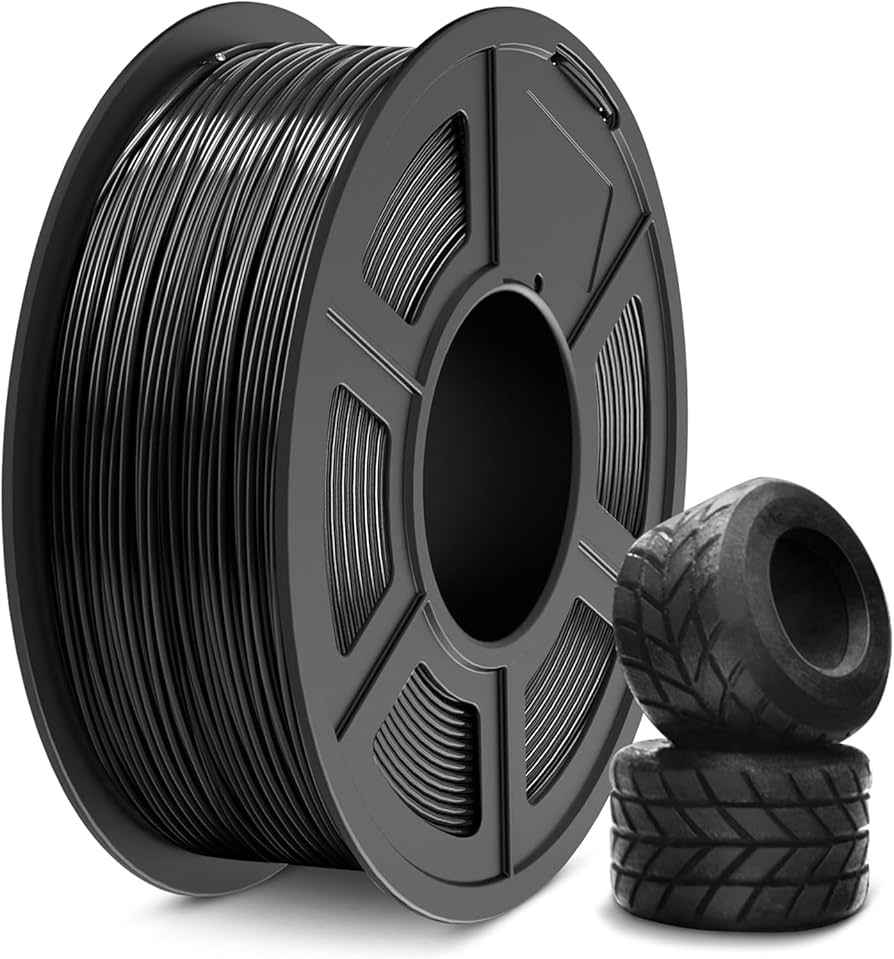
SUNLU TPU 95A Flexible Filament 1.75mm 1KG
General flexible parts like cases, grips; Bowden-compatible.
$21.99
SUNLU TPU 95A Flexible Filament 1.75mm 1KG Excellent printability on most printers, consistent diameter, low stringing for intermediates.
Get the App
Better experience on mobile
Master selecting TPU, TPE, and other flexible filaments for durable, bendable prints that match your printer and project needs.
Struggling with brittle prints that crack under stress? Flexible filaments like TPU let you create gaskets, phone cases, wearables, and toys that bend without breaking—perfect for functional parts in 3D printing.
In this guide, you'll learn the key properties, types, and selection criteria to pick the ideal filament for your intermediate-level setup. We'll break it down step-by-step, from basics to testing, so you can avoid failed prints and common pitfalls. Expect 15-20 minutes to read and apply this to your next project.
By the end, you'll confidently choose filament that prints smoothly and performs reliably, saving time and filament waste.
Estimated Time: 15-20 minutes to read and decide on filament Difficulty: intermediate
Flexible filaments are thermoplastic elastomers (TPEs) that stretch and recover shape, unlike rigid PLA or ABS. Think of them like rubber bands vs. plastic rulers—they excel in parts needing impact resistance or seals.
Why it matters: Choosing the wrong type leads to jamming or poor layer adhesion. Expect filaments rated by Shore hardness (e.g., 85A softer, 95A firmer).
Start by reviewing your project's bend needs: high flex for hinges or moderate for grips.
💡 Tips:
⚠️ Warnings:
Focus on Shore Hardness (A-scale): Measures flexibility (60A very soft, 98A semi-rigid). Elongation at break: How much it stretches before snapping (300-600% typical).
Other factors: Abrasion resistance for wear parts, UV stability for outdoor use. Why? Matches filament to real-world stress.
Expect trade-offs: Softer = more flexible but harder to print.
💡 Tips:
⚠️ Warnings:
Primary types:
Why it matters: TPU suits 95% of projects; TPE for ultra-flex. Compare datasheets for your needs.
💡 Tips:
Direct drive extruders handle flex best (short filament path reduces buckling). Bowden tubes need 95A+ hardness and slow speeds.
Verify: Extruder gear grip, hotend diameter (0.4mm+), enclosure for temp stability.
Expect issues on stock Ender 3 Bowden without mods—upgrade to Capricorn tubing.
💡 Tips:
⚠️ Warnings:
List needs: Flex level (high/low), environment (indoor/outdoor), load-bearing. E.g., RC car tire needs abrasion-resistant 92A TPU; seal needs 85A.
Prioritize: Balance flex, durability, print ease. Use apps like PrusaSlicer simulator.
💡 Tips:
Top brands: SUNLU, Inland, SainSmart—consistent diameter, low moisture. Read reviews for oozing, adhesion.
Metrics: Spool quality, vacuum-seal, batch consistency. Avoid generics with >0.05mm variance.
💡 Tips:
⚠️ Warnings:
Softer needs slower speeds (15-25mm/s), 220-240°C. Budget: $20-30/kg good value.
Weigh: Premium ($40+) for precision vs. budget for testing.
💡 Tips:
Order small spools, print calibration models (flex beam test). Measure rebound, strength.
Validate: Matches specs? Prints clean?
💡 Tips:
⚠️ Warnings:
Problem: Filament jamming mid-print
Solution: Switch to direct drive or 95A+ hardness; clean extruder gears; dry filament.
Problem: Excessive stringing or oozing
Solution: Lower temp by 5-10°C, enable retraction (3-5mm), slow speed.
Problem: Poor layer adhesion
Solution: Increase bed temp to 50°C, use glue stick, slow first layer.
Problem: Prints too brittle after printing
Solution: Wrong hardness or moisture—retest specs and dry.
Excellent printability on most printers, consistent diameter, low stringing for intermediates.
Best for: General flexible parts like cases, grips; Bowden-compatible.
Price Range: $21.99
Budget-friendly with high elongation (500%+), reliable for direct drive printers.
Best for: High-volume testing or wear parts like tires.
Price Range: $19.99
Superior abrasion resistance and color options, vacuum-sealed for freshness.
Best for: Functional prototypes needing durability.
Price Range: $24.99
Balanced flex and strength, easy to print even on Bowden.
Best for: Seals, gaskets, everyday flex projects.
Price Range: $25.99
Premium consistency, minimal shrinkage for pro results.
Best for: Precision parts where quality trumps cost.
Price Range: $29.99
General flexible parts like cases, grips; Bowden-compatible.
SUNLU TPU 95A Flexible Filament 1.75mm 1KG Excellent printability on most printers, consistent diameter, low stringing for intermediates.
High-volume testing or wear parts like tires.
Inland TPU Flexible Filament 95A 1.75mm 1KG Budget-friendly with high elongation (500%+), reliable for direct drive printers.
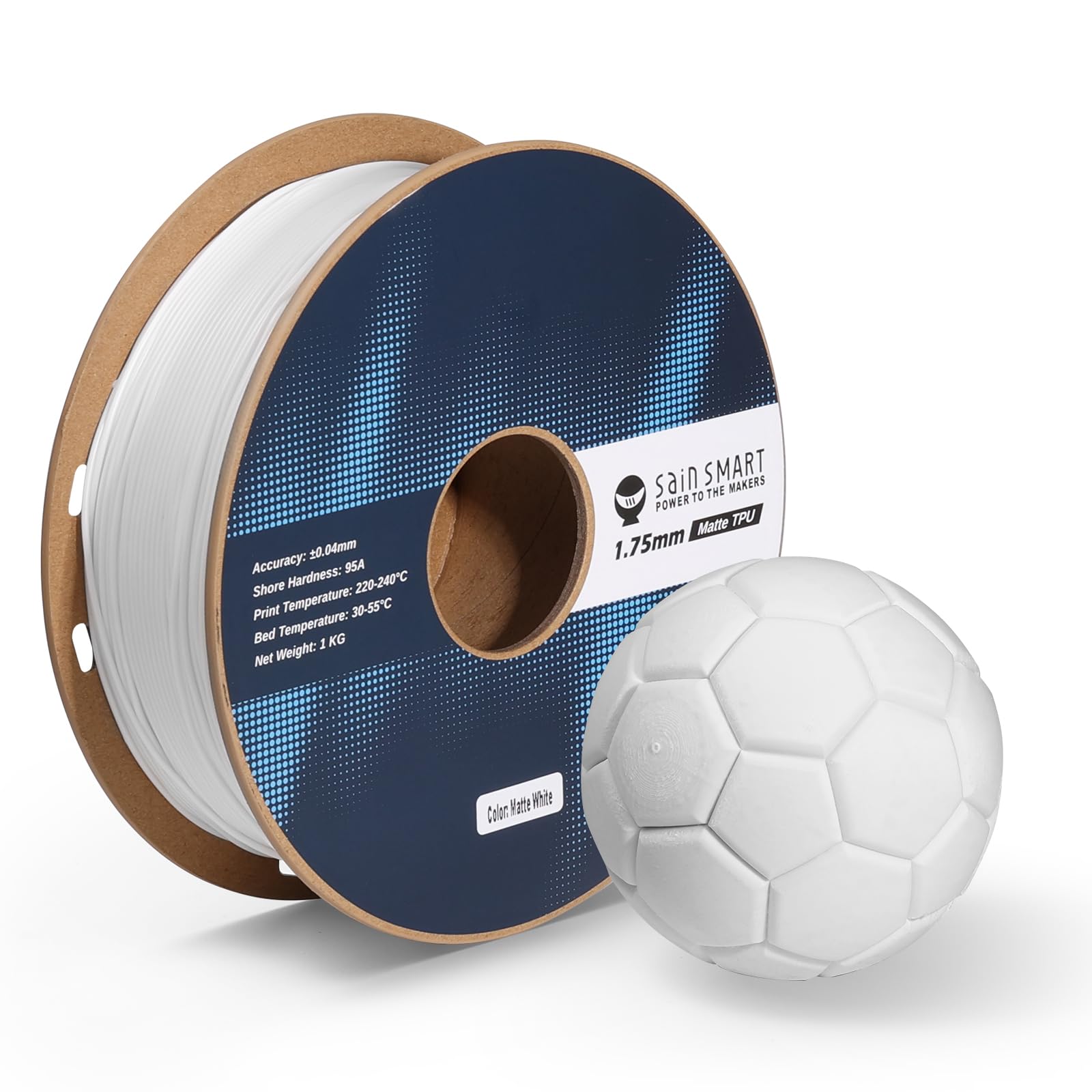
Functional prototypes needing durability.
SainSmart TPU 95A Flexible Filament 1.75mm 1KG Superior abrasion resistance and color options, vacuum-sealed for freshness.
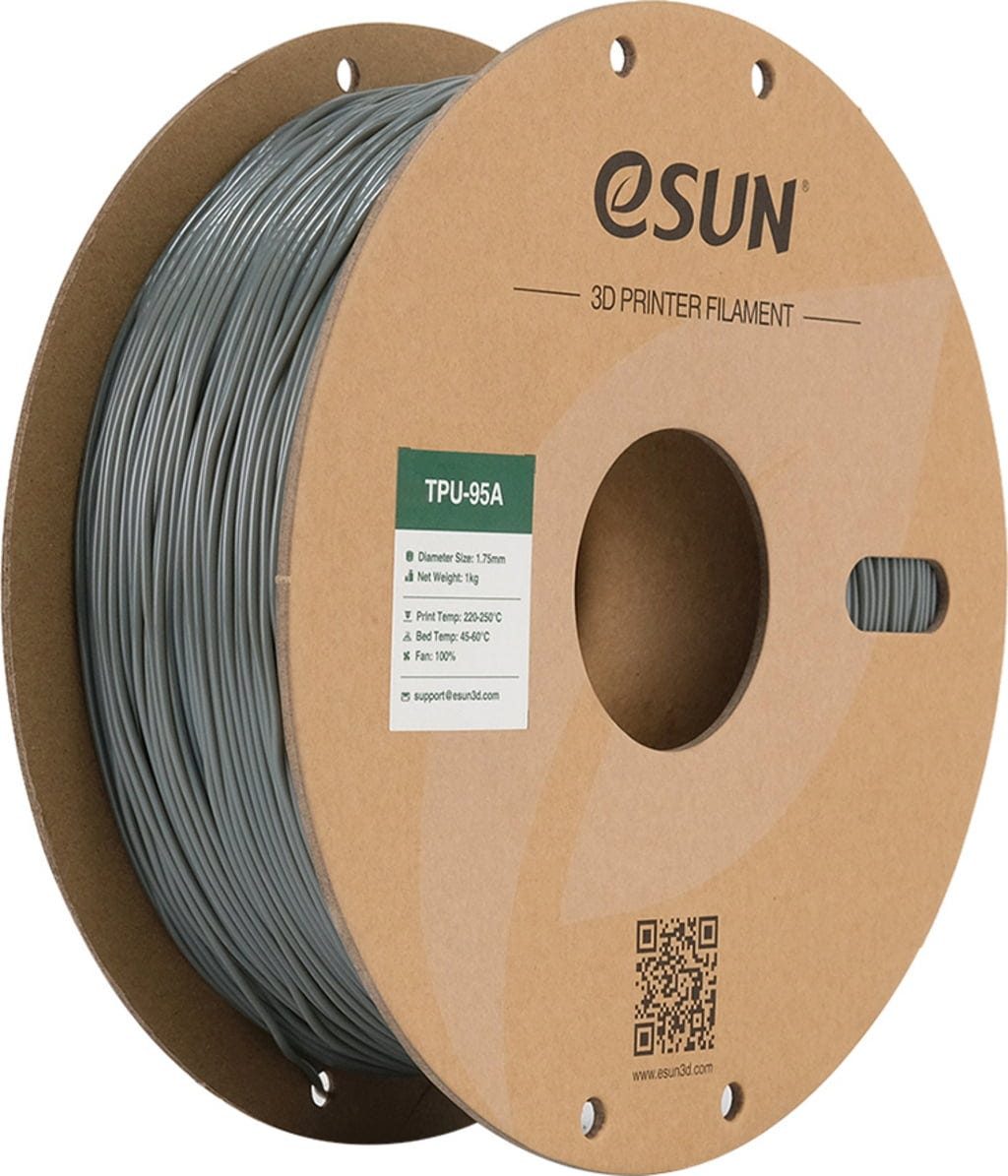
Seals, gaskets, everyday flex projects.
eSUN eTPU-95 Flexible Filament 1.75mm 1KG Balanced flex and strength, easy to print even on Bowden.

Precision parts where quality trumps cost.
Polymaker PolyFlex TPU95 1.75mm 1KG Premium consistency, minimal shrinkage for pro results.