Cutting metal with an angle grinder is a common task for welders, fabricators, and DIYers, but choosing the wrong grinder can lead to slow cuts, burned-out motors, or even dangerous kickback. Whether you're cutting rebar, sheet metal, or thick steel plates, the right angle grinder makes the job faster, cleaner, and safer. This guide walks you through the critical factors: disc size, motor power, speed, safety features, and disc type. By the end, you'll know exactly what to look for when selecting a grinder for metal cutting.
▸What You'll Need
- •Angle grinder (corded or cordless)
- •Cutting discs for metal (e.g., thin cut-off wheels, abrasive or diamond)
- •Safety gear: safety glasses, gloves, hearing protection, face shield
- •Workpiece (metal to be cut)
- •Clamps or vise to secure workpiece
- •Optional: dust extraction or respirator for fine metal particles
Estimated Time: 30 minutes to review this guide; 1–2 hours to research and purchase
Difficulty: intermediate
▸Step-by-Step Instructions
Step 1: Determine the Disc Size You Need
Angle grinders come in several disc sizes: 4-1/2 inch (115 mm) is the most common for general metal cutting, offering a good balance of portability and cut depth (about 1-3/4 inch deep). 5-inch (125 mm) grinders are slightly more powerful and cut deeper (about 2 inches). 6-inch (150 mm) and 7-inch (180 mm) are for heavy-duty cutting of thick plate or pipe (up to 2-1/2 inch deep). For most home and light professional metal cutting, a 4-1/2 inch grinder is sufficient. If you frequently cut thicker materials, consider a 5 or 6-inch model.
💡 Tips:
- •Check the disc size stamped on the grinder's guard; never use a disc larger than the guard rating.
- •Larger discs require more torque; match disc size to motor power.
⚠️ Warnings:
- •Using a disc that is too large for the guard can cause it to shatter at high speeds.
Step 2: Match Motor Power to Your Cutting Needs
Motor power is measured in amps for corded grinders (usually 6–15 amps) and volts/Ah for cordless (18–36V). For occasional light metal cutting, a 7–8 amp corded grinder works well. For frequent or heavy cutting (e.g., thick steel, rebar), choose 10–13 amps. Cordless grinders like 18V brushless models can match 10-amp corded power for many cuts, but battery life is limited. Look for a grinder with a rated power output; higher amps mean more torque to prevent stalling under load.
💡 Tips:
- •For cordless, choose 20V or higher and at least 5.0 Ah batteries for sustained cutting.
- •Brushless motors are more efficient and last longer than brushed ones.
⚠️ Warnings:
- •Don't buy an underpowered grinder for heavy work; it will bog down and overheat.
Step 3: Check the No-Load Speed (RPM)
Angle grinders operate at high RPMs, typically 8,000–12,000 RPM. For metal cutting with thin cut-off wheels, a speed of 10,000–11,000 RPM is ideal. Slower speeds (8,000 RPM) are better for thicker abrasive wheels to reduce heat buildup. Many grinders have a single speed, but some offer variable speed (adjustable RPM) which is useful for different materials. For metal cutting, a fixed speed around 10,000 RPM is fine.
💡 Tips:
- •Variable speed grinders allow you to slow down for stainless steel to avoid work hardening.
- •Check the disc manufacturer's recommended max RPM and never exceed it.
⚠️ Warnings:
- •Using a disc rated for lower RPM on a higher-speed grinder can cause disc failure.
Step 4: Evaluate Safety Features: Guard, Brake, and Anti-Kickback
A sturdy adjustable guard is essential to deflect sparks and contain disc fragments. Look for a tool-free guard adjustment or a simple screw lock. An electric brake stops the disc quickly after releasing the trigger—this is a critical safety feature that reduces run-down time from 10 seconds to under 2 seconds. Anti-kickback protection (electronic clutch or current limiting) cuts power if the disc binds, preventing the grinder from jerking violently. A paddle switch (constant pressure) is safer than a slide switch for cutting because it forces you to maintain grip.
💡 Tips:
- •Always position the guard between your face/body and the disc.
- •Test the brake before buying; it should stop the disc within 2 seconds.
⚠️ Warnings:
- •Never remove the guard for better access—it's your primary protection.
Step 5: Choose Cutting Discs for Metal
The disc type matters as much as the grinder. For cutting metal, use thin cut-off wheels (Type 1 or 41), 1/16 to 1/8 inch thick. Abrasive discs are affordable but wear quickly; resin-bonded discs are common. Diamond cutting discs are more expensive but last much longer and cut cleaner with less heat. For ferrous metals, use discs rated for steel. For stainless, use discs with aluminum oxide or silicon carbide to avoid contamination. Ensure the disc's hole size matches the grinder's spindle (typically 7/8 inch for 4.5-inch grinders).
💡 Tips:
- •Thinner discs (0.045 inch) cut faster with less material loss but break more easily.
- •Use a disc specifically labeled for metal cutting, not masonry or tile.
⚠️ Warnings:
- •Never use a cutting disc for grinding—they are weaker and can shatter.
Step 6: Consider Ergonomics and Build Quality
A grinder that's comfortable to hold reduces fatigue during long cuts. Look for a slim body, rubberized grip, and a side handle that can be mounted on either side (or top). Weight matters: a 4.5-inch corded grinder weighs about 4–5 lbs; cordless models add battery weight (1–2 lbs). A tool with a vibration-dampening system reduces hand strain. Metal gear housings dissipate heat better than plastic, prolonging motor life. Check ventilation slots to ensure they are not blocked by your hand.
💡 Tips:
- •Test the grip in store; your hand should wrap comfortably around the body.
- •Look for a grinder with two-finger trigger or paddle switch for better control.
⚠️ Warnings:
- •Avoid grinders with poorly placed on/off buttons that can be accidentally activated.
Step 7: Decide Between Corded and Cordless
Corded grinders offer unlimited run time and consistent power, ideal for heavy or continuous cutting. They are heavier due to the motor but often more powerful for the price. Cordless grinders provide portability for remote jobs or tight spaces without a power cord. Modern brushless 20V/36V grinders can match 10-amp corded performance for short bursts. However, expect 15–30 minutes of continuous cutting per 5.0 Ah battery. If you cut metal for more than 30 minutes at a time, corded is better.
💡 Tips:
- •For cordless, buy an extra battery and fast charger to minimize downtime.
- •Corded grinders often have lower upfront cost and higher torque.
⚠️ Warnings:
- •Cheap cordless grinders may lack safety features like brakes; prioritize safety.
Step 8: Set Your Budget and Compare Brands
Angle grinder prices range from $30 (basic) to $200+ (pro-grade). For occasional metal cutting, a mid-range grinder ($50–$100) like DeWalt, Makita, or Milwaukee offers good value. For daily professional use, invest $120–$200 in a model with a brake, variable speed, and robust motor. Avoid the cheapest models—they often have weak motors, no brakes, and flimsy guards. Read customer reviews focusing on metal cutting performance, not just grinding.
💡 Tips:
- •Consider buying a kit from a reputable brand that includes two batteries and a charger.
- •Check warranty; most pro brands offer 1–3 years limited warranty.
⚠️ Warnings:
- •Beware of counterfeit grinders on marketplace sites; buy from authorized sellers.
▸Pro Tips
- •Always secure your workpiece with a vise or clamps; freehand cutting is dangerous and less accurate.
- •Use a straightedge as a guide for long, straight cuts in sheet metal.
- •Let the disc do the work; apply light pressure—forcing the tool causes binding and overheating.
- •For cutting curves, use a thin disc and make relief cuts before the final cut.
- •After each cut, let the grinder run free for a few seconds to cool the disc and motor.
- •Apply cutting wax or lubricant (like WD-40) to reduce friction and extend disc life.
- •Check disc condition before each use; discard discs with cracks or excessive wear.
- •Wear a face shield over safety glasses; sparks can bounce off the guard into your face.
▸Common Mistakes to Avoid
- •Using a grinding disc for cutting—grinding discs are thicker and not designed for cutting, leading to poor performance and breakage.
- •Forcing the grinder through the cut—excessive pressure can bind the disc, causing kickback and motor stall.
- •Neglecting to check the disc's maximum RPM vs. grinder speed—mismatch can cause disc to explode.
- •Using the wrong disc size—a disc too large for the guard can shatter, a disc too small wastes material.
- •Ignoring the guard orientation—always keep the guard between the disc and your body; improper positioning increases injury risk.
▸Troubleshooting
Problem: Grinder bogs down or stalls when cutting
Solution: Reduce pressure; ensure you are using a disc appropriate for the material (e.g., thin cut-off wheel). Check that the disc is not dull or glazed. Consider a grinder with higher amp rating or variable speed.
Problem: Excessive sparks, disc wears out quickly
Solution: You may be using too much pressure or the wrong disc type. Use a disc designed for metal (e.g., aluminum oxide for steel). For stainless steel, use a disc with silicon carbide. Let the disc cut at its own speed.
Problem: Grinder vibrates excessively
Solution: Stop immediately—the disc may be out of balance, damaged, or not mounted correctly. Check the disc for cracks or uneven wear. Re-tighten the flange nut. If vibration persists, the grinder arbor may be bent; replace the tool.
Problem: Disc won't stop rotating after releasing trigger
Solution: This is normal for grinders without a brake. Upgrade to a model with an electric brake for safety. If your grinder has a brake and it's not working, clean the dust from the brake mechanism or have it serviced.
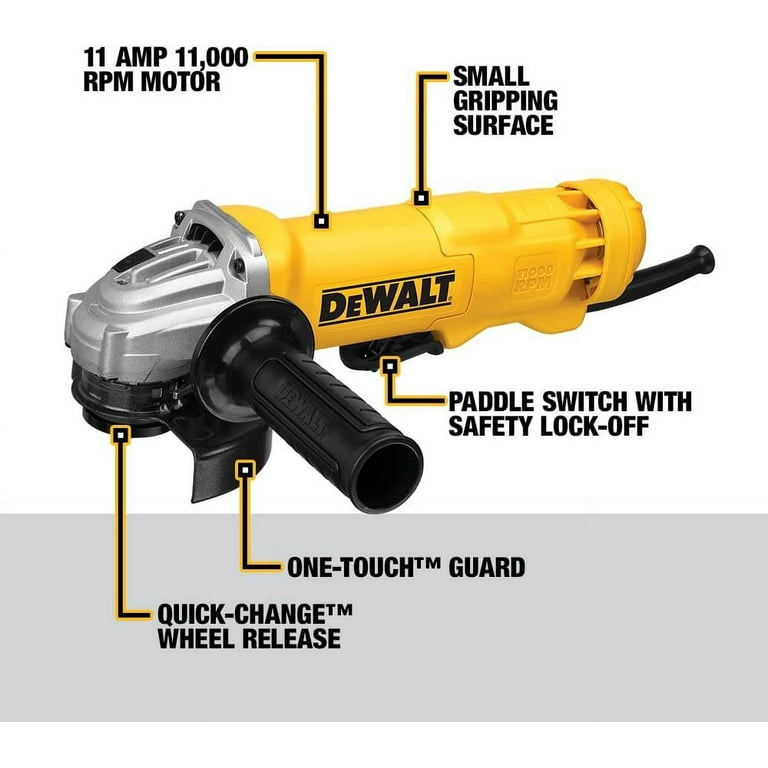
DEWALT DWE402 4-1/2-Inch Paddle Switch Angle Grinder
Reliable 11-amp motor, electric brake, and low-vibration design for safe, efficient metal cutting.
Best for: Best for intermediate users who need a durable corded grinder for regular metal cutting projects.
Price Range: $80–$100
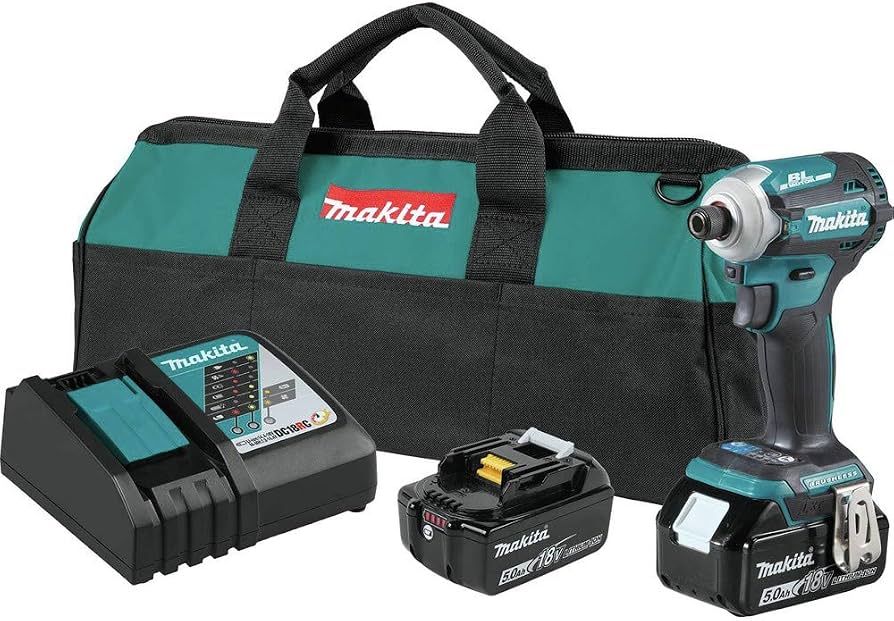
Makita XAG05T 18V LXT Brushless Cordless Angle Grinder
Brushless motor provides power comparable to corded, with automatic speed control and anti-restart protection.
Best for: Ideal for jobsite portability and metal cutting where cords are inconvenient.
Price Range: $130–$160 (tool only; battery not included)
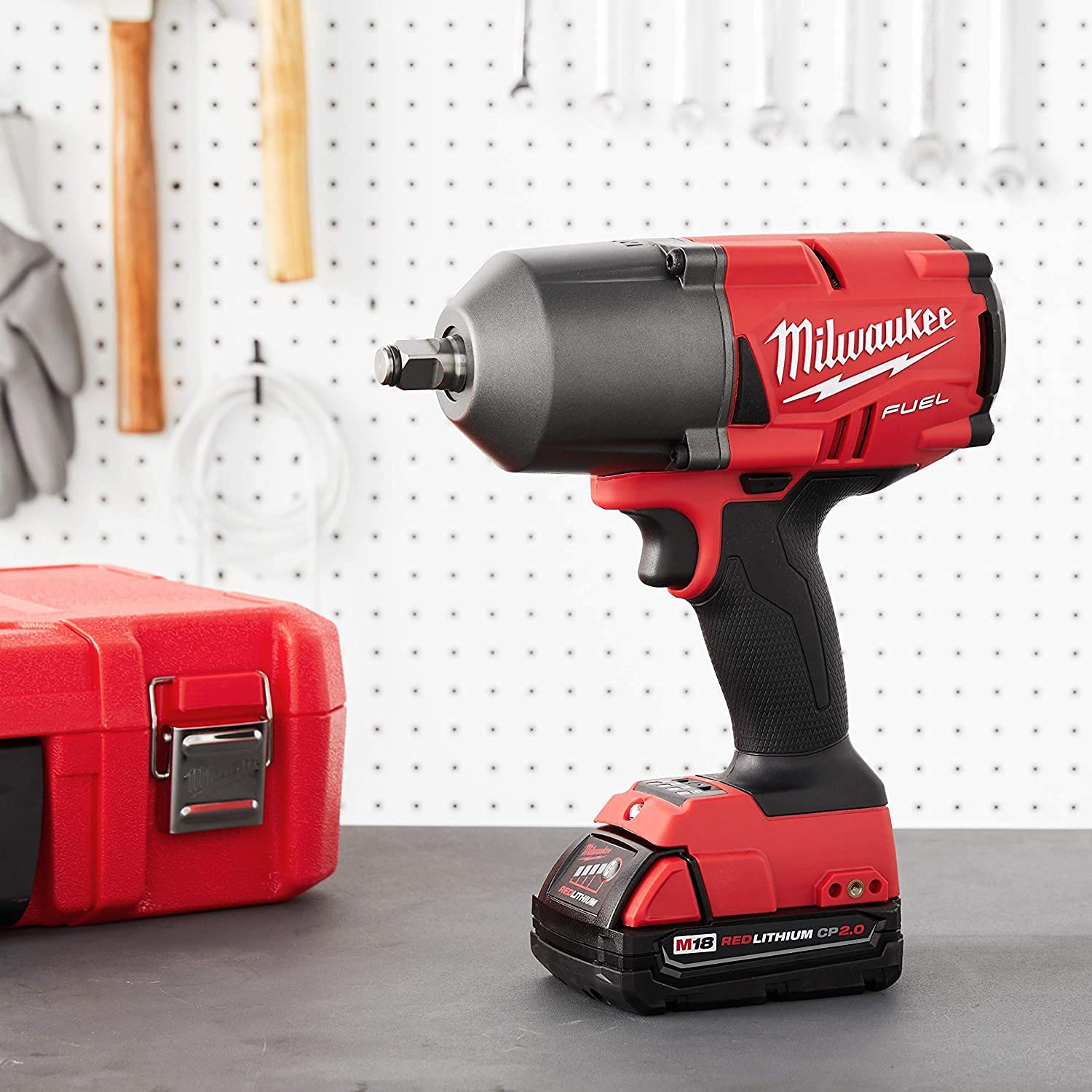
Milwaukee 2880-20 M18 FUEL 4-1/2/5-Inch Grinder
Top-of-the-line with PowerState brushless motor, 11,000 RPM, and REDLINK intelligence for overload protection.
Best for: Professional-grade for heavy daily metal cutting; excellent brake and ergonomics.
Price Range: $150–$180 (tool only)
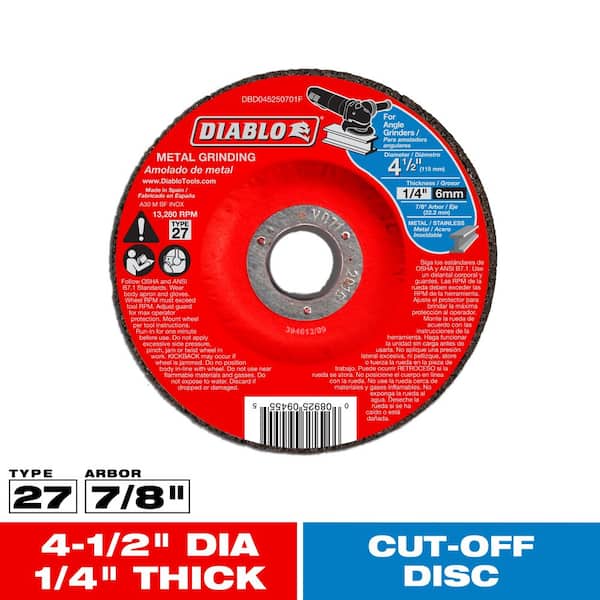
Diablo 4.5-Inch x 0.045-Inch Cutting Discs
Premium thin kerf metal cutting wheels that last longer and cut faster than standard discs.
Best for: Best disc choice for clean, burr-free cuts on steel and stainless steel.
Price Range: $15–$25 for a 10-pack
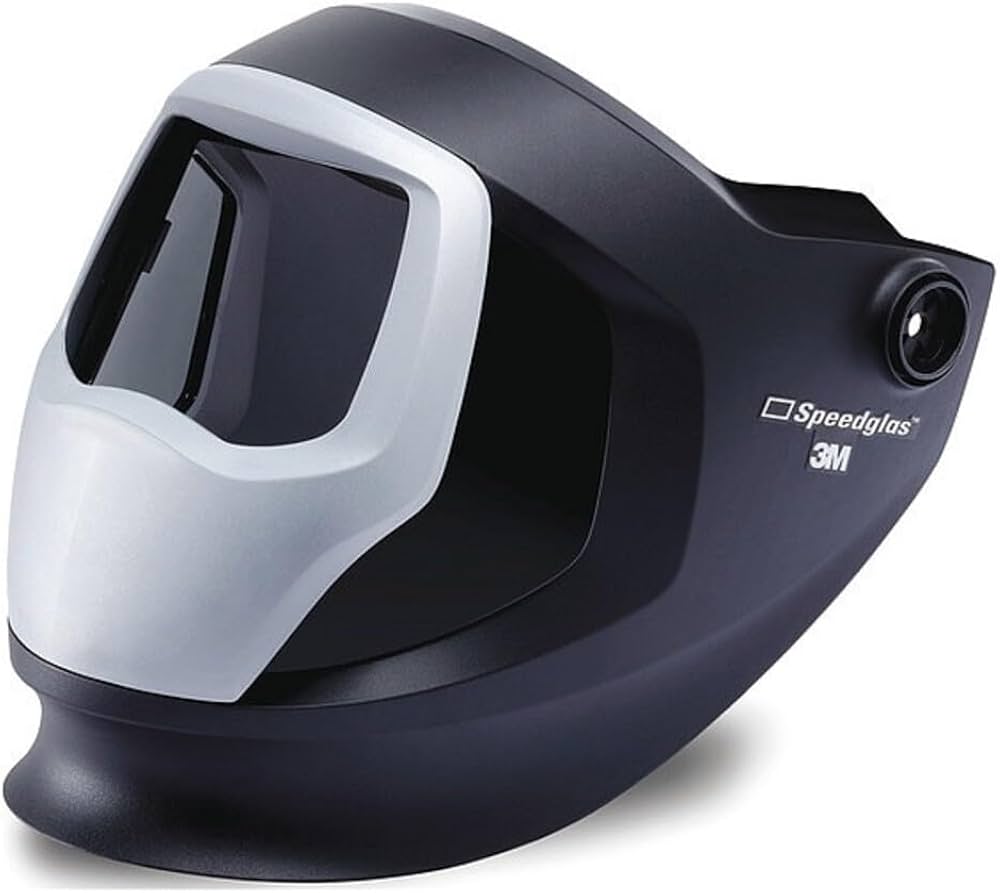
3M 82525 Speedglas Welding Face Shield
High-impact polycarbonate shield with UV protection, essential when cutting metal with a grinder.
Best for: Protects face and eyes from sparks and debris during metal cutting operations.
Price Range: $30–$60