If you sleep through standard alarms, you know the frustration of oversleeping and the scramble to get out the door. Heavy sleepers need more than a gentle beep—they need an alarm that can cut through deep sleep. This guide will teach you how to evaluate alarm clock features like volume, vibration, light, and smart capabilities so you can pick one that finally gets you up. We'll walk through each factor step by step, share real-world tips from verified customer feedback, and recommend products that have proven effective for heavy sleepers.
▸What You'll Need
- •Basic understanding of alarm clock types (digital, analog, smart, specialty)
- •Optional: decibel meter app on your smartphone to check ambient noise
- •List of your personal sleep habits (e.g., typical wake-up time, whether you share a bed)
Estimated Time: 15-20 minutes (reading and evaluating your needs)
Difficulty: beginner
▸Step-by-Step Instructions
Step 1: Assess Your Sleep Habits and Environment
Before shopping, identify what makes you a heavy sleeper. Do you sleep through loud noises? Are you sensitive to light? Do you share a bed with a partner who wakes easily? Note your bedroom's ambient noise level (use a smartphone app) and whether you prefer a gradual or sudden wake-up. This will guide every other decision. Success: a short list of must-have features tailored to your sleep profile.
💡 Tips:
- •Ask a partner or roommate how hard it is to wake you.
- •Track your sleep cycles with a wearable to see when you're in deep sleep.
⚠️ Warnings:
- •Don't assume you need the loudest alarm just because you're a heavy sleeper; vibration or light might work better.
Step 2: Understand Alarm Volume and Decibels
Decibels (dB) measure sound intensity. Standard alarms produce 70-80 dB, but heavy sleepers often need 90-110 dB. Look for clocks with adjustable volume and a maximum of at least 90 dB. Some specialty alarms exceed 120 dB, which is as loud as a rock concert. Check specifications for decibel ratings—many customer reviews highlight actual loudness. Success: you can compare alarms based on dB ratings instead of vague 'extra loud' labels.
💡 Tips:
- •A decibel meter app can help you gauge how loud your current alarm is.
- •Note that noise can be distorted at high volumes; read reviews about sound clarity.
⚠️ Warnings:
- •Alarms above 120 dB can cause hearing damage over time; use sparingly and keep the clock at a distance.
Step 3: Consider Vibration Alarms (Bed Shakers)
Vibration alarm clocks use a puck-shaped shaker placed under your pillow or mattress. These are ideal for heavy sleepers who are insensitive to sound, or for those who share a bed with a light sleeper. The vibrations are strong enough to rouse you without noise. Many models combine loud sound and vibration for a dual approach. Success: you understand whether a shaker is right for you based on bed type and sensitivity to touch.
💡 Tips:
- •Place the shaker between the mattress and box spring for a gentler wake-up.
- •Multiple shakers can be connected for larger beds.
⚠️ Warnings:
- •Vibration alarms may not work on memory foam or very thick mattresses.
- •Some partners find the vibration annoying—test placement first.
Step 4: Evaluate Light-Based (Sunrise) Alarms
Sunrise alarm clocks simulate a natural sunrise by gradually increasing light intensity over 20-40 minutes before your set time. They often include a melodic alarm at the end. Heavy sleepers who are sensitive to light or prefer a gentle wake-up may benefit. However, if you sleep in a very dark room or wear an eye mask, light may not be effective. Look for models with adjustable brightness and color temperature. Success: you know whether a light alarm fits your sleep environment and sensitivity.
💡 Tips:
- •Place the alarm facing you, not behind a headboard.
- •Combine a sunrise alarm with a secondary sound alarm as a backup.
⚠️ Warnings:
- •If your bedroom gets natural morning light, a sunrise alarm may be redundant.
- •These are generally not loud enough as a standalone alarm for very heavy sleepers.
Step 5: Look for Smart Features and Customization
Smart alarms offer capabilities like gradual volume ramping, multiple alarms, smartphone integration, and even wake-up apps that require solving puzzles or scanning barcodes. Some connect to smart home systems to turn on lights. For heavy sleepers, a gradual volume increase can prevent startling, while puzzle alarms ensure you stay awake. Consider whether you want Wi-Fi, Bluetooth, or a simple battery backup. Success: you have a list of smart features that match your wake-up style.
💡 Tips:
- •If you tend to hit snooze, look for alarms with a 'skip snooze' or 'lock' feature.
- •App-based alarms are powerful but require your phone to be charged and near you.
⚠️ Warnings:
- •Smart alarms can be complicated to set up; read reviews for ease of use.
- •Battery backup is crucial for heavy sleepers—power outages can render smart clocks useless without backup.
Step 6: Check Power Backup and Reliability
A power outage at night can silence a standard alarm clock. Heavy sleepers should prioritize clocks with battery backup (usually 9V or AA batteries) that keep the alarm working during a blackout. Some clocks also have a backup battery for the time but not the alarm—verify critical features. Also consider travel alarms that run on batteries entirely. Success: you can identify which power features are essential for your home's electrical reliability.
💡 Tips:
- •Replace backup batteries yearly, and test the backup function after setup.
- •Battery-only alarms (e.g., travel clocks) are great for heavy sleepers who move around frequently.
⚠️ Warnings:
- •Not all 'battery backup' models continue to sound the alarm on battery—read the manual.
- •Avoid models that lose settings when power is restored.
Step 7: Read Verified Customer Reviews
Product specifications can be misleading. Look for reviews from self-identified heavy sleepers who mention specific experiences: 'This alarm finally wakes me up,' 'The vibration shakes my entire bed,' 'Couldn't hear it even on max volume.' Check both positive and negative feedback for patterns. Focus on durability, loudness as perceived, and ease of setup. Success: you have a shortlist of 2-3 models with strong consensus among heavy sleepers.
💡 Tips:
- •Filter reviews by 'Verified Purchase' and 'Most Recent'.
- •Search within reviews for keywords like 'heavy sleeper' or 'loud'.
- •Look at the number of ratings: a model with 10,000 reviews is more reliable than one with 50.
⚠️ Warnings:
- •Beware of overly positive reviews that sound generic or mention free products.
- •Check the date—older reviews may reference an older version of the product.
Step 8: Compare and Choose Your Alarm Clock
Now compile your must-have features (e.g., >100 dB, vibration shaker, battery backup, adjustable ramp) and compare your shortlist models side by side. Use online comparison tools or make a simple chart. Consider price versus features—some budget alarms are surprisingly effective, while premium models offer elegant designs and extra functionality. If possible, test the alarm in a store (if demo units are available) or buy from a retailer with a good return policy. Success: you purchase an alarm clock that matches your needs and budget.
💡 Tips:
- •Set a maximum price and stick to it; many effective alarms are under $50.
- •Check if the alarm comes with a satisfaction guarantee or warranty.
⚠️ Warnings:
- •Avoid impulse buys based on flashy features like Bluetooth speakers if your core need is loudness.
- •Remember that no alarm is foolproof—always have a backup plan (e.g., a second alarm).
▸Pro Tips
- •Place your alarm across the room so you have to get out of bed to turn it off.
- •Use two alarms – one loud, one vibrating – as a dual failsafe.
- •Set your alarm for the same time every day to regulate your sleep cycle.
- •If you share a bed, a vibrating shaker under your pillow is often less disruptive than a loud siren.
- •Combine a sunrise alarm with a secondary sound alarm for a gradual yet reliable wake-up.
- •Replace backup batteries twice a year (e.g., when daylight saving time changes).
- •Test your new alarm immediately: set it for a few minutes from now and try to sleep – see if it wakes you.
▸Common Mistakes to Avoid
- •Choosing an alarm based only on looks or brand without checking decibel ratings.
- •Ignoring power backup – a power outage can render your fancy smart alarm useless.
- •Buying a sunrise alarm when you wear an eye mask or sleep in a bright room.
- •Assuming louder is always better – extremely loud alarms can cause hearing damage and be disruptive to neighbors.
- •Not reading reviews from other heavy sleepers – you might miss crucial feedback about real-world performance.
▸Troubleshooting
Problem: The alarm is not loud enough even on max volume.
Solution: Check if the volume is limited by a separate setting (some clocks have a volume limit for safety). Consider adding a secondary device like a vibrating shaker or a smart plug that triggers a lamp. Alternatively, replace the clock with a model that has higher decibel ratings.
Problem: The vibrating shaker doesn't vibrate strongly enough.
Solution: Ensure the shaker is placed between the mattress and box spring directly under your pillow area. If your mattress is too thick (especially memory foam), try placing it under the bed frame or using a dual-shaker system. Some models allow you to plug in two shakers for more intensity.
Problem: The clock loses its settings during a power outage.
Solution: Verify that your backup battery is fresh and properly inserted. Some clocks have a capacitor that only keeps time, not alarm settings – in that case, replace the clock with one that saves settings in non-volatile memory (often advertised as 'memory backup').
Problem: The sunrise alarm doesn't wake me up.
Solution: Increase the brightness to maximum and ensure the clock faces you directly without obstructions. Combine it with an audio alarm (set to loud) that activates a few minutes after the sunrise cycle begins. If you're a very heavy sleeper, a sunrise alarm alone may not be sufficient.
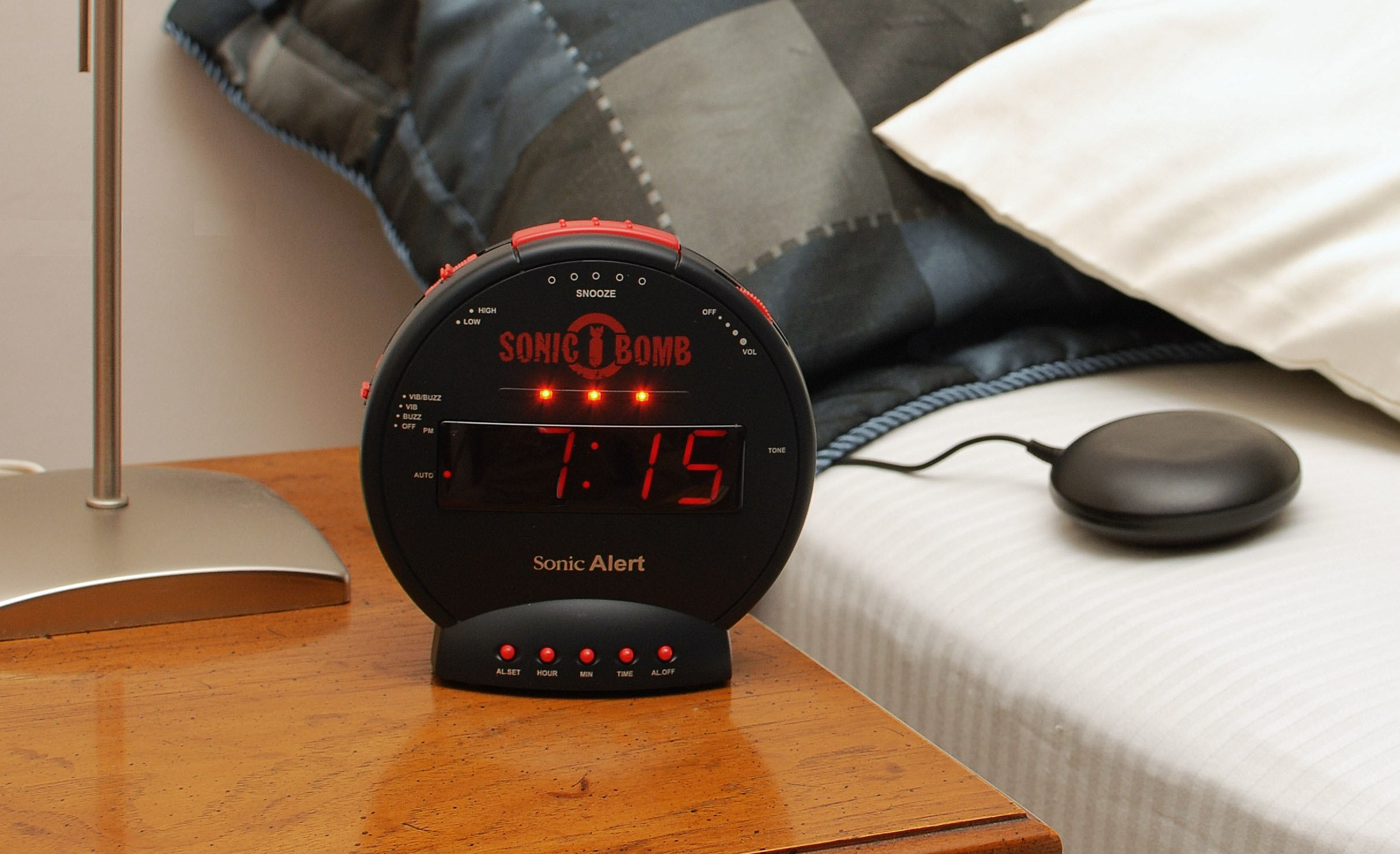
Sonic Boom Alarm Clock
One of the most popular choices among heavy sleepers, it features a 113 dB loud alarm, a powerful vibrating shaker, and a backup battery. Verified customer feedback consistently praises its ability to wake deep sleepers.
Best for: Ideal for those who need both extreme volume and vibration; great for deaf/hearing-impaired users too.
Price Range: $30-$40
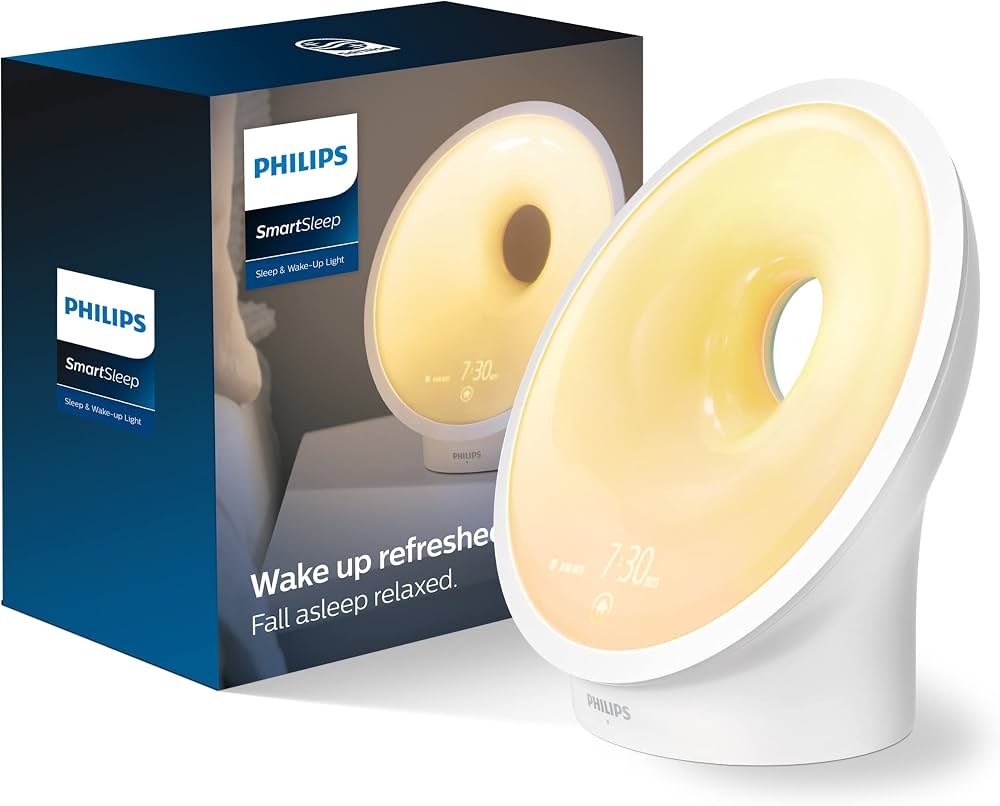
Philips SmartSleep Wake-Up Light (HF3670)
A high-end sunrise alarm with gradual light and optional nature sounds. It has a sunset simulation for falling asleep. While not the loudest, it offers a gentle and natural wake-up experience.
Best for: Best for heavy sleepers who prefer a gradual, less jarring wake-up and are sensitive to light (but may need a backup sound alarm).
Price Range: $150-$180
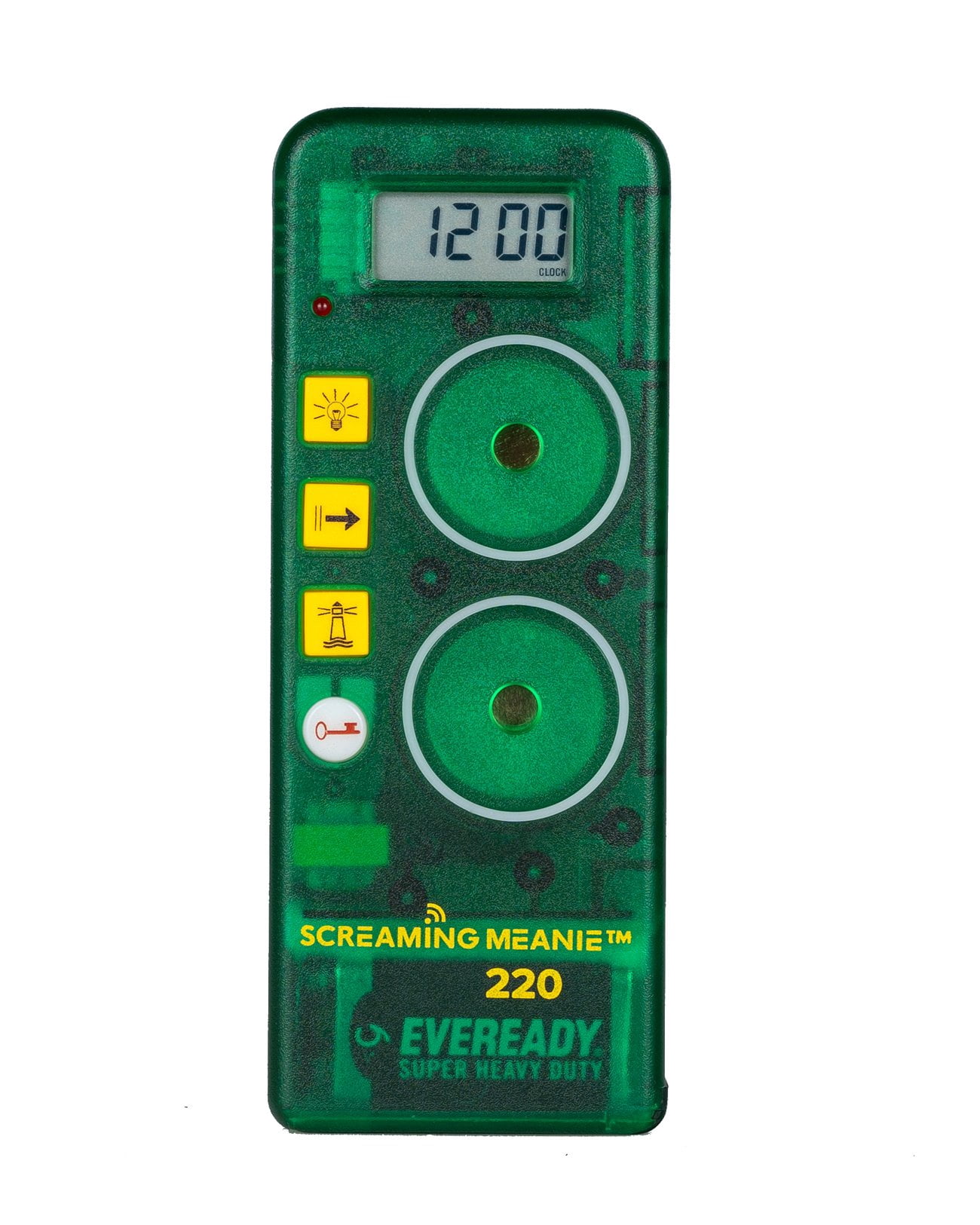
Screaming Meanie Alarm Clock
A small, ultra-loud travel alarm that can reach up to 120 dB. It has no vibration but is incredibly loud for its size. Customer reviews highlight its effectiveness in hotel rooms and for deep sleepers.
Best for: Perfect for travelers who need a portable, no-frills loud alarm that fits in a bag.
Price Range: $15-$25
Rugged Roadkill Alarm Clock
A rugged, extra-loud alarm with a vibrating shaker. It's built to be durable and has a loud speaker that many heavy sleepers swear by. It also includes a backup battery.
Best for: Suitable for those who want a tough, no-nonsense alarm for home or dorm use – one that can be thrown across the room (but maybe don't).
Price Range: $30-$40
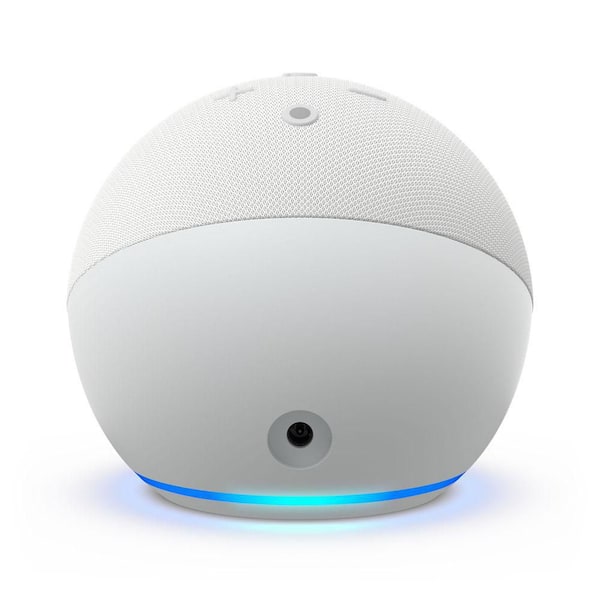
Amazon Echo Dot with Clock (5th Gen)
A smart speaker that can be used as an alarm with customizable sounds, volume settings, and integration with smart home devices. It may not be as loud as dedicated alarms but offers flexibility and routines.
Best for: Great for tech-savvy heavy sleepers who want to combine alarms with smart lights, music, or morning briefings.
Price Range: $40-$60