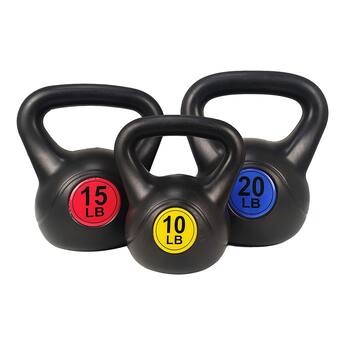
Standing confused in front of a rack of kettlebells? You're not alone. With weights ranging from a featherlight 4 kg to a brutal 48 kg, choosing the right kettlebell size can feel like a high-stakes guessing game. Pick too heavy and you risk injury; go too light and you won't see results. The good news? There's a simple formula to help you zero in on the perfect weight in just a few minutes.
In this guide, you'll learn how to assess your fitness level, identify your training goals, and use a simple swing test to determine your ideal kettlebell weight. We'll also cover how gender and experience factor into the equation, common mistakes to avoid, and whether an adjustable kettlebell might be the smartest investment for your home gym.
By the end, you'll be able to confidently walk into any gym or hit 'add to cart' online knowing exactly which kettlebell will help you push your limits safely and effectively.
▸What You'll Need
- •Access to a few kettlebells of different weights (or a store with a test area)
- •A timer or stopwatch (optional, for the swing test)
- •Basic knowledge of kettlebell exercises, especially the two-hand swing
- •A yoga mat or soft floor (to protect your floor during floor exercises)
- •Comfortable workout clothes and shoes
Estimated Time: About 10 minutes to read and self-assess. Add 10–15 minutes if you test weights in person.
Difficulty: beginner
▸Step-by-Step Instructions
Step 1: Assess Your Current Fitness Level
Before you even touch a kettlebell, take an honest look at your overall fitness. Are you brand new to strength training, or do you already have experience with weights? Do you have any injuries or limitations? Your answer will immediately narrow your starting range. For complete beginners with little to no strength training experience, experts typically recommend starting with a light weight to focus on form. That means a 4-6 kg (about 9-13 lb) for women and 8-12 kg (18-26 lb) for men. If you're already comfortable doing squats, deadlifts, or push-ups, you can move up the scale.
This initial self-assessment is the foundation for everything else, so be brutally honest with yourself—an inflated ego will only get you hurt. Remember that kettlebell movements require a mix of coordination, mobility, and strength, so being strong in one area doesn't automatically mean you're ready for a heavy bell.
💡 Tips:
- •Don't worry about the number on the bell; worry about your form.
- •If you're recovering from any joint issues, consult a trainer or physical therapist first.
⚠️ Warnings:
- •Don't start too heavy just because you lift dumbbells—kettlebell movements use different muscle stabilizers.
Step 2: Determine Your Primary Goal
Kettlebells can do a lot, but your goal changes how you choose weight. If you're training for muscle strength and power, you'll want a heavier bell that allows 5-8 reps per set. For fat loss or cardiovascular conditioning, a lighter weight that allows 10-15+ reps is more effective. If you're looking to improve muscular endurance, you can go even lighter and aim for 15-20 reps. So ask yourself: What do I want to achieve?
A heavier weight is not automatically better—it's what fits your goal. Write your goal down, and refer back to it when you're torn between two sizes. For general fitness, a mid-range weight that allows about 10 reps is a versatile compromise.
💡 Tips:
- •For general fitness, a mid-range weight that allows 10 reps is a versatile compromise.
- •For athletes wanting explosive power, prioritize weight over rep count.
⚠️ Warnings:
- •Don't pick a weight purely based on aesthetic reasons or because your friend uses it.
Step 3: Consider the Movements You'll Do
Not all kettlebell exercises require the same weight. The two-hand swing, which involves using your hips to power the bell up, uses the largest muscles in your body and lets you handle a much heavier bell than an overhead press or a Turkish get-up. For ballistic movements like swings, you can typically use a weight 2-4 kg heavier than for upper-body pushes and pulls. For example, if you can swing a 16 kg, but can only overhead press an 8 kg, that's totally normal.
As a beginner, you'll want to choose a weight that allows you to safely perform the most demanding exercises in your routine. If you plan to do a lot of overhead lifting, lean toward the lighter end of the range. If your workout plan includes Turkish get-ups, go lighter—they're notoriously tricky and require shoulder stability.
💡 Tips:
- •When in doubt, think about your weakest exercise.
- •If your plan includes Turkish get-ups, choose a weight close to half of what you can swing.
⚠️ Warnings:
- •Never choose a weight that forces you to arch your lower back during overhead lifts.
Step 4: Perform the 10-Rep Swing Test
This is the single most practical way to gauge the right weight. Stand with your feet shoulder-width apart, hold the kettlebell with both hands, and perform a basic two-hand swing. If you can complete 10 reps with perfect form—back flat, core tight, and hips driving the movement—you've found a good training weight. If your form breaks down before 10 reps, the bell is too heavy. If you can do 20+ reps without feeling tired, it's too light.
This test is repeated by many coaches and is a quick, safe method to assess your starting point. If you don't yet know how to swing a kettlebell, practice with an empty hand or a light weight first, and watch a few tutorials. The swing is the fundamental kettlebell movement, so this test directly measures your ability to manage the bell in a dynamic, full-body exercise.
💡 Tips:
- •Film yourself to check your form or have a friend watch.
- •If you're doing the test in a store, make sure there's enough space to swing safely.
⚠️ Warnings:
- •Don't do the swing test on a hard, slippery surface. Use a mat or non-slip floor.
Step 5: Adjust by Gender and Experience (as a Starting Point, Not a Rule)
While individual strength matters more than gender, there are common starting points that instructors recommend. For the average sedentary or beginner woman, an 8 kg (18 lb) kettlebell is ideal for learning proper mechanics. For the average beginner man, a 12 or 16 kg (26-35 lb) is a good start. If you're already athletic or have a background in strength training, you might begin with 12 kg for women and 20 kg for men.
These are just starting points, not hard rules. Remember, the swing test is your ultimate guide. These numbers simply give you a ballpark so you don't waste time trying completely unsuitable sizes.
💡 Tips:
- •When testing, try the lighter weight first, then increase. It's easier to add weight than to rescue poor form.
- •Remember that a full 'cast iron' kettlebell feels heavier than a vinyl-coated one with the same weight because the density shifts.
⚠️ Warnings:
- •Don't use someone else's suggestion without applying the swing test—everyone's leverages are different.
Step 6: Decide Between a Fixed Weight and an Adjustable Kettlebell
If you're building a home gym, you have a bigger decision to make: buy a single fixed-weight bell, a pair, or an adjustable kettlebell like the Bowflex SelectTech 840. Adjustable kettlebells can range from 8 to 40 pounds or more, letting you change the weight as you get stronger. They save space and money in the long run, but they can feel bulkier and the weight distribution is different from a solid cast iron kettlebell.
If you're not sure which weight you'll settle on, an adjustable model is a great safety net for beginners. On the other hand, if you're in a commercial gym, you can just pick from the rack and avoid the cost.
💡 Tips:
- •Try a fixed-weight kettlebell first to feel the traditional shape, then decide if you want the convenience of adjustable.
- •If you go the adjustable route, check that the locking mechanism holds securely.
⚠️ Warnings:
- •Avoid cheap adjustable kettlebells with a complicated assembly that might loosen during swings.
Step 7: Plan for Progression (When to Go Heavier)
Once you've found the right starting weight, it won't stay your perfect weight forever. As your strength improves, you'll eventually outgrow it. A common rule is to move up once you can comfortably do 15-20 perfect swings with the current weight. That increase should be modest—usually about 4 kg (9 lb) for men and 2-4 kg for women.
If you expect to progress quickly, consider an adjustable kettlebell or a set of two (a light one for presses, a heavier one for swings). Progression will keep your workouts challenging, and having that plan in mind will stop you from getting stuck at a plateau.
💡 Tips:
- •Keep a training log to track sets and reps so you know when it's time to level up.
- •Don't rush—perfect form with a lighter weight is better than shaky form with a heavier one.
⚠️ Warnings:
- •Don't skip from 8 kg to 20 kg in one leap; intermediate steps like 12 kg exist for a reason.
▸Pro Tips
- •Start lighter than you think—you can always buy a heavier bell later. Your ego will not help you here.
- •When testing, always compare at least two weights side by side: a very achievable one and a challenging-but-doable one.
- •If you're between two sizes, pick the lighter one first. After a month of consistent training, you can reassess.
- •Ask a trainer to spot your form during your first few sessions; even one correction can save you from chronic back pain.
- •Remember that a kettlebell swings around your body, so it needs to clear your knees and torso. If the bell is so big you're hitting yourself, it's too heavy.
- •For overhead work, the weight should feel about half of what you can safely swing.
- •If your gym has different brands of kettlebells, note that competition-style kettlebells have the same dimensions regardless of weight, but cast iron ones vary; the shape matters for how hard it is to hold.
- •Consider buying a chalk bag or liquid chalk to get a better grip when you're testing heavier weights.
▸Common Mistakes to Avoid
- •Choosing a weight so heavy that your form breaks down. This is the #1 mistake. You'll start swinging with your lower back instead of your hips, leading to injury.
- •Buying only one kettlebell. A single weight can't serve all exercises. For example, an 8 kg might be great for presses but useless for swings where you need 16 kg.
- •Ignoring the difference between kilogram and pound markings. Kettlebells are often listed in kg but you may see lbs. A 35 lb is 16 kg, but a 25 lb is just 11.3 kg. That's a significant difference.
- •Assuming that heavier is always better for building muscle. Actually, hypertrophy requires moderate weight with high reps, and endurance work needs light weights with lots of reps.
- •Skipping the swing test. It's the fastest, most reliable indicator of the right starting load.
▸Troubleshooting
Problem: The kettlebell hurts your wrist during pressing moves.
Solution: Try a lighter weight and work on wrist flexibility. If pain persists, use a pad or wrist wraps.
Problem: The weight feels too easy after a few weeks.
Solution: That's the signal to progress. Go up 4 kg or increase reps, then reassess.
Problem: My lower back hurts after swings.
Solution: The weight is too heavy, your form is faulty, or both. Reduce weight and focus on hip hinge mechanics. Consider seeing a physical therapist if pain is severe.
Problem: I can't grip the bell during heavier lifts.
Solution: Use chalk to improve grip, and work on grip strength. Also, you may need a bell with a slightly thicker handle—competition kettlebells have a standard handle size.
Problem: I'm between two sizes and can't decide.
Solution: Go lighter for a gradual ramp. If using an adjustable, set it to the middle.
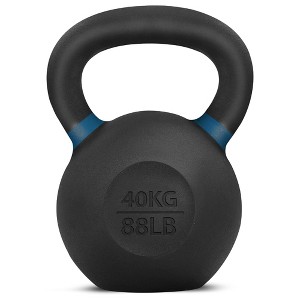
Yes4All Solid Cast Iron Kettlebell
A classic, affordable option in many weight increments. Good for beginners who want to feel the traditional kettlebell design.
Best for: Starting with a fixed weight; you can buy a pair in both 8kg and 16kg.
Price Range: $30-$100
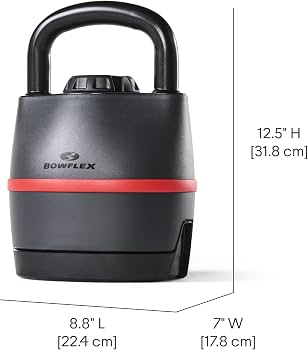
Bowflex SelectTech 840 Adjustable Kettlebell
This adjustable model ranges from 8 to 40 pounds, letting you dial in the exact weight as you progress without buying a rack full of bells. Perfect for home gyms with limited space.
Best for: When you're unsure which fixed weight will be your forever weight, or you want one bell to grow with you.
Price Range: $200-$300
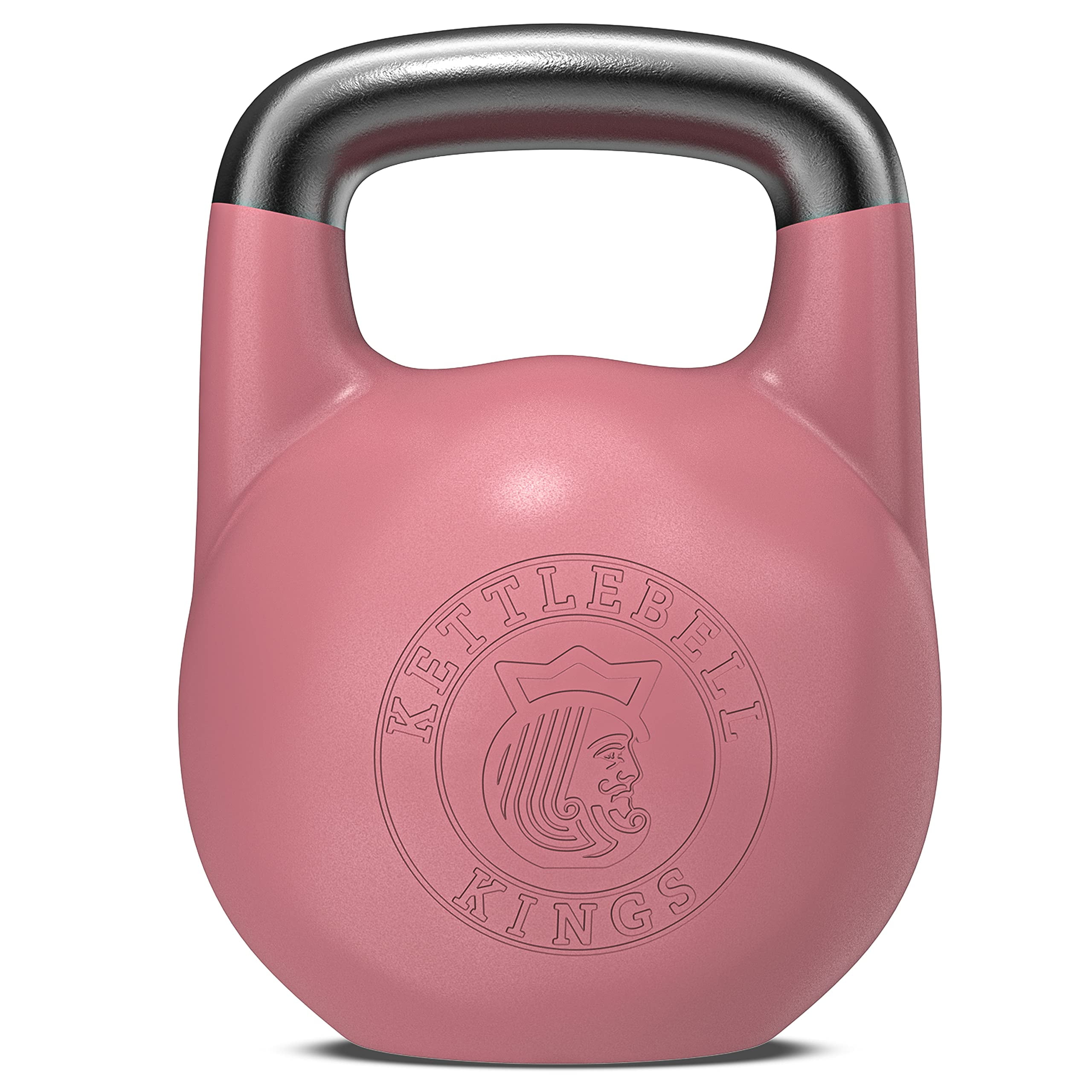
Kettlebell Kings Competition Kettlebell
Competition-style kettlebells have a uniform shape and handle width regardless of weight, which gives your grip a consistent feel. They're the gold standard for serious swingers.
Best for: If you're serious about kettlebell sport or want a premium training tool with a smooth finish.
Price Range: $100-$200
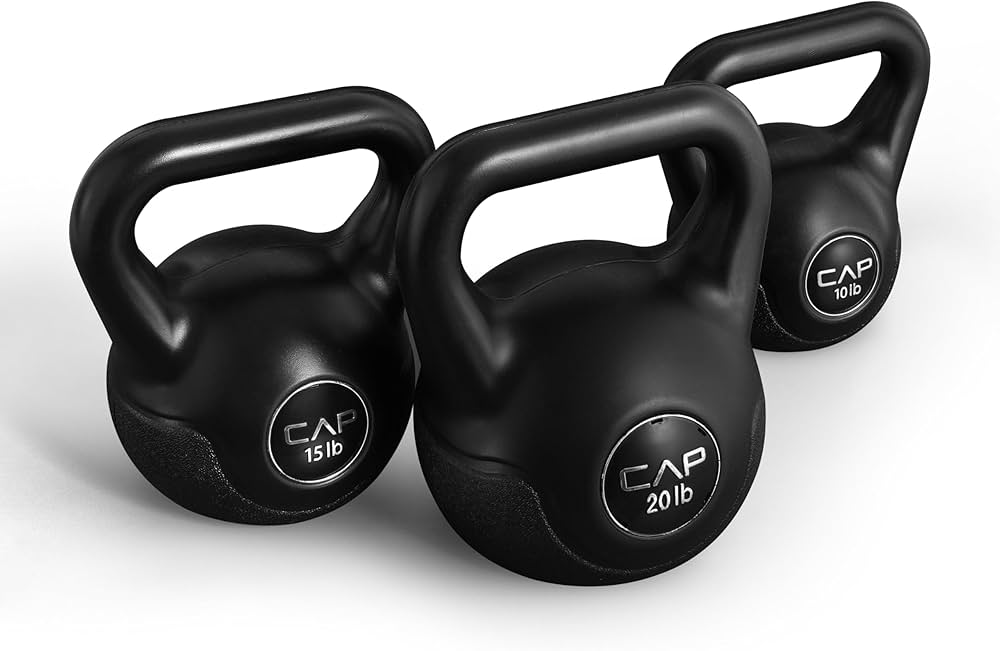
CAP Barbell Vinyl Coated Kettlebell
A vinyl-coated option is friendlier to your floors and less noisy. Ideal if you're just starting out and prefer a more comfortable touch.
Best for: Beginners who want a durable, low-maintenance bell for those first few months.
Price Range: $20-$70
BalanceFrom Rubber Hex Head Kettlebell
Another starter-friendly option with a wide flat base and thick powder coat. Great for those who want a low-priced, no-fuss kettlebell.
Best for: To get started without a big investment; can be used for most basic exercises.
Price Range: $15-$80