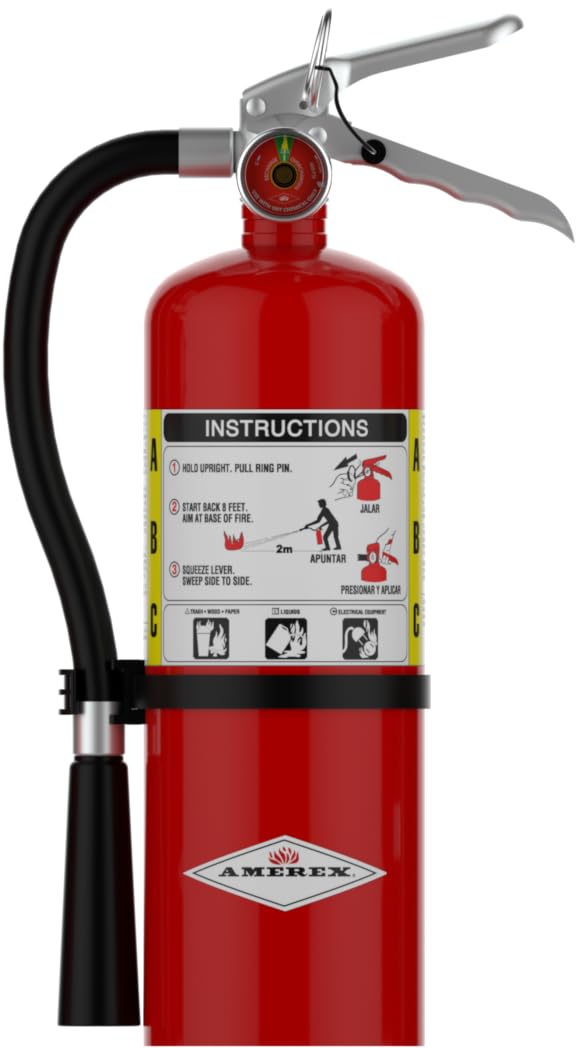
A fire extinguisher can be a lifesaver, but with so many types and ratings, choosing the right one for your home can be confusing. Many people buy the first extinguisher they see, only to find it’s ineffective for the fires they’re most likely to face—like cooking grease or electrical fires. This guide will walk you through the key factors: fire classes, extinguisher types, size, placement, and maintenance. By the end, you’ll be able to confidently select an extinguisher that matches your home’s risks and know how to keep it ready for emergencies.
▸What You'll Need
- •Understanding of common home fire hazards (kitchen, garage, living room)
- •Knowledge of fire classes (A, B, C, D, K)
- •A budget for purchasing an extinguisher ($20–$80)
- •A tape measure for checking mounting location
Estimated Time: 10–15 minutes to read and decide
Difficulty: beginner
▸Step-by-Step Instructions
Step 1: Understand the Five Classes of Fire
Fires are classified by the fuel that feeds them. Class A fires involve ordinary combustibles like wood, paper, and cloth. Class B fires are fueled by flammable liquids (gasoline, oil, grease). Class C fires are electrical (appliances, wiring). Class D fires involve combustible metals (rare in homes). Class K fires are kitchen fires from cooking oils and fats. Knowing these classes helps you choose an extinguisher that can handle the most likely fires in your home.
💡 Tips:
- •In a typical home, Class A, B, and C are the most common.
- •Kitchen-specific extinguishers (Class K) are designed for commercial kitchens but some home models also cover K.
⚠️ Warnings:
- •Never use a Class A extinguisher on a grease fire (Class B or K) — it can spread the flames.
Step 2: Learn the Extinguisher Types and Their Ratings
Home extinguishers are typically rated for multiple classes. The most common is an ABC dry chemical extinguisher, which works on A, B, and C fires. You'll see a number-letter code like 2-A:10-B:C. The number indicates the extinguishing capacity (higher = more effective). For example, a 2-A rating means it can handle a fire equivalent to 2.5 gallons of water. For home use, a 2-A:10-B:C or 3-A:40-B:C is recommended. CO2 extinguishers are good for electrical fires but less effective on Class A. Wet chemical (Class K) are for kitchens.
💡 Tips:
- •Stick with multi-purpose ABC dry chemical for general home use.
- •A higher B rating (e.g., 40-B) is better for garage or workshop flammable liquids.
⚠️ Warnings:
- •Some extinguishers are labeled for only one or two classes — ensure yours covers A, B, and C.
Step 3: Choose the Right Size and Weight
Fire extinguishers for home use range from 2.5 to 10 pounds. A 5-pound ABC extinguisher is the most common and provides a good balance of capacity and maneuverability. Heavier units (10 lb) offer more discharge time but can be hard to handle. Smaller 2.5-lb units are easier to store but may not have enough agent for a larger fire. Consider who will use it — if household members are not strong, a 5-lb model is manageable for most adults.
💡 Tips:
- •Place one extinguisher per floor; kitchens and garages are top priorities.
- •Mount it on a wall bracket so it’s easily accessible, not hidden in a closet.
⚠️ Warnings:
- •Avoid very large (20 lb) commercial units — they are heavy and can be dangerous to operate indoors.
Step 4: Check for Proper Certifications and Expiration
Look for extinguishers tested by UL (Underwriters Laboratories) or ETL (Intertek). These certifications ensure the unit meets safety and performance standards. Also check the manufacture date and pressure gauge. The gauge needle should be in the green zone. Most dry chemical extinguishers last 5–15 years, but they lose pressure over time. Don’t buy an extinguisher that looks old or has a broken seal.
💡 Tips:
- •Buy from a reputable brand like First Alert, Kidde, or Amerex.
- •Note the expiration date — replace or recharge as needed.
⚠️ Warnings:
- •Do not test the extinguisher by partially discharging it; it may not hold pressure afterward.
Step 5: Consider Special Needs: Kitchen, Garage, or Car
For kitchens, a standard ABC extinguisher works, but if you fry often, a Class K or a special 'kitchen' model may be better. Garages often have flammable liquids, so a higher B rating helps. For a car, a compact 2.5-lb ABC or a clean agent extinguisher (like Halotron) is good — it won’t damage electronics. Mount it in the trunk or under a seat.
💡 Tips:
- •Aerosol-style extinguishers (like First Alert Tundra) are easy to use but have limited range.
- •For the car, a bracket that attaches to the seat rail is handy.
⚠️ Warnings:
- •Do not store extinguishers in direct sunlight or extreme heat (car interior in summer).
▸Pro Tips
- •Place an extinguisher on every level of your home, especially near kitchens and garages.
- •Mount it 3–5 feet off the ground for easy access, away from potential fire sources (e.g., not directly over the stove).
- •Teach all household members the PASS technique: Pull the pin, Aim at the base, Squeeze the handle, Sweep side to side.
- •Check the pressure gauge monthly; if it’s in the red, replace or recharge immediately.
- •Buy extinguishers with a metal valve and handle — plastic valves can degrade.
- •Consider a fire blanket as a supplement for kitchen grease fires.
- •If you have elderly or disabled family members, a lighter unit (2.5 lb) may be easier to handle.
▸Common Mistakes to Avoid
- •Buying an extinguisher with too low a rating — a 1-A:5-B:C may not be enough for a room fire.
- •Assuming one extinguisher is enough — you need one per floor and in key rooms.
- •Storing the extinguisher in a closet or under the sink where it’s hard to grab quickly.
- •Failing to check the expiration date — many people keep expired extinguishers.
- •Using the wrong type for the fire (e.g., water on a grease fire).
▸Troubleshooting
Problem: The pressure gauge reads in the red zone.
Solution: If the needle is in the red 'overcharged' or 'recharge' area, the extinguisher is not ready. Replace it with a new one or have it professionally recharged.
Problem: The extinguisher is past its expiration date (check label).
Solution: Expired units should be replaced. You can recycle them at a local fire department or hazardous waste facility.
Problem: The pin is missing or seal is broken.
Solution: Do not rely on it — replace the extinguisher immediately. A missing pin means it can accidentally discharge.
Problem: You discharged the extinguisher partially (e.g., for training).
Solution: Even if it still has pressure, the internal seal may be compromised. Replace it to ensure full performance in an emergency.
First Alert HOME1 Rechargeable Home Fire Extinguisher
Top-rated 2-A:10-B:C rating, UL certified, lightweight 5 lb, easy-to-read gauge, and a metal handle. Ideal for most homes.
Best for: General home use, kitchen, living room, garage.
Price Range: $25–$35
Kidde 466179 Pro 5 Fire Extinguisher
Also 2-A:10-B:C, with a unique handle design and a wall bracket included. Kidde is a trusted brand.
Best for: General home use, workshop, and garage.
Price Range: $30–$45
First Alert Tundra AF400 Fire Spray
Aerosol can alternative, no pin to pull, easy to use for beginners. Good for small fires or as a secondary option. Disposable, but has a 2-A:10-B:C rating.
Best for: Kitchen, car, or for elderly users who struggle with traditional extinguishers.
Price Range: $15–$20
Amerex B500 5-Pound ABC Dry Chemical Fire Extinguisher
Professional-grade, commercial quality for home use. Durable metal construction, higher rating (3-A:40-B:C). Excellent for garages or workshops.
Best for: Garage, workshop, or high-risk areas where a premium extinguisher is desired.
Price Range: $55–$75
Kidde 466179 Kitchen Fire Extinguisher (K-Class)
Specifically rated for kitchen grease fires (Class K). Easy pull-pin design, wall bracket, and clear instructions.
Best for: Kitchens with frequent deep frying or high cooking oil use.
Price Range: $30–$40