Nothing ruins a perfect fishing day like a trolling motor battery dying mid-lake. Many anglers waste money on undersized or incompatible batteries, leading to short run times or frequent replacements. This guide equips you with the knowledge to choose the right 12V battery for your marine trolling motor.
You'll learn the essential specs—amp-hours, types, group sizes, and more—through simple explanations and calculations. By the end, you'll confidently select a battery that matches your motor's needs for all-day performance. Expect a straightforward process taking 20-30 minutes of research.
Whether upgrading from lead-acid to lithium or starting fresh, this intermediate-level guide breaks it down step-by-step, with real-world examples and pro tips.
▸What You'll Need
- •Trolling motor manual or specs (thrust rating in lbs, amp draw)
- •Details on usage: hours per trip, boat weight, typical conditions
- •Calculator or app for Ah calculations (optional: battery load calculator online)
- •Measuring tape for battery compartment dimensions
- •Budget range and access to retailer sites like Amazon
Estimated Time: 20-30 minutes
Difficulty: intermediate
▸Step-by-Step Instructions
Step 1: Determine Your Trolling Motor's Power Needs
Start by checking your trolling motor's thrust rating (e.g., 55 lb thrust) and amp draw. Most 12V trolling motors pull 30-60 amps at full speed. Refer to the manual for exact figures—divide thrust lbs by 2 for rough amp draw (e.g., 55 lb ≈ 27 amps average).
Why it matters: Undersized batteries drain fast; aim for 1.5-2x your motor's hourly amp draw in battery Ah capacity for 4-6 hours runtime. Expect to note max amp draw and desired runtime.
Image description: Diagram showing trolling motor label with thrust rating and a simple amp draw chart.
💡 Tips:
- •Use online trolling motor amp draw charts for popular models like Minn Kota or Newport.
⚠️ Warnings:
- •Don't guess—overestimate amp draw by 20% for wind/heavy loads.
Step 2: Understand Battery Types for Marine Trolling
Marine batteries fall into three main types: Flooded lead-acid (cheap, high maintenance), AGM (sealed, vibration-resistant), and Lithium (LiFePO4, lightweight, longest life). Flooded are basic deep-cycle; AGM handles marine bumps better; lithium offers 5-10x cycles but higher upfront cost.
Analogy: Flooded is like a gas car (refuel often), AGM a hybrid, lithium an EV. For trolling, prioritize deep-cycle over starting batteries. Expect AGM or lithium for most modern setups.
💡 Tips:
- •AGM for budget marine; lithium if weight/portability matters.
Step 3: Calculate Required Amp-Hour (Ah) Capacity
Ah measures runtime: Ah = amp draw x hours needed x 0.85 (for 85% usable depth of discharge). Example: 40A draw x 5 hours x 0.85 = 170Ah minimum. For 12V systems, match or exceed this.
Why it matters: Too low Ah = early cutoff; too high wastes money/space. Test with a multimeter on your motor if possible.
💡 Tips:
- •Add 20% buffer for accessories like fish finders.
Step 4: Evaluate Reserve Capacity (RC) and Cranking Amps
RC (minutes at 25A draw) shows sustained power; aim for 100+ RC for trolling. CCA/MCA for starting (less critical for pure trolling but good for dual-purpose). Marine-rated batteries have MCA > CCA for cold water.
Expect 180-220 RC for Group 27 batteries.
⚠️ Warnings:
- •Skip high-CCA starting batteries—they fail fast in deep-cycle use.
Step 5: Check Group Size and Physical Fit
Common: Group 24, 27, 29, 31 (e.g., 27 is 12.75"L x 6.8"W x 9"H). Measure your boat's battery box. Weight: Lead-acid 50-70 lbs, lithium 25 lbs.
Why: Poor fit causes vibration damage.
Step 6: Assess Weight, Maintenance, and Lifespan
Lithium: 2,000+ cycles, no maintenance. AGM: 500 cycles, spill-proof. Factor boat size—lighter for kayaks. Marine certification (e.g., BCI) ensures saltwater resistance.
💡 Tips:
- •Prioritize vibration-proof for rough waters.
Step 7: Compare Brands, Price, and Warranty
Top brands: Renogy (lithium), Optima (AGM), Interstate. Budget $100-200 lead-acid, $300-500 lithium. Look for 1-5 year warranties. Read Amazon reviews for real marine use.
⚠️ Warnings:
- •Cheap no-name batteries sulfate quickly.
Step 8: Final Selection and Compatibility Check
Cross-check motor voltage (strictly 12V), terminals, and charging system. Buy from reputable sellers. Test upon arrival with a load tester.
▸Pro Tips
- •Use a battery app like Battery University for quick Ah calcs.
- •Pair with a smart charger matching battery chemistry.
- •For multi-battery setups, wire in parallel for more Ah.
- •Store at 50% charge off-season to maximize life.
- •Consider temperature—cold reduces capacity 20%; get MCA-rated.
- •Lithium BMS protects from over-discharge automatically.
- •Shop end-of-season sales for 20% discounts.
▸Common Mistakes to Avoid
- •Choosing starting batteries for deep-cycle trolling—leads to quick failure; use deep-cycle only.
- •Ignoring group size—batteries won't fit, causing unsafe installs; always measure first.
- •Underestimating Ah needs—stranded mid-lake; calculate with buffer.
- •Skipping marine-rated—vibration/salt corrodes standard auto batteries.
- •Overlooking weight—too heavy slows small boats; opt for lithium.
▸Troubleshooting
Problem: Battery dies too quickly
Solution: Recalculate Ah or check for high amp draw/parasitic loads; upgrade capacity.
Problem: Won't hold charge
Solution: Sulfation from deep discharge; desulfate or replace. Use proper charger.
Problem: Overheats during use
Solution: Wrong chemistry or poor ventilation; switch to AGM/lithium and ensure airflow.
Problem: Terminals corrode fast
Solution: Not marine-rated; clean with baking soda, apply dielectric grease.
Renogy 12V 100Ah LiFePO4 Deep Cycle Battery
Lightweight (26 lbs), 4000+ cycles, built-in BMS for safety—ideal for long trips without maintenance.
Best for: Kayaks or bass boats needing all-day power and easy install.
Price Range: $200-$250
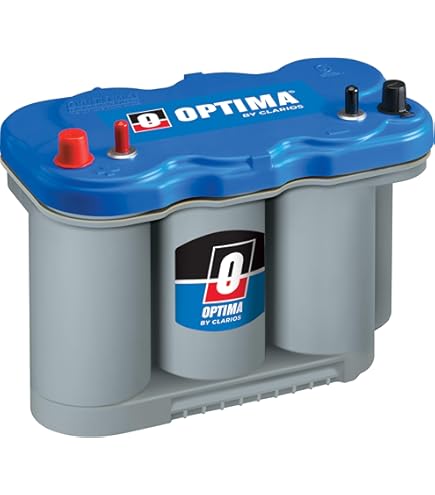
Optima Batteries 8052-161 D31M BlueTop Dual Purpose
AGM tech resists vibration, dual start/deep-cycle—proven in marine environments.
Best for: Versatile for trolling plus electronics starting on mid-size boats.
Price Range: $250-$300
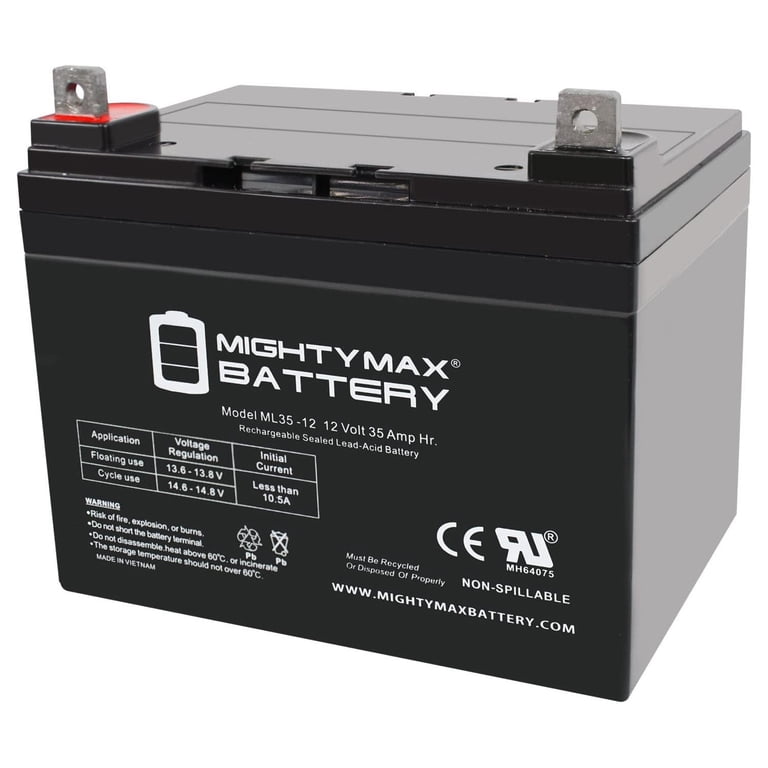
Mighty Max ML35-12 12V 35Ah AGM Battery
Affordable sealed AGM with good RC for short trips, spill-proof.
Best for: Budget setups or small trolling motors under 40 lbs thrust.
Price Range: $70-$90
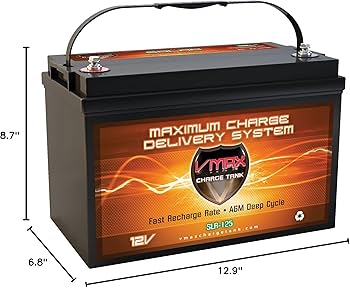
VMAXTANKS SLR125 12V 125Ah AGM Deep Cycle
High capacity, 5-year warranty, excellent for heavy use.
Best for: Large jon boats or extended fishing with 55+ lb motors.
Price Range: $250-$280