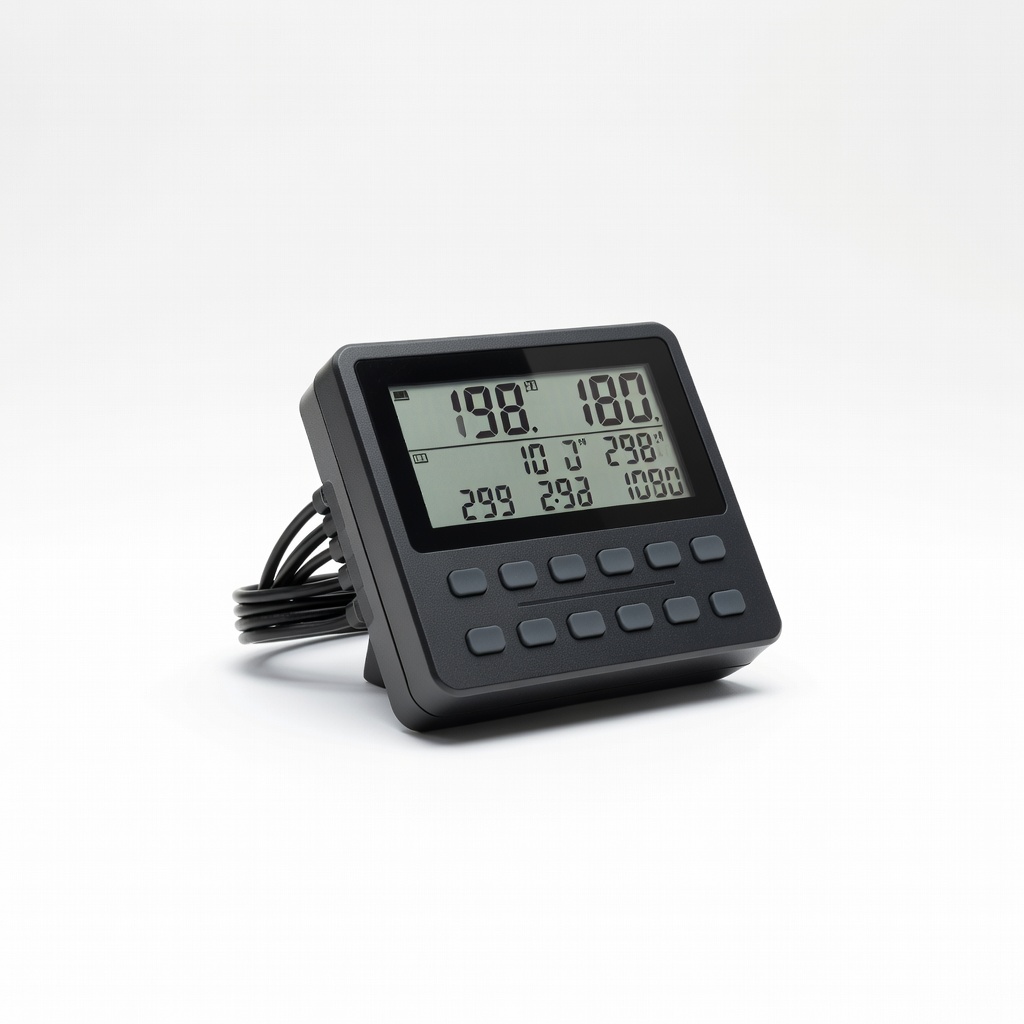
Overheating 12V batteries in RVs is a common issue that can lead to reduced lifespan, swelling, or even fire hazards, especially during long trips or off-grid camping. Many RV owners unknowingly use incompatible chargers or skip monitoring, resulting in premature battery failure and expensive replacements. This guide equips you with proven methods to charge safely and efficiently.
You'll learn step-by-step how to prepare, charge, and monitor your batteries—whether lead-acid, AGM, or lithium—while keeping temperatures in check. By following these instructions, you'll achieve full charges without risks, saving time and money on maintenance.
The process is straightforward for intermediate users familiar with basic electrical tools. Expect 30-45 minutes per battery, depending on capacity and charge level.
▸What You'll Need
- •Digital multimeter (for voltage and temperature checks)
- •Smart 12V battery charger with temperature compensation (required)
- •Battery terminal cleaner brush and baking soda solution
- •Insulated gloves and safety glasses (PPE)
- •Infrared thermometer (optional but recommended for precise temp monitoring)
- •Wrench or socket set for terminals
- •Well-ventilated workspace or outdoors
Estimated Time: 30-45 minutes per battery
Difficulty: intermediate
▸Step-by-Step Instructions
Step 1: Prepare Your Workspace and Safety Gear
Start in a cool, well-ventilated area away from flammable materials to dissipate heat naturally. Disconnect the RV's battery bank from all loads using the disconnect switch or by removing the negative terminal first.
Wear insulated gloves and safety glasses. Why? Sparks or acid splashes can occur, and overheating batteries release flammable gases. Success looks like a clear, organized space with no RV systems drawing power.
Pro tip: Charge during cooler times like early morning to keep ambient temps below 77°F (25°C).
💡 Tips:
- •Label cables before disconnecting to avoid mix-ups.
⚠️ Warnings:
- •Never charge indoors without ventilation—hydrogen gas buildup risks explosion.
Step 2: Inspect and Test the Battery
Visually check for bulging, cracks, leaks, or corrosion. Use a multimeter to measure open-circuit voltage: 12.6V+ for full, 12.0-12.4V for partial, below 12V needs charge.
Clean terminals with a baking soda-water mix and brush. Rinse and dry. This ensures efficient charging without resistance that causes extra heat. Expect clean, shiny terminals and a voltage reading confirming charge need.
Why it matters: Damaged batteries overheat faster and can fail catastrophically.
💡 Tips:
- •Take 'before' voltage photo for comparison.
⚠️ Warnings:
- •Dispose of damaged batteries immediately—don't charge them.
Step 3: Select and Set Up Your Charger
Choose a smart charger matching your battery type (AGM, flooded, lithium) with built-in temp compensation. Set to the correct mode (e.g., 14.4V for AGM). Connect red to positive (+), black to negative (-) on the battery first, then to power.
Why? Smart chargers auto-adjust amperage and voltage based on temp, preventing overcharge heat. Success: Charger display shows 'charging' and initial amps (e.g., 5-10A for 100Ah battery).
💡 Tips:
- •Match charger amps to 10-20% of battery Ah rating for optimal speed without heat.
⚠️ Warnings:
- •Wrong mode overheats—double-check battery label.
Step 4: Monitor Temperature During Charging
Use an infrared thermometer to check battery surface temp every 15 minutes—keep under 125°F (52°C). Or rely on charger temp sensor if equipped. Watch for voltage stabilizing at 14.4-14.7V (bulk/absorption phase).
Ventilate with a fan if needed. This step prevents thermal runaway. Expect temp rise of 20-30°F initially, then plateau.
💡 Tips:
- •Place wet rag on top to aid cooling if temp climbs.
⚠️ Warnings:
- •Stop if over 125°F—let cool and resume at lower amps.
Step 5: Complete the Charge and Disconnect
Charge until 'full' (green light, float mode ~13.6V). This takes 4-12 hours based on depletion. Disconnect charger power first, then cables (negative first).
Retest voltage: Should hold 12.6V+ after 1 hour rest. Reconnect to RV. Success: Battery at 100% without hot spots.
💡 Tips:
- •Float charge overnight for maintenance if storing.
⚠️ Warnings:
- •Don't leave on indefinitely—smart chargers auto-stop, but monitor.
Step 6: Post-Charge Maintenance Check
Top up electrolyte if flooded type (distilled water only). Log voltage, temp, and charge time. Store in cool, dry place if not in use.
This ensures longevity. Expect no corrosion regrowth and stable voltage.
💡 Tips:
- •Use a battery box for protection.
⚠️ Warnings:
- •Overfilling electrolyte causes overflow when hot.
▸Pro Tips
- •Use temperature-compensating chargers to auto-adjust for ambient heat.
- •Charge multiple batteries in parallel with a multi-bank charger to save time.
- •Keep batteries 50-77°F (10-25°C) for fastest, safest charging.
- •Invest in a battery monitor for real-time voltage/temp via app.
- •Equalize flooded batteries monthly at low amps to prevent sulfation.
- •Cool batteries to room temp before charging for even heat distribution.
- •Fan or AC during summer charges cuts overheating risk by 50%.
▸Common Mistakes to Avoid
- •Using a generic car charger without temp sensing—causes overvoltage heat; use smart chargers only.
- •Charging in direct sun or hot compartments—ambient heat spikes internals; shade and ventilate.
- •Ignoring voltage before charging—deeply discharged batteries overheat in bulk phase; equalize first.
- •Fast-charging at >20% C-rate—generates excess heat; limit to 10-15%.
- •Leaving connected too long—trickle turns to overcharge; rely on auto-float.
▸Troubleshooting
Problem: Battery gets excessively hot (>125°F)
Solution: Pause charging, cool with fan/water rag, reduce amps or use desulfation mode. Check connections for resistance.
Problem: Charger won't start or errors
Solution: Verify polarity, clean terminals, ensure voltage >10.5V. Try manual mode if auto fails.
Problem: Voltage drops quickly post-charge
Solution: Self-discharge or bad cell—load test battery. Replace if under 12.2V after 24hrs.
Problem: Sulfation (white powder buildup)
Solution: Use pulse desulfator mode or equalize. Prevent with regular maintenance.
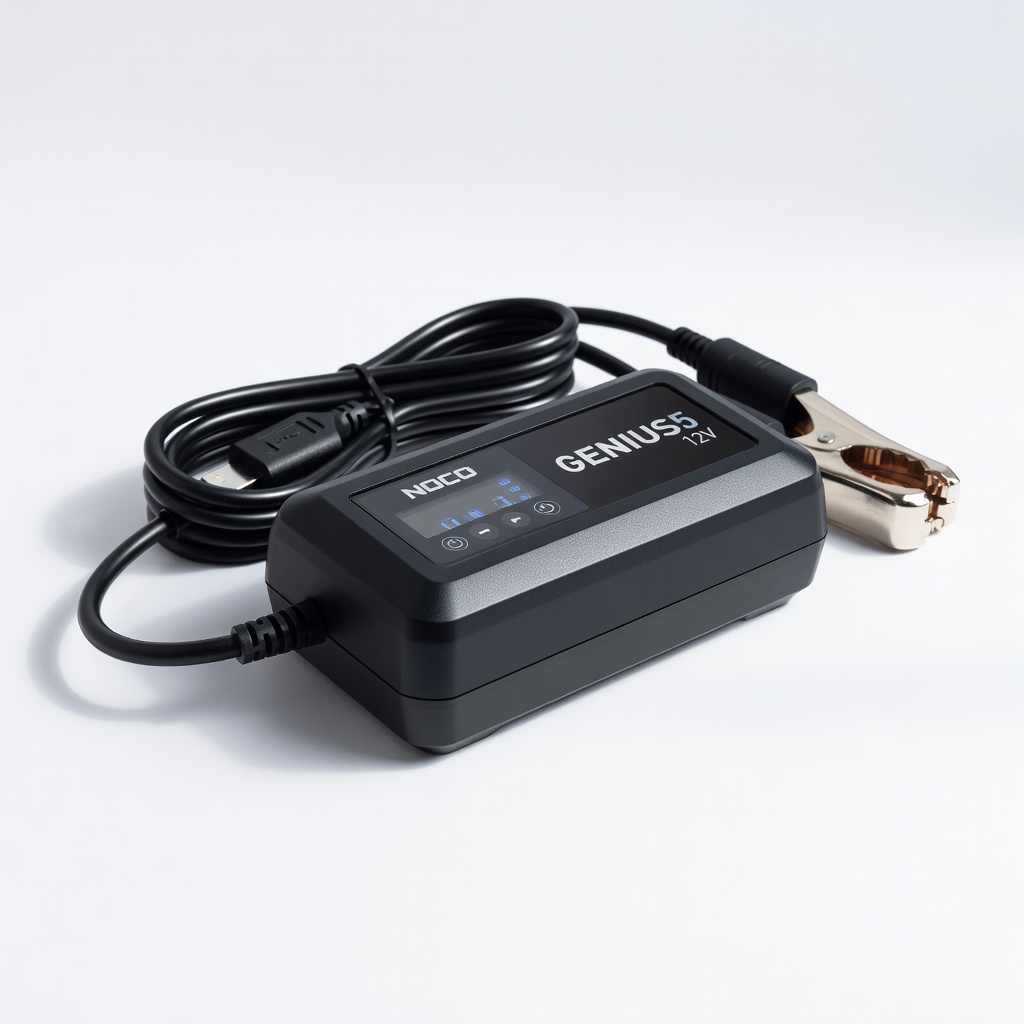
NOCO GENIUS5 12V Smart Charger
Built-in thermal sensor auto-adjusts charge rate to prevent overheating, ideal for RV lead-acid/AGM/lithium.
Best for: Primary charger for 5-120Ah batteries during routine maintenance or storage.
Price Range: $59.95
Battery Tender 021-0123 1.25A Charger
Safe low-amp trickle with spark-proof tech and temp compensation for gentle, no-heat charging.
Best for: Long-term float charging or deeply discharged RV batteries.
Price Range: $49.95
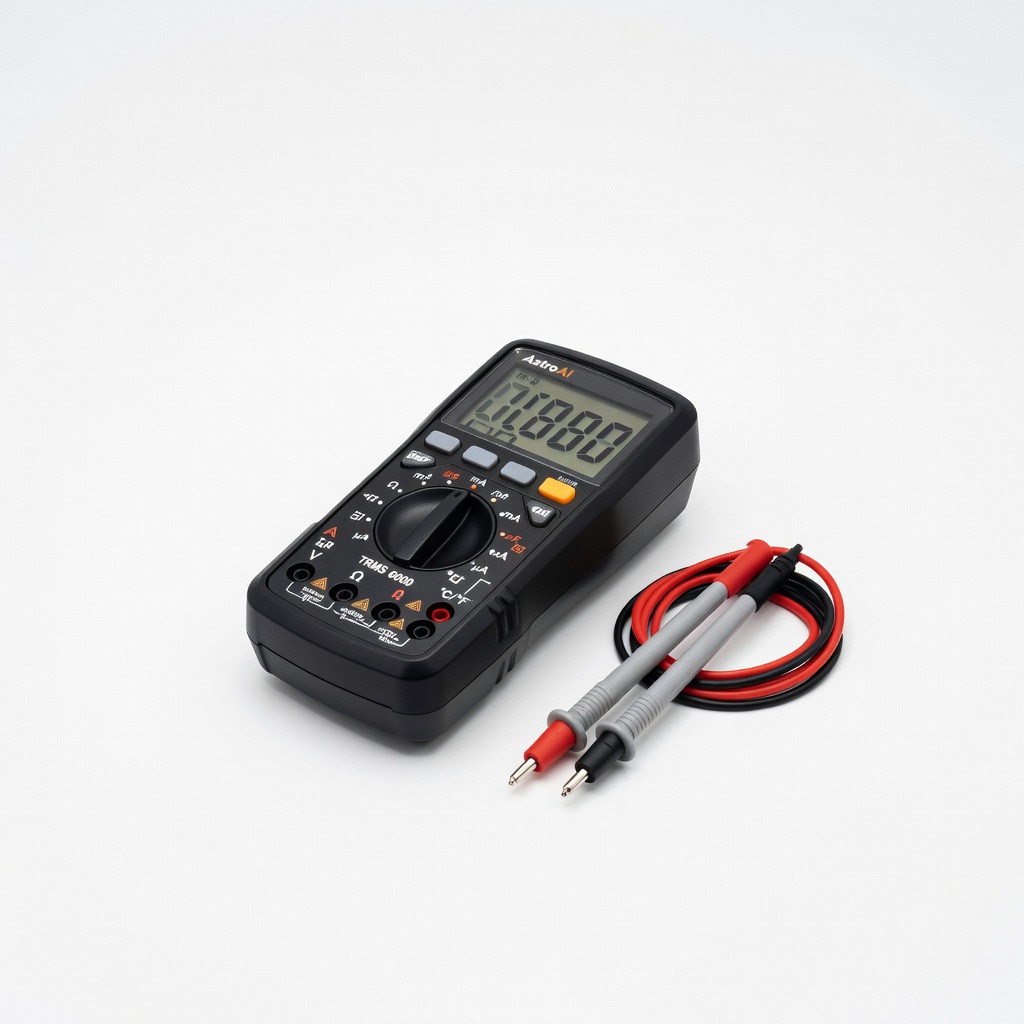
AstroAI Digital Multimeter TRMS 6000
Accurate voltage/temp readings with auto-ranging for precise monitoring without guesswork.
Best for: Pre/post-charge testing and troubleshooting RV battery banks.
Price Range: $29.99
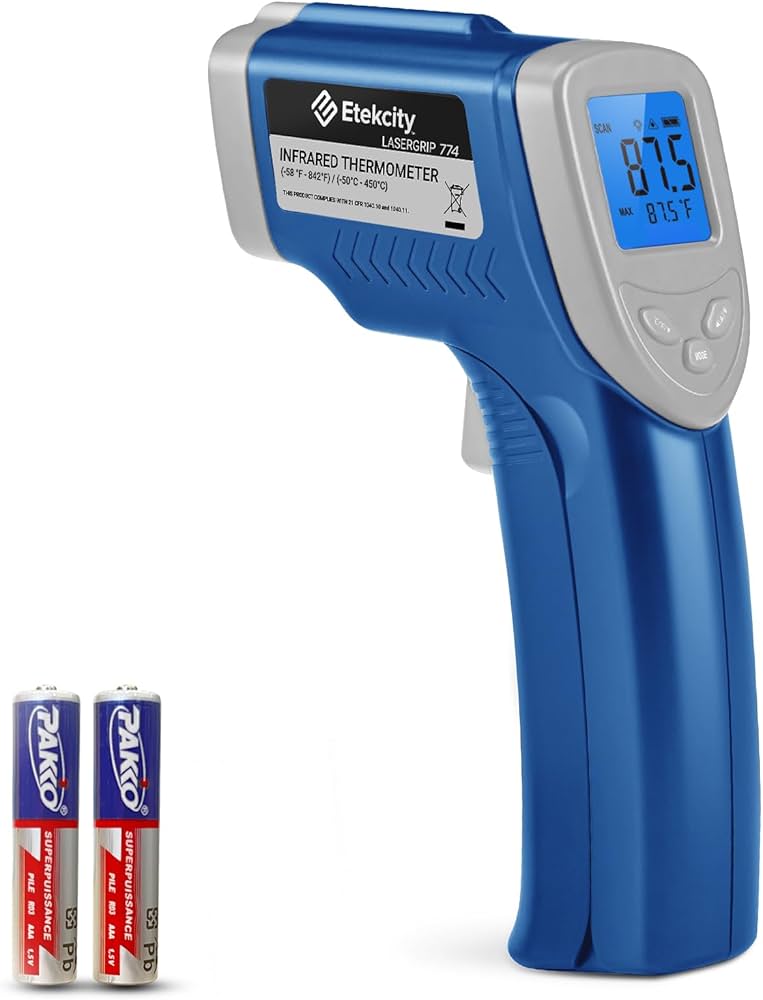
Etekcity Lasergrip 774 Infrared Thermometer
Non-contact temp measurement spots hot spots instantly, preventing overheat damage.
Best for: Real-time monitoring during charge sessions in hot climates.
Price Range: $24.99
Renogy 500A Battery Monitor
Bluetooth app tracks voltage, temp, SOC in real-time for proactive overheating alerts.
Best for: Installed in RV for ongoing multi-battery bank management.
Price Range: $69.99