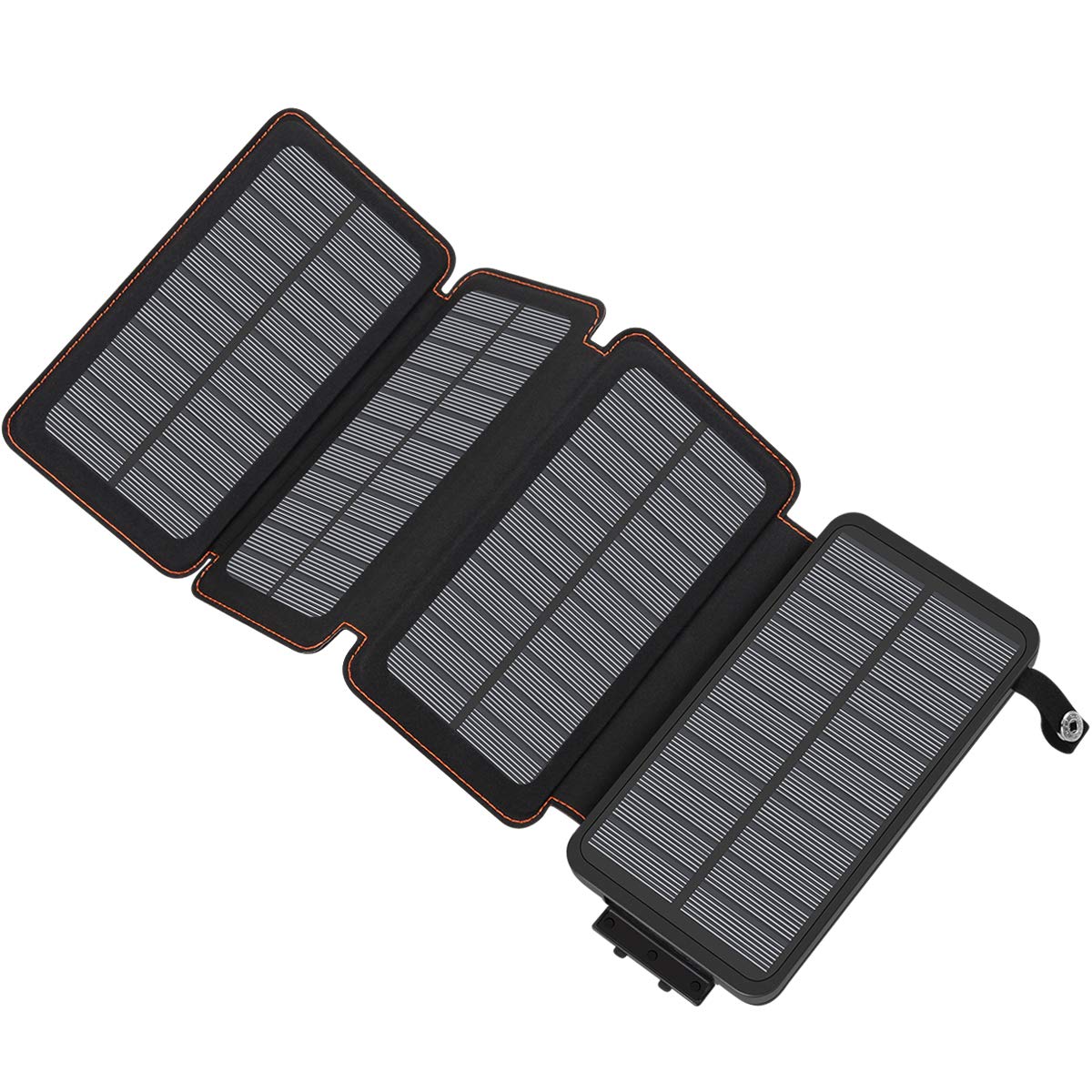
Imagine you're on a multi-day hike, miles from the nearest outlet, and your phone battery dies just as you need to check the trail map. A solar power bank can be a lifesaver, but with so many options on the market, choosing the right one feels overwhelming. This guide breaks down everything you need to know: from understanding solar panel efficiency and battery capacity to matching a power bank to your camping style. By the end, you'll be able to confidently select a solar power bank that keeps your devices running without the weight and complexity of a full generator.
▸What You'll Need
- •List of devices you plan to charge (phone, tablet, headlamp, etc.)
- •Device battery capacities (in mAh) for calculating needs
- •Basic understanding of milliamp-hours (mAh) and watt-hours (Wh)
- •A rough idea of your trip duration and sunlight availability
Estimated Time: 10–15 minutes read, plus 30–60 minutes for research and comparison
Difficulty: intermediate
▸Step-by-Step Instructions
Step 1: Assess Your Power Needs
Start by listing every electronic device you plan to bring and how many times you'll need to charge them per day. Note each device's battery capacity in mAh (e.g., a typical smartphone has 3,000–4,000 mAh, a tablet 8,000–10,000 mAh). Multiply by the number of charges you expect. This sum is the minimum battery capacity your solar power bank should have. For a weekend trip, aim for a power bank with at least 20,000 mAh to cover a phone, headlamp, and camera. Add a 50% buffer for cloudy days or unexpected usage.
💡 Tips:
- •Use a spreadsheet or app to track device capacities and daily needs.
- •Remember that solar power banks lose efficiency in cold weather—add 20% if camping in winter.
⚠️ Warnings:
- •Don't just match the mAh number—conversion losses mean you'll get about 70–80% of the rated capacity.
Step 2: Understand Solar Charging Speeds
Not all solar panels are equal. Look for monocrystalline panels—they're more efficient (18–22%) than polycrystalline (15–17%) and charge faster in low light. Check the panel's rated wattage: a 20W panel in direct sun can deliver about 1.2A–2A to a USB device. However, real-world conditions (clouds, angle, shading) often cut output by half. For reliable charging, a panel with at least 15W is recommended for a single device; 28W or more for faster charging or multiple devices. Also note the charging current: 2.4A per port or 3A with USB-C PD (Power Delivery) speeds up charging.
💡 Tips:
- •Tilt the panel toward the sun at regular intervals—optimal angle varies by latitude and time of day.
- •Avoid partial shading; even a small shadow can drop output drastically.
Step 3: Evaluate Battery Capacity and Output Ports
Battery capacity is measured in mAh (often misleading) or watt-hours (Wh). A 20,000 mAh power bank at 3.7V is 74 Wh. More important is what you can actually draw from the ports. Look for USB-A ports with at least 2.4A output, and USB-C PD ports that can deliver 18W, 27W, or even 60W for laptops. Some solar power banks also include AC outlets (120V) for small appliances, but these add weight and complexity. For camping, a 20,000–25,000 mAh bank with two USB-A (2.4A) and one USB-C PD (18W) is versatile.
💡 Tips:
- •If you need to charge a laptop, look for a power bank with 45W+ USB-C PD output.
- •Consider LiFePO4 batteries if you camp in extreme temperatures—they're safer and last longer.
⚠️ Warnings:
- •Cheap power banks may overstate capacity or use low-quality cells that degrade quickly.
Step 4: Check Portability and Durability
Camping gear needs to be rugged and lightweight. A solar power bank with a built-in panel is convenient but often bulkier than a separate panel + battery combo. For backpacking, aim for under 1.5 lbs (680 g) total. Look for an IPX4 or higher water resistance rating (splash-proof). A rubberized or silicone shell protects against drops. Some models have mounting holes or carabiners for attaching to a backpack. If you're car camping, weight is less critical, and you can opt for higher capacity (30,000 mAh+) or larger solar panels (30W+).
💡 Tips:
- •Foldable solar panels pack flatter and can be hung on a backpack while hiking.
- •A built-in flashlight or SOS strobe is a valuable safety feature.
⚠️ Warnings:
- •Waterproof (IP67) ratings are rare for solar power banks—don't submerge them.
Step 5: Consider Extra Features
Modern solar power banks offer handy extras: a high-lumen LED flashlight (often with SOS mode), wireless charging pads (slow but convenient), and the ability to charge the internal battery and an external device at the same time (pass-through charging). Some have digital displays showing remaining capacity or charging rate. While these features add weight and cost, they can improve your camping experience. Prioritize must-haves (e.g., flashlight for night use) over nice-to-haves (wireless charging, which is slow and inefficient).
💡 Tips:
- •Pass-through charging is great—set up the panel in the sun while your phone charges from the power bank.
- •A good flashlight can replace a separate headlamp in a pinch.
⚠️ Warnings:
- •Wireless charging generates heat and wastes 20–30% of power; use cables for efficiency.
Step 6: Compare Top Models on the Market
Let's look at a few popular solar power banks as of 2026:
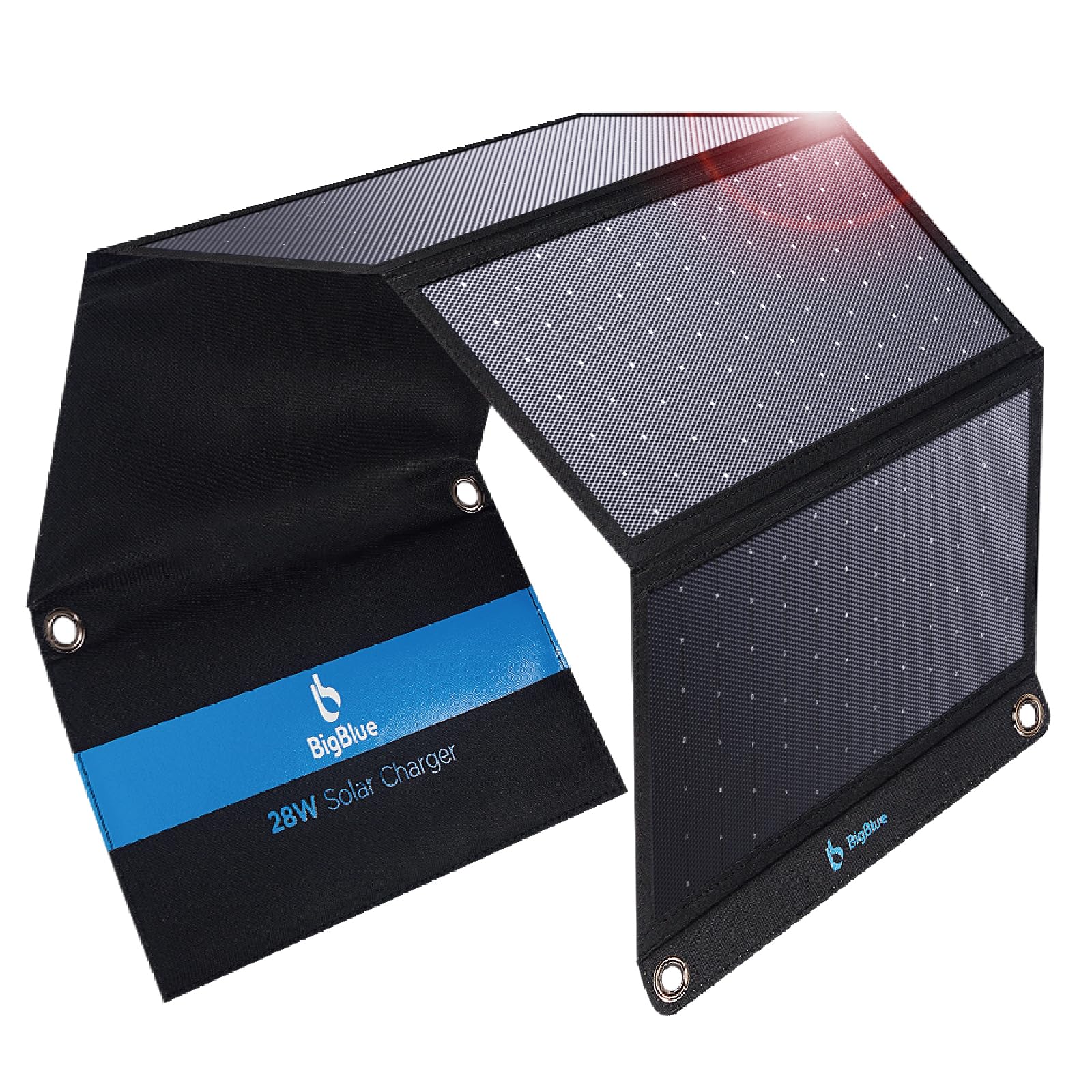
- •BigBlue 28W Solar Charger (panel only, 28W, 3 USB ports, foldable, 1.2 lbs) – ideal for backpackers who already have a USB battery pack.
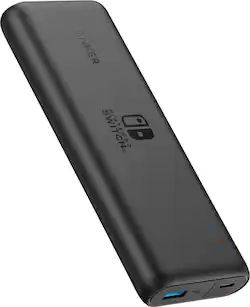
- •Anker PowerCore 20100mAh + 21W Solar Panel (combo) – reliable brand, high-quality cells, but the panel is only 21W.
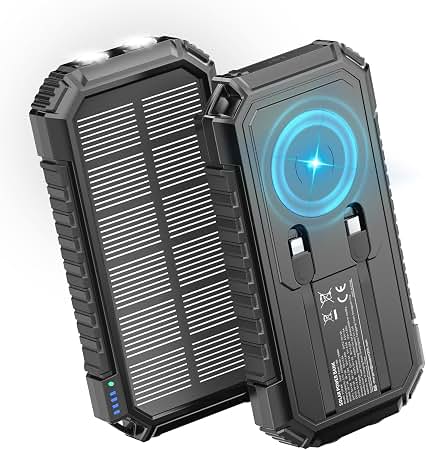
- •Riapow 25000mAh Solar Power Bank (built-in 5W panel, three USB-A, one USB-C PD, flashlight) – affordable integrated option for car camping.
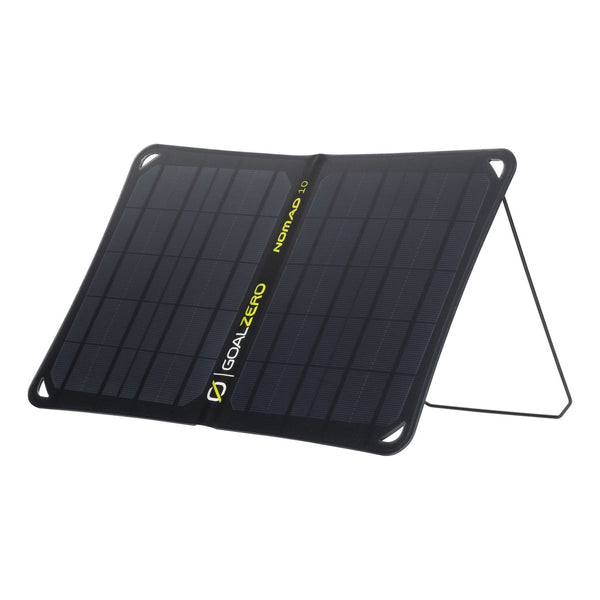
- •Goal Zero Venture 70 + Nomad 10 (separate: Venture 70 is 20,400 mAh water-resistant, Nomad 10 is 10W panel) – premium, modular, best for serious campers.
- •Hiluckey 25000mAh Solar Power Bank (built-in 3W panel, four USB-A, LED lights, compass) – budget-friendly all-in-one.
Compare based on your needs from step 1.
💡 Tips:
- •Read verified customer reviews for real-world performance (Amazon, REI).
- •Check the return policy—some brands offer 30-day satisfaction guarantees.
Step 7: Make Your Purchase Decision
Narrow down your options based on capacity, solar wattage, weight, and price. For lightweight backpacking, a separate 20W panel + a 10,000 mAh battery pack may suffice. For car camping or basecamps, a 30W+ panel with a 25,000 mAh integrated bank offers more power. Set a budget: decent solar power banks range from $40 to $200. Invest in a reputable brand to avoid poor build quality or inaccurate capacity ratings. Once you've chosen, pre-charge the battery fully before your trip—don't rely solely on solar for the first day.
💡 Tips:
- •Buy from a retailer with good return policies (Amazon, REI) in case the unit doesn't meet expectations.
- •Consider future trips—buy a little more capacity than you think you'll need.
⚠️ Warnings:
- •If a deal seems too good to be true (e.g., 50,000 mAh for $30), it's likely fake capacity.
▸Pro Tips
- •Pre-charge your solar power bank before leaving home—solar charging alone is slow for the initial fill.
- •Position the solar panel perpendicular to the sun for maximum absorption; adjust every hour.
- •Use a low-power device (like a Kindle) while charging from solar during the day to conserve battery.
- •Keep the power bank warm in cold weather (e.g., inside your sleeping bag) to maintain battery efficiency.
- •Clean the solar panel with a soft cloth if dust or pollen accumulates—dirty panels can lose 30% efficiency.
- •Label your charging cables to save time—use small colored zip ties or tape.
- •Combine a solar power bank with a small foldable solar panel for faster top-ups on sunny days.
▸Common Mistakes to Avoid
- •Overestimating solar charging speed: A 20W panel in real-world conditions may only charge a phone once per day.
- •Ignoring output ports: Only buying based on mAh without considering if it can charge your laptop or multiple devices simultaneously.
- •Choosing a tiny capacity: A 5,000 mAh solar power bank might not even charge a phone fully; aim for 20,000 mAh minimum.
- •Neglecting weather protection: Many solar power banks are only splash-proof; leaving them in heavy rain can ruin them.
- •Forgetting to pre-charge: Solar panels need direct sun to charge the internal battery, so always start with a full power bank.
▸Troubleshooting
Problem: Solar power bank charges very slowly or not at all.
Solution: Check if the panel is receiving direct sunlight without shadows. Clean the panel surface. Ensure the power bank's battery temperature isn't too high (above 45°C) or too low (below 0°C), as this triggers protection circuits.
Problem: Battery capacity seems lower than advertised.
Solution: Remember that conversion losses (from internal battery to USB output) reduce effective capacity by 20–30%. Also, extreme temperatures reduce available capacity. If it's drastically lower, the unit may be defective or fake.
Problem: Power bank won't charge my laptop.
Solution: Your laptop likely requires USB-C PD with at least 45W output. Verify the power bank's output specification. You may need a power bank with a dedicated AC outlet or a higher-wattage USB-C port.
Problem: LED flashlight stopped working.
Solution: Try resetting the power bank by pressing the power button for 10 seconds. If that fails, the LED may be burnt out; contact the manufacturer for warranty.
BigBlue 28W Solar Charger
High-efficiency monocrystalline panel with three USB ports, foldable and lightweight (1.2 lbs). Best for backpackers who already have a power bank.
Best for: Pair with any USB battery pack for fast solar top-ups during hikes.
Price Range: $60 - $80
Anker PowerCore 20100 + 21W Solar Panel Combo
Trusted brand with high-quality cells; the power bank has 20100 mAh with two USB 2.4A ports. The solar panel is portable but slower.
Best for: Ideal for weekend car campers who want a reliable all-in-one package.
Price Range: $70 - $90
Riapow 25000mAh Solar Power Bank
Built-in 5W panel, triple USB-A, USB-C PD (18W), and a powerful LED flashlight. Affordable and feature-packed for car camping.
Best for: Great for car campers or RVers who want one compact device for phone and tablet charging.
Price Range: $35 - $50
Goal Zero Venture 70 + Nomad 10 Solar Panel
Premium water-resistant battery (20,400 mAh) with IPX6 rating; 10W foldable solar panel. Modular system allows upgrades.
Best for: Serious campers who need rugged gear and want to expand into larger Goal Zero power stations later.
Price Range: $150 - $200
Hiluckey 25000mAh Solar Power Bank
Budget-friendly all-in-one with four USB-A ports, built-in compass, and SOS light. Has a modest 3W solar panel.
Best for: Budget-conscious campers who want a simple, functional power bank with solar trickle-charge capability.
Price Range: $25 - $40