Sensory play is crucial for toddlers as it stimulates their developing brains, improves hand-eye coordination, and fosters curiosity. But with countless options, choosing the right activity cube can feel overwhelming—especially when safety and engagement are top priorities. This guide breaks down everything you need to know to pick the best one.
You'll learn what makes an activity cube ideal for sensory play, key features to look for, and our top recommendations based on expert reviews, parent feedback, and safety standards. By the end, you'll confidently select a cube that keeps your little one engaged for hours.
Expect a straightforward read—no prior toy expertise needed. We'll cover concepts simply, with real examples and comparisons.
▸What You'll Need
- •Toddler's age and developmental stage (e.g., 6-12 months vs. 12-24 months)
- •Budget range ($15-$80)
- •Available play space (tabletop or floor)
- •Basic safety checklist (BPA-free, non-toxic materials, no small parts)
Estimated Time: 10-15 minutes
Difficulty: beginner
▸Step-by-Step Instructions
Step 1: Understand Sensory Play and Activity Cubes
Sensory play involves activities that engage a child's senses—touch, sight, sound, and sometimes taste or smell—to build neural connections. Activity cubes are multi-sided toys (usually 4-8 faces) packed with features like beads, gears, mirrors, and shape sorters.
Why it matters: These cubes provide endless stimulation in a compact form, perfect for small homes. Expect your toddler to explore textures (smooth wood vs. bumpy plastic), sounds (rattles, chimes), and movements (spinning parts). Analogy: Think of it as a toddler's personal playground in a box.
Start by observing your child's interests—do they love banging, spinning, or peeking?
💡 Tips:
- •Watch playtime for 5 minutes to note preferences.
Step 2: Identify Key Features for Sensory Development
Look for cubes with diverse sensory elements: tactile beads or rollers for touch, colorful spinners for sight, musical chimes for hearing, and safe mirrors for self-discovery.
Examples: High-contrast colors for young infants, textured surfaces for teething. Why prioritize? These target multiple senses, boosting cognitive growth per child development experts like those from the American Academy of Pediatrics.
Expect 5-7 activities per cube; more isn't always better if they're overwhelming.
💡 Tips:
- •Prioritize quiet features if noise-sensitive.
⚠️ Warnings:
- •Avoid cubes with batteries if preferring wooden, low-tech options.
Step 3: Check Age Appropriateness and Safety Standards
Most cubes suit 6+ months; confirm ASTM or EN71 certification for non-toxic materials. No small parts (choking hazard under 3 years).
Why it matters: Toddlers mouth everything—BPA-free plastic or natural wood prevents health risks. Test stability: it shouldn't tip easily.
Look for labels like 'washable' for easy cleaning.
Step 4: Evaluate Materials and Durability
Wooden cubes (e.g., beechwood) are eco-friendly and sturdy but heavier; plastic ones are lightweight and colorful but check for chew-proofing.
Pro analogy: Wood is like a heirloom toy; plastic like disposable fun. Durability means surviving drops and teething—rounded edges prevent splinters.
Feel the weight: 2-5 lbs is ideal for stationary play.
💡 Tips:
- •Opt for unfinished wood to avoid chemical finishes.
Step 5: Compare Top Activity Cubes by Price and Reviews
Scan Amazon ratings (4.5+ stars, 1,000+ reviews). Budget: $15-30 plastic, $40+ premium wood.
What to expect: High-rated cubes have varied activities and last 1-2 years. Cross-check parent forums like Reddit's r/Mommit for real use.
Step 6: Select and Introduce the Cube to Your Toddler
Buy based on steps above. Introduce during calm playtime: place nearby, demonstrate one feature.
Why: Builds familiarity without overwhelm. Rotate sides weekly for novelty.
Track engagement: 10-20 min sessions grow to longer.
💡 Tips:
- •Pair with a favorite toy for first use.
Step 7: Maintain and Clean Your Activity Cube
Wipe with mild soap/water weekly; air dry. For wood, use food-grade oil sparingly.
Why it matters: Hygiene prevents bacteria. Store upright to protect gears.
⚠️ Warnings:
- •Never submerge electronics.
▸Pro Tips
- •Supervise first 10 uses to ensure safe play.
- •Rotate activities by turning the cube to maintain interest.
- •Combine with tummy time for younger babies.
- •Choose cubes under 12 inches tall for easy reach.
- •Read reviews filtering for 'teething' or 'drool-proof'.
- •Gift-wrap one side to reveal new fun monthly.
- •Use as a travel toy—compact and engaging.
▸Common Mistakes to Avoid
- •Buying too advanced (e.g., 2+ year puzzles for 6-month-olds)—causes frustration; stick to age labels.
- •Ignoring material allergies (e.g., painted wood)—choose natural finishes.
- •Overlooking stability—top-heavy cubes tip; test on carpet.
- •Skipping reviews—fake high ratings hide poor quality.
- •Not cleaning regularly—leads to grime buildup.
▸Troubleshooting
Problem: Toddler loses interest quickly
Solution: Introduce one new feature daily; move to a new location like high chair.
Problem: Parts get stuck or break
Solution: Apply baby-safe lubricant sparingly; contact manufacturer for warranty (most 1-year).
Problem: Too noisy for home
Solution: Tape over chimes temporarily or choose wooden non-musical models.
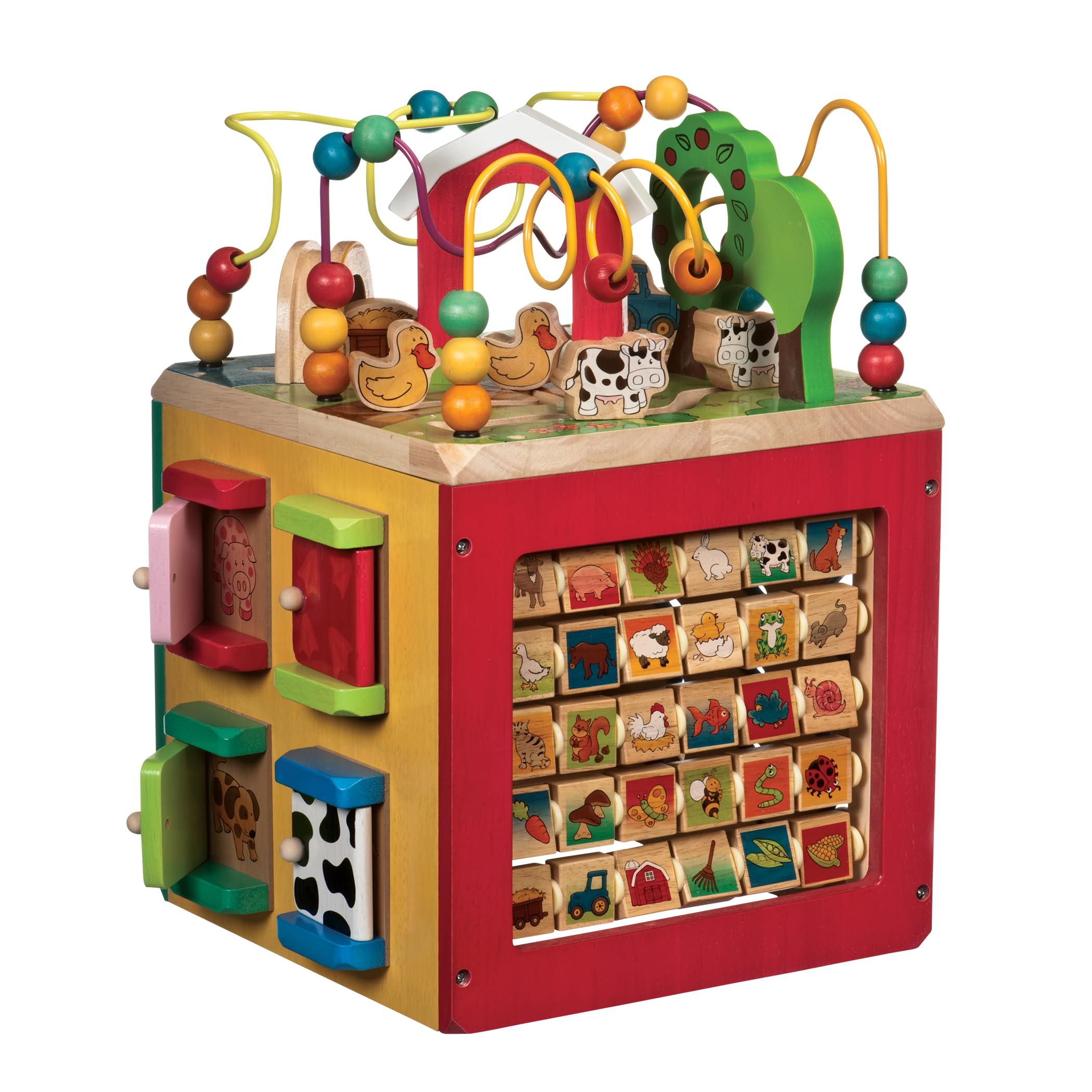
Melissa & Doug Chomp & Clack Alligator Activity Cube
Affordable wooden cube with 5 sides of gears, mirrors, and shapes—durable for teething and highly rated (4.7 stars, 5K+ reviews).
Best for: Best for 6-18 month olds starting sensory exploration on a budget.
Price Range: $12.99
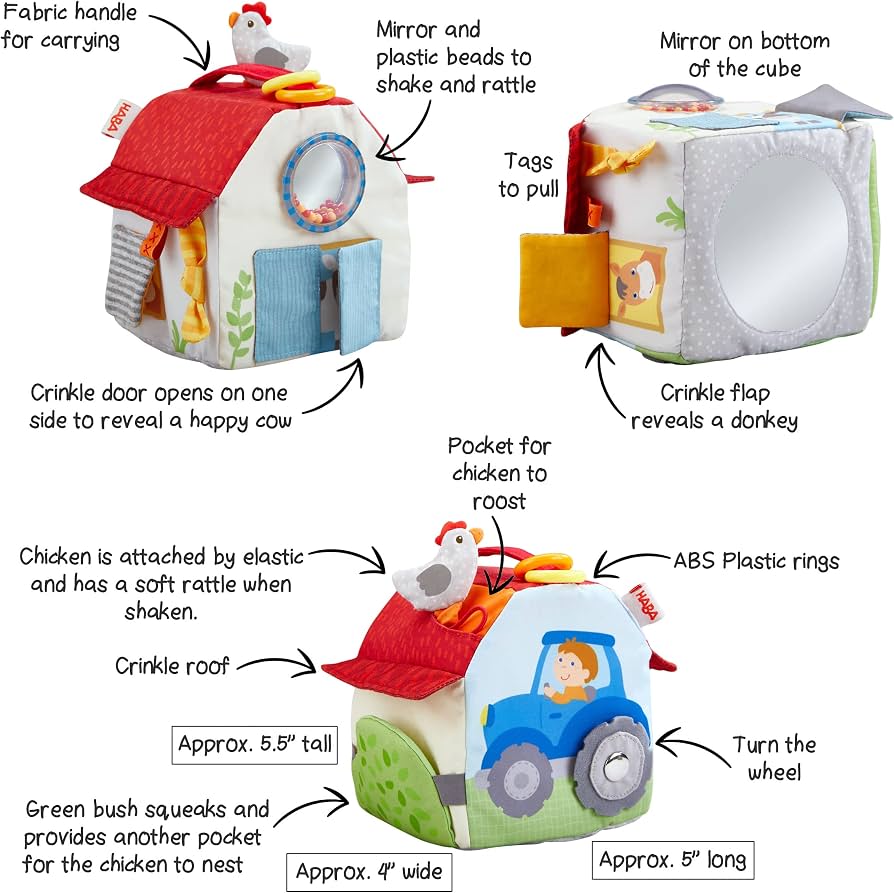
HABA Little Activity Cube
Premium German-engineered wood with 6 quiet, high-quality activities like abacus and spinner—meets strict EU safety, lasts years.
Best for: Ideal for eco-conscious parents wanting heirloom quality for 10-24 months.
Price Range: $69.99
Battat Discover 'n Grow Take-Along Activity Cube
Portable plastic cube with lights/sounds for auditory stimulation—lightweight, battery-powered fun (4.6 stars).
Best for: Great for travel or high-energy toddlers 6-36 months.
Price Range: $19.99
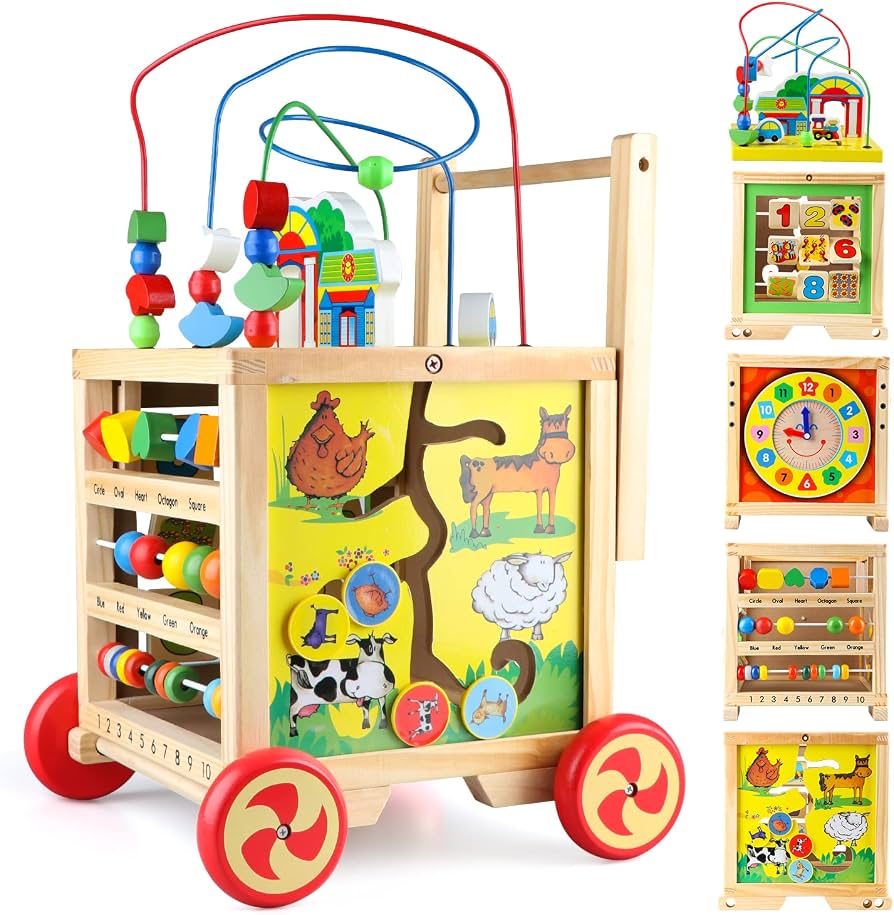
TOOKY 6-in-1 Baby Activity Cube
Multi-feature plastic/wood hybrid with sorter, piano—value-packed bestseller (4.5 stars, 10K+ reviews).
Best for: Budget all-rounder for busy parents with 12-24 month olds.
Price Range: $29.99
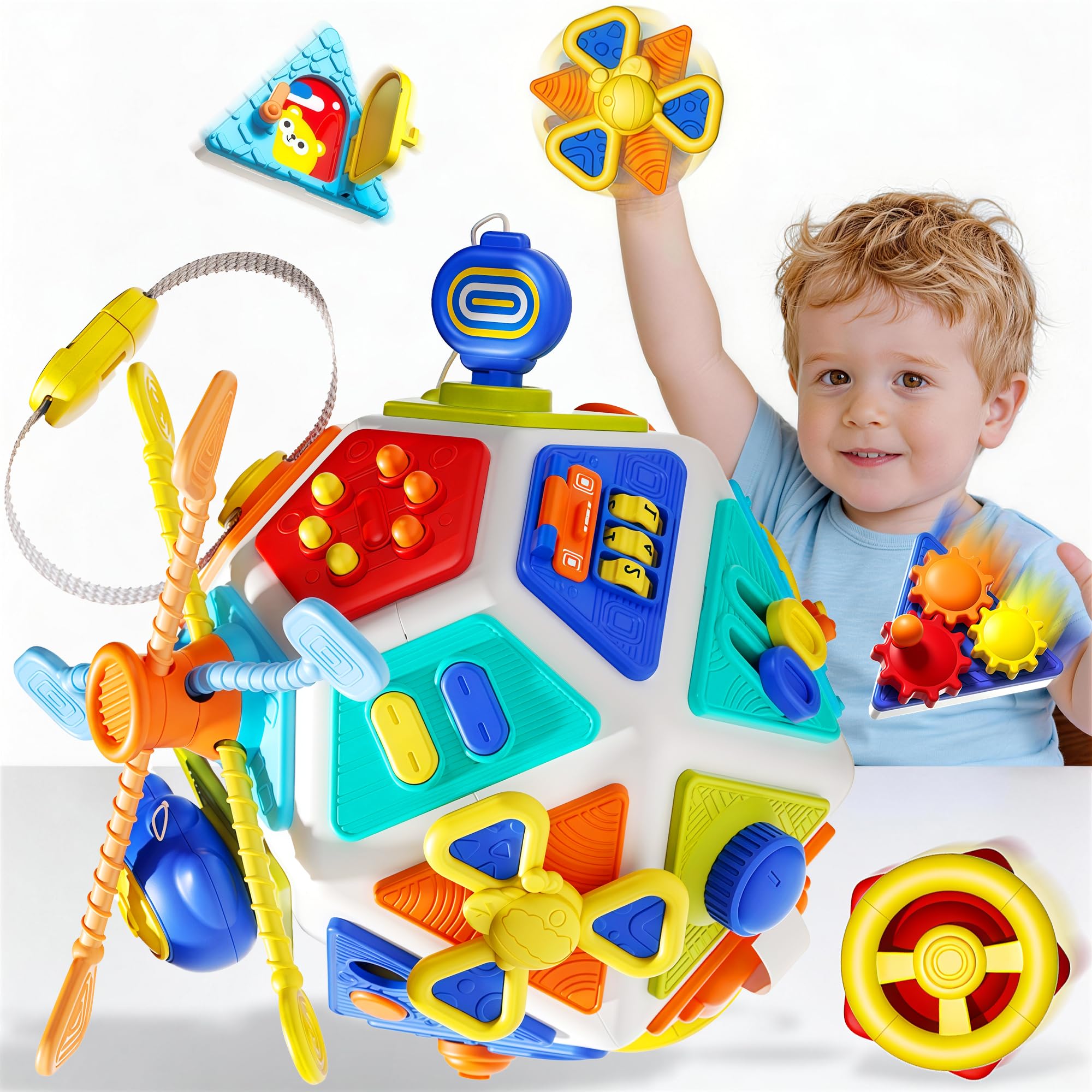
Montessori Sensory Busy Board Activity Cube
Lock/zipper focus for fine motor skills—washable fabric panels, aligns with Montessori principles.
Best for: For skill-building in 18+ months, less traditional cube.
Price Range: $24.99