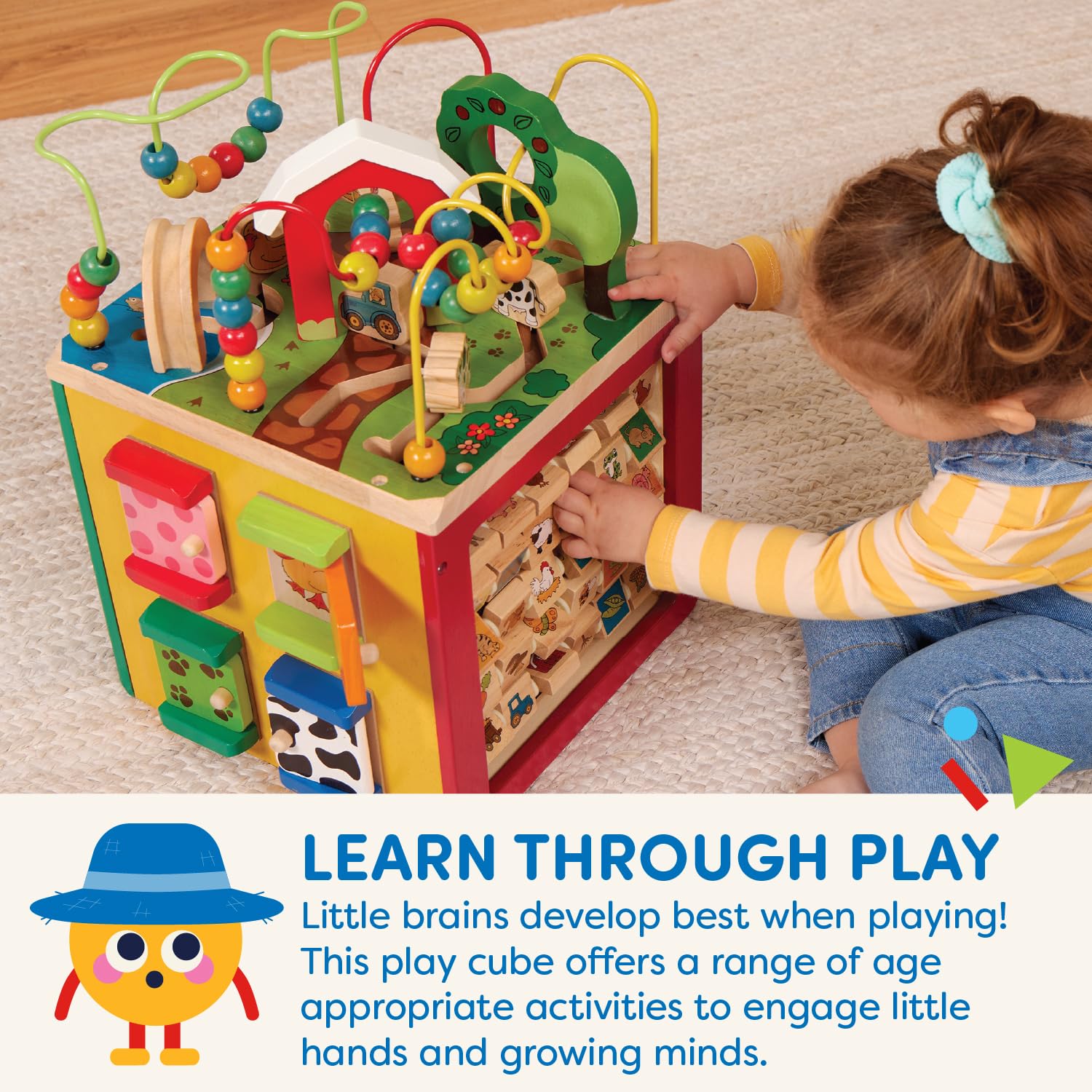
As a new parent, watching your baby hit developmental milestones is thrilling—but finding the right toys can be overwhelming. Activity cubes stand out as multi-tasking wonders that engage little hands and minds, preventing boredom while building essential skills like fine motor control, problem-solving, and sensory awareness.
In this guide, you'll discover what makes activity cubes special, key features to prioritize, safety must-haves, and our top picks for 2025. Whether your baby is 6 months or toddling at 18 months, you'll learn to choose one perfectly matched to their stage. Expect a quick read (10-15 minutes) with actionable advice—no prior toy expertise needed.
By the end, you'll confidently select an activity cube that sparks joy and growth, backed by real parent-tested insights.
▸What You'll Need
- •Baby's current age (6-24 months typical)
- •Budget ($15-$50 range)
- •Safe, flat play space (floor mat recommended)
- •Basic knowledge of baby milestones (optional: quick Google)
Estimated Time: 10-15 minutes
Difficulty: beginner
▸Step-by-Step Instructions
Step 1: Understand What an Activity Cube Is
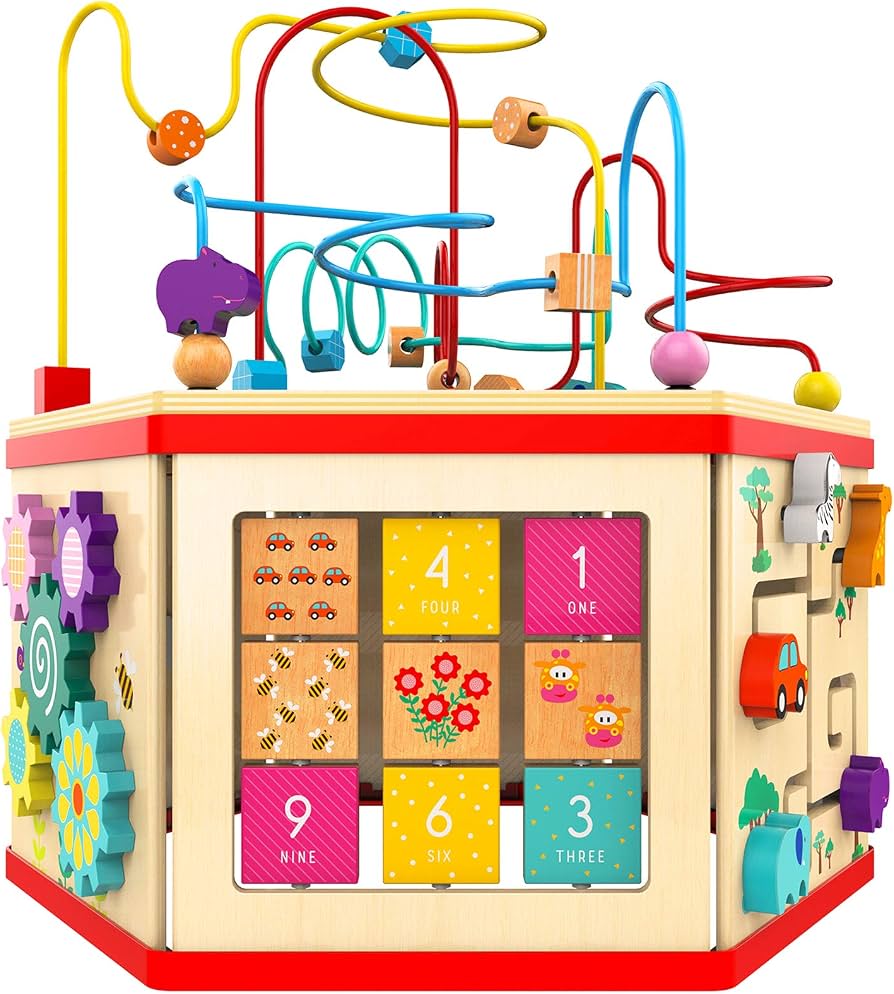
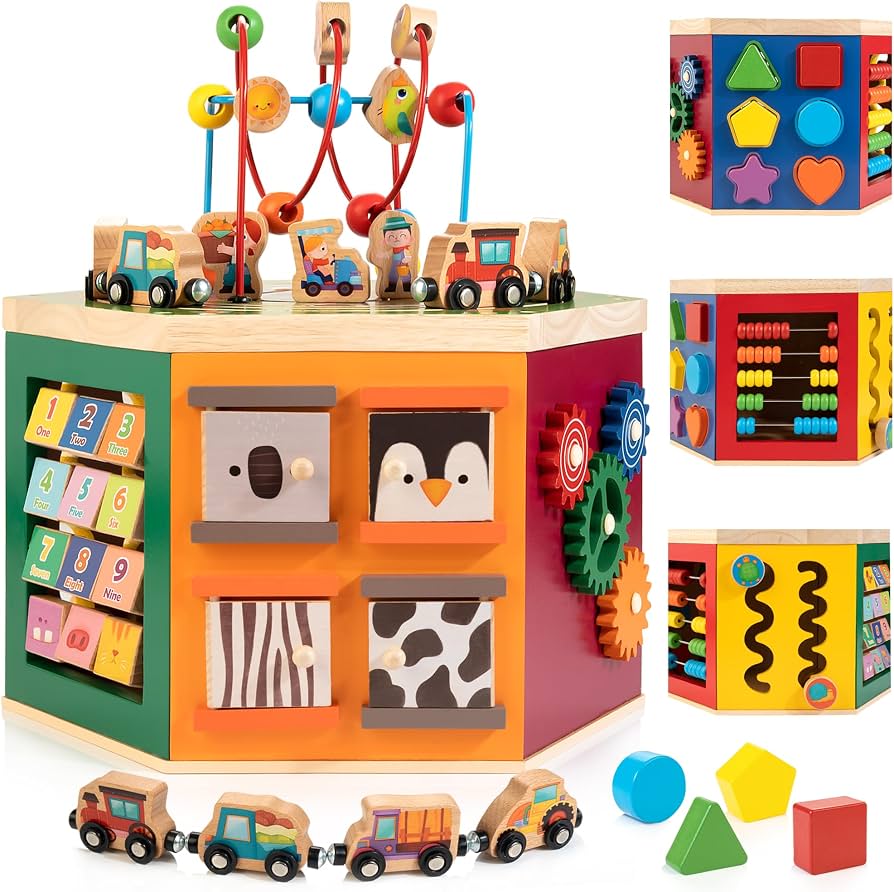
An activity cube is a compact, multi-sided toy (usually 6 faces) packed with interactive elements like spinners, gears, shape sorters, mirrors, and beads. Imagine a baby's personal playground in cube form—portable and versatile.
Unlike single-function toys, cubes rotate for endless discovery, keeping engagement high. They're designed for seated play, evolving from teething (6 months) to stacking/walking support (12+ months).
Expect 20-30 minutes of daily play per session; babies return repeatedly as skills grow.
💡 Tips:
- •Look for cubes with 5+ activities per side for variety.
Step 2: Explore Developmental Benefits
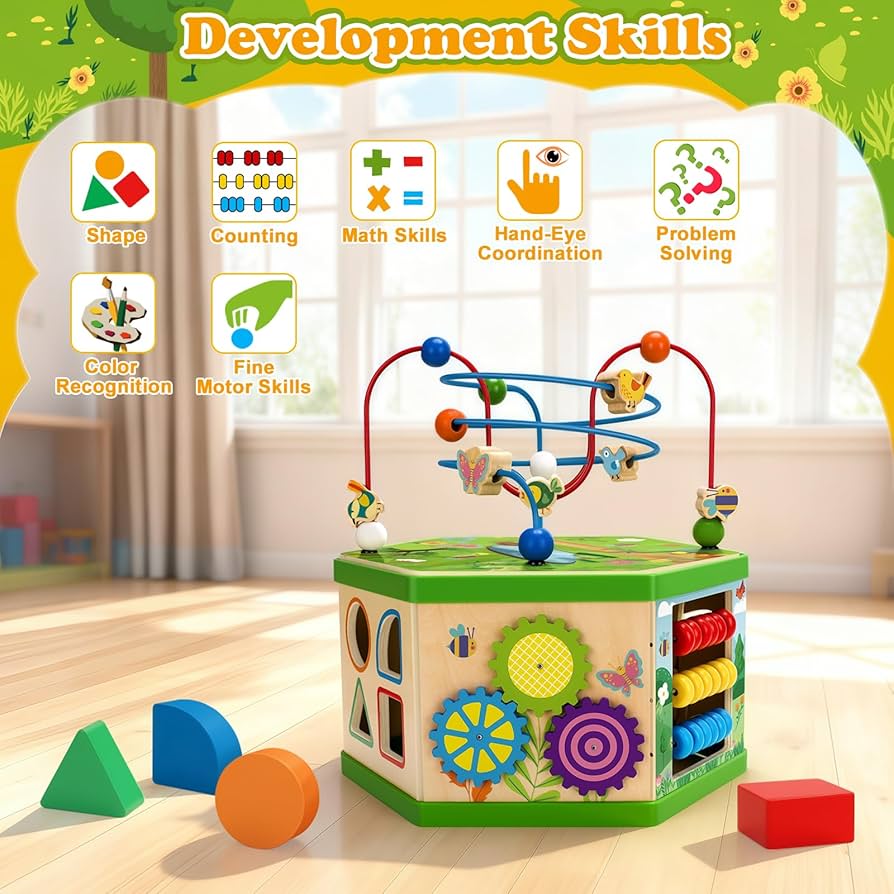
Activity cubes target multiple milestones: fine motor (grasping spinners), gross motor (pushing/pulling), cognitive (cause-effect with gears), sensory (textures, sounds, mirrors), and even language (some have ABCs or numbers).
Studies from the American Academy of Pediatrics highlight how such toys boost hand-eye coordination by 20-30% in the first year. Analogy: It's like a gym for babies—strengthening 'muscles' for crawling, walking, and exploring.
You'll notice improved focus, fewer frustrations, and proud 'aha!' moments as baby masters a flippy door.
⚠️ Warnings:
- •Don't expect overnight changes; benefits build over weeks.
Step 3: Identify Key Features to Look For
Prioritize 6-sided designs with diverse activities: beads maze, shape sorter, abacus, peek-a-boo doors, xylophone, and textured surfaces. Wooden cubes are durable and Montessori-inspired (quiet, natural); plastic/electronic add lights/sounds for stimulation.
Check for rounded edges, non-toxic paint (ASTM certified), and stability (doesn't tip easily). Removable parts? Bonus for cleaning.
Why it matters: Variety prevents boredom; quality ensures longevity through teething and toddlerhood.
💡 Tips:
- •Count activities: Aim for 20+ total across sides.
Step 4: Prioritize Safety Standards
Safety first: Choose CPSIA/ASTM-approved cubes free of BPA, phthalates, and small parts (choking hazard under 3"). Test stability—shake vigorously; it shouldn't wobble.
Wooden > plastic for splinters (smooth finish only); avoid painted lead risks. Real-world: 90% of recalls are for loose parts.
What to expect: Peace of mind during unsupervised tummy time.
⚠️ Warnings:
- •Skip cheap imports without certifications—check labels.
Step 5: Match to Your Baby's Age and Stage
6-12 months: Focus on grasping/textures (e.g., rattles, soft spinners). 12-18 months: Problem-solving (sorters, gears). 18-24 months: Numbers/colors for pre-literacy.
Assess your baby: Passive watcher? Lights/sounds. Active explorer? Mechanical parts. Analogy: Like Goldilocks—pick 'just right' to avoid frustration.
Pro tip: Scalable cubes grow with baby.
💡 Tips:
- •Observe play style for 1 week before buying.
Step 6: Evaluate Durability, Price, and Reviews
Wood lasts years ($30-50); plastic cheaper but wears ($15-30). Read 1,000+ review Amazon listings for 'dropped often' durability.
Value = activities/longevity. Expect minor wear; clean with damp cloth.
Compare 3 options side-by-side using our recs below.
Step 7: Introduce and Rotate for Maximum Engagement
Start with 10-min sessions; rotate sides daily. Sit nearby, model actions ("Spin the gear!") to encourage.
Track progress: More independent play? Success. Why: Builds confidence, prevents overstimulation.
Bonus: Pair with our sensory toys guide for variety.
💡 Tips:
- •Clean weekly; store upright to avoid dents.
▸Pro Tips
- •Buy wooden for eco-friendliness and quiet play—ideal for nap times.
- •Check for 'washable' labels; steam clean for hygiene.
- •Pair with a play mat to define safe space.
- •Rotate with other toys weekly to maintain novelty.
- •Film play sessions to spot favorite activities and buy similar.
- •Opt for neutral colors if passing to siblings.
- •Look for bundles with extras like stacking rings.
▸Common Mistakes to Avoid
- •Buying for wrong age: Too advanced frustrates; too simple bores—always check 6-24 month range.
- •Ignoring certifications: Leads to unsafe toys—verify ASTM/CPSIA every time.
- •Overlooking stability: Tippy cubes cause falls—test in-store if possible.
- •Choosing noisy electronics too early: Overstimulates; start silent.
- •Skipping reviews: Misses real issues like peeling paint.
▸Troubleshooting
Problem: Baby ignores the cube
Solution: Model play enthusiastically for 2-3 days; try different sides or during fussy times.
Problem: Cube tips over easily
Solution: Place on non-slip mat; return if unstable and get wider base model.
Problem: Parts get sticky/dirty
Solution: Wipe with mild soap solution daily; air dry fully.
Problem: Baby chews paint off
Solution: Switch to natural wood unfinished; consult pediatrician if ingested.
Top Bright Wooden Activity Cube
6 sides with 20+ activities including bead maze, sorter, and abacus—durable Montessori-style wood promotes quiet focus and fine motor skills.
Best for: Best all-rounder for 6-24 months; ideal for beginners wanting long-term value.
Price Range: $32.99
SDETER Montessori Activity Cube
Natural beech wood, non-toxic, 7-in-1 design with gears and mirrors—lightweight yet sturdy, highly rated for sensory development.
Best for: Perfect for teething 6-12 month olds; budget Montessori option.
Price Range: $29.99
Melissa & Doug Wooden Shape Sorter Cube
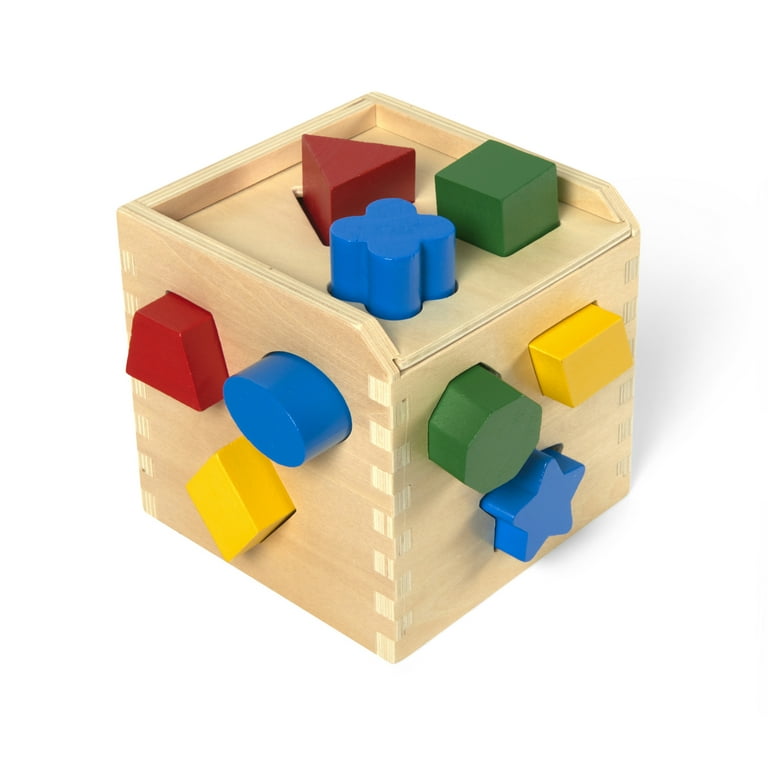
Classic solid wood construction with 5 sorter shapes and pull-out tray—timeless, promotes shape recognition and stacking.
Best for: Budget pick under $20 for 9-24 months; great starter cube.
Price Range: $12.99
Woodpeckers Crafts 9-in-1 Wooden Activity Cube
Premium 9 activities including piano and clock—smooth, eco-friendly wood with excellent reviews for durability.
Best for: For active 12+ month toddlers needing challenge; splurge-worthy.
Price Range: $39.99
Battat Wooden Discovery Cube
5 sensory sides with textures/gears—compact, portable, and parent-favorite for no batteries needed.
Best for: Travel-friendly for on-the-go development.
Price Range: $39.99