
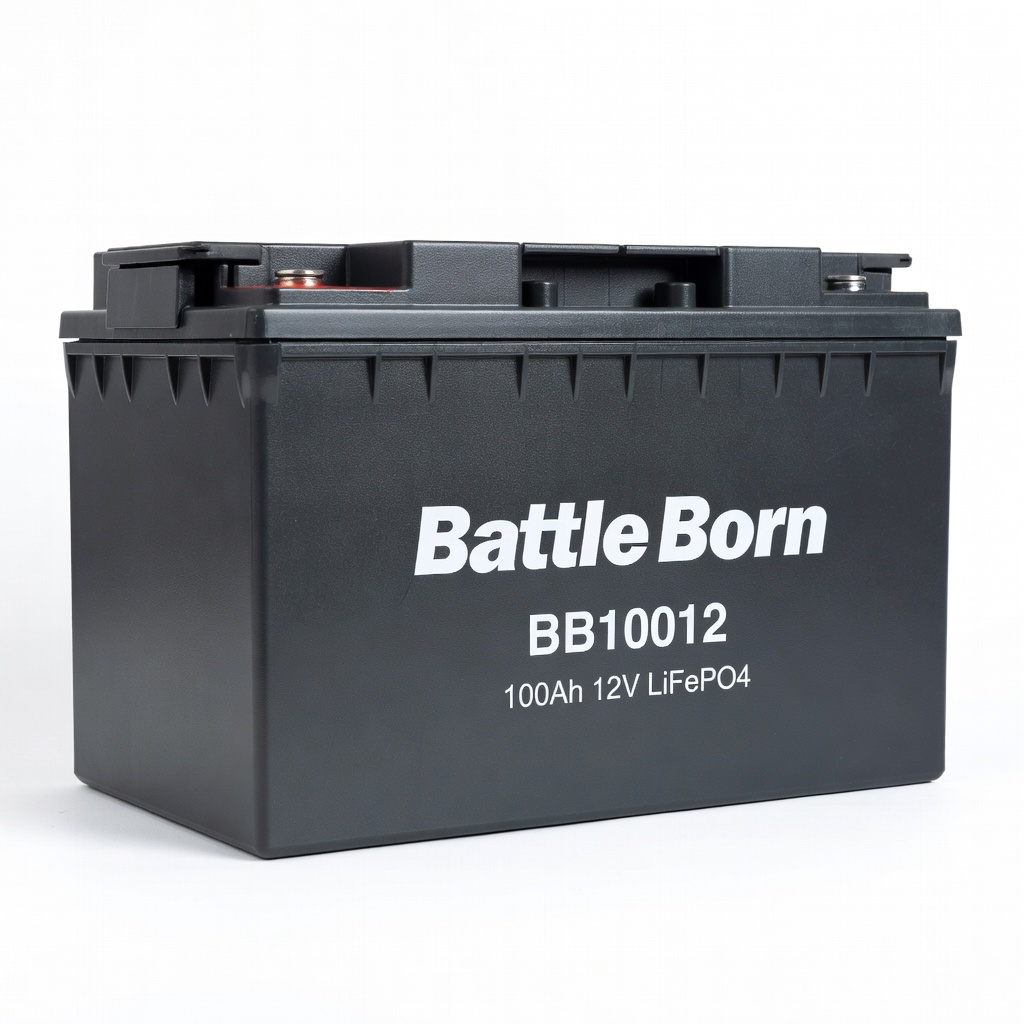
Battle Born BB10012 100Ah 12V LiFePO4
RVs/vans with 200-500W panels, high daily cycles.
$800-$900
Battle Born BB10012 100Ah 12V LiFePO4 Top cycle life (5000+), robust BMS, lightweight for solar mobility.
Get the App
Better experience on mobile
Master selecting top 12V batteries for solar in 2025: compare LiFePO4 vs AGM, size perfectly, and get reliable off-grid power storage.
In 2025, with rising energy costs and off-grid living booming, choosing the right 12V battery for your solar panels is crucial to avoid blackouts and wasted panels. Poor batteries lead to sulfation, short lifespans, and inefficiency—costing you hundreds in replacements.
This advanced guide breaks down battery types, specs, and top picks so you can calculate exact needs, compare chemistries like LiFePO4 vs. flooded lead-acid, and select the best for RVs, cabins, or marine solar setups. You'll learn to prioritize DoD, cycle life, and BMS integration.
Expect 25-35 minutes to read, evaluate your system, and decide—with pro-level insights minus fluff.
Estimated Time: 25-35 minutes Difficulty: advanced
Start with the fundamentals: 12V batteries for solar fall into lead-acid (flooded, AGM, Gel) and lithium (LiFePO4). Lead-acid is cheap but heavy, with 50% DoD limit and 300-500 cycles. LiFePO4 shines at 80-100% DoD, 3000-5000+ cycles, and 2.5x lighter—ideal for solar's intermittent charging.
Analogy: Lead-acid is like a gas tank (refuel often, shallow draws); LiFePO4 is a fuel cell (deep drains, fast recharge). For 2025 solar, prioritize LiFePO4 unless budget-constrained.
Expect: Match chemistry to use—AGM for vibration-prone RVs, LiFePO4 for stationary/cycling.
💡 Tips:
⚠️ Warnings:
Capacity (Ah) measures storage—e.g., 100Ah at 12V = 1200Wh usable at 100% DoD. C-rate (e.g., 1C discharge) dictates max draw; solar needs 0.2-0.5C for longevity.
Efficiency: Lead-acid 85-90%, LiFePO4 98%+ (less heat/loss). Check Peukert's law—high draws reduce effective Ah in lead-acid.
Why it matters: Undersized batteries cycle deeply, killing lifespan; oversize wastes money.
💡 Tips:
Factor panel output: 200W panels in 5 sun-hours = 1000Wh/day. Add 20-50% losses, aim for 2-3 days autonomy.
Example: 2000Wh load needs 200Ah LiFePO4 (at 100% DoD) or 400Ah AGM (50% DoD). Parallel for capacity, series for voltage (stay 12V).
Advanced: Use SOC monitoring via Bluetooth BMS.
⚠️ Warnings:
DoD is usable capacity %—critical for solar's partial charges. LiFePO4: 80-100% DoD, 4000 cycles to 80% capacity.
Cycle life: Full charge-discharge repeats. Solar daily cycles demand 2000+ minimum.
Test: Real-world, expect 10-year LiFePO4 life vs. 3-5 for AGM.
💡 Tips:
Solar extremes: LiFePO4 -4°F to 140°F discharge, with low-temp cutoff BMS. Lead-acid freezes at 50% SOC.
BMS must balance cells, protect from shorts. 2025 top picks have app monitoring (voltage, temp, SOC).
Benchmarks: Battle Born leads in cycles (5000+), Renogy in value. AGM like VMAX for budget.
Metrics table: Weigh cost/kWh ($0.10-0.30), weight (25lbs Li vs 60lbs lead).
Upfront: AGM $1.5/Ah, LiFePO4 $3-4/Ah—but Li pays back in 2 years via efficiency.
Warranty: 5-10 years on Li. Scale: Easy parallel up to 4-16 batteries.
💡 Tips:
⚠️ Warnings:
Fuse at 1.25x max current, equalize lengths. Ventilate lead-acid.
Maintenance: LiFePO4—plug-and-play; AGM—check electrolyte yearly.
Problem: Battery won't hold charge
Solution: Check connections, sulfation (desulfate lead-acid), or failing cells—replace if <80% capacity.
Problem: BMS cutoff during discharge
Solution: Verify low-temp or overload; reset via app, ensure 12V charger match.
Problem: Uneven bank voltages
Solution: Balance with individual chargers; replace outliers.
Problem: Overheating
Solution: Improve ventilation, downsize loads; seek pro for wiring faults.
Top cycle life (5000+), robust BMS, lightweight for solar mobility.
Best for: RVs/vans with 200-500W panels, high daily cycles.
Price Range: $800-$900
Bluetooth app, self-heating option, excellent value per cycle.
Best for: Cabins/home solar, scalable banks.
Price Range: $300-$400
Low-temp protection, 4000+ cycles, budget Li leader.
Best for: Marine/off-grid, cold climates.
Price Range: $250-$300
Deep cycle, spill-proof, cheapest upfront for beginners.
Best for: Backup/static solar under 1000Wh/day.
Price Range: $200-$250
Group 31 size fits vans, 500A surge for inverters.
Best for: High-draw inverters, mobile solar.
Price Range: $220-$280
RVs/vans with 200-500W panels, high daily cycles.
Battle Born BB10012 100Ah 12V LiFePO4 Top cycle life (5000+), robust BMS, lightweight for solar mobility.

Cabins/home solar, scalable banks.
Renogy 12V 100Ah LiFePO4 Battery Bluetooth app, self-heating option, excellent value per cycle.

Marine/off-grid, cold climates.
LiTime 12V 100Ah LiFePO4 with Bluetooth Low-temp protection, 4000+ cycles, budget Li leader.
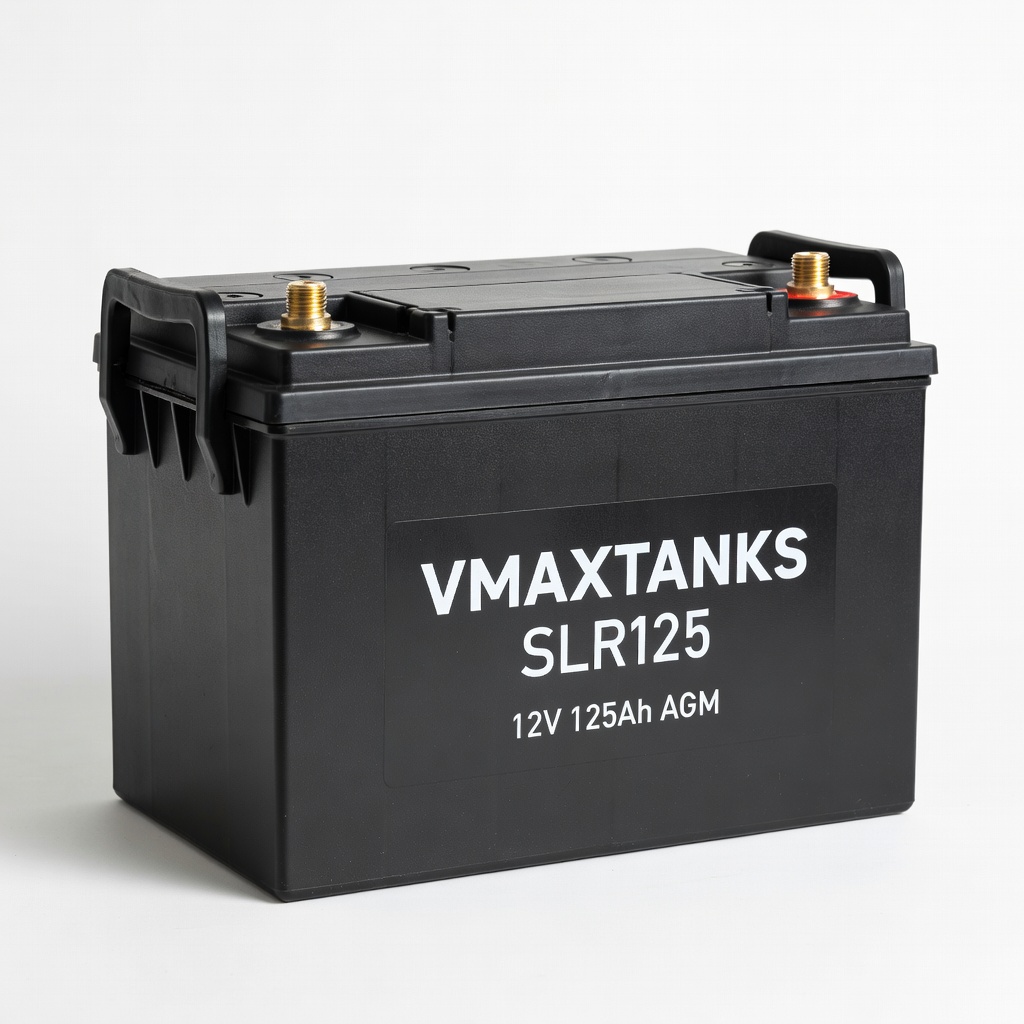
Backup/static solar under 1000Wh/day.
VMAXTANKS SLR125 12V 125Ah AGM Deep cycle, spill-proof, cheapest upfront for beginners.
High-draw inverters, mobile solar.
Redodo 12V 100Ah LiFePO4 Group 31 size fits vans, 500A surge for inverters.