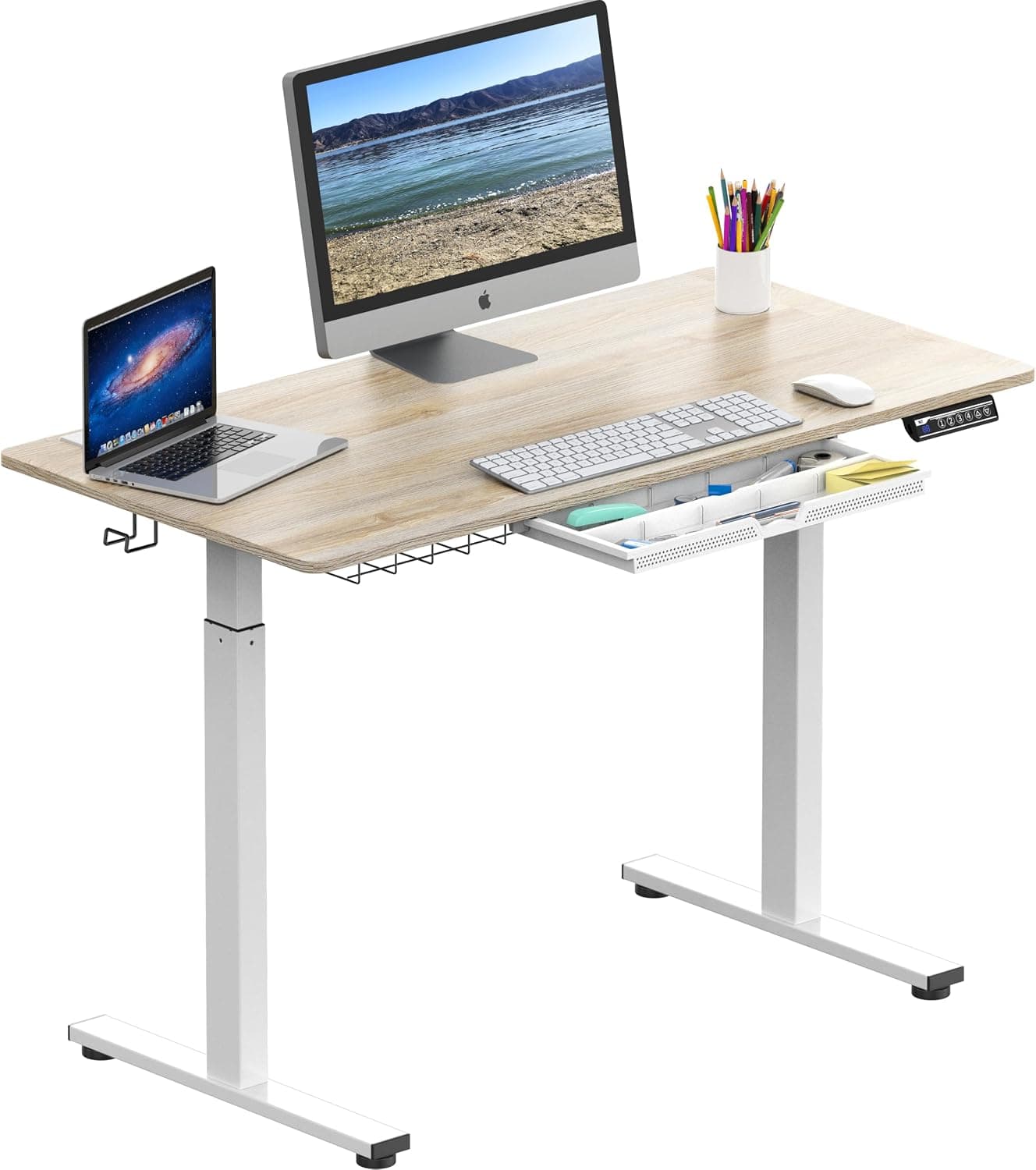
Prioritize motor stability, height range (armpit height standing), and weight capacity. Dual motors are quieter and more stable than single motors.
Prioritize motor stability, height range (your standing desk should reach armpit height when standing), and weight capacity. Dual motors are quieter and more stable than single motors.
The Short Answer
When shopping for a standing desk, focus on three pillars: motor quality, height range, and weight capacity. Single-motor desks are budget-friendly but can be slow and noisy; dual-motor models offer smoother, faster transitions and better stability. Your desk's top height must match your armpit height (about 42–48 inches for most people) to ensure proper ergonomics. Weight capacity (150–350 lbs) should cover your monitor, accessories, and future additions.
The Full Picture
Let's break down each factor so you can make an informed purchase—avoiding common pitfalls and getting the best value for your money.
Why This Matters
Standing desks are an investment in your health. Poor ergonomics from a desk that's too low or too high can cause neck, shoulder, and back pain. A wobbly desk disrupts focus. By understanding the key specs, you'll choose a desk that serves you for years.
The Key Factors
1. Motor System: Single vs. Dual
| Feature | Single Motor | Dual Motor |
|---|---|---|
| Speed | ~1 inch/sec | ~1.5–2 inch/sec |
| Noise | Moderate (50+ dB) | Quiet (45–50 dB) |
| Stability | Good for minimal loads | Excellent for heavy setups |
| Cost | $200–400 | $400–800+ |
Verdict: If you have a basic setup (single monitor, light accessories), a single motor can suffice. For dual monitors, a desktop full of gear, or frequent height changes, invest in dual motors.
2. Height Range
Your standing desk should reach elbow height when seated and armpit height when standing. Minimum sitting height: 25–29 inches. Maximum standing height: 47–51 inches. Measure your armpit while standing in shoes you'll wear.
Pro tip: A desk that goes too low (e.g., 23") is fine for very short users; a desk that doesn't go high enough (below 48") will force you to shrug your shoulders.
3. Weight Capacity
Check the manufacturer's rated capacity. Most dual-motor desks support 300–350 lbs. Single-motor desks usually handle 150–200 lbs. Remember: include monitor, mount, keyboard, books, and any future upgrades.
4. Desktop Size and Material
Standard widths: 48", 60", 72". Depth: 24–30". Choose a material that suits your aesthetic: solid wood (heavy but durable), laminate (light and affordable), or bamboo (eco-friendly).
5. Additional Features
- Programmable memory presets – saves your sit/stand heights
- Anti-collision sensors – stops movement if it hits an obstacle
- Cable management – trays or clips to keep cords tidy
- Stability – check reviews for wobble at full height
Common Mistakes to Avoid
- Ignoring motor type – A single-motor desk under a heavy load can fail prematurely.
- Overlooking height range – If the desk doesn't go high enough, you'll stand with bent elbows.
- Buying without checking your space – Measure your room width and depth first.
- Forgetting about shipping costs – Some desks ship for free; others add $100+.
When to Buy for Best Value
Timing your purchase can save 20–30%. Check our guides:
- Best Time to Buy Office Chairs (2026 Guide)
- Best Time to Buy Desks (2026 Guide)
- Best Time to Buy Ergonomic Office Chairs (2025 Guide)
Our Recommendation
For most people, the best standing desk is a dual-motor, 60-inch wide, laminate-top model with a height range of 25–50 inches and a weight capacity of 300+ lbs. Brands like Uplift, Jarvis, and FlexiSpot offer reliable options. If you're on a tight budget, a single-motor desk from Autonomous or Ikea can work, but expect more noise and less stability. Pair it with an ergonomic chair from our office chair guides for the complete setup.
Verdict
A standing desk is a long-term purchase. By prioritizing motor stability, proper height, and weight capacity, you'll avoid replacements and discomfort. Use our savings tips to buy at the right time, and you'll get a productivity-boosting workspace without breaking the bank.
Frequently Asked Questions
What is the ideal height for a standing desk?
The ideal standing desk height when standing is such that your elbows are at a 90-degree angle and your hands rest comfortably on the keyboard. For most people, this means the desktop should be at armpit height, typically 42-48 inches. When sitting, it should be at elbow height, around 25-29 inches. Measure your armpit while standing in your usual shoes.
How much does a good standing desk cost?
Good standing desks range from $200 to over $800. Budget single-motor desks cost $200-400 but may be noisier. Dual-motor desks with better stability and speed range from $400-800+. Premium models with solid wood tops and advanced features exceed $1000. For most users, investing $500-700 in a dual-motor desk offers the best balance of quality and value.
Why do standing desks wobble?
Standing desks wobble primarily due to insufficient build quality, especially with single motor legs or thin steel frames. A desk with a C-frame or T-frame base and crossbars minimizes wobble. Dual motor systems are typically more stable. Additionally, the desk's height affects stability; fully extended desks wobble more. Always check customer reviews for wobble reports at standing height.
Who should buy a single-motor standing desk?
A single-motor standing desk is suitable for users with light setups, such as a single monitor and minimal accessories, who don't adjust height frequently. It's also a budget-friendly option for those with limited funds. However, if you have a heavy desktop, multiple monitors, or plan to alternate between sitting and standing often, invest in a dual-motor desk for better stability and speed.
Products Mentioned