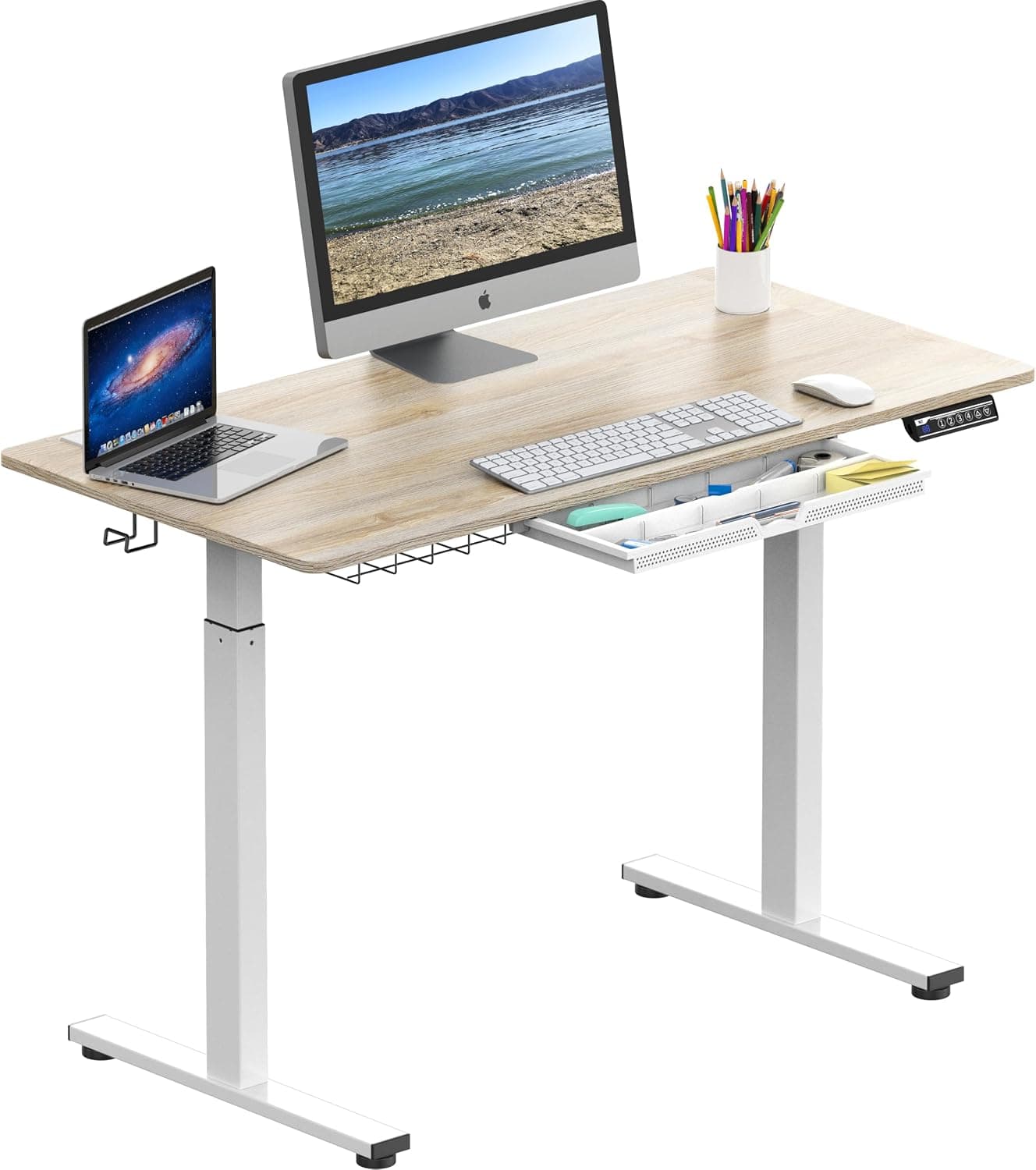
Prioritize motor stability, height range (armpit height when standing), and weight capacity. Dual motors are quieter and more stable than single motors.
The Short Answer
Prioritize motor stability, height range (your standing desk should reach armpit height when standing), and weight capacity. Dual motors are quieter and more stable than single motors.
The Full Picture
Standing desks have become a staple in ergonomic offices, but not all are created equal. With countless options on the market, it's easy to get overwhelmed by marketing jargon. This guide breaks down the critical factors to consider so you can invest in a desk that actually improves your health and productivity.
Why It Matters
Sitting for prolonged periods is linked to back pain, cardiovascular issues, and reduced focus. A quality standing desk lets you alternate between sitting and standing, promoting better posture, circulation, and energy levels. However, a poorly built desk can wobble, fail to adjust properly, or break down quickly—negating any benefits.
The Key Factors
1. Motor System: Single vs. Dual Motors
Dual-motor desks are the gold standard. They lift heavier loads with less strain, operate quieter, and provide smoother height transitions. Single-motor desks work for light setups (monitor + laptop) but may struggle with stability and speed when loaded.
| Feature | Single Motor | Dual Motor |
|---|---|---|
| Noise Level | Moderate (whining under load) | Low (smooth, consistent) |
| Load Capacity | 80–120 lbs | 200–350 lbs |
| Speed | ~1.5 inches/sec | ~1.8 inches/sec |
| Stability at Max Height | Moderate wobble | Stable even at standing height |
| Price | $300–$500 | $500–$800+ |
Verdict: Budget permitting, choose dual motor. If you only plan to hold a laptop and don't stand often, a single motor may suffice.
2. Height Range
Your desk must drop low enough for sitting ergonomics (around 25-26 inches for most) and rise high enough for standing with elbows at 90°. The key measure: armpit height. When standing, the desk top should sit just below your armpits with relaxed shoulders. Most quality desks offer 25–50 inches range. If you're particularly tall (6'5"+) or short (5'0"-), look for desks with extended ranges.
3. Weight Capacity
This isn't just about lifting your gear—it's about stability. A desk rated for 300 lbs will feel more solid at standing height with a dual-monitor setup than one rated for 150 lbs. Always factor in monitors, arms, laptop, and any other peripherals.
4. Stability and Wobble
Wobble is the #1 complaint for cheap standing desks. It's most noticeable at standing height and when typing. Causes include:
- Single motor (asymmetric lift)
- Thin legs or crossbars
- Lightweight frame
- Unleveled feet
Look for desks with:
- Steel frame (vs. aluminum)
- Crossbeam between legs
- Reinforced leg columns (e.g., three-stage vs. two-stage)
- Auto-leveling feet
5. Desktop Material and Size
The surface should be durable, scratch-resistant, and appropriate for your gear. Options:
- Laminate: Affordable, easy to clean, but can chip
- Solid Wood: Premium, repairable, heavy
- Bamboo: Eco-friendly, warm look, moderate durability
Width: 60" is standard (accommodates dual monitors). 72" for ultrawide or multi-monitor setups.
6. Programming and Memory Presets
Must-have feature if you share the desk or switch positions frequently. Look for at least 4 memory presets. Digital displays are handy but not essential.
7. Cable Management
A mesh tray or under-desk cable raceway saves headaches. Some desks include built-in grommets for routing cables.
8. Warranty and Customer Support
Standing desks should last 5–10 years. Look for:
- Frame warranty: 5–15 years
- Motor warranty: 2–5 years
- Electronics warranty: 1–2 years Avoid brands with less than 2 years on motors.
Common Mistakes to Avoid
Mistake 1: Buying a desk too short for standing. Many budget desks max out at 46 inches—fine for short users, but if you're over 5'10", you'll end up hunched.
Mistake 2: Ignoring the importance of shipping. Large, heavy boxes often incur freight charges. Measure your doorways and stairs before ordering.
Mistake 3: Skimping on the desktop quality. Thin particleboard tops can sag under monitor arms. At least 1-inch thickness is recommended.
Mistake 4: Not planning your accessory budget. Monitor arms, mat, and cable management can add $200+ to the total cost.
Timing Your Purchase
Like many office products, standing desks go on sale during major shopping events. To get the best deal, check our Best Time to Buy Desks (2026 Guide) and Best Time to Buy Office Chairs (2026 Guide) for complementary seating. If you're also upgrading your chair, our Best Time to Buy Ergonomic Office Chairs (2025 Guide) can help you save.
Our Recommendation
Best Overall (Value): A dual-motor frame with a 60" x 30" laminate top, 300 lb capacity, and 5-year warranty. Expect to pay $500–$700.
Best for Tall Users (6'3"+): Look for a desk with a height range starting below 25" and reaching at least 50". Consider a three-stage leg design for extra stability.
Best for Tight Budgets ($300–$400): A manual crank or single-motor desk with a solid frame but limited memory. Accept that wobble may occur at max height.
If You Share a Desk: Invest in a desk with at least 4 memory presets and a quiet motor—dual motor is non-negotiable.
Final Verdict: A standing desk is an investment in your health. Pay the premium for dual motors, ample height range, and a solid warranty. The cost of a cheap desk (replacement, frustration, health issues) far outweighs the upfront savings.
Frequently Asked Questions
What is the best height for a standing desk?
The ideal standing desk height is at or just below your armpits when standing with relaxed shoulders and elbows at 90°. Most people require a range of 25–50 inches. For sitting, the desk should be around 25-26 inches. Adjustable desks allow you to switch between both.
How much should I spend on a standing desk?
Budget $300–$800 for a quality electric standing desk. Entry-level single-motor desks cost $300–$500 but may lack stability. Dual-motor desks with good stability and higher weight capacity range from $500–$800+. Premium solid-wood desks can exceed $1,000. Consider warranty and motor quality as long-term investments.
Why are dual motor standing desks better than single motor?
Dual motors lift heavier loads (up to 350 lbs) more smoothly and quietly than single motors. They provide better stability at standing height, faster adjustment speeds, and less strain on the mechanism. Single motors are adequate for light setups but often wobble under heavy loads. For most users, dual motors offer superior performance and durability.
How long do standing desks last?
With proper care, a quality standing desk can last 5–10 years. Frame warranties typically cover 5–15 years, motors 2–5 years, and electronics 1–2 years. Dual-motor desks with steel frames tend to outlast single-motor aluminum ones. Regular cleaning and avoiding overloading help extend lifespan.
Products Mentioned