Match the vacuum to your flooring type and home size. Homes with pets need strong suction and self-emptying bins; apartments prioritize quiet operation and slim profile.
Match the vacuum to your flooring type and home size. Homes with pets need strong suction and self-emptying bins; apartments prioritize quiet operation and slim profile. These two factors alone will narrow your options from dozens to a handful of worthy contenders.
The Short Answer
Start by identifying your primary flooring (hardwood, tile, carpet, or mix) and the square footage. For homes with pets, look for models with at least 2,500Pa suction and a self-emptying base to minimize dander. If you live in an apartment, noise levels under 55dB and a height below 3.5 inches matter most. For larger homes (over 2,000 sq ft), battery life of 120+ minutes or a battery auto-return feature is essential.
The Full Picture
Robot vacuums have evolved from novelty gadgets to essential home appliances. But with hundreds of models spanning $200 to $1,500, choosing wrong means wasted money and persistent dust bunnies. Below, we break down the five key decisions you must make before clicking “buy.”
1. Flooring Type
The most critical spec is suction power and brush design. Hard floors: Choose a model with a floating brush roll that doesn’t scratch; direct suction without bristles is best. Medium-pile carpets: Suction of 2,000–2,500Pa works. High-pile or shag: You need a self-adjusting brush roll and at least 3,000Pa. For mixed flooring, ensure the vacuum transitions seamlessly (check the drop-off sensor height).
2. Home Size & Layout
| Home Size | Battery Requirement | Navigation Type | Suggested Budget |
|---|---|---|---|
| < 1,000 sq ft | 60–90 min | Gyro or random | $200–$400 |
| 1,000–2,000 sq ft | 90–120 min | LiDAR or SLAM | $400–$700 |
| > 2,000 sq ft | 120+ min or auto-empty | LiDAR + waypoints | $700+ |
Open floor plans benefit from LiDAR navigation, while multi-room layouts with many walls can get by with gyro sensors. Stairs? Verify cliff sensors are reliable.
3. Pet-Specific Needs
Pet hair tangles in brushes, gets trapped in dustbins, and creates airborne allergens. Look for:
- Self-emptying base – reduces daily bin digging.
- Tangle-free brush roll – often a rubber comb or v-blade design.
- HEPA filter (true HEPA, not just “washable”) – captures dander.
- High suction (≥2,500Pa) to lift embedded fur from carpets.
Many premium models (e.g., Roomba j7+, Roborock Q5 Pro) excel here. For budget pet options, check the Eufy X8 Hybrid.
4. Smart Features vs. Privacy
Wi-Fi, app control, voice assistants – today’s robot vacuums are smart. But consider: Do you need to see a map on your phone, or is a simple schedule enough? Cameras and LiDAR maps can be privacy concerns if you’re uneasy with data being stored on cloud servers. Models with on-device processing (like Roborock S8) keep mapping offline. If privacy is paramount, avoid vacuums with live camera feeds.
5. Maintenance & Long-Term Costs
Robots aren’t “set and forget.” Factor in filter replacements (every 3–6 months), brush roll swaps (yearly), and battery replacements (every 2–3 years). Some brands like iRobot offer affordable consumables; others like Dyson cost more. Self-emptying models reduce manual dustbin emptying but add bag costs. Over 3 years, a $500 vacuum with $100/year consumables can cost $800 total.
Common Mistakes
- Buying too much robot for your space – A $1,000 model in a 400 sq ft apartment is overkill. Spend the savings on a handheld vacuum for touch-ups.
- Ignoring furniture height – Many robots can’t clear low sofa legs taller than 4 inches. Measure your gaps first.
- Forgetting about thresholds – If you have 0.5-inch transition strips, ensure the vacuum’s climb angle is ≥15°.
- Choosing based solely on price – A $200 vacuum may lack mapping, forcing random cleaning that wastes time and battery.
Our Recommendation
- For pet owners on carpet: Roborock S8 Pro Ultra – excellent tangle-free brush, HEPA filter, and self-emptying base. Pair it with a deal from our Best Time to Buy Robotic Vacuums guide to save up to 30%.
- For apartment dwellers with hardwood: iRobot Roomba 694 – compact (3.5” tall), quiet (55dB), and under $300. Check our Best Time to Buy Clothes Dryers guide – wait, that’s unrelated. Actually, time your vacuum purchase with seasonal sales using our Best Time to Buy Refrigerators guide logic (same Black Friday/Cyber Monday patterns apply).
- For large homes with mixed floors: Eufy X10 Pro Omni – long battery, LiDAR, and auto-empty bin. For more buying insights, see our Best Time to Buy Washer Dryer Combos 2025 article – the appliance purchase calendar is similar.
Ultimately, the right robot vacuum matches your floor reality, not your neighbor’s. Measure your home, list your non-negotiables, and then hunt for deals using our timing guides above.
Frequently Asked Questions
What is the best robot vacuum for pet hair in 2026?
For pet hair, prioritize models with ≥2,500Pa suction, a tangle-free brush roll, true HEPA filter, and a self-emptying base to reduce dander. Top picks include the Roborock S8 Pro Ultra for carpet and the Eufy X8 Hybrid for budget. Avoid models without rubber brushes or basic filters.
How often should you replace robot vacuum filters and brushes?
Replace filters every 3–6 months depending on usage and pet dander. Brush rolls should be swapped yearly or when you notice reduced pickup. Batteries typically last 2–3 years. Self-emptying models add bag costs (replace every 1–2 months). Always check your vacuum's app for maintenance reminders.
Why does my robot vacuum keep getting stuck?
Common causes: furniture legs lower than 4 inches, thresholds over 0.5 inches, dark rugs or floors (confuse cliff sensors), loose cords, and clutter. Measure your furniture clearance first. Ensure thresholds are within the vacuum's climb angle (≥15°). For persistent issues, use virtual barriers or no-go zones in the app.
Who should buy a self-emptying robot vacuum?
Self-emptying bases are ideal for pet owners (minimizes dander exposure), people with allergies, and those cleaning over 1,500 sq ft. They reduce emptying frequency to once every 1–2 months instead of daily. However, they add cost (usually $100–200 extra) and ongoing bag expenses. Budget-conscious users may skip this feature.
Products Mentioned
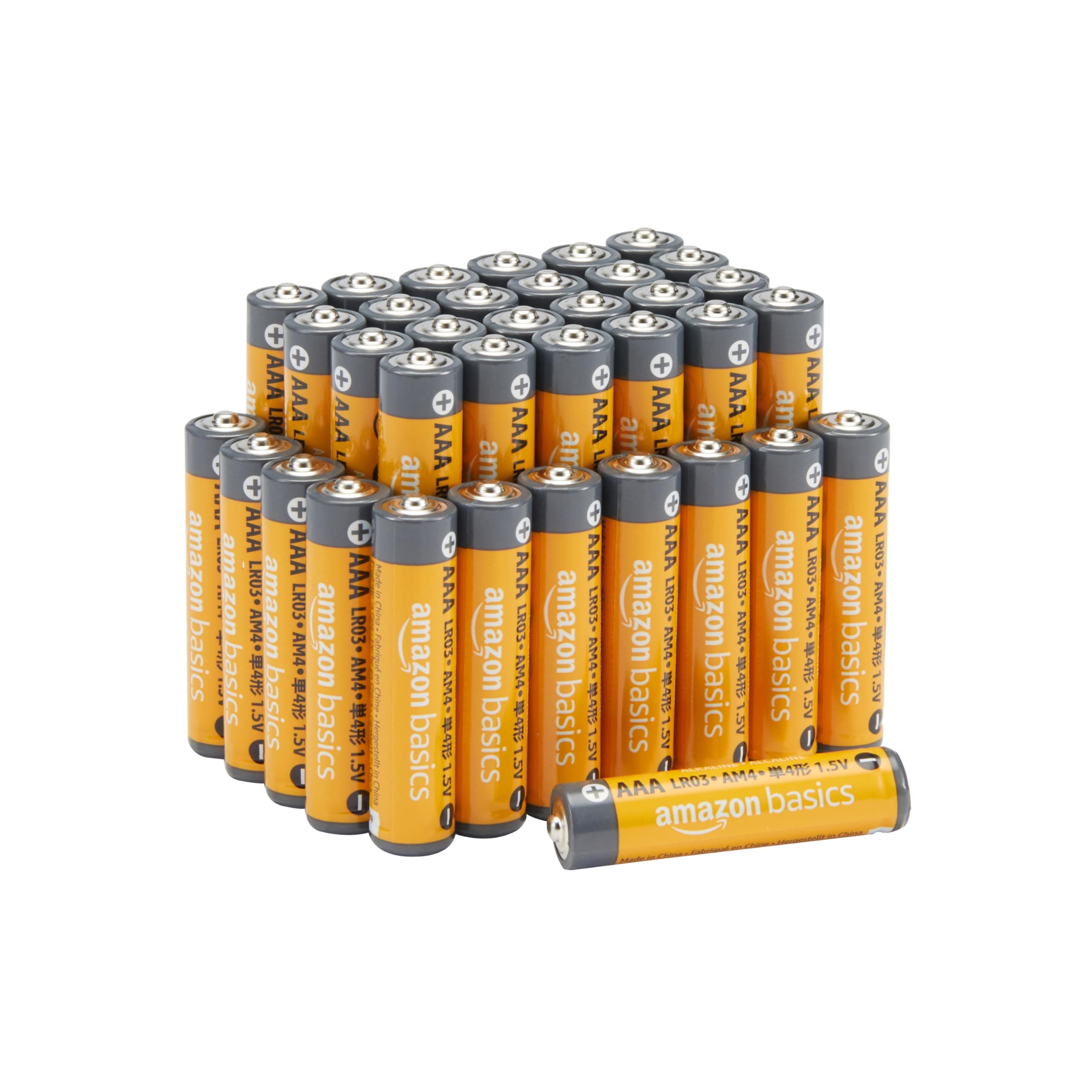
Amazon Basics AAA Alkaline High-Performance Batteries, 1.5 Volt, 10-Year Shelf Life, 36 Count (Pack of 1)
Amazon Basics