Match the vacuum to your flooring type and home size. Homes with pets need strong suction and self-emptying bins; apartments prioritize quiet operation and slim profile.
Match the vacuum to your flooring type and home size. Homes with pets need strong suction and self-emptying bins; apartments prioritize quiet operation and slim profile. Once you know your primary surfaces and the square footage you need to cover, the rest is about navigation, maintenance, and budget.
The Short Answer
Choosing a robot vacuum comes down to matching the machine to your lifestyle, not just the price tag. Here’s the quick breakdown:
- Hardwood or tile floors? Any robot vacuum will glide easily, but consider one with a mop attachment to handle wet messes.
- Wall-to-wall carpet? Look for at least 2,500 Pa of suction and a rubber roller to avoid tangles.
- Pets shedding everywhere? The self-emptying dock and a tangle-free brush are non-negotiable.
- Live in a compact apartment? Prioritize a slim profile (under 4 inches) and a quiet motor (under 55 dB) for late-night cleaning.
- Large home over 2,000 sq ft? Focus on battery life (over 120 minutes) and a mapping system that resumes after recharging.
For a deeper dive into the best time to buy robot vacuums — sales events, new-model launches, and price trends — check our Best Time to Buy Robotic Vacuums guide.
The Full Picture
The robot vacuum market has exploded. There are now models with laser mapping, AI obstacle avoidance, self-emptying docks, and even mop-and-vacuum hybrids — with prices ranging from $150 to over $1,500. The real question is: What do you actually need?
Why does this matter? Because a $1,200 robot vacuum is a waste of money if you have a single-floor apartment with no pets. Conversely, a budget $250 model will drive you insane if it gets stuck on cables every day or needs its bin emptied twice per cleaning session. The right robot vacuum saves hours each week; the wrong one becomes a $300 paperweight.
The good news? You don't need to be an engineer to figure it out. Just work through these five key factors, and you'll land on the right machine for your home.
The Key Factors
Flooring Type
Your floors are the biggest deciding factor. Robot vacuums handle hard floors and low-pile carpets easily, but medium-pile or high-pile carpets require more suction. For mixed flooring, look for a robot that automatically boosts suction when it detects carpet. If you have thick rugs, make sure the robot's bumper height is tall enough not to get stuck on rug edges.
Home Size
Square footage directly impacts battery life and navigation. In a small apartment, even a basic robot with random navigation can clean a room in 30 minutes. In a multi-level house, you'll want one with mapping that remembers multiple floor plans and can be moved between floors. For homes over 2,000 sq ft, opt for a model with a self-empty dock so you don't have to empty the bin constantly.
Pet Hair and Allergens
Pet owners face three challenges: fur, dander, and messes. Strong suction is essential (2,500 Pa minimum), but a tangle-free brush roll is even more important — otherwise, you'll spend 15 minutes cutting hair off the brush every week. A self-emptying base is also a game-changer because you can fit up to 60 days of debris in the dock. If you or your family have allergies, look for models with HEPA filters, which trap fine dust and pollen.
Quiet Operation and Slim Profile
Apartments and homes with kids or pets that sleep during the day need a quieter model. Noise levels are measured in decibels (dB) — typical robot vacuums range from 58 to 75 dB. A vacuum under 60 dB is quiet enough for daytime cleaning without disrupting Zoom calls or baby naps. Also check the height. Under-furniture clearance is typically around 3.5 to 4.5 inches. Measure the gap under your sofa and bed before you buy.
Smart Features and Navigation
Mapping and navigation determine how well the robot cleans. Infrared bump-navigation models are cheaper but clean randomly, often missing spots. LiDAR or camera-based mapping creates a floor plan and cleans in efficient rows. If you want the robot to avoid charging cables, pet poop, and shoes, look for AI obstacle avoidance — a feature now available in mid-range models. These are also worth it if you plan to run the vacuum while you're away from home.
The Self-Emptying Base
This is the biggest convenience factor since the original Roomba. Instead of emptying the dustbin every day, a self-emptying dock sucks the debris into a sealed bag that holds up to 60 days of dirt. It adds $150-300 to the price, but for homes with pets or larger areas, it's worth every penny. Replacing the bag costs around $5-15 per month — a small price for never touching dust again.
Comparison Table: Which Features Matter for Your Home
| Home Profile | Must-Have Features | Nice-to-Have Features |
|---|---|---|
| Pet owners | Strong suction (2,500+ Pa), tangle-free brush, self-emptying dock, HEPA filter | AI obstacle avoidance, mopping capability |
| Apartment dwellers | Slim profile (< 4"), quiet motor (< 60 dB), small footprint | Wi-Fi controls, no-go zones |
| Hardwood/tile floors | Water tank or mop pad, gentle wheels, no scratch brush | Auto-boost suction (for area rugs) |
| Large homes (2,000+ sq ft) | Long battery (> 120 min), mapping and auto-resume, self-emptying dock | Multiple floor maps, remote scheduling |
| Mixed flooring | Carpet detection, suction auto-boost, height clearance | Mop-and-vacuum hybrid with sensor for rugs |
Common Mistakes
- Buying way more suction than you need. If you have all hard floors, 2,000 Pa is overkill. Suction numbers matter only for carpet.
- Ignoring height clearance. Get a tape measure before you buy. A vacuum that’s 4.5 inches tall will never fit under your 3.5-inch sofa, no matter how good the navigation is.
- Skipping the self-emptying dock for pet homes. Trust me, you will resent emptying the little bin every day. The dock pays for itself in sanity.
- Not researching obstacle avoidance for homes with cords or kids. That $400 budget model might get tangled in a charging cable daily, making it effectively useless.
- Forgetting about the price of replacement parts. HEPA filters, brushes, mop pads, and side brushes need periodic replacement. Check availability and cost before you buy.
Our Recommendation
If you have pets and carpets: Get a robot vacuum with a self-emptying dock, 2,500+ Pa suction, and a tangle-free brush roll. The extra $200 prevents a week of mess and frustration.
If you live in an apartment or have hardwood floors: Prioritize a slim, quiet model with a mop attachment and basic mapping. You don't need a self-emptying dock unless you're vacuuming more than 500 sq ft.
If you have a large, multi-floor house: Choose a robot with LiDAR mapping, multiple floor plans, and auto-resume. Check battery life carefully — if it can't cover a floor in one session, it should resume charging and revisit missed spots.
For budget-conscious buyers, consider buying during major sales events like Black Friday, Prime Day, or the new-model cycle. Our Best Time to Buy Robotic Vacuums guide covers the annual price patterns. And if you're also shopping for other smart-home gear, the same seasonal logic applies to bottom freezer refrigerators and clothes dryers — both follow predictable sales calendars.
Verdict
Choosing the right robot vacuum is about matching features to your floors, your population (human and pet), and your home's layout. Decide on your top two priorities (e.g., pet hair and self-emptying), set a budget, and then compare a shortlist of models that hit those marks. You'll end up with a device that saves time without asking for extra maintenance. And remember: the best vacuum is the one you actually want to run every day.
That's our comprehensive guide. We hope this helps you find your perfect match.
Frequently Asked Questions
What is the difference between LiDAR and camera-based navigation in robot vacuums?
LiDAR uses lasers to map your home by emitting pulses and measuring reflections, creating an accurate floor plan even in the dark. Camera-based navigation uses visual sensors to recognize landmarks and obstacles, but can struggle in low light. LiDAR is typically more precise and reliable, while camera systems can be cheaper but may require more light to operate effectively.
How do I prepare my home for a robot vacuum?
Before the first run, pick up loose cables, clothing, and small toys that could get tangled. Secure rugs with non-slip pads, and block off areas you don't want cleaned. Clear low clearance under furniture if the robot is taller than the gap. Also, remove pet bowls and breakable items from the floor. Regular prep reduces the risk of the vacuum getting stuck or damaging objects.
Why do robot vacuums get confused on dark floors or rugs?
Robot vacuums use cliff sensors and optical sensors to navigate. Dark surfaces absorb infrared light, making it hard for the sensors to detect drops or obstacles. As a result, the vacuum may think there's a cliff and reverse, or it may skip cleaning dark rugs entirely. To avoid this, keep lights on or use a robot with camera-based navigation that doesn't rely on infrared.
Who should not buy a robot vacuum?
If you have a small, clutter-free studio with no pets, a manual vacuum may be sufficient and more affordable. Robot vacuums also aren't ideal if you have high-pile carpets that require deep cleaning, or if you have many areas with awkward angles and stairs that the robot can't navigate. They add convenience but aren't a substitute for a cordless stick vacuum in all homes.
Products Mentioned
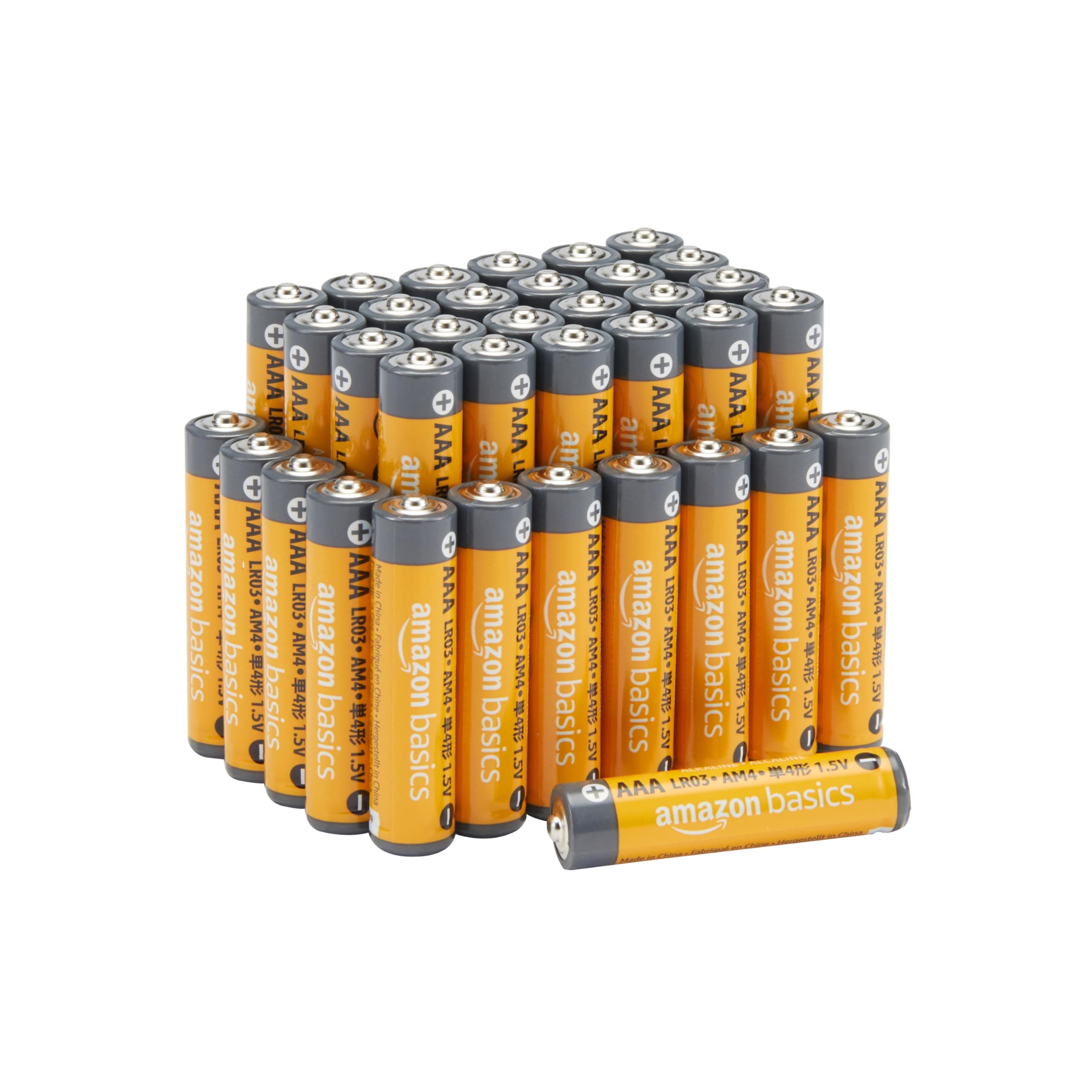
Amazon Basics AAA Alkaline High-Performance Batteries, 1.5 Volt, 10-Year Shelf Life, 36 Count (Pack of 1)
Amazon Basics