Match the vacuum to your flooring type and home size. Homes with pets need strong suction and self-emptying bins; apartments prioritize quiet operation and slim profile.
Match the vacuum to your flooring type and home size. Homes with pets need strong suction and self-emptying bins; apartments prioritize quiet operation and slim profile.
The Short Answer
To choose the right robot vacuum, first identify your primary flooring (carpet, hardwood, or tile), presence of pets, home size, and whether you value silence or self-maintenance. Then match those needs to a model's suction power, navigation technology, bin capacity, and noise level. For most homes, a mid-range robot with LiDAR mapping and a self-emptying dock offers the best balance of convenience and cost. For detailed pricing windows, see our Best Time to Buy Robotic Vacuums (2026 Guide).
The Full Picture
Robot vacuums have evolved from gimmicks to essential home helpers, but with hundreds of models available, choosing one can be overwhelming. Here's how to break down the decision into manageable factors.
Flooring Type
- Hard floors (wood, tile, laminate): Look for a robot with soft rubber brushes and a water-mopping function. Avoid models with aggressive beater bars that can scratch surfaces. Suction power over 2,000 Pa is sufficient.
- Carpet: High-pile carpets require strong suction (3,000+ Pa) and a brush roll that can handle fibers. Some models automatically boost suction on carpet detection. For deep cleaning, consider a model with twin rubber brushes that resist tangling.
- Mixed flooring: Choose a robot with a sensor that automatically adjusts suction and brush speed when transitioning between surfaces.
Home Size and Layout
- Small apartments (<1,000 sq ft): A compact model with a slim profile (<3.5 inches) can clean under furniture. Batteries around 2,000 mAh are sufficient. Quieter operation (under 55 dB) is a plus.
- Medium homes (1,000–2,500 sq ft): Look for a robot with LiDAR or vSLAM navigation for systematic cleaning. A battery life of 100+ minutes ensures coverage without recharging. Self-emptying bins are convenient.
- Large homes (>2,500 sq ft): Prioritize battery life (150+ minutes), large dustbin (500+ mL), and multi-zone cleaning. Some models support multiple floors without losing maps.
Pets and Allergies
Pets bring hair, dander, and messes. Key features:
- Strong suction: 4,000+ Pa for deep carpet cleaning.
- Self-emptying bin: Minimizes contact with pet hair and dust.
- HEPA filter: Captures allergens (especially important if you also run an air purifier; see our Best Time to Buy Air Purifiers (2026 Guide)).
- Brush design: Rubber brushes resist hair tangling better than bristle brushes.
Navigation and Mapping
- Random bounce: Cheap and incomplete. Avoid unless you have a small, empty room.
- Gyroscope: Slightly better but still inefficient.
- LiDAR or vSLAM: These create accurate maps and clean in systematic rows. vSLAM uses cameras and may work better in bright light; LiDAR works in darkness. For multi-room homes, this is essential.
- Real-time obstacle avoidance: Top models now use AI to recognize cables, pet waste, and socks. Worth the premium if you have clutter.
Additional Features
- Self-emptying dock: Great for convenience, but adds cost and occupies floor space. Emptying frequency goes from daily to every 30–60 days.
- Mopping: Basic models drag a wet cloth; better models have vibrating or spinning pads with water level control. Useful for hard floors but not a substitute for a real mop.
- Voice control and smart home integration: Works with Alexa, Google Home, or Apple HomeKit. Some robots can be triggered by smart door sensors or routines. For more on smart home timing, see our Best Time to Buy Refrigerators (2026 Guide) (smart fridges often pair with other smart devices).
- Noise level: Quiet operation (under 55 dB) is crucial for apartments or baby rooms. Vacuum-only modes are typically louder than mopping.
Comparison: Budget vs. Premium vs. Pet-Specific
| Feature | Budget ($200–$400) | Premium ($600–$1,200) | Pet-Specialist ($500–$800) |
|---|---|---|---|
| Suction | 1,500–2,500 Pa | 3,500–6,000 Pa | 4,000–5,500 Pa |
| Navigation | Gyroscope/random | LiDAR + AI obstacle avoidance | LiDAR with pet hair detection |
| Self-emptying | Optional | Included | Usually included |
| Brush | Bristle | Rubber or combo | Tangle-resistant rubber |
| Filter | Basic | HEPA | HEPA with anti-allergen seal |
| Battery | 60–90 min | 120–180 min | 100–150 min |
| Mopping | Gravity-feed | Smart water control | Disposable pads or vibrating |
| Noise | 60–70 dB | 50–65 dB | 55–65 dB |
| Example | Entry-level brands | Roborock S8, iRobot j9 | Neato D10, Roomba j7+ |
Common Mistakes
- Ignoring mapping quality: Random-bounce robots waste time and miss spots. Invest in LiDAR or vSLAM.
- Choosing based on suction alone: High suction on a poorly designed brush or filter is ineffective. Look at overall cleaning performance.
- Forgetting about the bin: A tiny bin means frequent emptying. Self-emptying docks are a game-changer for large homes or pet households.
- Assuming all robot vacuums work on carpet: Some cheap models can't climb or clean high-pile carpets. Check specifications.
- Overlooking noise: A noisy robot can disrupt work, sleep, or pets. Check decibel ratings.
Our Recommendation
For most households, the best all-rounder is a mid-priced robot vacuum (around $500–$800) with LiDAR navigation, strong suction (3,500+ Pa), a self-emptying dock, and HEPA filtration. If you have pets, prioritize tangle-resistant rubber brushes and a self-emptying bin. Apartment dwellers should look for a slim, quiet model (under 3.4 inches and 55 dB). Budget shoppers can find decent options in the $200–$300 range but will sacrifice mapping and suction.
Specific picks:
- Best for pets: Roborock Q Revo (self-emptying, 5,500 Pa, rubber brush)
- Best for hardwood: iRobot Braava jet m6 (excellent mopping) paired with a Roomba j7+
- Best budget: Eufy RoboVac X8 (LiDAR, 2,500 Pa, good for small homes)
Timing your purchase can save you significant money. Robot vacuums see major discounts during Black Friday, Prime Day, and January clearance sales. For exact deal windows, bookmark our Best Time to Buy Robotic Vacuums (2026 Guide). Similarly, if you're considering other appliances like air purifiers or refrigerators, check our timing guides to plan your purchases together.
Verdict: Don't overbuy. A $600 robot that matches your home's specific needs will outperform a $1,200 model that doesn't. Measure your floors, note your priorities, and then choose accordingly.
Frequently Asked Questions
How long do robot vacuum batteries last?
Robot vacuum batteries typically last 2–4 years depending on usage and maintenance. Li-ion batteries degrade over time, with daily use reducing lifespan faster. Signs of aging include reduced run time and inability to hold a charge. Most manufacturers offer replacement battery kits, extending the vacuum's life for another 1–2 years. To maximize life, avoid fully draining the battery and keep it in a cool, dry place.
Why do robot vacuums need LiDAR?
LiDAR (Light Detection and Ranging) enables precise mapping and systematic cleaning in rows, unlike random-bounce or gyroscope navigation. It works in darkness and creates accurate room maps for efficient coverage, no-go zones, and multi-floor support. LiDAR-based robots clean faster and cover more area in less time, making them essential for larger homes and those with complex layouts.
What is the best robot vacuum for pet hair?
The best robot vacuum for pet hair features strong suction (4,000+ Pa), tangle-resistant rubber brushes, a self-emptying bin with HEPA filter, and LiDAR navigation. Models like the Roborock S8, iRobot Roomba j7+, and Neato D10 excel in picking up pet hair from carpets and hard floors. Key is a brush design that resists hair tangling and a large dustbin to minimize emptying.
When should I replace my robot vacuum?
Replace your robot vacuum when it no longer meets your cleaning needs—usually every 3–5 years. Signs include battery life dropping below 60 minutes, frequent navigation errors, poor cleaning performance despite maintenance, or lack of software updates. If repair costs exceed half the price of a new model with better features (e.g., more suction, self-emptying), it's time to upgrade.
Products Mentioned
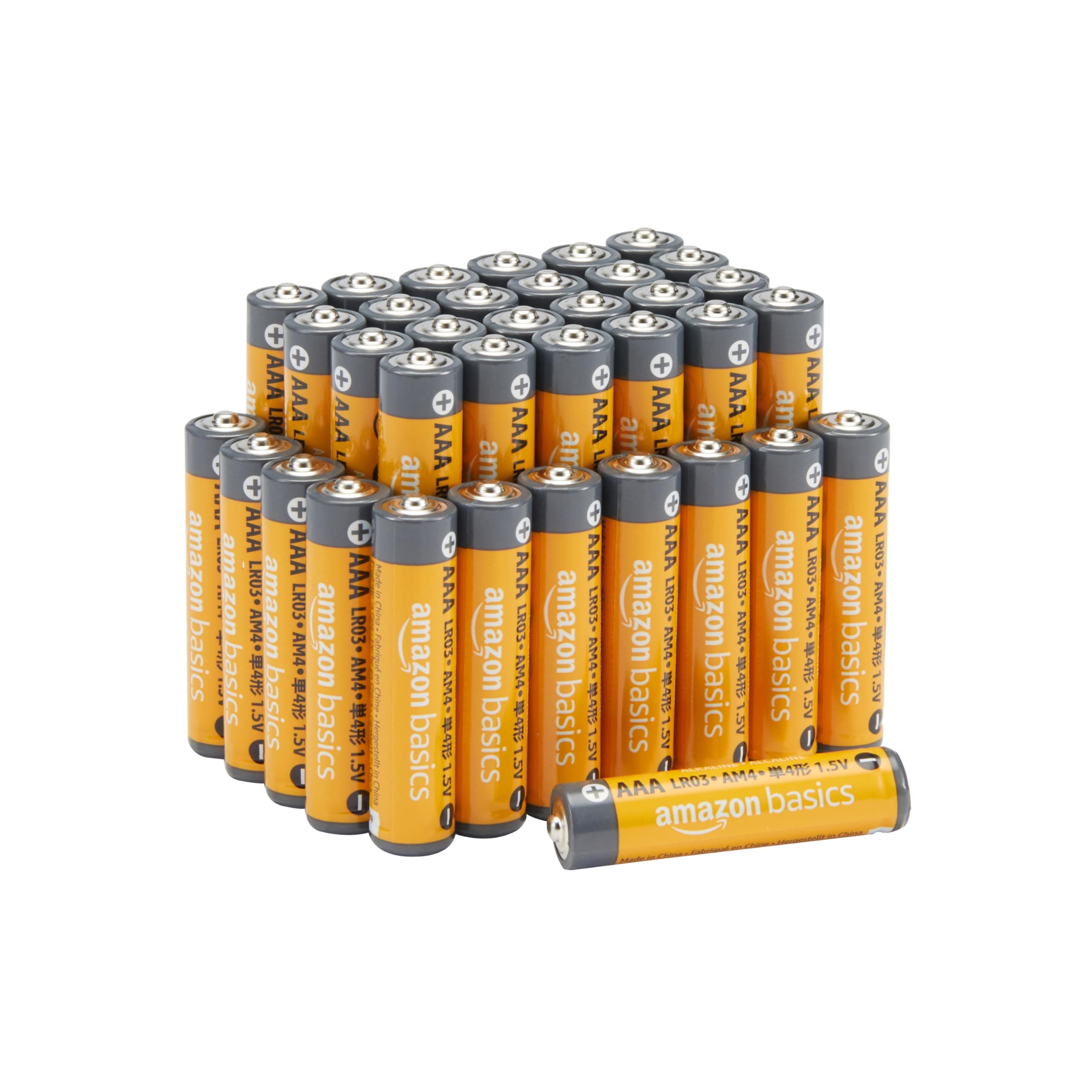
Amazon Basics AAA Alkaline High-Performance Batteries, 1.5 Volt, 10-Year Shelf Life, 36 Count (Pack of 1)
Amazon Basics