Match the vacuum to your flooring type and home size. Homes with pets need strong suction and self-emptying bins; apartments prioritize quiet operation and slim profile.
Match the vacuum to your flooring type and home size. Homes with pets need strong suction and self-emptying bins; apartments prioritize quiet operation and slim profile. That's the core of choosing a robot vacuum, but there's more to consider for a perfect fit.
The Short Answer
- Floor type: Hard floors need a brushroll that doesn't scatter debris; carpets require strong suction and a brushroll that agitates fibers.
- Home size & layout: Large homes need a long battery life (90+ minutes) and self-emptying bin; smaller spaces can make do with a simpler model.
- Pets: Opt for tangle-free brushrolls, high suction (2500Pa+), and a self-emptying base if you have shedding pets.
- Smart features: Mapping, room-specific cleaning, and app controls matter if you want to schedule or direct cleaning.
- Budget: Prices range from $200 to $1,500+; set a realistic budget and prioritize must-haves.
The Full Picture
Problem: Dust Bunnies Take Over
Modern life leaves little time for daily sweeping. Robot vacuums promise hands-free floors, but the sheer variety can paralyze buyers. Buying the wrong one leads to frustration—a vacuum that gets stuck, misses debris, or can't handle your rugs.
Solution: Enter the Robot Vacuum
Today's robot vacuums are more capable than ever, using lidar or camera navigation, powerful motors, and smart features like room mapping. The right one can reduce manual vacuuming by 90% or more.
Why It Matters: Time and Cleanliness
A well-chosen robot vacuum maintains consistent cleanliness, especially between deep cleans. It's an investment in convenience that pays off daily. However, mismatched features mean wasted money.
The Key Factors
| Factor | What to Look For | Who Cares Most |
|---|---|---|
| Floor Type | Hard floors: rubber brushroll, no tangle. Carpets: high suction (2500Pa+), bristle brushroll | All homes, especially mixed flooring |
| Home Size | Small (<1000 sq ft): 60-min battery. Large: 90+ min battery, self-emptying bin | Large homes |
| Pets | Tangle-free brushroll, strong suction, self-emptying base, HEPA filter | Pet owners |
| Smart Features | Lidar or vSLAM navigation, no-go zones, room scheduling | Tech-savvy users |
| Noise Level | Under 55 dB for quiet operation, over 65 dB for more power | Apartment dwellers, night cleaners |
| Maintenance | Self-cleaning brushroll, washable filter, brush replacement intervals | Everyone |
Flooring type is the #1 decision driver. For all hard floors, a simple model like the iRobot Roomba 694 works fine, but for carpets, you need more suction and agitation. Homes with a mix should consider a hybrid like the Roborock Q5+ which automatically adjusts power.
Home size affects battery and bin capacity. Open-concept layouts may need a vac that can mow through 1500 sq ft on a single charge. Self-emptying bins (like the ones in the iRobot Roomba j7+) are game-changers for large homes.
Pet owners face unique challenges: hair tangling around brushrolls, dander in filters, and more frequent bin emptying. Look for models with tangle-free brushrolls (e.g., Neato D10's helical brush) and self-cleaning bases. For serious shedding, consider a model with a mop function to pick up fine particles.
Smart features have become standard, but not all are equal. Lidar-based mapping (e.g., Roborock S7 MaxV) creates precise maps, while camera-based (e.g., iRobot Roomba j7+) uses object recognition. If you have many obstacles (cords, small toys), camera-based is safer.
Quiet operation matters for apartments or if you run the vac while sleeping or working. Models like the Eufy RoboVac 11S are whisper-quiet at 55 dB, but they lack powerful suction. Balance noise with performance.
Common Mistakes to Avoid
- Ignoring floor transitions: If you have thick rugs or high-pile carpet, budget for a model with enough clearance (0.4"+).
- Overlooking maintenance costs: Filters, brushrolls, and batteries need regular replacement—factor that into total cost.
- Assuming all robot vacuums are autonomous: Many still get stuck on cords, under furniture, or on dark rugs that confuse cliff sensors.
- Choosing based on suction alone: A 5000Pa vacuum is meaningless if navigation is poor and it misses half the room.
When to Buy
Robot vacuums see deep discounts during Amazon Prime Day, Black Friday, and the end-of-year sales cycle. Check our Best Time to Buy Robotic Vacuums (2026 Guide) for price trends. For other appliance deals, see our guides on refrigerators and portable air conditioners.
Our Recommendation
There's no one-size-fits-all, but here's our verdict:
- For pet owners with mixed flooring: Roborock S7 MaxV Ultra (high suction, self-emptying, mop).
- For apartments on a budget: Eufy RoboVac 11S (quiet, slim, under $250).
- For large homes with carpets: iRobot Roomba j7+ (strong suction, excellent navigation, self-emptying).
- For hard-floor-only (no pets): Samsung Jet Bot AI+ (efficient, smart features, low maintenance).
Buy at the right time—our buying guide shows when prices historically drop. Avoid impulse buys during holidays when MSRP may be artificially inflated.
The perfect robot vacuum exists for your home—just match the key factors to your specific needs. Flooring, size, and pets are the three pillars. Get those right, and you'll enjoy cleaner floors without lifting a finger.
Frequently Asked Questions
What is a self-emptying robot vacuum and how does it work?
A self-emptying robot vacuum automatically transfers debris from its internal dustbin into a larger base station bag, which typically holds 30–60 days of dirt. This reduces manual emptying frequency. The base uses strong suction to pull debris through a docking port, making it ideal for large homes or pet owners seeking maximum hands-off convenience.
How do I set up virtual boundaries or no-go zones?
Most modern robot vacuums let you set no-go zones via their app after the initial mapping run. You can draw rectangles or lines on the map to block areas like pet bowls or charging cords. Some models also use physical magnetic strips or infrared beacons. Always ensure the map is complete before creating no-go zones to avoid navigation errors.
Why do some robot vacuums need a camera?
Camera-based navigation (vSLAM) uses visual landmarks to map and navigate, often providing better obstacle avoidance than lidar by recognizing objects like cords or shoes. This is safer if you have many small items on the floor. However, cameras require adequate lighting and may raise privacy concerns—check if the manufacturer processes images locally.
Who should consider a robot vacuum with a mopping function?
A robot vacuum with a mopping pad is ideal for homes with mostly hard floors (tile, hardwood, laminate) that need both dry vacuuming and damp mopping. It's especially useful for light daily cleaning to remove dust and sticky spots. Avoid it if you have mostly carpet or thick rugs, as mopping can saturate them.
Products Mentioned
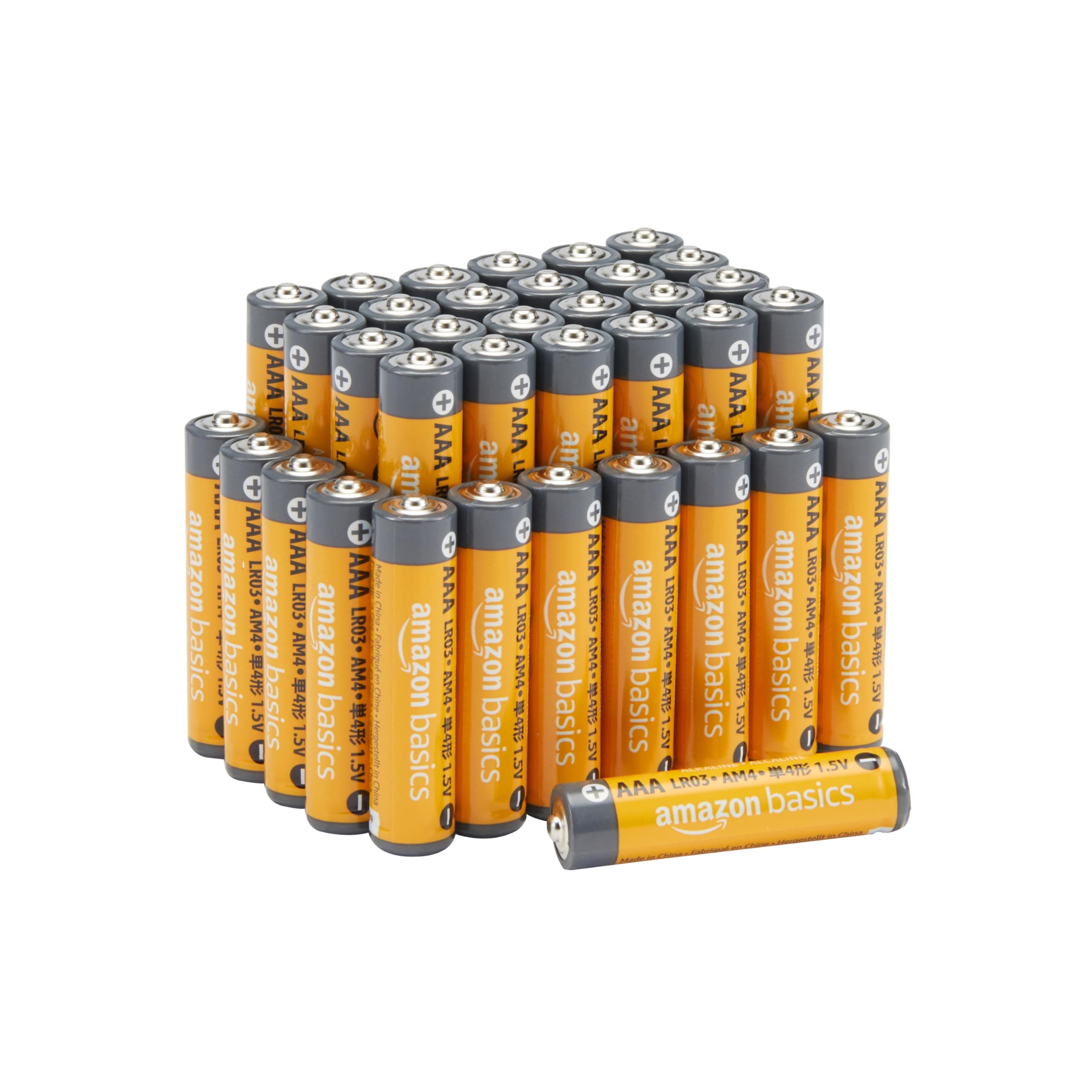
Amazon Basics AAA Alkaline High-Performance Batteries, 1.5 Volt, 10-Year Shelf Life, 36 Count (Pack of 1)
Amazon Basics