Match the vacuum to your flooring type and home size. Homes with pets need strong suction and self-emptying bins; apartments prioritize quiet operation and slim profile.
Match the vacuum to your flooring type and home size. Homes with pets need strong suction and self-emptying bins; apartments prioritize quiet operation and slim profile. Robot vacuums have become indispensable for maintaining clean floors with minimal effort, but choosing the wrong one can lead to frustration and wasted money.
The Short Answer
To choose the right robot vacuum, assess your flooring mix (carpet vs. hard floors), home size, and specific needs like pet hair or quiet operation. For mostly hard floors, a slim, single-brush model works fine. For thick carpets, look for models with at least 2,500 Pa suction and anti-tangle brushes. Pet owners should prioritize strong suction, self-emptying bins, and high-efficiency filters. Apartment dwellers need low noise (under 55 dB) and a low profile to fit under furniture.
The Full Picture
Robot vacuums range from $200 to $1,500+, and the right one depends on your home's layout, floor types, and lifestyle. The three biggest factors are navigation technology, suction power, and maintenance convenience. Modern models use LiDAR (laser) or camera-based navigation for efficient cleaning, while older ones rely on bump-and-run patterns. LiDAR is best for complex floor plans with multiple rooms, but it adds height (around 3.6 inches). Cameras can be cheaper but may struggle in low light.
Why It Matters
A poorly matched robot vacuum will miss messes, get stuck often, or require constant attention. For example, a budget model with weak suction (under 1,500 Pa) won't clean embedded dirt from carpets, while a high-end model in a small studio may be overkill. Matching features to your home ensures you get the most value.
The Key Factors
1. Floor Type
- Hardwood/Tile: Any robot works, but look for edge-sweeping brushes and soft rollers to avoid scratches. Avoid models with bristle brushes if you have pets—they tangle easily.
- Low-pile carpet: Suction between 1,500–2,500 Pa is sufficient. Rubber rollers are better than bristle.
- Medium/High-pile carpet: Need 2,500+ Pa suction and dual rubber brushes. Avoid budget models—they'll struggle with deep dirt. Some high-end models can even detect carpet and boost suction.
2. Home Size
- Small (under 800 sq ft): A basic model with 1,000–2,000 Pa suction and a simple navigation system (gyro or camera) is fine. Battery life of 60–90 minutes is enough.
- Medium (800–2,000 sq ft): Look for LiDAR navigation, >2,000 Pa suction, and battery >120 minutes. Self-emptying base is optional but convenient.
- Large (over 2,000 sq ft): Prioritize mapping and multi-level support, self-emptying bins, and large dustbins. Consider models with reusable mop pads for hard floors.
3. Pet Owners Pet hair tangles in bristle brushes, so choose rubber rollers. Self-emptying bins are huge—they hold up to 30 days of debris. High-efficiency filters (HEPA or similar) trap allergens. Suction should be at least 2,500 Pa. Look for models with high bin capacity or disposable bags to avoid constant emptying.
4. Noise Levels Standard robot vacs run at 60–70 dB, similar to a vacuum cleaner. For apartment use, aim for models rated under 55 dB, especially if you run them when sleeping or working. Many offer a “quiet” mode that reduces suction but still maintains some cleaning.
5. Navigation and Mapping
- Random/bump-and-run: Cheapest ($150–$300), but inefficient and can miss spots. Only suitable for simple, open layouts.
- Gyroscope: Better coverage, but no room recognition.
- Camera: Good for most homes, but avoid if you have dark areas or lots of obstacles. Some use “visual SLAM” to map.
- LiDAR: Best overall—fast, accurate, works in darkness. Typically found in $400+ models.
6. Additional Features
- Self-emptying base: Adds ~$100–$300 but reduces maintenance. Recommended for pet owners, allergy sufferers, or large homes.
- Mop combo: Useful for hard floors, but don’t expect deep cleaning—most just dampen a cloth. Some advanced models have spinning mop pads.
- Object avoidance: AI-powered cameras can avoid cables, socks, and pet waste. Worth the premium if you have clutter.
- Voice assistant compatibility: Works with Alexa/Google Home for hands-free control.
Comparison Table: Suitability by Floor Type
| Floor Type | Recommended Suction | Brush Type | Edge Cleaning | Notes |
|---|---|---|---|---|
| Hardwood/Tile | 1,500–2,000 Pa | Soft rubber roller | Yes | Avoid bristle brushes |
| Low-pile carpet | 2,000–2,500 Pa | Dual rubber rollers | Nice to have | Tangle-resistant |
| Medium-pile carpet | 2,500 Pa+ | Dual rubber rollers | Recommended | Self-emptying base optional |
| High-pile carpet | 3,000 Pa+ | Specialized tangle-free | Not critical | Only high-end models work well |
| Mixed floors (all) | 2,500 Pa+ (auto boost) | Combination brushes | Yes | Look for floor detection |
Common Mistakes
- Buying based on brand alone: Features matter more than name. A $300 model with LiDAR can outperform a $700 model with camera.
- Ignoring bin capacity: Tiny bins (under 400 ml) require emptying after every run on large homes or pet homes.
- Not measuring furniture clearance: Many robots are 3.5–4 inches tall. If your couch has a 3.5-inch gap, the robot won’t fit. Measure before buying.
- Expecting deep mopping: Robot mops are for maintenance, not scrubbing. They can’t handle sticky messes.
- Neglecting smart mapping: If you have multiple rooms or floors, a robot that can map and schedule cleaning per room saves time.
Our Recommendation
For most homes (mixed floors, medium size): Choose a LiDAR-based robot vacuum with at least 2,500 Pa suction and dual rubber brushes. A model with self-emptying base and mop attachment offers the best balance of convenience and performance. Expect to spend $400–$700.
For apartments (hard floors, small space): Prioritize a slim profile (under 3.5 inches), quiet operation (under 55 dB), and good edge cleaning. A camera-based model around $300–$400 is sufficient.
For pet owners (any flooring): Invest in a self-emptying robot vac with rubber rollers, HEPA filter, and suction over 2,500 Pa. Budget $500–$900 for reliable performance.
Timing your purchase: Robot vacuums see significant discounts during Prime Day (July), Black Friday (November), and back-to-school sales (August). To plan ahead, check our Best Time to Buy Robotic Vacuums (2026 Guide) for seasonal pricing trends. Also consider coordinating with other appliance purchases—our guides for refrigerators and clothes dryers can help you bundle deals.
Verdict
Choosing the right robot vacuum comes down to matching specs to your home’s specific demands. Don’t overspend on features you won’t use, but don’t under-pick on critical factors like suction and navigation if your home needs them. A well-chosen robot vacuum saves hours per week and keeps floors consistently clean. Start by measuring your home, identifying your hardest floor type, and prioritizing your top two or three needs—then pick a model that fits that shortlist.
Frequently Asked Questions
Can robot vacuums replace traditional vacuums?
Robot vacuums are great for daily maintenance but usually can't replace a traditional vacuum for deep cleaning, especially on high-pile carpets. They handle surface debris well but may miss embedded dirt. For best results, use a robot vacuum for frequent touch-ups and a traditional vacuum for periodic deep cleaning.
How long do robot vacuum batteries last?
Most robot vacuum batteries last 2 to 4 years depending on usage and maintenance. Li-ion batteries typically offer 500-1000 charge cycles. Capacity declines over time, reducing runtime. Replacing the battery can restore original performance. Models with removable batteries are easier to replace.
Do robot vacuums work on thick carpets?
Yes, but only high-end models with strong suction (3,000 Pa or more) and specialized rubber brushes can effectively clean thick carpets. Budget models often struggle and may get stuck. Look for features like carpet boost, which automatically increases suction on carpets, and a high enough clearance to avoid getting stuck.
Are robot vacuums safe for hardwood floors?
Yes, most robot vacuums are safe for hardwood floors if they use soft rubber rollers or brushless designs. Avoid models with bristle brushes, which can scratch. Also, ensure the vacuum doesn't have protruding parts. Mop combos should use a gentle cloth or pad. Always check the manufacturer's recommendations.
Products Mentioned
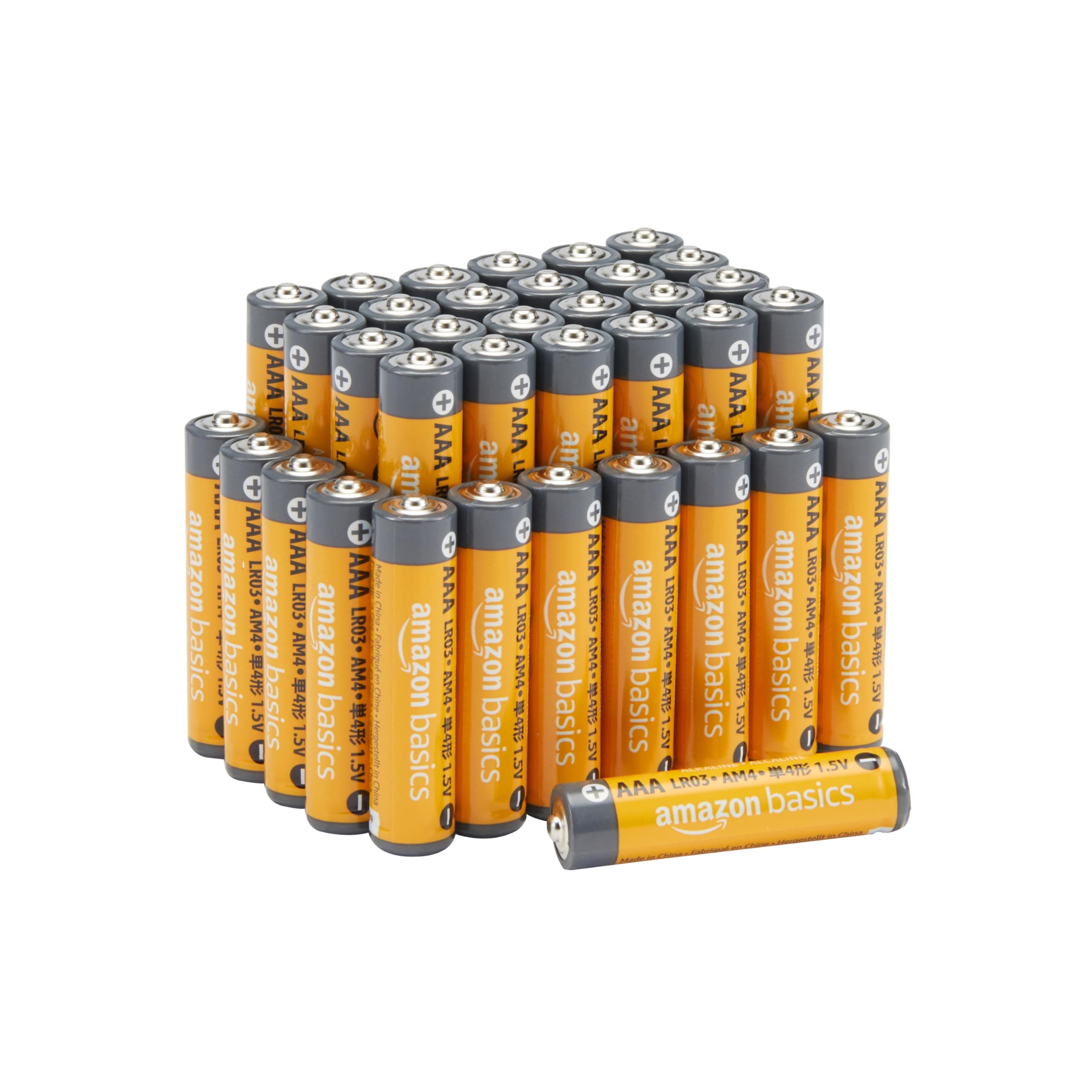
Amazon Basics AAA Alkaline High-Performance Batteries, 1.5 Volt, 10-Year Shelf Life, 36 Count (Pack of 1)
Amazon Basics