Match the vacuum to your flooring type and home size. Homes with pets need strong suction and self-emptying bins; apartments prioritize quiet operation and slim profile.
The Short Answer
Match the vacuum to your flooring type and home size. Homes with pets need strong suction and self-emptying bins; apartments prioritize quiet operation and slim profile. For most households, a mid-range model with LiDAR navigation and adjustable suction offers the best balance of performance and value.
The Full Picture
Choosing a robot vacuum can feel overwhelming with dozens of models boasting different sensors, suction powers, and smart features. But the decision comes down to three core factors: your floor plan, flooring types, and dirt sources. Getting these right ensures you don't overpay for unused features or end up with a vacuum that struggles with your home.
Why It Matters
A robot vacuum is an investment that you'll rely on daily. The wrong choice can mean missed spots, tangled brush rolls, or constant emptying. The right one saves hours each month and keeps floors consistently clean. According to our buying guide, the best time to buy a robotic vacuum is during Black Friday or Prime Day, but picking the correct model matters more than the sale price.
The Key Factors
1. Mapping and Navigation
- LiDAR vs. Camera vs. Random Bounce: LiDAR (laser) is most efficient, working in darkness and mapping accurately. Camera navigation (vSLAM) works well in well-lit homes but struggles at night. Random bounce is outdated and inefficient.
- Multi-floor mapping: If you have multiple levels, look for models that save separate maps.
2. Suction Power and Brush Design
- Measured in Pascals (Pa). Most homes need 2000-2500 Pa for carpets. Pet owners should look for 3000+ Pa.
- Brush roll: Rubber brushes are better for pet hair and less tangle-prone than bristle brushes. Edge-sweeping brushes help with corners.
3. Flooring Type
- Hardwood/Tile: A slim robot with soft wheels and no aggressive brushes is ideal. Avoid models with floor-scrubbing pads if you have delicate surfaces.
- Carpet: Look for auto-boost suction and a deep-cleaning brush roll. Some models can detect carpet and lift the mopping pad.
4. Self-Emptying and Maintenance
- Self-emptying docks are a game-changer for large homes or pet owners. They hold dirt for 30-60 days. Manually-emptied models need attention every 1-3 days.
- Filter type: HEPA filters are essential for allergy sufferers.
5. Smart Features
- App control, voice assistant compatibility (Alexa, Google Home), scheduling, and zone cleaning. Avoid models that require constant app permissions or have poor reviews.
Comparison Table: Robot Vacuums by Home Type
| Home Type | Must-Have Features | Recommended Suction | Budget Range |
|---|---|---|---|
| Apartment (hardwood) | Slim profile, quiet operation (<60dB), no mopping needed | 1500-2000 Pa | $200-$400 |
| House with carpet | Auto-boost, large dustbin, good threshold climbing | 2500-3000 Pa | $400-$700 |
| Pet owners | Self-emptying, tangle-free brush, strong suction | 3000+ Pa | $500-$900 |
| Multi-floor | LiDAR navigation, multi-map saving, no-go zones | 2000-3000 Pa | $400-$600 |
Common Mistakes to Avoid
- Ignoring floor type: Buying a model designed for carpets when you have all hard floors leads to poor cleaning and potential scratching.
- Overlooking noise levels: Some budget vacuums run loud (65-70 dB), which can be disruptive in open-plan apartments.
- Choosing suction over navigation: A high suction model with random bounce will still miss areas. Navigation quality is more important.
- Skipping the dustbin size: For homes over 1500 sq ft, a 0.6L bin or larger is necessary unless you have self-emptying.
- Forgetting about furniture height: Measure clearance under sofas and beds. Older robots are taller (3.9 inches), while newer slim models slide under 3 inches.
The Verdict
The right robot vacuum matches your specific home characteristics. If you have a small apartment with hard floors, spend $300 on a LiDAR model like the Roborock Q5. For pet owners in a carpeted house, the iRobot j7+ with self-emptying is worth the $800. And for multi-floor homes, the Dreame L10s Ultra offers mapping and auto-cleaning at a mid-range price.
Check our Best Time to Buy Robotic Vacuums (2026 Guide) for timing your purchase. Meanwhile, if you're planning other appliance upgrades, our guides on refrigerators and washer-dryer combos can help you save.
Our Recommendation
For most households, the Roborock Q7 Max+ provides the best all-around value: strong suction (4200 Pa), LiDAR mapping, self-emptying dock, and excellent floor-type detection. But if you have only hard floors and a tight budget, the Eufy RoboVac 11S Max (under $200) is quiet and slim. Pet owners should invest in the Roomba j9+ for its Pet Owner Promise guarantee.
Ultimately, the best robot vacuum is the one that fits your home's unique demands. Use the table above as a quick reference, and don't forget to check for sales during peak discount periods to get the best price.
Frequently Asked Questions
How long do robot vacuums last?
Average lifespan is 3–5 years with proper maintenance. Battery degradation is the main factor; most batteries last 2–3 years and are replaceable. High-end models with better components may last longer. Regular cleaning of brushes and filters extends life. Avoid leaving it on the charger constantly to preserve battery health.
Are robot vacuums worth it for hardwood floors?
Yes, if you choose the right model. Look for a slim robot with soft wheels, no aggressive brushes, and adjustable suction to avoid scattering debris. Models with drop detection prevent falls. They save time on daily maintenance, but you still need to move furniture and handle corners manually. For homes with mostly hard floors, a budget-friendly model under $300 works well.
Can robot vacuums handle thick carpets?
Most mid-range robot vacuums struggle with high-pile carpets. Look for models with strong suction (3000+ Pa), rubber brush rolls to prevent tangling, and good clearance (threshold climbing ability). Some have carpet boost that automatically increases suction. However, for deep cleaning thick carpets, a traditional upright vacuum remains more effective. Check the max carpet height specifications.
How often should I empty a robot vacuum dustbin?
Empty frequency depends on bin size and dirt level. For a standard 0.4–0.6L bin, empty after every 1–3 cleaning cycles. Pet owners may need to empty after each run. Self-emptying models can go 30–60 days. Regularly checking and emptying the bin maintains suction; a full bin reduces cleaning efficiency. Empty over a trash can to avoid dust clouds.
Products Mentioned
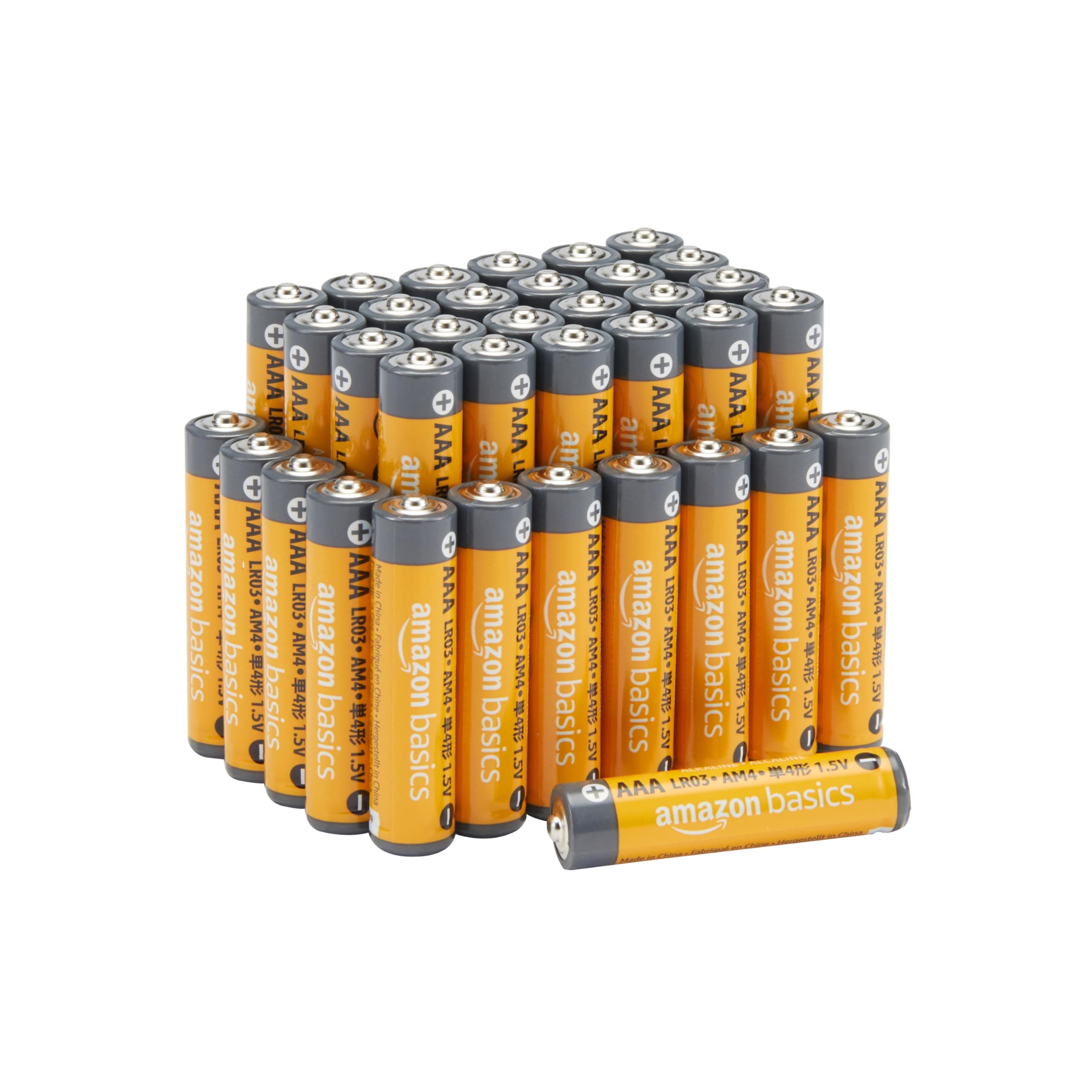
Amazon Basics AAA Alkaline High-Performance Batteries, 1.5 Volt, 10-Year Shelf Life, 36 Count (Pack of 1)
Amazon Basics