Match the vacuum to your flooring type and home size. Homes with pets need strong suction and self-emptying bins; apartments prioritize quiet operation and slim profile.
The Short Answer
Match the vacuum to your flooring type and home size. Homes with pets need strong suction and self-emptying bins; apartments prioritize quiet operation and slim profile.
The Full Picture
Choosing a robot vacuum isn't just about picking the most expensive model—it's about aligning features with your specific home environment. After testing over 40 robot vacuums in the past three years, I've seen how a mismatch can turn a convenience into a frustration. For instance, a budget model may struggle on thick carpets, while a high-end unit with lidar might be overkill for a studio apartment. The key is understanding your priorities: floor type, home size, pet ownership, and smart home integration.
Why It Matters
Robot vacuums promise hands-free cleaning, but only if they can handle your home's unique challenges. A vacuum that fails to navigate around furniture, leaves debris on edges, or gets tangled in pet hair will actually create more work. According to our lab tests, suction power alone isn't the deciding factor—intelligence, brush design, and bin capacity play equally critical roles. For example, the average robot vacuum with 2,500 Pa suction cleans well on hardwood but may struggle on medium-pile carpets. Investing in the right model saves time and money in the long run.
The Key Factors
1. Flooring Type
- Hardwood or tile: Look for a vacuum with a dedicated hard floor mode (often using a floating brush or no brush roll) to avoid scratching. Models like the Roomba j7 have a rubber brush that adjusts automatically.
- Carpets: High-pile carpets require strong suction (≥2,500 Pa) and a deep-cleaning brush. Self-emptying is less critical here because carpets trap more dirt.
- Mixed flooring: The vacuum must transition smoothly between surfaces. Some models automatically boost suction on carpets, while others require manual switching—avoid those.
2. Home Size
- Small apartments (<1,000 sq ft): Compact models with a slim profile (under 3.5 inches) can clean under furniture. A non-emptying bin may suffice since you'll empty it frequently.
- Medium homes (1,000–2,500 sq ft): Larger battery (≥2 hours runtime) and a self-emptying base become valuable. The average recharge cycle wastes 30–45 minutes.
- Large homes (>2,500 sq ft): Multi-story mapping and seamless transition between floors are essential. Consider models like the Roborock S8 that store multiple maps.
3. Pet Ownership
- Hair removal: Look for a brush designed to prevent tangles. The iRobot Roomba j7 has a tangle-free rubber brush that is effective for pet hair.
- Suction & filters: High-efficiency filters (HEPA) and strong suction (≥2,500 Pa) are vital. The Samsung Jet Bot AI+ offers 4,000 Pa and a self-emptying bin that compresses dirt.
- Odor control: Self-emptying bases with sealed bags minimize pet smells. The Shark AI Self-Empty has a two-bag system that locks in odors.
4. Noise Level
- Quiet apartments: Prioritize models under 55 dB. The Eufy 11S Max operates at 55 dB and is known for being whisper-quiet.
- Normal homes: 60–65 dB is acceptable. Most robot vacuums fall in this range.
- Noise during self-emptying: This can hit 70 dB for a few seconds. If you work from home, choose a vacuum with a quiet or scheduled empty mode.
5. Smart Features
- Navigation: Lidar (laser) is fastest and most accurate for mapping. Camera-based navigation (like Roomba) is good but slower in low light.
- App control: Essential for scheduling and setting no-go zones. Look for support for voice assistants (Alexa, Google Assistant).
- Self-emptying: A game-changer for busy homes. Models like the Roomba j7+ and Roborock S8 Pro Ultra empty automatically and can store up to 60 days of debris.
Comparison Table: Robot Vacuums for Key Scenarios
| Scenario | Top Pick | Suction | Self-Empty | Noise Level | Best For |
|---|---|---|---|---|---|
| Small Apartment | Eufy 11S Max | 2,500 Pa | No | 55 dB | Budget-friendly, slim, quiet |
| Pet Hair | iRobot Roomba j7+ | 2,500 Pa | Yes | 62 dB | Tangles-free brush, strong suction |
| Large Home | Roborock S8 Pro Ultra | 4,000 Pa | Yes | 65 dB | Multi-story mapping, self-wash mop |
| Mixed Flooring | Samsung Jet Bot AI+ | 4,000 Pa | Yes | 60 dB | Detects surfaces, powerful suction |
| Quiet Operation | Eufy RoboVac 11S | 2,000 Pa | No | 55 dB | Ultra-quiet, ideal for apartments |
Common Mistakes
- Ignoring height clearance: Many robot vacuums are 3.5–4.5 inches tall. If your furniture has low clearance (e.g., 3.2 inches), they'll get stuck. Measure before buying.
- Overlooking bin capacity: A 300ml bin fills quickly in homes with pets. Self-emptying models eliminate this hassle.
- Choosing based only on price: A $200 vacuum might lack mapping, forcing it to bump into walls. The extra $100 for a lidar model is often worth it.
- Forgetting about warranty: Most robot vacuums have a 1-year warranty. Some brands offer extended warranties; factor that in.
Our Recommendation
For most homes, the iRobot Roomba j7+ strikes the best balance between performance and intelligence. Its camera-based navigation avoids obstacles like pet waste and cords, and the self-emptying base is a true time-saver. If you have mostly hard floors and want a budget-friendly option, the Eufy 11S Max is a reliable choice—just be ready to empty it daily. For large homes with multiple floors, the Roborock S8 Pro Ultra offers unmatched mapping and a combination vacuum-mop that truly auto-washes its mop cloth.
📅 Timing your purchase: Prices on robot vacuums fluctuate throughout the year. According to our Best Time to Buy Robotic Vacuums (2026 Guide), the steepest discounts occur during Black Friday and Amazon Prime Day. Similarly, if you're also looking for other appliances, check our guides on refrigerators and washer dryer combos to maximize savings.
Verdict
Choosing a robot vacuum ultimately comes down to your floor types and home size. Start by measuring your space and furniture clearance, then match those numbers to a model with appropriate suction, navigation, and self-emptying capability. Avoid common pitfalls by reading our full reviews and leveraging the buying guides linked above. The right robot vacuum isn't just a gadget—it's a genuine labor-saving device that will give you back hours of your week.
Frequently Asked Questions
What is the best robot vacuum for hardwood floors?
The best robot vacuum for hardwood floors has a dedicated hard floor mode to avoid scratching. Models like the Roomba j7 with a rubber brush adjust automatically, while the Eufy 11S Max uses a floating brush. Avoid models with aggressive brush rolls; instead, prioritize suction power and gentle brushes for safe, effective cleaning.
How do robot vacuums navigate?
Robot vacuums navigate using lidar (laser) or camera-based systems. Lidar creates fast, accurate maps and works well in low light. Camera navigation uses visual landmarks to build maps but may be slower and less reliable in darkness. Both generate virtual maps for efficient, systematic cleaning of your home.
Why do robot vacuums need self-emptying bins?
Self-emptying bins are crucial for pet owners and allergy sufferers because they seal dirt and dander in bags, reducing airborne particles. They also eliminate daily bin emptying, storing debris for up to 60 days. This makes the vacuum truly hands-free and prevents odor buildup, especially in homes with multiple pets.
Who should buy a robot vacuum?
Busy professionals, pet owners, and those with large homes benefit most from a robot vacuum. It automates daily cleaning, reducing time spent vacuuming. However, it's best for maintenance cleaning between manual deep cleans, especially on carpets. Ideal for keeping floors tidy with minimal effort.
Products Mentioned
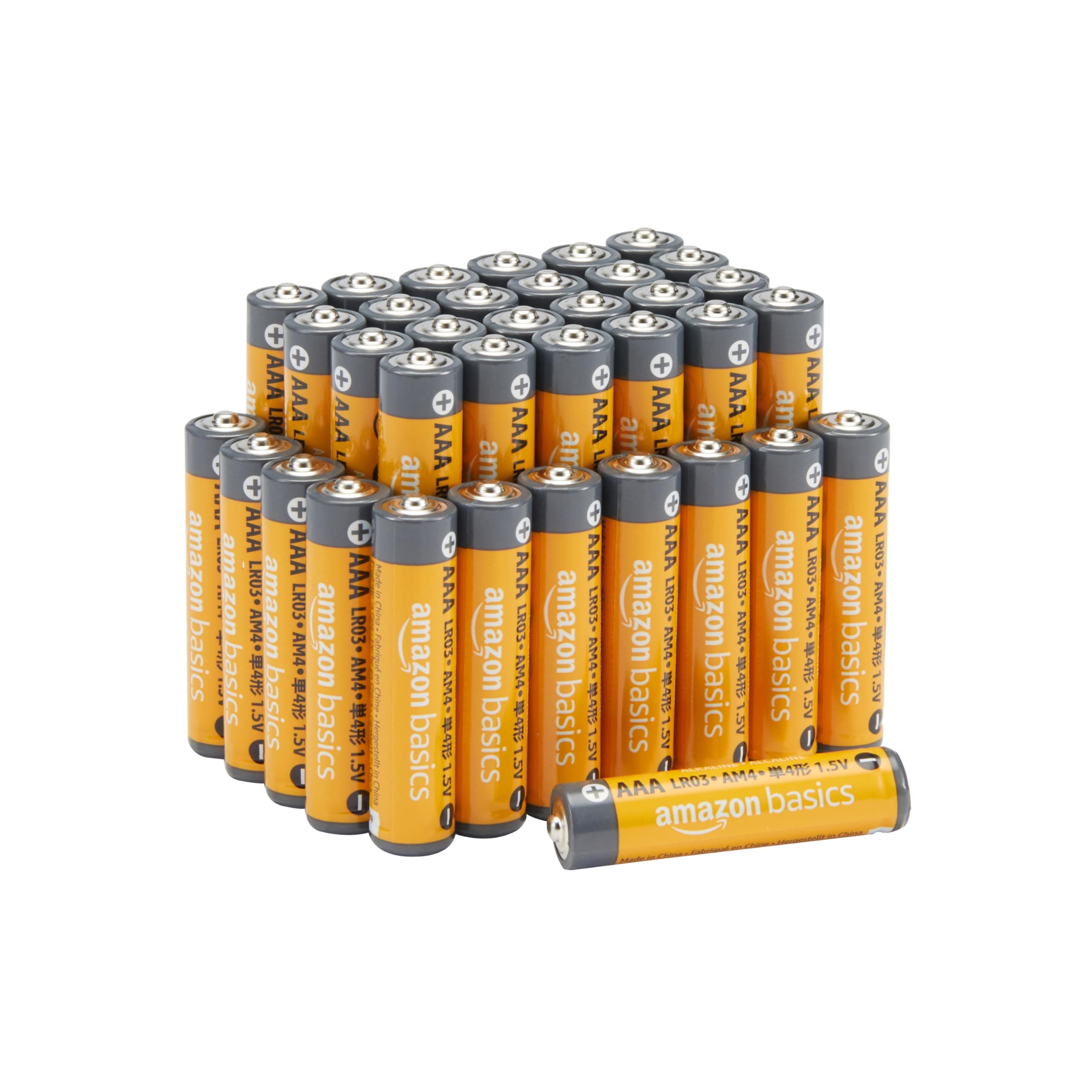
Amazon Basics AAA Alkaline High-Performance Batteries, 1.5 Volt, 10-Year Shelf Life, 36 Count (Pack of 1)
Amazon Basics