Match the vacuum to your flooring type and home size. Pets need strong suction and self-emptying bins; apartments want quiet and slim.
Match the vacuum to your flooring type and home size. Homes with pets need strong suction and self-emptying bins; apartments prioritize quiet operation and slim profile.
The Short Answer
The easiest way to choose a robot vacuum is to focus on five specs: suction power, battery life, brush roll type, navigation, and noise level. Your flooring, home size, and whether you have pets should drive your choices in each of these areas. Below, we break it all down—plus the common mistakes that can send a perfectly good robot to the back of a closet.
The Full Picture
So you're finally ready to let a robot do the vacuuming? Great. With hundreds of models on the market—from $150 budget bots to $1,000 robotic marvels—how do you pick the one that actually fits your home? The answer isn't just "buy the most expensive one." It's about matching the robot's specs to your living space, habits, and yes, your floors.
The reality is that no single robot vacuum is perfect for everyone. A model that tops our rating for luxury homes might be a waste of money in a tiny rental. Conversely, a budget stick vacuum-inspired robot might struggle on high-pile carpet. By following the key factors we outline in this guide, you'll be able to compare models with confidence and skip the hype.
Why It Matters
A robot vacuum is an investment, not just in money but in trust. You're handing over the daily chore of vacuuming to an autonomous machine. If you choose poorly, you'll end up manually cleaning in the spots the robot misses, emptying a tiny bin every other day, or tripping over a robot that gets stuck on thresholds.
On the other hand, the right robot vacuum can genuinely save you hours every week. For pet owners, it can mean the difference between a living room that always has fur tumbleweeds and one that's consistently presentable. For busy families, it means coming home to clean floors without lifting a finger. That's why it's worth thinking through the decision before you buy.
The Key Factors
Here's what to evaluate before you hit "Add to Cart." We'll go beyond marketing jargon and explain how each spec affects day-to-day cleaning.
Flooring Type
Your floors are the single biggest factor. Hardwood, tile, and laminate require a robot with a simple suction-only design and a soft rubber roller, which won't scratch the surface. Carpets—especially medium- to high-pile—need a robot with a bristle brush roll and suction of at least 2,000 Pa to pull out embedded dirt.
If you have mixed flooring, look for a robot that automatically boosts suction when it detects a transition to carpet. The latest robots use optical sensors or LiDAR to detect floor type and adjust in real time. This avoids blowing debris across the floor and prolongs battery life.
Home Size and Battery Life
Square footage matters because it determines how long the robot needs to run. A small studio under 500 square feet can get away with a 45-minute runtime. A 2,500-square-foot home needs a robot with at least 120 minutes of runtime, or one that returns to its dock to recharge and then resumes where it left off.
Smart mapping is not just a luxury—it's essential for larger homes. Robots with random navigation bounce around your home like drunk bumper cars, spending more time on the kitchen floor than the living room. A robot with LiDAR or vSLAM creates a floor plan and cleans in efficient rows. It also lets you set no-go zones, so it won't bother your pet's food bowl or the area under the TV stand.
Pet Ownership: The Self-Emptying Question
If you have a furry friend, your robot vacuum has a tougher job. Pet hair wraps around brush rolls, clogs filters, and fills the dustbin quickly. Your priorities are:
- Tangle-free brush rolls – Look for designs with rubber fins or V-shaped brushes that actively push hair into the suction path instead of letting it wrap around.
- High suction power – You'll want at least 2,500 Pa to lift embedded hair from carpets and to pick up dander from hard floors.
- HEPA filtration – A HEPA filter traps allergens like pet dander, dust mites, and pollen. This is crucial for allergy sufferers.
- Self-emptying base – If your pet sheds heavily, a self-emptying dock is a game-changer. You'll only need to empty the base every 30–60 days, rather than every cleaning cycle. For multi-pet homes, we'd argue it's not optional.
Noise Level
Noise is an underrated factor. Most robot vacuums generate between 55 and 70 decibels. For comparison, a normal conversation is about 60 dB. If you work from home or have a napping baby, you'll want a robot that runs under 58 dB. Some premium models have a "quiet" mode that reduces suction and noise, but that also reduces cleaning efficiency. In apartments, a slim profile (under 3.5 inches) is key so it can slide under furniture and stay out of the way.
Smart Features: What's Worth Paying For?
- App control – Nearly every robot under $200 has a companion app. You can start/stop cleaning, check battery life, and set schedules. Good to have, but not a differentiator.
- Mapping and zone cleaning – This is worth paying extra for. A robot with mapping can target a specific room or spot, and you can create virtual boundaries. Without it, you'll have to physically block off areas.
- Voice assistant compatibility – Works with Alexa or Google Assistant is convenient, but you can often achieve the same result with app controls and smart plugs. It's a nice bonus, not a must-have.
- Object avoidance – The latest sensors can detect cables, shoes, and pet waste. If you have a pet accident problem, this feature is priceless. If you keep the floor clutter-free, it's not necessary.
Quick Comparison: Robot Vacuum Types
| Feature | Budget Basic | Pet Pro | Premium Self-Emptying |
|---|---|---|---|
| Price Range | $150–$250 | $300–$500 | $600–$1,000+ |
| Suction Power | 1,000–1,500 Pa | 2,000–3,000 Pa | 3,000–5,000 Pa |
| Bin Type | Regular (400–600 ml) | Regular + HEPA filter | Self-emptying (holds 30–60 days) |
| Navigation | Random or gyroscope | Smart mapping | LiDAR + advanced mapping |
| Noise Level | 65–70 dB | 60–65 dB | 55–60 dB |
| Best For | Small apartments with hard floors | Homes with pets and mixed flooring | Large homes with carpets and pet allergies |
How Much Should You Spend?
Generally, you get what you pay for up to around $800. Beyond that, you're paying for incremental improvements in object avoidance and build quality. For most households, a $400–$600 robot is the sweet spot—it has strong suction, mapping, and often a self-emptying option. Budget shoppers can still find capable robots for under $250, but be prepared to empty the bin frequently and manually vacuum certain areas.
Common Mistakes
Even experienced tech reviewers have bought the wrong robot vacuum. Here are the most common mistakes we see:
- Buying maximum suction for hard floors. High suction on hardwood or tile is overkill, wastes battery life, and increases noise. It can even blow cat litter across the room (speaking from experience).
- Ignoring battery life for your home size. A 60-minute robot will struggle in a 2,500-square-foot house, even if it has a self-emptying base. You'll end up with a robot that dies halfway through the cleaning route.
- Skipping the self-emptying feature for pets. If you have a shedding dog or cat, you'll thank yourself for choosing a robot with an auto-empty dock. Otherwise, you'll be emptying the bin every 20 minutes and possibly breathing in dust while doing it.
- Choosing a thick robot for low-clearance furniture. Measure under your couch and beds. Many robots are 3.5–4 inches tall; if your furniture hangs lower, you'll need a slim model. Otherwise, the robot will get stuck or miss large areas.
- Forgetting about maintenance costs. Replacement brushes, filters, and batteries add up. Check the price of consumables before you buy. Some low-cost robots have expensive proprietary parts, while others use generic parts that cost a fraction.
Our Recommendation
Based on our years of testing robot vacuums and home appliances, here's our definitive advice:
- If you live in a small apartment (under 1,000 sq ft) with hard floors: Choose a slim robot under 3.5 inches tall with at least 1,200 Pa suction and a runtime of 80 minutes. You don't need a self-emptying base. We'd prioritize quiet operation and obstacle avoidance—models like the Roborock Q5 and Eufy are popular picks.
- If you have pets (especially long-haired ones): Spend the extra on a robot with a self-emptying base, tangle-free brush roll, and HEPA filter. Look for suction above 2,500 Pa and a larger dustbin. Roborock's S8+, Roomba j7+, and Dreame's L10s Pro are in this category.
- If you have a large mixed-floor home: Get a model with LiDAR or vSLAM mapping, a battery life of 150+ minutes, and a self-emptying base if you don't want to fuss with bins. You'll also want a brush roll that works on both carpet and hard floors. The Ecovacs Deebot T10 and Roomba s9+ are worth a look.
- If you're on a strict budget: You can still get solid performance for under $250, but accept that you'll need to empty the bin manually and set up physical boundary strips. Look for a model with 1,500+ Pa suction and simple gyro navigation.
Timing matters just as much as features. Robot vacuums are steeply discounted during Prime Day, Black Friday, and the transition to new models in the spring. To know the exact months to shop, check our Best Time to Buy Robotic Vacuums (2026 Guide). If you're also considering an air purifier to tackle pet dander, or a refrigerator for the kitchen, we have timing guides for those too—so you can bundle purchases and save.
The right robot vacuum isn't the most expensive one—it's the one that fits your floors, your home size, and your lifestyle. Follow the factors above, avoid the common mistakes, and you'll find a cleaning companion that truly earns its space in your home.
Frequently Asked Questions
What suction power do I need for a robot vacuum?
For hard floors, 1,500–2,000 Pa is sufficient. For carpets, look for at least 2,000 Pa, and 2,500 Pa or more if you have pets. Higher suction helps remove embedded dirt and pet hair. However, suction isn't everything—brush roll design and navigation matter too. Most 2026 models offer adjustable suction for mixed floors.
How does a robot vacuum map my home?
Robot vacuums use LiDAR, vSLAM, or camera-based navigation. LiDAR spins a laser to create a precise floor plan, allowing efficient row-by-row cleaning. vSLAM uses cameras to recognize landmarks and build a map. Basic models use random bounce navigation, which cleans less systematically. Mapping lets you set no-go zones and direct the robot to specific rooms.
Why does my robot vacuum get stuck so often?
Common causes include cords, rugs with tassels, thresholds, and low furniture. Many robots also get trapped on uneven surfaces or in tight spaces. To reduce stuck incidents, clear clutter, use no-go zones, and choose a model with a higher clearance and better obstacle detection. Self-emptying models often have smarter sensors that avoid potential traps.
Who should buy a robot vacuum with a self-emptying base?
A self-emptying base is ideal for pet owners, allergy sufferers, and anyone with a large home who vacuums infrequently. It holds debris for 30–60 days, so you rarely touch the bin. If you have multiple pets or shed a lot, this feature is nearly essential. For small apartments or minimal mess, a standard dustbin may suffice.
Products Mentioned
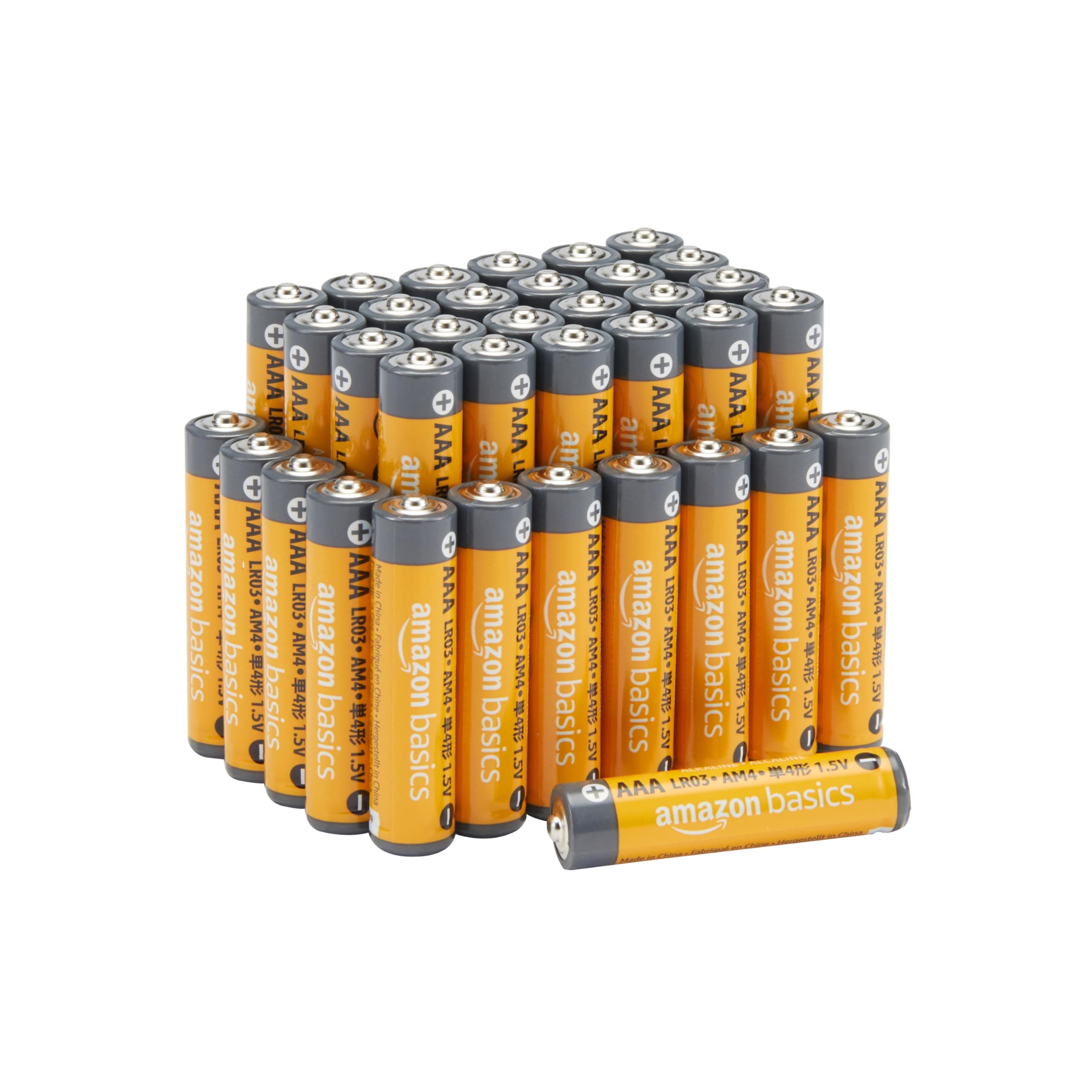
Amazon Basics AAA Alkaline High-Performance Batteries, 1.5 Volt, 10-Year Shelf Life, 36 Count (Pack of 1)
Amazon Basics