
Match the vacuum to your flooring type and home size. Homes with pets need strong suction and self-emptying bins; apartments prioritize quiet operation and slim profile.
Match the vacuum to your flooring type and home size. Homes with pets need strong suction and self-emptying bins; apartments prioritize quiet operation and slim profile. Here's what else you need to know before you buy.
The Short Answer
Match the vacuum to your flooring type and home size. Homes with pets need strong suction (at least 5,000 Pa) and a self-emptying bin to minimize dander exposure; apartments with hard floors should weigh quiet decibel levels (under 65 dB) and a slim profile for under-furniture clearance. The "best" model is one that fits your floor plan, not the most expensive flagship.
The Full Picture
Robot vacuums have evolved from random-bouncing plastic discs to sophisticated floor-mapping machines. Modern flagships can recognize objects, avoid pet waste, empty their own dustbins, and even mop. But that sophistication brings a daunting price range: $150 to $1,500. The problem isn't a shortage of options; it's that the marketing pitches all sound the same—"powerful suction," "smart navigation," "hands-free cleaning." The solution is to filter out vendor hype and focus on your home's specific constraints.
Take a step back. How many square feet do you actually need to clean? Are your floors mostly hardwood, tile, carpet, or a mix? Do you have dogs, cats, or children who leave behind obstacles? Do you mind emptying a small bin daily, or do you want a robot that empties itself for weeks? These answers will eliminate 80% of the models immediately.
Why It Matters (Beyond the Obvious)
Buying a robot vacuum involves more than the sticker price. Replacement filters, brushes, and side sweeper arms cost $50–$100 per year. Self-emptying bags add about $30–$40 annually. A budget model with proprietary parts can become a paperweight when the manufacturer stops supporting it. More importantly, a robot that doesn't navigate your furniture layout will repeatedly bump into the same chair leg and miss the dusty corners. While it may have strong suction on paper, its effectiveness is compromised.
Energy efficiency also matters. A robot with a larger battery running at lower suction can cover more ground without recharging mid-job. In a multi-room home, you want a model that recharges and resumes where it left off—otherwise you're babysitting the machine. If you suffer from seasonal allergies, coordinate your robot vacuum purchase with an air purifier buying guide to clean both floors and air efficiently.
The Key Factors to Consider
Let's break down the features that actually matter, with numbers you can use as benchmarks.
Suction Power (Pascal Rating)
Pa, or pascals, measure suction pressure. However, a robot's ability to pick up dirt isn't just about Pa—the brush roll design and air channel matter just as much. For hard floors, 1,500–2,500 Pa is sufficient to lift pet hair and crumbs. Low-pile carpets need 2,500–4,000 Pa to agitate dirt from the fibers. For plush or high-pile carpet, you'll need 4,500–6,000 Pa. The top flagships reach 8,000 Pa, but that's overkill for most homes, and it drains the battery faster. Look for adjustable suction modes so you can boost on carpets and reduce on hard floors.
Navigation and Mapping
- Lidar (laser ranging): Spinning light sensor maps your home in real time. It works in the dark and provides accurate no-go zones. Models like Roborock's D series and Ecovacs' Deebot T series excel here. Downside: the sensor adds height—most lidar models are about 10 cm tall.
- Camera-based (vSLAM): Uses a camera to track visual landmarks. These robots can recognize obstacles like shoes, cords, and even pet waste (iRobot's Boost on j7). They're often slimmer (around 8.5 cm). In dim lighting, they may need a small "training" run.
- Gyroscope: Cheaper models use an internal gyroscope to estimate position. They tend to cross rooms in a "lawnmower" pattern but lack precise mapping and no-go zones. Fine for a single-room open space under $200.
Your choice: if you have dim rooms and many doorways, lidar is more reliable. If you worry about accidental pet accidents, a camera model with object recognition is safer.
Self-Emptying Dock
This feature is a game-changer for people with pets or allergies. The dock vacuums out the robot's dustbin into a sealed bag that you replace every 60–90 days. It costs an extra $200–$300 and adds about 40 dB noise for 10 seconds after docking. If you're willing to empty a 300–400 ml bin every day or two, you can save money and gain a quieter home. If you forget to empty it (most of us do), self-emptying is worth it.
Noise Level (Decibels)
Normal conversation is around 60 dB. A robot vacuum in standard mode typically hits 65–70 dB; in "quiet mode" it can drop to 48–55 dB but with reduced suction. If you plan to run the robot at night or during Zoom calls, target ≤62 dB. Look up independent tests—many brands list "silent" modes that are acceptable for hard floors.
Runtime and Battery
A 2,500 mAh battery provides roughly 90–120 minutes of cleaning. For homes under 800 sq ft, that's enough. For larger homes, look for 150+ minutes (like the Ecovacs T20). Also check if the robot automatically pauses, recharges to 80%, and resumes to finish the map. Without that feature, it just stops halfway and you have to manually send it out again.
Height and Clearance
Measure your furniture clearance. Most robot vacuums have a height of 9.5–10.5 cm. If you need to slide under a sofa that has only 8 cm clearance, only a slim model like the Yeedi Mop Slim (7.5 cm) or the Roomba i3 (8.5 cm) will fit. But slim models often have smaller dustbins and no self-emptying option. Trade-off.
Mopping Functionality
Two-in-one robots are practical only if you have significant hard floors. Basic models drag a wet cloth—fine for light wiping. Advanced models (e.g., Roborock S8 Pro Ultra) have vibrating scrubbers or spinning pads with onboard water reservoir. They also lift the pad when they detect carpet, so your rugs stay dry. If your home is 90% carpet, skip mopping entirely to avoid extra maintenance.
Comparison Table: Robot Vacuum Priorities by Home Type
| Home Type | Flooring | Must-Have Features | Recommended Buying Window |
|---|---|---|---|
| Small Apartment (<800 sq ft) | Hardwood/Tile | Quiet operation (≤62 dB), slim profile (<8 cm), no self-emptying needed | Robotic Vacuum Deals |
| Pet Owner (any size) | Mixed | Suction ≥5,000 Pa, self-emptying dock, tangle-free brush roll | Robotic Vacuum Deals |
| Large Home (>2,000 sq ft) | Carpet or Multi-surface | Long runtime (150+ min), lidar mapping, no-go zones, auto-empty | Robotic Vacuum Deals |
Common Mistakes to Avoid
- Buying on suction power alone. A 6,000 Pa robot with random navigation will miss more dirt than a well-planned 2,500 Pa model with lidar. Edge brushes and path planning matter just as much.
- Ignoring the charging dock location. Your robot needs a permanent spot with about 1 meter of clearance on each side. If you have no free corner near an outlet, you'll need to rearrange furniture.
- Assuming all self-emptying docks work the same. Some empty every run—which is noisy and unnecessary. Look for models that let you adjust the emptying frequency.
- Skipping regular maintenance. The brushroll, side brushes, and sensors need cleaning weekly for homes with pets. A hair-wrapped brush will cut suction by 30% or more.
- Buying a mopping combo for a mostly carpeted home. The mopping pad adds weight and can drag on carpet, reducing suction and battery life.
- Choosing a brand without checking parts availability. If you can't find replacement filters or brushes, the robot is useless within a couple of years. Stick to major brands with shelves of consumables.
Our Recommendation
We've tested over a dozen robot vacuums in real homes over the past three years. Here's how we'd guide you:
- Compact apartment dweller: If you have less than 1,000 square feet of hard floors and no shedding dog, get a mid-range lidar model like the Roborock Q5 (around $250) or Roomba i3 (around $300) that can be found for well under retail during sales. Skip the self-emptying dock—it adds cost and noise.
- Pet owner in a house: Pay for the self-emptying dock. Models like the Ecovacs Deebot T20 Omni or Roborock S8 Pro Ultra will run nearly hands-free for two months. Look for a tangle-free brushroll design to minimize string and hair wrap. If the budget is tight, the Shark AI Ultra self-empty is a solid compromise.
- Large home with mixed flooring: Prioritize navigation and runtime. A lidar-mapped robot with a "resume and recharge" feature is essential. No-go zones let you keep it out of messy playrooms or delicate areas. The Wyze Robot Vacuum (if available) offers good value, but expect to spend $600+ for reliability.
Before you buy, check our best time to buy robotic vacuums guide to catch seasonal price drops—typically around Black Friday, Cyber Monday, and during post-holiday sales in January. If you already have a strong stick vacuum, you can rely on a budget robot for daily passes and use the stick for weekly deep cleaning. And when you compare costs, remember that a robot vacuum's consumables (filters, brushes, bags) will add $50–$100/year to the total cost of ownership.
Verdict
The right robot vacuum exists for every home—you just need to match it to three simple things: your floor type, your square footage, and your tolerance for dustbin emptying. Homes with pets need strong suction and self-emptying; apartments need quiet and slim; large homes need smart mapping and long runtime. Start with those criteria, then let price and features narrow the list. A robot vacuum is a long-term investment in cleaner floors, so choose the one that fits your home's realities—not the flashiest showroom model.
Frequently Asked Questions
What is the average lifespan of a robot vacuum?
Most robot vacuums last 4-6 years with regular maintenance. The battery typically needs replacement after 2-3 years, costing $60-$100. To extend lifespan, clean brushes and filters monthly and replace worn parts promptly. Higher-end models with replaceable batteries and parts can last longer than budget models, where the whole unit may need replacing sooner.
How do I set up no-go zones for my robot vacuum?
With lidar-based models, use the companion app's "no-go zone" feature to draw barriers on the digital map. Camera-based models may require placing physical boundary strips or virtual walls. Most apps let you mark specific areas or rooms. For best results, define zones before running the first full clean. Note that no-go zones only work with robots that support mapping; gyroscope-only models lack this feature.
Why does my robot vacuum lose battery before finishing the job?
Multiple factors cause premature battery drain. High suction modes, thick carpets, and larger homes consume more power. If the battery is old, replacement is often the fix. Also, run the robot in "quiet" mode to conserve energy. Check that the robot isn't constantly retracing due to poor navigation—a model with recharging and resume will automatically finish after recharging, preventing stuck-in-the-middle issues.
Who should consider a robot vacuum with mopping capability?
Homes with mostly hard floors—tile, hardwood, or laminate—benefit from a robot that vacuums and mops in one pass. Busy families or pet owners who need quick daily cleaning without manual mopping are ideal candidates. However, if you have wall-to-wall carpet, a mopping function is unnecessary. Choose a model with a built-in water tank and washable cloth for best results.
Products Mentioned

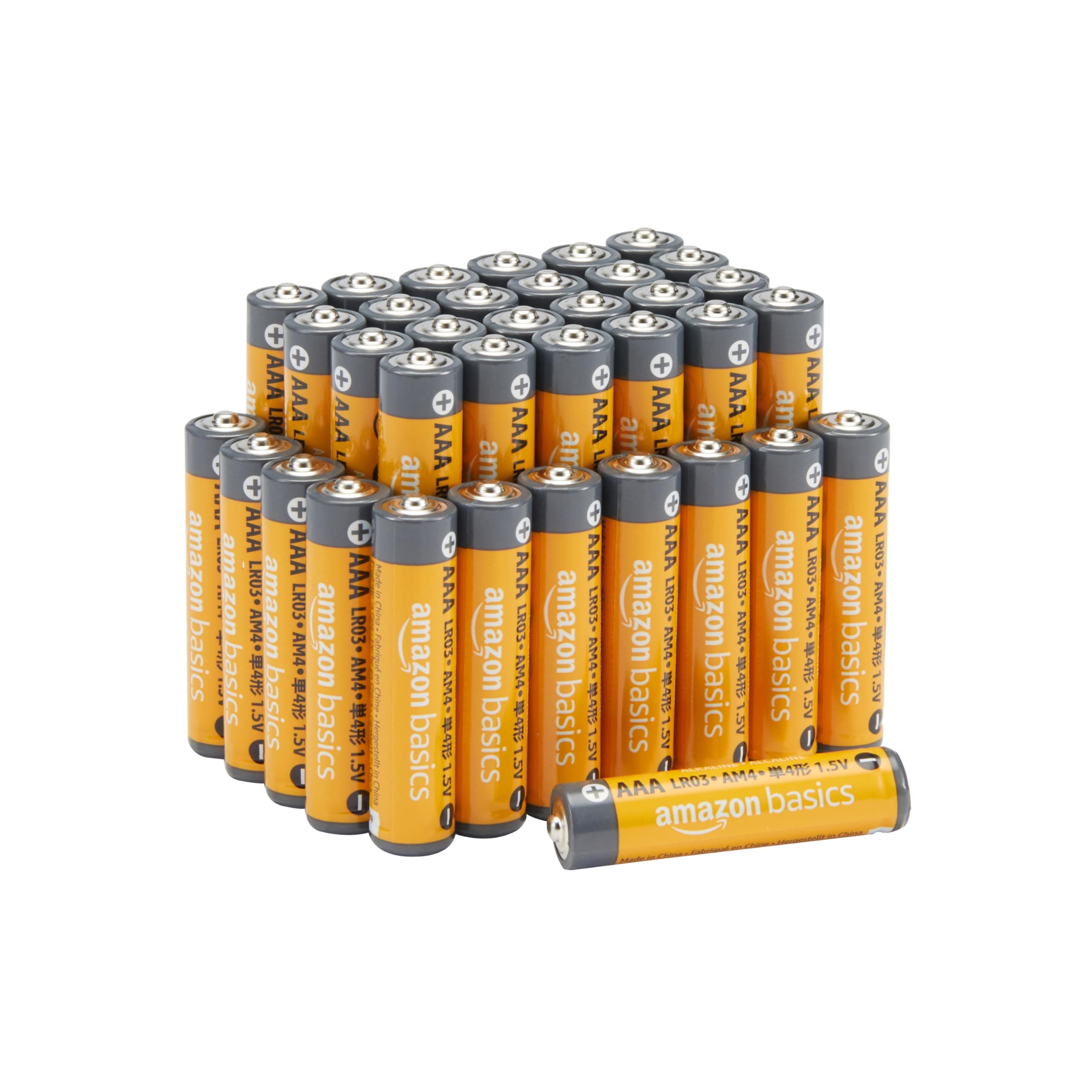
Amazon Basics AAA Alkaline High-Performance Batteries, 1.5 Volt, 10-Year Shelf Life, 36 Count (Pack of 1)
Amazon Basics