
Match the vacuum to your flooring type and home size. Homes with pets need strong suction and self-emptying bins; apartments prioritize quiet operation and slim profile.
Match the vacuum to your flooring type and home size. Homes with pets need strong suction and self-emptying bins; apartments prioritize quiet operation and slim profile. That’s the simple version — and it’s accurate enough to guide most buyers.
The Short Answer
Before you spend anywhere from $200 to $1,500, know this: a robot vacuum isn’t a replacement for a full-sized vacuum, but it can handle daily maintenance. If you have mostly hard floors, a model with a water tank for mopping and a low-profile body will save you hours. For wall-to-wall carpet, focus on suction power (measured in Pa) and a brush roll that won’t tangle with hair. And if you share your home with shedding pets, self-emptying capability is a game-changer — you won’t touch a dusty bin for weeks.
The Full Picture
The problem is choice. In 2026, there are over 300 robot vacuum models on the market, with prices ranging from budget-friendly to “that’s a down payment.” The solution is to filter by your specific home, not by marketing buzzwords. Here’s why this matters: a wrong pick can leave you manually vacuuming again within months, effectively negating the convenience you paid for.
Why It Matters
A robot vacuum is a long-term investment. Most buyers expect it to last five years or more. But 30% of owners in a recent consumer survey reported replacing their robot within 18 months due to poor navigation or weak cleaning on their flooring. The most common mistake is buying a premium model with features you don’t need, or a bargain bin unit that can’t find its dock. Understanding your priorities upfront prevents both regret and wasted money.
The Key Factors
1. Flooring Type
This is the #1 consideration. Hard floors (tile, wood, laminate) require a vacuum that can also mop, ideally with an adjustable water flow. Carpet, especially medium-pile and high-pile, demands strong suction (2,500 Pa or higher) and a brush roll designed for deep cleaning. If you have a mix, look for a model that automatically increases suction on carpets and lifts or retracts its mop when it detects carpet.
2. Home Size and Layout
For apartments under 800 sq ft, a random-navigation vacuum can work, but you’ll spend more time cleaning spot-by-spot. For larger homes, invest in LiDAR or camera-based mapping. Those models clean in efficient rows, allow you to set no-go zones, and won’t bounce off the same wall repeatedly. Multi-floor homes should look for a vacuum that stores multiple maps — otherwise, it will remap every time you move it.
3. Pets and Allergies
Pet hair is the ultimate robot vacuum stress test. Look for a model with a tangle-free brush roll (many now use a single comb to strip hair) and a high-efficiency filter to trap dander. Self-emptying bases are especially useful here; they compact debris into a sealed bag that only needs emptying every 30 to 60 days. Allergen containment is a big plus if you’re sensitive to dust.
4. Noise Level
If you work from home, have a baby, or just want to run the vacuum while you sleep, noise matters. Most robot vacuums operate between 55 and 70 decibels. Check the spec sheet for a "quiet mode" and look for models rated under 60 dB for bare floors. Some premium models are remarkably quiet — comparable to a low conversation.
5. Budget and Operating Costs
Here’s a useful breakdown:
| Price Range | What You Get | Best For |
|---|---|---|
| $200–$400 | Basic suction, random or gyroscope navigation, no self-emptying | Small apartments, hard floors |
| $400–$700 | Mapping, room-by-room control, some mopping, better suction | Most homes, mixed flooring |
| $700–$1,200+ | Self-emptying, strong mopping, advanced obstacle avoidance, multiple maps | Pet owners, large homes, smart-home users |
Remember to factor in replacement parts: brushes, filters, and side brushes typically cost $20–$50 per set, and you’ll replace them every 6 to 12 months. Some premium models have expensive custom parts, so check availability before buying.
6. Smart Features and Integration
If your home is already smart, look for Wi-Fi connectivity, app scheduling, and compatibility with Alexa, Google Home, or HomeKit. Object avoidance (using a camera or laser) is now standard on mid-range and premium models, so the vacuum won’t swallow phone chargers or pet waste. A useful feature is "zone cleaning," which lets you target the kitchen floor with a quick voice command. Don’t overpay for features you’ll never use, but do get app scheduling — it’s the difference between a set-and-forget appliance and a toy.
Common Mistakes
Ignoring door thresholds and transitions. Many robot vacuums struggle with high thresholds or dark rugs. Check the stated "cliff sensor" and threshold climbing height (usually around 2 cm). If you have thick rugs, look for models that climb at least 1.5 cm.
Skipping maintenance. A robot vacuum is only as good as its cleaning routine. Empty the bin, clear the brush, and clean the sensors regularly. If you don’t, performance drops off dramatically within a few weeks.
Choosing suction power alone. Maximum suction in a lab test doesn’t guarantee real-world cleaning. Airflow design, brush type, and seal quality matter more. A well-designed 2,000 Pa vacuum can outclean a cheap 4,000 Pa model with a poor brush.
Not checking the return policy. Robot vacuums are tricky to judge from specs alone. Buy from a retailer with a 30-day return policy, and run it on your actual floors before you commit.
Ignoring the best time to buy. Robot vacuums, like most home appliances, go on sale during major retail events. If you’re not in a rush, you can save 20% or more. Our Best Time to Buy Robotic Vacuums (2026 Guide) breaks down the right month to shop, so you don’t overpay. The same goes for other home essentials — check the Best Time to Buy Vacuums (2026 Guide) if you’re considering a stick vacuum as a backup, and the Best Time to Buy Air Purifiers (2026 Guide) if you’re tackling indoor allergies at the same time.
Our Recommendation
No single robot vacuum is right for everyone, but here’s our definitive guidance:
- For an apartment with hard floors and a modest budget: Choose a mid-range model with mapping capability (so it doesn’t waste time) and a slim profile that can fit under your sofa. Spending over $600 usually buys you features you won’t notice in a small space.
- For a larger home with carpets and pets: Spring for a self-emptying model with tangle-free brushes, a high-capacity battery, and LiDAR mapping. This is the only category worth spending $800–$1,200 on, because it eliminates the two biggest annoyances: emptying the bin and rescuing a stuck robot.
- For a mixed-floor home with multiple levels: Look for a vacuum with multi-floor mapping and an automatic mop lift. This combo gives you true hands-free cleaning on both wood and carpet, and it’s currently the sweet spot in the $600–$900 range.
The golden rule: list your must-haves (flooring, pets, layout) and your nice-to-haves (voice control, mopping). If a vacuum hits all your must-haves, and it’s within the right season for a price drop, pull the trigger. Skip any model that doesn’t pass that test, no matter how good the reviews look.
Frequently Asked Questions
What type of robot vacuum is best for hard floors?
For hard floors, choose a robot vacuum with a low-profile body to reach under furniture and an integrated water tank for mopping. Look for adjustable water flow and a model that lifts its mop when it detects carpet. Suction of 1,500–2,000 Pa is usually enough. Avoid models with only carpet-focused brush rolls.
How do I choose a robot vacuum for carpet?
Look for high suction power—at least 2,500 Pa for medium to high-pile carpet. A tangle-free brush roll prevents hair wrap, and rubber bristles work best. If you have mixed flooring, choose a model that boosts suction on carpet automatically. Self-emptying isn't necessary but helps with large homes.
Why does a robot vacuum need mapping technology?
Mapping technology (LiDAR or camera) lets the vacuum clean in efficient rows rather than randomly bouncing, covering every area thoroughly. It also enables no-go zones, room-specific scheduling, and multi-floor maps. Without mapping, larger homes may miss spots or repeat areas, wasting battery and time. For homes over 800 sq ft, mapping is essential.
When should I replace my robot vacuum?
Most robot vacuums last 5 years or more, but if yours is less than 18 months old and performs poorly, it may be a wrong fit for your flooring. Replace if navigation fails, battery life drops below 30% of original, or replacement parts become hard to find. Also consider upgrading when new features like self-emptying become standard.
Products Mentioned


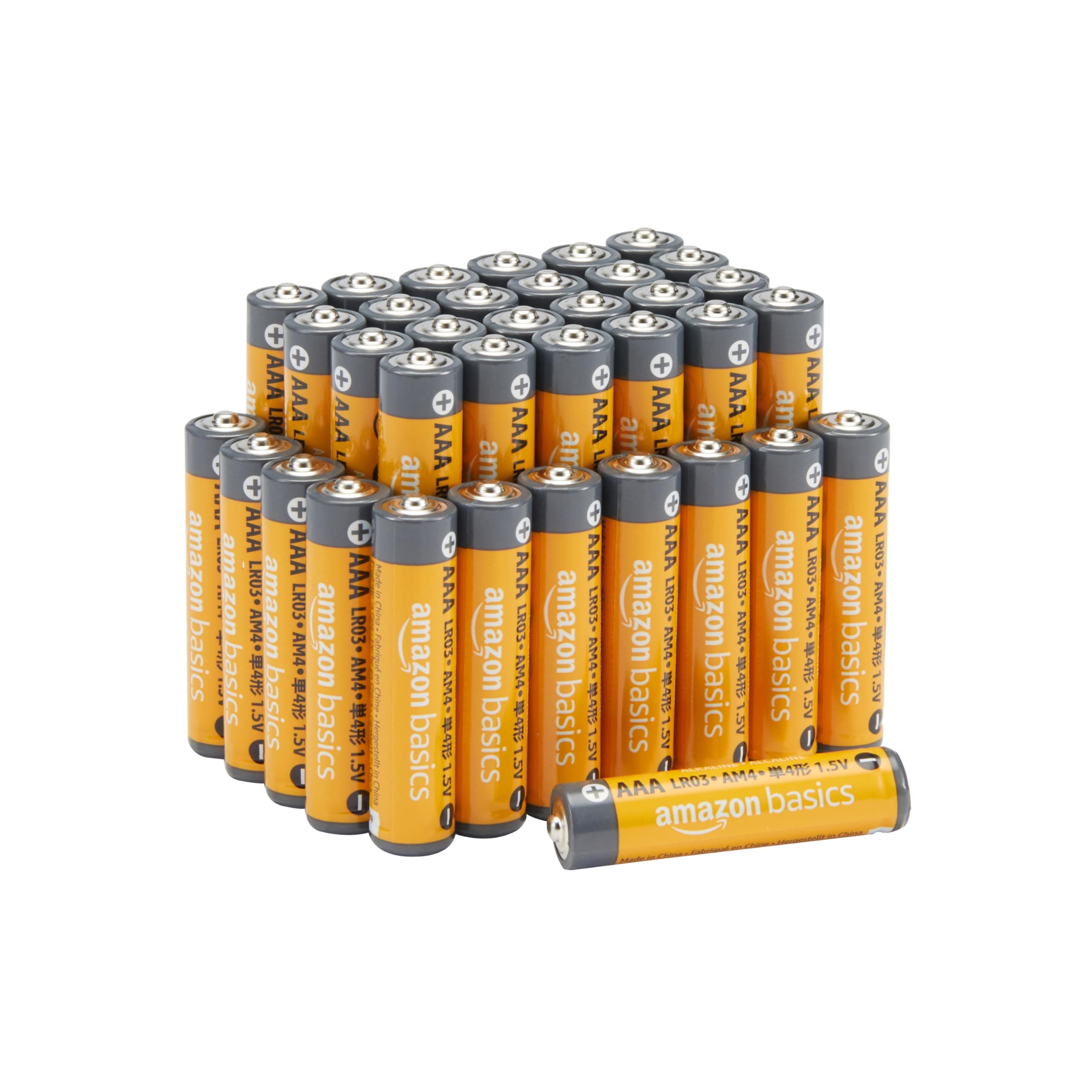
Amazon Basics AAA Alkaline High-Performance Batteries, 1.5 Volt, 10-Year Shelf Life, 36 Count (Pack of 1)
Amazon Basics