
Match the vacuum to your flooring type and home size. Homes with pets need strong suction and self-emptying bins; apartments prioritize quiet operation and slim profile.
Match the vacuum to your flooring type and home size. Homes with pets need strong suction and self-emptying bins; apartments prioritize quiet operation and slim profile. Getting this right means the difference between a hands-free cleaning ally and an expensive dust-dispersing toy.
The Short Answer
Start by listing your non-negotiables: flooring type, square footage, pet hair, and whether you'll put up with maintenance. Hardwood and tile require a robot that won't scratch floors; thick carpets demand powerful suction; and multi-level homes need a model with a reliable mapping system. If you have pets, look for self-emptying bases and tangle-free rubber brushes. If you live in an apartment, prioritize a slim profile (under 10 cm) and quiet operation (under 60 dB). Budget $250–$800 for a genuinely useful robot, and check our Best Time to Buy Robotic Vacuums (2026 Guide) for pricing cycles.
The Full Picture
Robot vacuums have evolved from novelty gadgets to essential home appliances, but nearly 40% of owners report being underwhelmed because they bought the wrong model for their space. The right robot won't just clean — it will empty itself, navigate around shoes, and give you back hours every week. The wrong one will get stuck on tassels, miss entire rooms, or die halfway through a living room. This guide walks through the five factors that actually matter, so you can buy with confidence the first time.
Why It Matters
A robot vacuum isn't a “set and forget” purchase — it's a long-term relationship. The average model lasts 4–6 years, and the cost of a bad choice isn't just the sticker price: it's the daily irritation of a robot that gets stuck under your couch, fails to cover your open-concept layout, or smears pet hair instead of picking it up. Meanwhile, a well-matched robot can cut your manual vacuuming time by 90%. With the global robot vacuum market expected to exceed $13 billion by 2027, manufacturers are flooded with options, which paradoxically makes choosing harder. That's why this decision needs to be methodical, not spontaneous.
The Key Factors
1. Flooring Type (Non-Negotiable)
- Hardwood, tile, or laminate: Look for a robot with rubber bristle-less brushes and a “hard floor” setting. These won't scratch surfaces and are easier to clean hair off. Models like the Roborock Q5+ and iRobot Roomba j7+ excel here.
- Low-pile carpet: Any decent vacuum will handle this, but you'll want a model with a suction power of at least 2,000 Pa to pull embedded dirt.
- High-pile or thick rugs: Avoid robots with low-profile bodies; they'll bog down. Seek models with a “carpet boost” mode that automatically increases suction when the sensor detects a rug. A tall clearance (at least 1.6 cm) is critical.
- Mixed flooring: Choose a robot with a smart sensor that can detect transitions and adjust climbing power — otherwise it'll get stuck on thresholds.
2. Home Size and Layout
- Under 800 sq ft (e.g., apartment): A robot with a ~1,000 mAh battery is fine. Look for a slim build to get under furniture, and a quiet motor (<60 dB) so it doesn't disturb neighbors. The vacuums in our apartment guide often double as manual companions, but for full autonomy, a compact robot like the Eufy G40+ works well.
- 800–2,000 sq ft (e.g., typical house): You need a larger dustbin (400–600 ml) and a battery life of at least 90–120 minutes. A self-emptying base becomes essential for convenience.
- Multi-level homes: Don't buy one robot for all floors unless it has multi-floor mapping. Models like the Roborock S7 MaxV can store up to four floor plans, but you'll have to move the base manually — so consider a second budget robot for downstairs.
3. Pet Hair and Allergies
Pets are the main reason people buy robot vacuums, yet they're also the fastest way to break an ill-suited model. Pet hair wraps around roller brushes, clogs filters, and fills dustbins quickly. Look for:
- Suction ≥2,500 Pa for gripping embedded fur.
- Tangle-free brushes (either dual rubber or comb-style bristles).
- Self-emptying bin with a HEPA filter — otherwise you'll be emptying the bin daily and breathing in allergens.
- Allergen seal to keep dust from escaping.
The iRobot Roomba j7+ and Roborock Q5+ are top picks for pet owners, both of which pair with self-emptying bases that hold up to 60 days of dirt.
4. Navigation and Smart Features
Cheaper robots bounce around randomly — they might clean the same spot three times and miss an entire hallway. Consider these navigation technologies:
- Laser LIDAR mapping: Uses spinning laser to build a precise floor plan. Best for complex layouts and no-go zones. Slightly more expensive but worth it.
- Camera-based vSLAM: Uses optical sensors to map your home. Works in darkness but can be tricked by sudden light changes.
- Gyroscope-only: Cheap (under $200) but randomly bounces. Only viable for small single-room spaces.
You also want app controls, scheduling, and virtual boundaries (like “no-go” strips) if you have delicate areas or pet food bowls.
5. Maintenance and Longevity
Factors to compare:
- Dustbin capacity: 300 ml is too small for a 1,500 sq ft home; 500+ ml means fewer empties.
- Filter cleaning: Some filters need washing every month — factor in labor.
- Brush replacement: Expect to replace main brushes every 6–12 months ($30–$50).
- Battery swappability: Some robots have removable batteries, extending useful life.
Comparison Table: Popular Robot Vacuums at a Glance
| Model | Flooring | Suction | Navigation | Self-Empty | Best For | Price |
|---|---|---|---|---|---|---|
| iRobot Roomba j7+ | Hardwood + low carpet | 2,000 Pa | Camera vSLAM | Yes | Pet owners with mixed floors | ~$599 |
| Roborock Q5+ | Hardwood + low/medium carpet | 2,700 Pa | LiDAR | Yes | Large homes, pet hair | ~$429 |
| Eufy G40+ | Hardwood + tile | 2,000 Pa | LiDAR | No | Apartments, tight budgets | ~$249 |
| Ecovacs Deebot T9 | All floors | 3,000 Pa | LiDAR | Yes | Carpet-heavy homes | ~$499 |
| Shark AI Ultra | Hardwood + carpet | 2,500 Pa | LiDAR | Yes | Pet owners who prefer bagless | ~$649 |
Common Mistakes to Avoid
- Buying on suction alone: A 5,000 Pa motor won't save you if the robot can't navigate past your kids' toys. Navigation is 70% of the experience.
- Ignoring cliff sensors: If you have a split-level home with balconies or stairs, cheap robots may fall off edges. Always check for adequate cliff detection.
- Not measuring furniture clearance: Many robots are 4 inches tall, but your sofa might only have 3 inches of clearance. Measure before you buy!
- Forgetting about low-pile rugs: Some robots struggle to climb onto thick rugs, getting stuck at the edge. Look for a model with a “carpet crossing” spec.
- Assuming self-emptying means zero maintenance: You still need to clean the base filter and remove hair tangles weekly.
- Buying during peak season: You can save 30–40% if you time your purchase. Check our Best Time to Buy Air Purifiers (2026 Guide) for cross-season insights, and the Best Time to Buy Vacuums (2026 Guide) for general vacuum deals.
Our Recommendation
For most homes: The Roborock Q5+ is the sweet spot. It has LiDAR navigation, powerful 2,700 Pa suction, a self-emptying base, and it handles both hardwood and low-pile carpets. It's a better value than the Roomba j7+ for pet owners.
For apartments under 700 sq ft: The Eufy G40+ — it's slim, quiet, and cheap, and it doesn't waste money on a self-emptying base you'll rarely use.
For carpet-heavy houses with 2+ floors: The Ecovacs Deebot T9 has the best carpet detection in its class and can store multiple floor plans.
If you have a tight budget: Wait for a sale on older models — Black Friday and January typically have the best deals, as detailed in our Best Time to Buy Robotic Vacuums (2026 Guide). Even the previous-generation Roomba i3 is a great steal at under $200.
Verdict
The right robot vacuum doesn't need to be the most expensive — it needs to fit your floors, your home size, and your pet situation. If you own medium-pile carpets and a Golden Retriever, a self-emptying LiDAR model is non-negotiable. If you're in a studio with outlets exposed, a lesser model will work beautifully. Spend 20 minutes measuring your rooms and listing your annoyances, and you'll be rewarded with years of hands-free clean floors. For a final sanity check, read our Best Time to Buy Clothes Dryers (2025 Guide) — because after your robot vacuum saves you time, you'll need somewhere to dry those pet blankets.
Frequently Asked Questions
What is the average lifespan of a robot vacuum?
Most robot vacuums last between 4 and 6 years with proper maintenance. Battery life starts degrading after about 2-3 years, and replacement batteries cost $50–$100. The motor and sensors can last longer, but navigation technology becomes outdated quickly. If your robot stops covering your home efficiently or fails to hold a charge, it's likely time for a replacement.
How often should you clean a robot vacuum?
Empty the dustbin after every use if you have pets, or every 2–3 days otherwise. Clean the brush roll and wheels weekly to remove hair and debris. Replace the filter every 2–3 months, depending on usage. Self-emptying bases need less frequent emptying, but the base's bin should be checked weekly. Regular maintenance prevents clogs and maintains suction power.
Why does my robot vacuum keep getting stuck?
Robot vacuums commonly get stuck on loose cords, tassels, area rug edges, and low furniture. To prevent this, secure cords with cable ties, use edge tape on rugs, and pick up small items before cleaning. Many newer models have obstacle detection, but older ones rely on sensors. If your robot gets stuck often, check for uneven thresholds or furniture with narrow gaps.
When should you buy a robot vacuum?
The best time to buy a robot vacuum is during major sales events like Black Friday, Cyber Monday, Prime Day, and Amazon Days. Prices typically drop 30–40% during these periods. New models are released in the spring, so previous-year models see discounts. If you're not in a rush, wait for a holiday sale to get the best value.
Products Mentioned

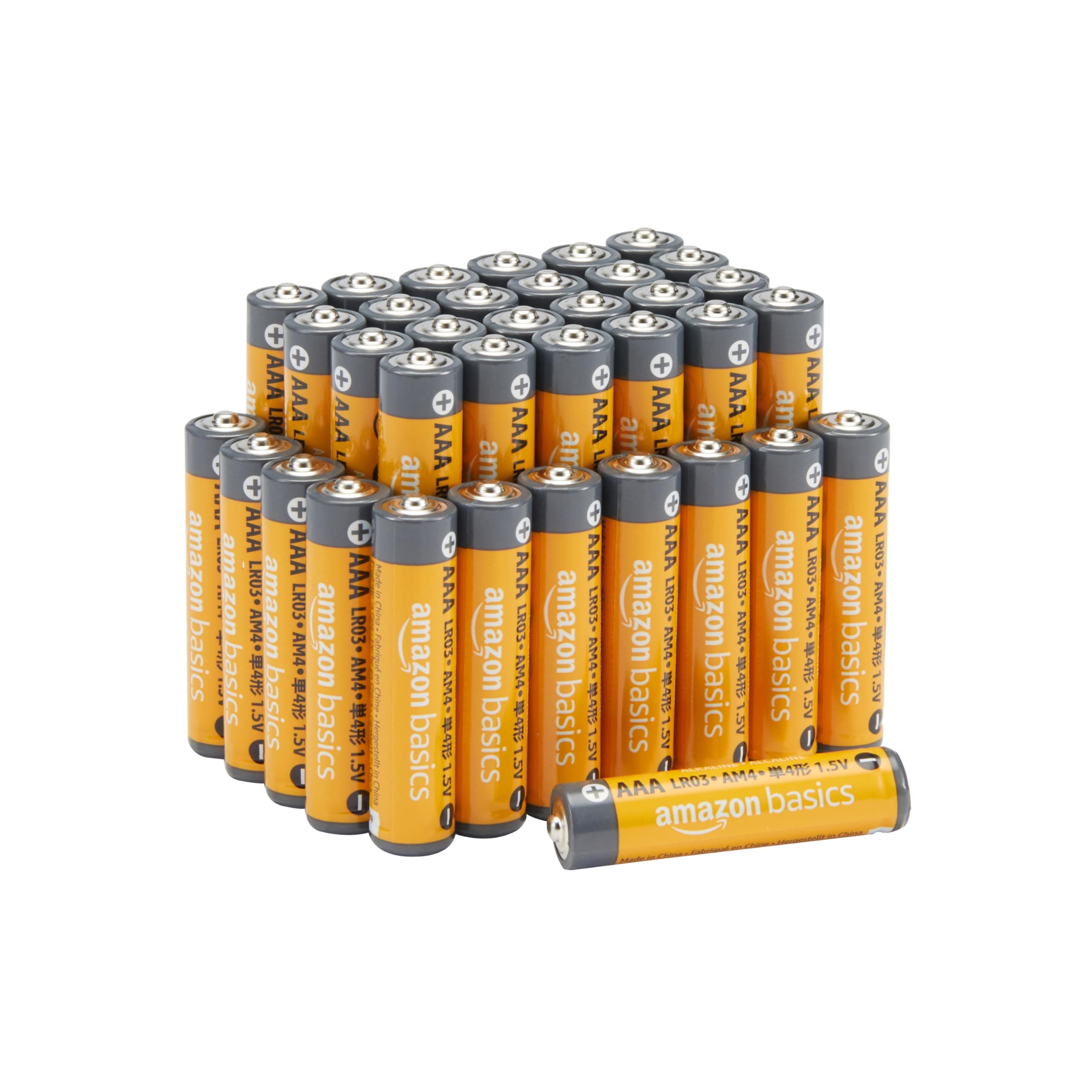
Amazon Basics AAA Alkaline High-Performance Batteries, 1.5 Volt, 10-Year Shelf Life, 36 Count (Pack of 1)
Amazon Basics