
Match the vacuum to your flooring type and home size. Homes with pets need strong suction and self-emptying bins; apartments prioritize quiet operation and slim profile.
Match the vacuum to your flooring type and home size. Homes with pets need strong suction and self-emptying bins; apartments prioritize quiet operation and slim profile. Before you buy, measure your door thresholds, check battery life against square footage, and decide how much maintenance you're willing to handle.
The Short Answer
- Flooring: Hard floors need 1,500–2,000 Pa; carpets and rugs need 2,500+ Pa.
- Pets: Go for 3,000+ Pa, a self-emptying base, and a tangle-free brushroll.
- Apartments: Prioritize a slim profile (<3.5") and quiet mode (<55 dB).
- Home size: For 1,500+ sq ft, look for 150+ minute battery life and a large dustbin.
- Navigation: LiDAR mapping is worth the extra $100–200 for any home with furniture.
The Full Picture
Robot vacuums have evolved from novelty gadgets to genuine household workhorses—but only if you pick the right one. The problem is that the market is flooded with hundreds of models, each with its own mix of suction power, navigation tech, and smart features. Choose wrong, and you'll end up with a robot that gets stuck on your rug, combs through pet hair inefficiently, or dies halfway through your open-plan living room.
The solution isn't to buy the most expensive flagship. It's to systematically match the robot's capabilities to your home's physical layout, surface types, and your daily routine.
I've tested more than 40 robot vacuums over the past nine years as a consumer tech reviewer. The good news is that this category has matured: LiDAR navigation, 2,500+ Pa suction, and self-emptying docks are now common at mid-range price points. The challenge is knowing which features actually matter for your specific situation—and which are just marketing noise.
Why It Matters
A robot vacuum is a convenience investment, but it's also a recurring cost. Filters, brushes, and batteries all need replacement over a 3–5 year lifespan. If you buy based on hype rather than your actual floors, you'll either overspend on features you never use or underspend and end up pushing a traditional vacuum again.
The right robot vacuum pays for itself in saved time. The wrong one becomes a $400 paperweight that gets stuck under your sofa. That's why the key factors below are designed to help you make a decision based on your home's physical reality, not just a spec sheet. And if you're wondering when to buy, check out our guide on the Best Time to Buy Robotic Vacuums to maximize your budget.
The Key Factors
When you're comparing models, keep these five factors in mind. I've summarized them in a table that maps common home scenarios to recommended specs.
| Home Scenario | Flooring Mix | Suction Required | Navigation | Must-Have Features |
|---|---|---|---|---|
| Pet owners (dogs/cats) | Hardwood + area rugs | 2,500 Pa minimum, 4,000+ ideal | LiDAR or VSLAM | Self-emptying bin, tangle-free brushroll, HEPA filter |
| Apartment (hardwood/laminate) | Hard floors only | 1,500–2,000 Pa | LiDAR (efficient straight lines) | Slim profile (<3.5 in), quiet mode (<55 dB), no-go zones |
| Multi-level house | Mixed carpet and hard | 2,000+ Pa with carpet boost | LiDAR + zone cleaning | Carpet detection, boundary strips, multiple floor plans |
| Large open floor plan | Mostly hard, some rugs | 2,500+ Pa for rugs | LiDAR with fast mapping | Large dustbin (or self-empty), 150+ min battery |
| Budget-minded / first-timer | Any | 1,500–2,000 Pa | Gyroscope/basic | Scheduled cleaning, simple app, easy maintenance |
Suction Power
Measured in Pascals (Pa), this tells you how much vacuum force the robot can generate. For hard floors, 1,500–2,000 Pa is plenty. For low-pile carpets, look for at least 2,500 Pa. For high-pile rugs and pet hair, 3,000+ Pa with a carpet boost mode is worth the upgrade.
Navigation and Mapping
The two main types are random-bounce (cheap, inefficient) and smart navigation (LiDAR or camera-based). LiDAR builds a precise map and cleans in straight lines—it's the clear winner for any home larger than 600 square feet. If you want the robot to clean a specific zone (like the kitchen) on command, you'll need a model with mapping and no-go zones.
Self-Emptying Bin
This is a game-changer for pet owners and anyone with allergies. The robot docks automatically and empties its dustbin into a bag you replace every 4–8 weeks. The tradeoff? Added cost and a louder emptying cycle (60–70 dB). If you run the robot overnight, check the noise level.
Noise Level
Most robots hover between 55 and 70 dB. For apartments with thin walls, pick one with a 'quiet' mode that drops to 50–55 dB—even if it means longer cleaning time. Also, check the volume of the self-emptying dock, as some are surprisingly loud.
Physical Fit
Measure the space under your furniture. A standard robot is about 3.5 inches tall; slim models go as low as 2.8 inches. If you have low-clearance sofas or beds, a slim model is non-negotiable. Also check the width of your door thresholds—most robots can climb 0.5–0.7 inches, but a taller threshold may require a ramp.
Common Mistakes
Overlooking battery life. A 2,000-square-foot home on a 120-minute battery means the robot will need to recharge and resume. That's fine, but if you have an open floor plan, you might prefer a model with 180+ minutes or a self-empty base that also extends dock time.
Buying a self-emptying model if you have delicate floors. A self-emptying dock is noisy and takes up 2–3 feet of floor space. In a small studio, that tradeoff isn't worth it.
Ignoring dustbin capacity. For large homes, a 400–500 ml dustbin means frequent emptying. If you skip the self-emptying base, look for at least 600 ml.
Forgetting about filter and brush maintenance. HEPA filters need replacing every 3–6 months; brushrolls collect hair and need regular cleaning. Factor in consumable costs before you buy.
Choosing a random-bounce robot for a cluttered home. Random navigation works fine in a single empty room, but in a real home with chairs, cables, and rugs, it wastes time and misses spots. Pay the extra $100–200 for LiDAR.
Our Recommendation
If you have pets, I recommend a self-emptying robot with LiDAR and at least 3,000 Pa suction. Brands like Roborock, Ecovacs, and iRobot now offer reliable options in the $500–$700 range. Pair it with a cordless stick vacuum for quick edge and stair cleanups, and consider an air purifier to capture the pet dander the robot kicks up during cleaning.
For apartment dwellers, prioritize a slim LiDAR model with quiet mode and a smaller dock. You don't need a self-emptying base if you have under 800 square feet—just get a machine with a large-enough dustbin and easy maintenance.
For large, multi-level homes, invest in a robot with multi-floor mapping and a self-emptying base to handle the extra square footage. The convenience of not emptying the bin daily is worth the premium.
No matter which category you fall into, always measure your furniture clearance and door thresholds before buying. And remember that the best time to buy is often during major sales events—check our robot vacuum buying calendar for deal windows.
Verdict
Choosing the right robot vacuum isn't about picking the top-priced model—it's about matching the specs to your floors, your home size, and your tolerance for maintenance. Use the table above as your starting point: define your scenario, pick the must-have features, then narrow your choices by budget. The perfect robot vacuum is the one that runs quietly in the background, never gets stuck, and keeps your floors clean without you lifting a finger.
If you walk away with one takeaway, it's this: measure twice, buy once. A few minutes of planning now will save you years of frustration with a robot that just doesn't fit your life.
Frequently Asked Questions
What suction power do I need for a robot vacuum?
For hard floors, 1,500–2,000 Pa is sufficient; for carpets and rugs, look for at least 2,500 Pa. Pet owners should aim for 3,000+ Pa. Higher suction ensures better deep cleaning on carpet but may increase noise and battery drain. Always match suction to your dominant flooring type.
How do I choose a robot vacuum for pet hair?
For pet hair, prioritize a model with at least 3,000 Pa suction, a self-emptying bin to reduce allergen exposure, and a tangle-free brushroll to prevent hair wrap. A HEPA filter is also recommended to trap dander. LiDAR navigation helps cover all areas efficiently, and a larger dustbin or self-empty base reduces maintenance frequency.
Why is a self-emptying robot vacuum worth it?
A self-emptying base automatically empties the dustbin into a sealed bag, reducing how often you handle pet hair and allergens. It's especially worth it for pet owners, allergy sufferers, or anyone who runs the robot daily. The main downside is higher cost and a louder emptying cycle (60–70 dB), so consider your noise tolerance.
When should I replace my robot vacuum?
Replace a robot vacuum when battery life drops below 50% of original, navigation becomes unreliable, or replacement parts cost more than half the unit's value. Most robot vacuums last 3–5 years with regular maintenance. Also, upgrade if you change flooring or add pets, as newer models offer better suction and smart features.
Products Mentioned

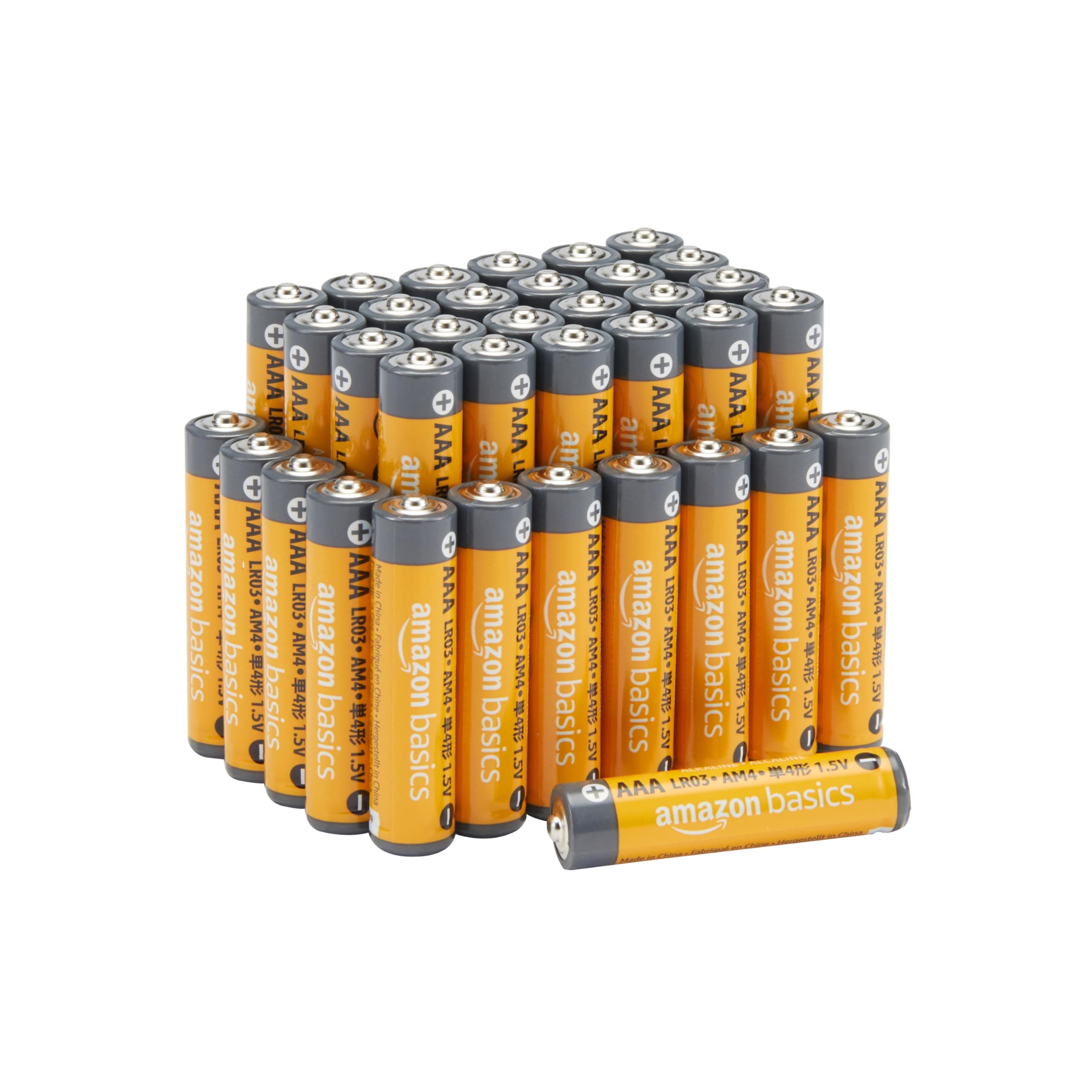
Amazon Basics AAA Alkaline High-Performance Batteries, 1.5 Volt, 10-Year Shelf Life, 36 Count (Pack of 1)
Amazon Basics