
Match the vacuum to flooring type and home size. Pets need strong suction and self-emptying bins; apartments need quiet, slim models.
Match the vacuum to your flooring type and home size. Homes with pets need strong suction and self-emptying bins; apartments prioritize quiet operation and slim profile. That's the core advice—but the right robot vacuum also depends on how you live, not just where you live. In this guide, I'll break down every key factor, so you can choose with confidence instead of guessing from the spec sheet.
The Short Answer
Start with the two questions that determine 80% of your decision:
- What surfaces does the robot need to clean?
- How large is the space it must cover?
If you have wall-to-wall carpet or area rugs, you need a model with strong suction and a roller brush that won't tangle. For bare floors, suction matters less than a soft sweep-and-suction combo that doesn't scatter debris. Homes with pets should add self-emptying to the must-have list—dander and hair fill a tiny bin fast. Apartments under 1,000 square feet benefit from slim, quiet models that can slide under furniture and run while you sleep.
The Full Picture
Robot vacuums have evolved from novelty gadgets to genuinely useful appliances—but the marketing around them makes it hard to separate features from gimmicks. In 2025, you can find robot vacuums for under $150 and over $1,500. The difference isn't just brand cachet; it's navigation tech, battery endurance, self-maintenance, and noise engineering.
The problem: buying the wrong robot vacuum means either paying for capabilities you'll never use or missing the one feature that would actually solve your daily pain. For example, a $600 self-emptying model won't help you if your main complaint is carpet edge cleaning—you'd be better off with a robot that has a better brush design.
Recent advancements have also blurred the line between budget and premium. Obstacle-avoidance cameras that once cost $1,000 are now appearing in $400 models, and even mid-range robots offer variable suction and no-go zones. That's good news—but it also means you need to weigh your real needs against the spec sheet.
This guide walks you through the key factors, from floor type and home size to pet ownership and smart-home integration. You'll leave with a clear, personalized checklist—and the confidence to ignore the hype.
Why It Matters
A robot vacuum is a recurring cost, not a one-time purchase. You'll buy filters, brushes, and possibly a new battery within three years. If you start with the wrong platform, you're locked into its consumable ecosystem. Worse, a robot that struggles with your layout will end up in the closet, wasting $300–$800.
Choosing correctly means fewer manual vacuuming sessions, cleaner indoor air (especially for allergy and pet households), and a device that genuinely integrates into your routine. It's also a smart investment: if you time your purchase well, you can save 20–40% off MSRP. For instance, our Best Time to Buy Robotic Vacuum guide shows that major discounts typically appear during Black Friday, Amazon Prime Day, and Q1 model refreshes.
The Key Factors
1. Flooring Type
This is the single most important factor.
- Hardwood, tile, laminate: Look for a robot with a soft silicone brush and strong suction (2,000–3,000 Pa is plenty). Avoid models that rely on aggressive beater bars; they can scratch finishes.
- Low- to medium-pile carpet: You'll need at least 2,500 Pa, plus a rubber brush that doesn't shed.
- High-pile carpet: Most robot vacuums struggle here. Only consider flagship models with suction above 4,500 Pa and a self-adjusting cleaning head.
2. Home Size and Battery
Most robot vacuums run 60–120 minutes before returning to the dock. If your home is over 2,000 square feet, look for a battery above 5,000 mAh or a model with a "resume and recharge" feature. For apartments under 1,000 square feet, a 60-minute runtime on hard floors is usually enough.
3. Pet Households
Pets demand three things: strong suction (to pull embedded hair), a tangle-free brush (to prevent clogs), and a self-emptying base (so you don't empty the bin every other day). The extra $100–$200 for self-emptying pays for itself in convenience. Air filtration is a bonus: a HEPA filter reduces dander recirculation—especially relevant if you also use an air purifier. (Our Best Time to Buy Air Purifiers guide can help you pair the two.)
4. Noise Level
If you work from home or have a baby, noise is a dealbreaker. Look for models rated under 65 dB—roughly a normal conversation. Budget bots can hit 75–80 dB, which is disruptive. Many premium models offer quiet modes that lower suction but are still fine for daily maintenance.
5. Navigation Tech
- Random bounce: Cheap and erratic; they miss spots and take longer. Avoid unless your home is tiny and empty.
- Gyroscopic/ inertia sensors: Better coverage, but still somewhat unpredictable.
- Laser (LiDAR) mapping: Creates a floor plan, allows room-specific cleaning, and works in the dark. This is the sweet spot for most homes.
- Camera (VSLAM): Good for homes with varied textures, but requires adequate lighting.
For multi-floor homes, mapping memory is essential—you don't want to remap each level.
6. Self-Emptying and Maintenance
A self-emptying dock changes the game: it holds 30–60 days of debris. But it also adds height and bulk, so make sure the dock fits under your furniture. For all models, plan to replace the filter every 6–12 weeks and the side brushes every 6–12 months. A model with easily available parts is worth paying a little extra for.
7. Price and Value
Budget robots (under $200) can handle basic hard floors but lack navigation smarts and can get stuck. Mid-range ($200–$500) offers LiDAR and good suction. Premium ($500+) adds self-emptying, obstacle avoidance, and app extras like no-go lines. The best value is usually in the $300–$500 bracket, especially during sales.
8. Smart Home and App Features
If you're already invested in Alexa, Google Home, or Matter, check compatibility. App features like no-go lines, virtual boundaries, and scheduled cleaning turn a good robot into a great one. Some models even let you control the robot with your voice—nice in theory, but the app is where the real power lives. Don't buy a robot whose app is clunky or unsupported; check recent reviews for firmware updates.
Comparison Table: Priorities by Home Profile
| Home Profile | Suction | Self-Empty | Noise | Navigation | Clearance |
|---|---|---|---|---|---|
| Apartment/condo (hard floors) | 2,000–2,500 Pa | Optional | Under 60 dB | Gyro or LiDAR | Under 3.5 in |
| House with pets (mixed floors) | 4,000+ Pa | Recommended | Under 68 dB | LiDAR + obstacle detect | Under 4 in |
| Large multi-floor home | 3,000+ Pa | Required | Under 65 dB | LiDAR with mapping | Under 4.5 in |
| Carpet-heavy home | 4,500+ Pa | Recommended | Under 65 dB | LiDAR | Under 4.5 in |
Our Recommendation
Personalize your pick with these rules of thumb:
- You live in an apartment under 1,000 sq ft: Compact size (under 3.2-inch height), noise under 60 dB, and battery around 60 minutes. You can skip self-emptying; a 400–500 ml bin is enough.
- You have pets: Prioritize suction (4,000+ Pa), self-emptying dock, and a tangle-free brush. Expect to spend $500–$700; it's worth the money.
- You have multiple floors: Buy a robot with LiDAR mapping and multi-floor memory. If your budget allows, add self-emptying—trust me, lugging the bin up and down stairs gets old.
- You're on a budget: Look for last year's flagship model during clearance events. The best times are Black Friday, Amazon Prime Day, and January–April when new models launch. Our Best Time to Buy Robotic Vacuum guide tracks these cycles.
If you have allergies but no pets, prioritize HEPA filtration and scheduled cleaning over raw suction. If your home is above 2,500 square feet, plan for a secondary robot or a stick vacuum for touch-ups—check our Best Time to Buy Vacuums guide to score deals on a backup.
Common Mistakes
- Buying on suction alone. High suction means little if the robot's navigation is poor. A 5,000 Pa random-bounce bot will clean in circles while missing your hallway.
- Ignoring door thresholds. If you have thick rugs or raised thresholds, check the robot's obstacle-climbing rating (usually in mm). Models with less than 15 mm climb will get stuck.
- Skipping measurement checks. Always measure under-furniture clearance before buying. A robot that's 3.5 inches tall will stop at an entertainment center with a 3-inch gap.
- Assuming all robot vacuums work on all floors. Some higher-end models are designed for hard floors only, and their brushroll can damage carpets.
- Forgetting about the dock location. Self-emptying docks can be loud (70–80 dB during emptying) and need 1–2 feet of clearance on both sides. Plan that space before you buy.
- Neglecting consumable costs. HEPA filters and brushes add up. A cheap robot with pricey consumables will cost more over two years than a mid-range model with generic parts.
Verdict
The right robot vacuum matches your floor surfaces, home size, and daily habits. For most homes, a mid-range LiDAR-based robot in the $300–$450 range—with decent suction (3,000 Pa+) and app controls—delivers the best value. Add a self-emptying dock if you have pets or you're stretched for time. Don't buy a $1,500 model unless you need its specific obstacle avoidance and multi-floor mapping capabilities.
Remember to time your purchase. Check our Best Time to Buy Robotic Vacuum guide to catch the steepest discounts, and if you're pairing it with a stick vacuum for deep cleans, our Best Time to Buy Vacuums guide covers those deals too.
Ultimately, the best robot vacuum isn't the one with the most features—it's the one that fits your home and your routine. Start with the checklist above, and you'll find a robot that actually earns its place in your living room.
Frequently Asked Questions
What suction power do I need for a robot vacuum?
For hard floors, 2,000–3,000 Pa is usually enough. Low- to medium-pile carpet needs at least 2,500 Pa, while high-pile carpet requires a flagship model with 4,500 Pa or more. If you have a mix, choose a robot with adjustable suction so it can adapt automatically. Check the spec sheet for Pa (Pascal) ratings to match your flooring.
How do I choose a robot vacuum for a small apartment?
Focus on size, noise, and battery. Look for a slim model that slides under furniture, and check the noise rating—under 65 dB is ideal for sleeping or working. A 60-minute runtime is usually enough for under 1,000 square feet. Avoid bulky self-emptying bases if space is tight; a compact dock is better.
Why do robot vacuums need self-emptying bins for pet homes?
Pet hair and dander fill a standard bin quickly—usually within one or two cleaning cycles. A self-emptying base transfers debris into a larger bag, so you only empty it every few weeks. This prevents loss of suction and saves you from daily maintenance. For pet owners, the extra cost is worth the convenience and consistent performance.
When should I buy a robot vacuum to get the best price?
The biggest discounts appear during Black Friday, Amazon Prime Day, and Q1 model refreshes, when new releases push older models down in price. If you can wait, these events typically offer 20–40% off MSRP. Sign up for price alerts and check historical pricing so you don't pay full price.
Products Mentioned

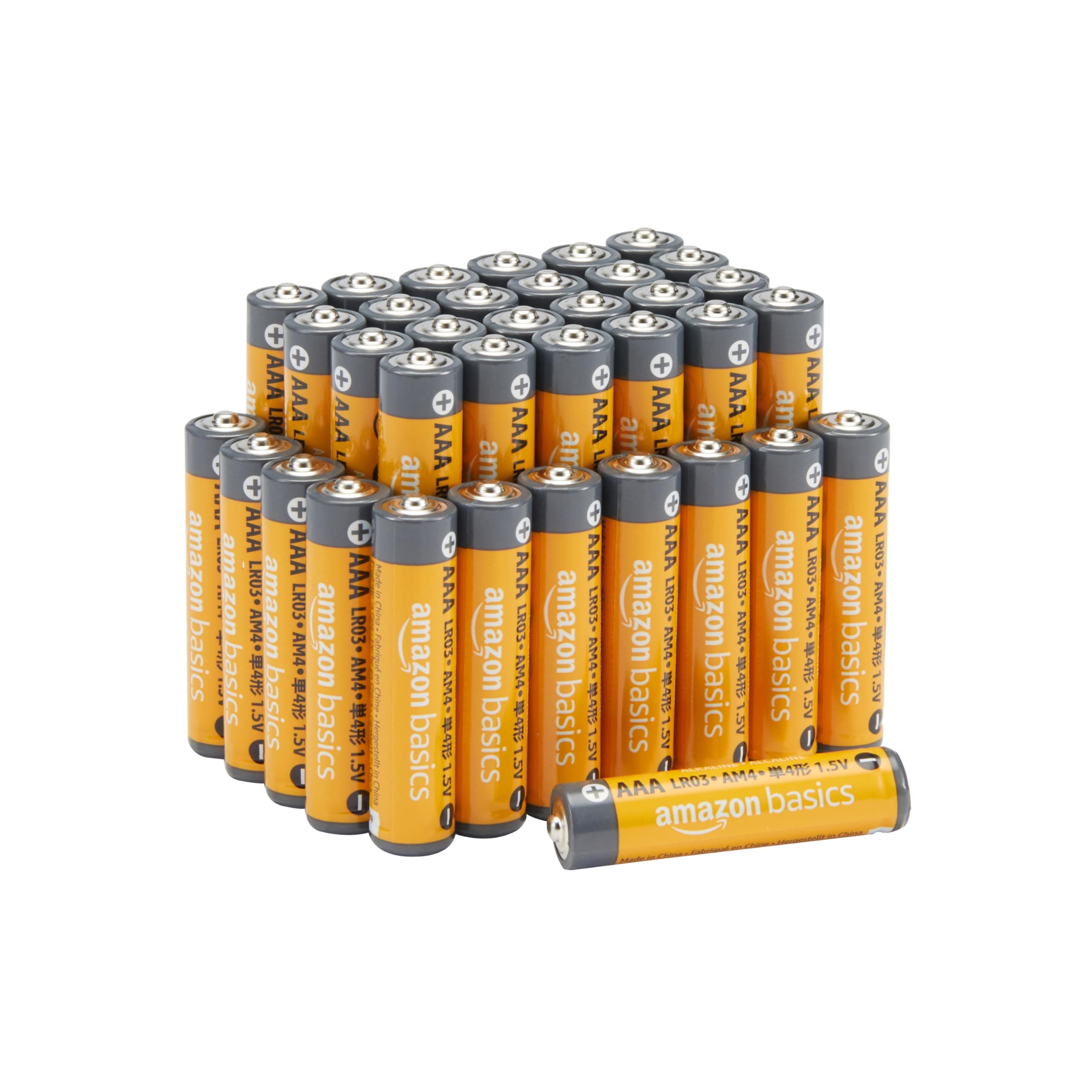
Amazon Basics AAA Alkaline High-Performance Batteries, 1.5 Volt, 10-Year Shelf Life, 36 Count (Pack of 1)
Amazon Basics