
Match the vacuum to your flooring and home size. Pets need strong suction and self-emptying bins; apartments prioritize quiet operation and slim profile.
Match the vacuum to your flooring type and home size. Homes with pets need strong suction and self-emptying bins; apartments prioritize quiet operation and slim profile. Here’s how to identify the model that fits your specific situation without overpaying.
Robot vacuums have evolved from novelty gadgets to essential home appliances. But with hundreds of models ranging from $150 to $1,500, choosing the right one is trickier than simply picking the most expensive box. The secret is to match the vacuum’s capabilities to your living space, floor types, and lifestyle — not to obsess over marketing features you’ll never use.
The Short Answer
Ask yourself these four questions before comparing models:
- What flooring do you have? Hardwood and tile require good edge cleaning; low-pile carpet needs solid suction; high-pile carpet and thick rugs demand a model with anti-tangle brushes and higher wattage. Robot vacuums are excellent on hard floors and low carpets, but struggle with thick carpets — you may need a separate upright or stick vacuum for those.
- How big is your home? For spaces under 1,000 square feet, a simple random-navigation model with a small dustbin can work. For larger homes, you need LiDAR or camera-based mapping to cover the layout efficiently and avoid cleaning the same spot repeatedly.
- Do you have pets? Pet hair, dander, and litter require stronger suction (4,000 Pa or more) and a self-emptying bin so you don’t empty the dustbin every day. Look for models with rubber brushes that resist hair tangling.
- Are you in an apartment or a house? Apartments benefit from quieter models (under 55 dB) and a slim profile to fit under furniture. Houses with multiple levels may need a model that saves multiple maps and has longer battery life.
If you want the easiest answer: match the vacuum to your primary floor type and pet situation, then let that narrow your options. For budget planning, check our Best Time to Buy Robotic Vacuums guide to find deals.
The Full Picture
A robot vacuum isn’t a replacement for a full-size vacuum — it’s a maintenance tool that keeps floors clean between deeper cleanings. This means you should set expectations accordingly. Even premium models can’t rival the suction power of a corded upright on dense carpets. The real value is in daily upkeep: running a robot vacuum every day captures 90% of the dust, dirt, and pet hair before it settles into fibers or gets tracked through the house.
That said, the market has segmented into three clear tiers:
- Budget ($150–$300): Basic brushroll suction, random pattern navigation, no mapping. These work fine on hard floors in small, open-concept spaces. They often bump into furniture and miss corners.
- Mid-range ($300–$600): Gyroscopic or LiDAR mapping, app control, virtual boundaries, stronger suction. Some include mopping pads. This is the sweet spot for most homes.
- Premium ($600+): Self-emptying bases, 3D obstacle avoidance, camera-based navigation, high-end mopping, and superior pet hair handling. These are for large homes, pet households, or tech enthusiasts.
Why It Matters
Choosing the right robot vacuum isn’t just about budget — it’s about whether the vacuum will actually clean your floors or drive you to manual cleanup every day. The wrong choice leads to frustration, wasted money, and a device that ends up in a closet.
For instance, a budget vacuum with random navigation will repeatedly clean the same area while missing others. In a large home, that means you’ll still need to vacuum manually. A premium self-emptying model in a small apartment wastes money and floor space with a bulky base. Matching the vacuum to your home size and flooring prevents these mismatches.
The Key Factors
When you compare specs, don’t get hypnotized by raw numbers. Here’s how to evaluate what matters:
1. Flooring Type
- Hardwood/Tile: Look for a vacuum with a high-quality side brush and good edge cleaning. A mopping function is a plus.
- Low-Pile Carpet: Needs at least 2,000 Pa suction and a rubber brushroll that doesn’t get tangled.
- High-Pile Carpet/Area Rugs: Look for models with “carpet boost” mode and a self-cleaning brushroll. Be prepared to use a manual vacuum for stairs and heavy traffic areas.
2. Home Size
- Under 1,000 sq ft: A non-mapping vacuum with a simple app is fine.
- 1,000–2,500 sq ft: You’ll want LiDAR or camera mapping for efficient paths and room-specific schedules.
- 2,500+ sq ft: Consider a model with a self-emptying base and large battery (2,500 mAh+). Multi-level homes require saved maps and the ability to carry the base up/down.
3. Pets & Allergies
- Suction power matters: 4,000 Pa is a good baseline for pet hair.
- Self-emptying bins (2.5–4 L dust capacity) reduce exposure to allergens.
- HEPA filters are essential for allergy sufferers.
- Rubber brushes are quieter and don’t clog with hair.
4. Noise & Living Space
- If you work from home or have a baby, look for models under 55 dB. Note that “Boost Mode” will be louder.
- Slim profile (under 4 inches / 10 cm) is critical for sliding under sofas and beds.
5. Navigation & Smart Features
- Random bounce: Cheapest, least efficient.
- Gyroscope: Cleans in parallel lines, but can get lost.
- LiDAR (Laser): Maps rooms in real-time, excellent accuracy.
- Camera (VSLAM): Uses visual landmarks, handles dark rooms less well but good for avoiding objects.
6. Total Cost of Ownership
Don’t forget replacement parts: filters, side brushes, main brush, and battery. High-end models have pricier parts. A budget model with a $15 filter that needs monthly replacement can cost more than a $600 vacuum with a washable filter.
Here’s a quick comparison table of typical model types:
| Feature | Budget (≤$250) | Mid-Range ($250–$600) | Premium ($600+) |
|---|---|---|---|
| Suction Power | 1,500–2,500 Pa | 2,500–4,000 Pa | 4,000–6,000+ Pa |
| Navigation | Random bounce | LiDAR / Gyro | LiDAR + Camera |
| Self-Emptying | No | Optional | Yes |
| Noise Level | 65–70 dB | 55–65 dB | 50–60 dB |
| Dustbin Capacity | 0.3–0.6 L | 0.4–0.8 L | 2.5–4 L (base) |
| Mopping Function | No | Optional | Integrated |
Our Recommendation
Based on your needs, here’s a direct recommendation:
- Apartment / small condo, no pets, hard floors: Go with a mid-range LiDAR model from Roborock, Dreame, or Eufy (around $300). You get reliable mapping and app control without the premium price tag.
- Pet owners with carpet: Invest in a self-emptying model like the Roborock S8 Pro Ultra or iRobot Roomba j7+ (often $600–$800). The self-emptying base is a game-changer for daily pet hair removal.
- Large house, multiple floors, tight budget: Choose a mid-range vacuum with strong suction (≥4,000 Pa) and removable batteries, then manually move it between floors. Learn to use virtual walls to block off problem areas.
Before you buy, check the Best Time to Buy Robotic Vacuums guide for seasonal discounts. If a robot vacuum still feels like a compromise for your high-pile carpet, a cordless stick vacuum might be a better primary tool. And when you’re planning a whole-home smart appliance upgrade, don’t forget an air purifier to complement your clean floors.
Common Mistakes
- Ignoring floor type — The most common error. A powerful motor won’t help if the brush is wrong for your carpet.
- Overlooking dustbin size — Pet owners especially need large bins or self-emptying; otherwise you’ll be emptying constantly.
- Buying a model that’s too tall — If it doesn’t fit under your couch, you’re losing a major benefit.
- Forgetting to measure door thresholds — Some vacuums can’t climb raised thresholds between rooms.
- Skipping app features — Without mapping, you can’t schedule specific rooms or set no-go zones. This is a huge usability win.
- Underestimating maintenance — Filters, brushes, and sensors need regular cleaning. Check availability and cost before buying.
Verdict
Choosing the right robot vacuum comes down to matching three things: flooring, home size, and pet situation. Once you identify those, the decision becomes straightforward. Don’t buy on brand names alone; buy on specs that matter for your floor plan. A $250 mid-range model can outperform a $700 flagship in a small apartment, and a pet-centric premium model is worth the splurge for allergy suffers. Read our detailed buying guides, watch for sales, and pick the one that fits your life — not the one with the flashiest box.
Frequently Asked Questions
What is LiDAR in a robot vacuum?
LiDAR (Light Detection and Ranging) uses laser beams to measure distances and create a real-time map of your home. Robot vacuums with LiDAR navigate systematically, avoiding obstacles and covering every area efficiently. It's more accurate than camera-based systems, especially in low light, and allows for precise room division and virtual boundaries.
How do robot vacuums map your home?
Robot vacuums map your home using sensors like LiDAR or cameras. LiDAR spins and emits laser pulses to build a 2D map, while camera-based systems use visual landmarks. The vacuum stores the layout to plan efficient cleaning routes, avoid repeated areas, and let you set no-go zones or room-specific schedules. Mapping is essential for larger homes.
Why do robot vacuums need a self-emptying base?
A self-emptying base automatically empties the vacuum's dustbin into a larger sealed bag, typically holding 30-60 days of dirt. This is crucial for pet owners or allergy sufferers because it reduces contact with dust and dander, and you won't need to empty the bin after every cleaning. It's a premium feature that adds convenience but increases cost and footprint.
When should I use a robot vacuum vs a regular vacuum?
Use a robot vacuum daily to maintain floors and pick up surface dirt, pet hair, and debris. Use a regular vacuum weekly (or as needed) for deep cleaning carpets, reaching edges and corners, and cleaning stairs or upholstery. Robot vacuums complement, not replace, traditional vacuums—especially on high-pile carpets and tight spaces.
Products Mentioned

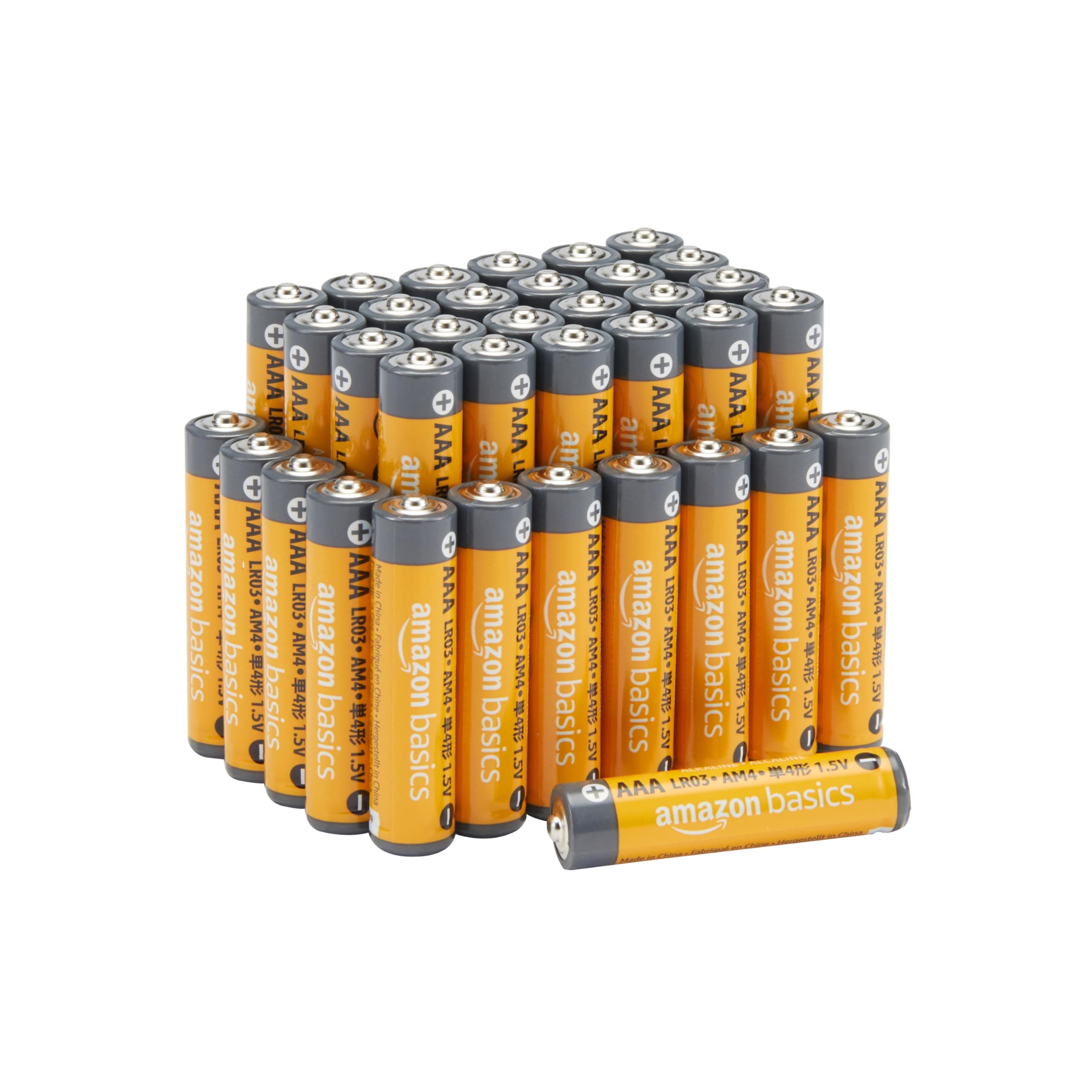
Amazon Basics AAA Alkaline High-Performance Batteries, 1.5 Volt, 10-Year Shelf Life, 36 Count (Pack of 1)
Amazon Basics