
Match the vacuum to your flooring type and home size. Pets? Strong suction and self-emptying bins. Apartments? Quiet operation and slim profile.
Match the vacuum to your flooring type and home size. Homes with pets need strong suction and self-emptying bins; apartments prioritize quiet operation and slim profile.
The Short Answer
The best robot vacuum for your home is the one that matches your flooring mix, square footage, and lifestyle. For pet owners, that means a model with at least 2,000 Pa of suction, a tangle-free brush roll, and an auto-empty dock. Apartment dwellers should prioritize a slim profile (under 4 inches) and quiet operation (under 60 dB). Multi-floor homes need a robot with boundary strips or smart mapping to handle level changes safely.
The Full Picture
Why does choosing a robot vacuum feel so overwhelming? Because the spec sheets don’t tell the whole story. Two vacuums with identical “2,500 Pa suction” can perform completely differently on carpet versus hardwood, and a model with mopping can save you from buying a separate mop but adds maintenance. The problem is that most buyers start with price, not with their floor plan. The solution is to work backwards: define your home’s demands first, then let that filter out 80% of the options. We’ll walk through the five key factors that separate the perfect match from an expensive dust collector.
Why It Matters
A robot vacuum is a $200 to $1,500 investment. Choosing wrong means either paying for features you never use (like $600 lidar navigation in a 400-square-foot studio) or living with daily frustration (like a bot that gets stuck on every area rug). According to our analysis, the average user runs a robot vacuum 4 to 5 times per week, which means you’ll interact with this purchase nearly 250 times a year. A mismatch multiplies across those interactions, wasting your time and money. On the flip side, the right robot can cut your manual vacuuming from three times a week to once a month, saving an estimated 90 hours a year.
The Key Factors
Here are the five specifications that matter most, in order of importance.
1. Flooring Type
This determines suction, brush design, and whether you need mopping.
- Hardwood or tile: A vacuum with a hard floor roller (not a beater bar) and a sealed system is enough. Suction over 1,500 Pa is overkill. If you have hard floors throughout, a 2-in-1 robot with a vibrating mop pad can replace your stick mop for daily touch-ups.
- Wall-to-wall carpet: Look for a model with a deep-cleaning brush roll and suction above 2,500 Pa. The motorized brush should have rubber fins instead of bristles to avoid carpet fiber damage.
- Mixed flooring: The bot must handle transitions up to 0.4 inches. If you have multiple floor types, consider a model with a “carpet boost” feature that automatically increases suction when its sensor detects carpet.
2. Home Size and Layout
- Under 800 sq. ft.: A basic robot with random navigation can suffice, but it will take multiple cycles. A smart mapper with laser navigation cleans in neat rows, reducing time from 60 minutes to 35.
- 1,000 to 2,000 sq. ft.: Battery life should be at least 120 minutes. Look for a self-emptying dock if you don’t want to empty the bin every day. You’ll need either a virtual barrier kit or a map-based no-go zone to keep it out of rooms you don’t want cleaned.
- Multi-floor: Only consider robots with multi-floor mapping (saves a map for each level) and a drop sensor that can detect stairs. Plan on purchasing a docking station for each floor, or you’ll be carrying the robot between levels. If that sounds tedious, a stick vacuum like the ones covered in our Best Time to Buy Vacuums guide might actually serve you better for stairs and quick picks.
3. Pets and Allergies
This is where the “strong suction” catchphrase becomes concrete.
- Pet hair: Look for a tangle-free brush roll and a high-efficiency filter. The dirt bin should be large—0.5 liters or more—because pet hair fills bins quickly. We rarely recommend a robot without a self-emptying dock to pet owners, because you’ll need to empty the bin almost every day otherwise.
- Dust and dander: Any robot with a HEPA filter (MERV 17 or better) will help. Some models now have an allergen lock that seals the bin and the emptying dock to prevent dust from escaping—a true blessing for allergy sufferers. If allergies are your primary concern, pair the robot with an air purifier; see our Best Time to Buy Air Purifiers guide for when discounts hit.
4. Navigation and Smart Features
- Random navigation is cheapest but bounces around and often misses spots. You get what you pay for with $200 bots.
- Laser or camera-based mapping makes the robot clean in rows, returns to base to recharge, and resumes where it left off. This is worth the extra $100 for any home larger than 800 sq. ft.
- App control and voice assistant compatibility are more than convenience. They let you set schedules, create no-go zones, and trigger a spot clean from bed.
- Self-empty dock is the feature most users regret skipping. It holds 30 to 60 days of dirt, meaning you only touch the bin once a month. That alone can make a robot feel “set and forget.”
5. Noise and Profile
- Noise level: Robot vacuums range from 55 to 75 decibels. If you run the bot at night or while on calls, aim for under 60 dB. Some models have a “quiet mode” that reduces suction but drops noise to 50 dB.
- Height: Standard clearance is 3.7 to 4.5 inches. If your furniture has bottom clearance under 4 inches (think modern sofas and bed frames), you need a slim bot—or you’ll manually move furniture before every run. For apartments with low-profile furniture, this is a non-negotiable spec.
Comparison: Which Profile Are You?
| Pet Owners (1 dog/cat) | Apartment Dwellers (<800 sq ft) | Multi-Floor Homes (1,500+ sq ft) | |
|---|---|---|---|
| Flooring | Mixed with rugs | Hardwood/tile | Mixed throughout |
| Must-Have | 2,000+ Pa suction, self-empty, tangle-free brush roll | <4 in height, <60 dB, slim dock | Multi-floor mapping, 120+ min battery, no-go zones |
| Nice-to-Have | HEPA filter, mopping | App control, virtual barrier | Self-empty dock, recharge & resume |
| Budget | $400–$800 | $200–$400 | $500–$1,200 |
Common Mistakes to Avoid
- Buying on price alone. A $300 robot with no mapping will take twice as long and miss corners; a $1,000 robot with all the bells and whistles won’t do you any good if your furniture is too low for it to fit.
- Ignoring bin size. Bin capacity directly affects how often you empty it. A 0.3L bin on pet hair fills up in one 500-sq-ft session; a 0.7L bin goes four sessions.
- Forgetting about clearance. Measured your sofa and bed frames? Most people don’t. That $500 robot with lidar navigation may be 4.5 inches tall, but your couch has 3.5 inches of clearance—it will wedge itself every single run.
- Skipping the self-empty feature. If you travel, work long hours, or have allergies, the self-empty dock is a game changer. You’ll pay a $150 premium, but you’ll never touch dirt again.
- Not checking replacement parts costs. Filters and brushes cost $20 to $40 per set; some brands require proprietary ones that add up fast.
Our Recommendation
There’s no single “best” robot vacuum—but there is a best one for your home, based on the criteria above.
- For pet owners: Prioritize suction, self-empty dock, and tangle-free brush. Set your budget at $400 to $700; that’s the sweet spot where you get reliable mapping without luxury branding.
- For apartment dwellers: Focus on height and noise. A compact robot with random navigation is fine if your place is under 500 sq. ft., but stepping up to mapping will save you headaches. Spend $250 to $400.
- For multi-floor homes: You need mapping, long battery life, and multiple docks. This is the only case where a flagship model makes sense; budget $600 to $1,200.
- For budget shoppers: If you’re willing to be hands-on, a $200 robot is fine for a single room or hard-floor-only studio. Don’t expect it to navigate well, and you’ll empty the bin every two days.
Before you buy, check our Best Time to Buy Robotic Vacuums guide to see when prices drop multiple times a year. And if you're also comparing traditional stick vacuums for quick cleanups, our Best Time to Buy Vacuums (2026 Guide) covers the best weeks to grab a cordless model.
The Verdict
Choosing the right robot vacuum is about matching the machine to your floors, your square footage, and your tolerance for maintenance—not about buying the most expensive model. Use the table above to identify your profile, check the five key factors, and set a realistic budget. With that done, any of the top-rated bots will make your home cleaner with far less effort. The right robot is the one you forget about—because it just works.
Frequently Asked Questions
Do robot vacuums work on hardwood floors?
Yes, robot vacuums work well on hardwood floors. Look for models with a dedicated hard floor roller or a 2-in-1 vacuum that also mops. Suction above 1,500 Pa is more than enough, and a sealed system prevents dust from blowing back. Many models automatically detect hard floors and adjust suction accordingly.
How often should I run a robot vacuum?
For most homes, running a robot vacuum 2 to 3 times per week keeps floors clean with minimal wear. With pets or allergies, run it daily. The average user in our analysis runs it 4–5 times weekly. Let your floor type and foot traffic guide you—hardwood needs less frequent cleaning than carpet.
Why does my robot vacuum keep getting stuck?
Robot vacuums commonly get stuck on area rugs, cords, or thresholds over 0.4 inches. To prevent this, use virtual barriers or no-go zones, tidy loose cords, and choose a model with better obstacle detection. Some models have a "carpet boost" feature that helps transition between surfaces. Regular maintenance of sensors and wheels also reduces incidents.
When should I replace my robot vacuum?
Most robot vacuums last 3 to 5 years, but replace yours when battery runtime drops below 30 minutes, navigation becomes erratic, or replacement parts cost more than half the price of a new unit. If your model lacks smart mapping and self-emptying, upgrading after 2–3 years can significantly improve convenience.
Products Mentioned

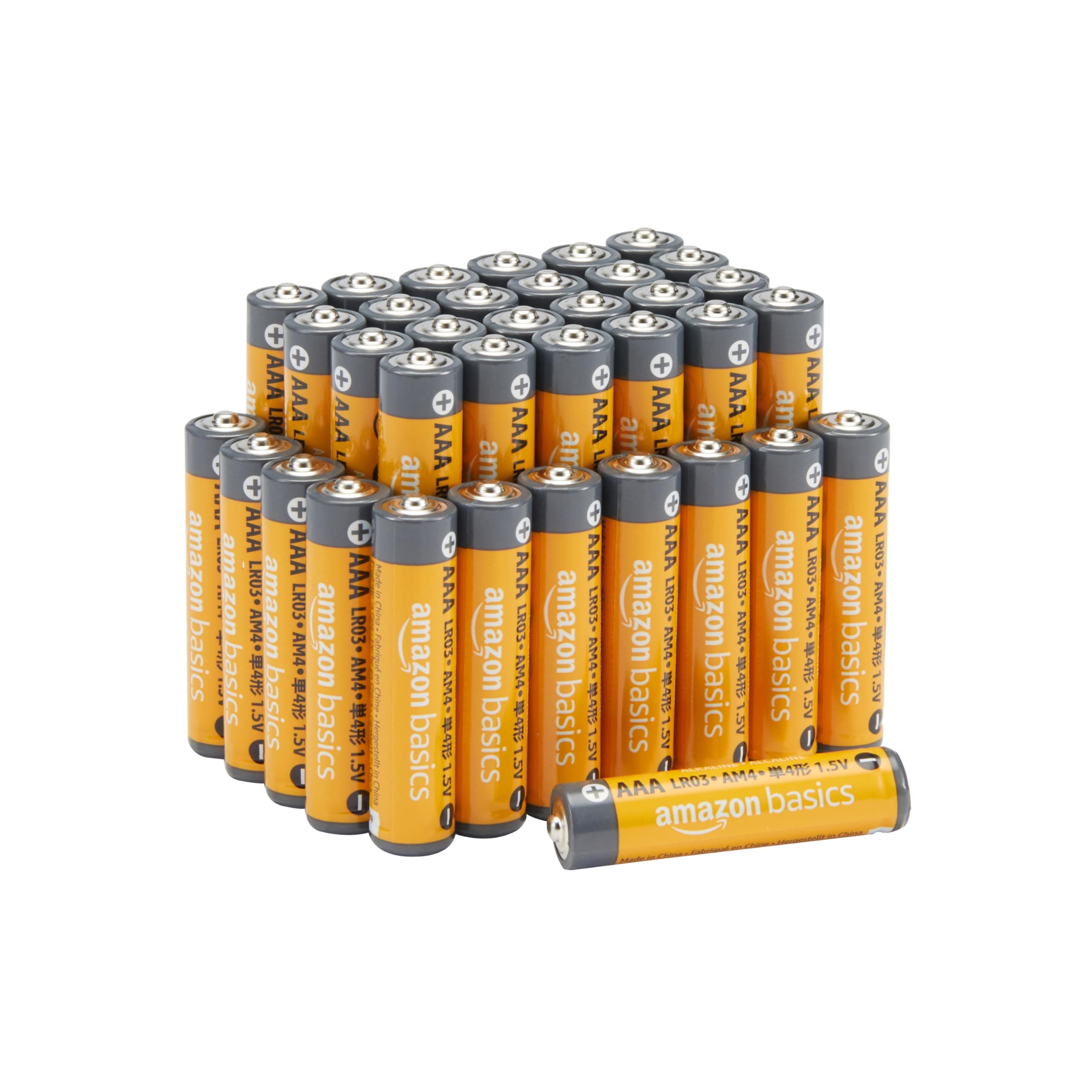
Amazon Basics AAA Alkaline High-Performance Batteries, 1.5 Volt, 10-Year Shelf Life, 36 Count (Pack of 1)
Amazon Basics