
Match the vacuum to your flooring type and home size. Pets need strong suction and self-emptying bins; apartments need quiet operation and a slim profile.
Match the vacuum to your flooring type and home size. Homes with pets need strong suction and self-emptying bins; apartments prioritize quiet operation and slim profile. Start with those two filters, and you'll avoid the 80% of models that won't work in your space.
The Short Answer
- Flooring type: Hard floors need a soft roller that doesn't scatter debris; carpet needs a brush roll and strong suction.
- Home size: Larger homes benefit from self-emptying bases and 100+ minute battery life.
- Pets: Look for 2,500 Pa or higher suction, tangle-free brush rolls, and a self-emptying bin.
- Apartments: Prioritize noise under 60 dB, a slim profile (under 3 inches), and a compact dock.
- Navigation: Lidar mapping beats random bounce for efficiency — especially in multi-room layouts.
The Full Picture
Buying a robot vacuum feels like peeling back a never-ending spec sheet. But the real decision is simpler than it looks: every robot is a tradeoff between suction, navigation, self-emptying, noise, and price. The right one for you depends on your floor plan and your daily life.
Think of it this way — you wouldn't buy a sports car for off-roading. Similarly, a 5,000 Pa monster with an auto-mop is overkill for a two-room apartment, while a budget bouncer will frustrate you in a house with three cats and wall-to-wall carpet. Define your constraints first, then let the specs fall into place.
Why It Matters
The average robot vacuum costs between $400 and $800. That's a significant investment, and the wrong choice isn't just wasted money — it's a constant reminder of failure every time you see it stuck under a chair or hear it whining over a threshold. On the flip side, the right robot vacuum becomes an invisible housekeeper; you'll forget it's there except for the cleaner floors.
The Key Factors
When you're comparing models, keep these specs front of mind:
- Suction power (Pa): 1,500–2,000 Pa is fine for hard floors; 2,500–3,000 Pa handles pet hair; anything above 4,000 Pa is marketing hype for most homes.
- Navigation: Lidar maps your home in clean lines; camera-based navigation is cheaper but can stumble in the dark; random bounce is a coin flip.
- Self-emptying base: A must for pet owners and anyone with allergies. It adds $100–$200 but means you only empty the dock every 30–60 days.
- Noise level: 55–60 dB is roughly the volume of a conversation; under 55 dB is ideal for apartments or homes with babies.
- Height and shape: Slim robots (under 3 inches) fit under sofas and beds. Round robots navigate tighter corners than D-shaped models.
- Battery life: 100 minutes covers most homes; larger floor plans need 150+ or a recharge-and-resume feature.
- Filter and brush maintenance: Washable filters and tangle-free brush rolls save hours of frustration.
Scenario Comparison
| Scenario | Suction Needed | Self-Emptying? | Noise Limit | Navigation | Price Range |
|---|---|---|---|---|---|
| Pet owners | 2,500+ Pa | Yes | 60 dB | Lidar | $500–$900 |
| Apartment dwellers | 1,500–2,000 Pa | Optional | 55 dB | Lidar or Camera | $250–$500 |
| Large home (2,000+ sq ft) | 2,000+ Pa | Yes | 60 dB | Lidar + recharge/resume | $600–$1,000 |
| Mixed hard/carpet | 2,000–2,500 Pa | Recommended | 60 dB | Lidar | $400–$700 |
Common Mistakes
- Chasing max suction — On hard floors, too much suction actually pushes debris around. Match suction to your dominant floor type.
- Ignoring furniture clearance — Measure your lowest sofa and bed frames. A 4-inch robot will wedge under a 3.5-inch gap.
- Skipping self-emptying for pets — Without it, you'll be emptying the bin every day. That kills the whole point.
- Forgetting about thresholds — If you have thick carpet transitions or door thresholds, check that the robot can climb 0.5–0.75 inches.
- Buying on brand alone — A high-end brand's budget model is still budget. Look at the specific sensor package and battery.
- Ignoring filter costs — Replacement filters and side brushes add $30–$60 a year. Factor that into your budget.
- Not checking the app — A mediocre robot with a great app beats a great robot with a buggy app. Read real-user app reviews.
Our Recommendation
For most homes, the sweet spot is a mid-range robot with Lidar navigation, 2,500–3,000 Pa suction, and a self-emptying base. That combination covers pets, mixed flooring, and busy households. If you live in an apartment or have a small space, skip the self-emptying base and choose a slim model under 55 dB — you'll save hundreds and still get a reliable daily clean.
Before you buy, check our Best Time to Buy Robotic Vacuums (2026 Guide) for seasonal price drops — robot vacuums often go on sale during Prime Day, Black Friday, and post-New Year clearances. You can also bundle a cordless stick vacuum for quick touch-ups by checking the Best Time to Buy Vacuums (2026 Guide). If allergies are a concern, pairing your robot with an air purifier helps; see our Best Time to Buy Air Purifiers (2026 Guide) to time that purchase too.
Verdict: Spend your budget on navigation and battery first, not on gimmicks like mopping attachments or voice assistants. The best robot vacuum is the one you run daily — choose one that matches your floors, obeys your schedule, and stays quiet enough to forget. Do that, and you'll wonder how you ever lived without it.
Frequently Asked Questions
Are robot vacuums worth it?
Robot vacuums are worth it for busy households, pet owners, and those with hard floors or light carpeting. They save time and keep floors consistently clean, but they don't deep-clean like traditional vacuums. If you expect hands-off daily maintenance, a mid-range model with self-emptying provides the best value. For heavy carpet or deep cleaning, you'll still need a regular vacuum.
How often should I run a robot vacuum?
For most homes, running a robot vacuum daily or every other day maintains clean floors. High-traffic areas or homes with pets may benefit from daily runs, while low-traffic homes can run it 2-3 times a week. Set a schedule in the app to match your lifestyle. Running it too rarely lets dirt accumulate; running it too often wastes battery and filter life.
How long do robot vacuums last?
A robot vacuum typically lasts 4-6 years with proper maintenance, including regular cleaning of filters, brushes, and sensors. Battery life degrades over time, often requiring a replacement after 2-3 years. High-end models with replaceable batteries or parts can last longer. Cheaper models may wear out sooner. Watch for declining battery performance or navigation issues as signs to replace.
Can a robot vacuum replace a traditional vacuum?
No, robot vacuums cannot fully replace a traditional vacuum for deep cleaning. They excel at daily surface pickup on hard floors and low-pile carpet, but struggle with stairs, upholstery, and deep carpet cleaning. For thorough cleaning, use a robot vacuum for routine maintenance and a traditional vacuum weekly or biweekly. Many households combine both for best results.
Products Mentioned

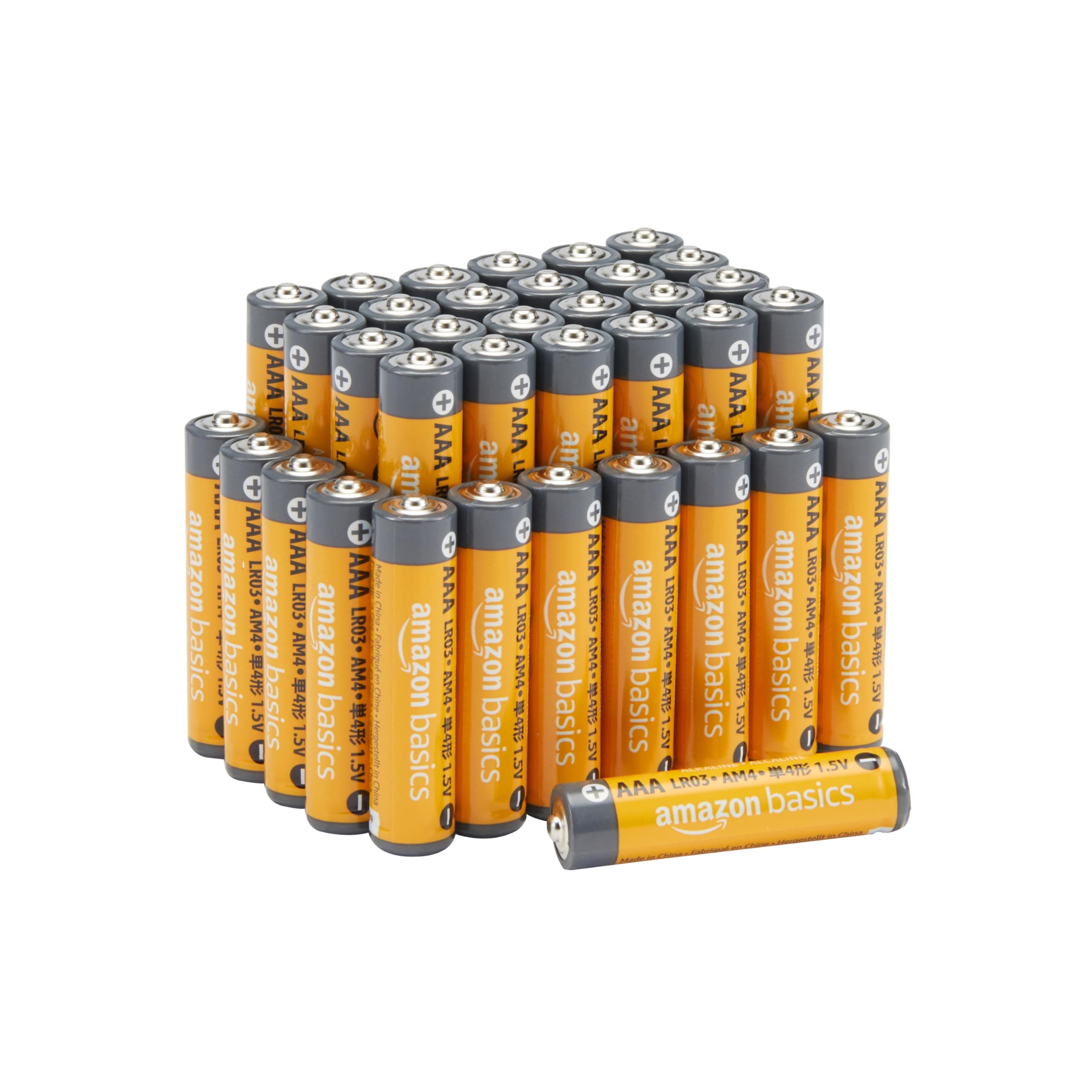
Amazon Basics AAA Alkaline High-Performance Batteries, 1.5 Volt, 10-Year Shelf Life, 36 Count (Pack of 1)
Amazon Basics