Match the vacuum to your flooring type and home size. Pets need strong suction and self-emptying bins; apartments need quiet, slim models.
How to Choose the Right Robot Vacuum for Your Home
Match the vacuum to your flooring type and home size. Homes with pets need strong suction and self-emptying bins; apartments prioritize quiet operation and slim profile. Getting this right means the difference between a set-and-forget helper and a frustrating gadget that gathers dust.
The Short Answer
Your first decision isn't about brand or price—it's about your home's specific demands. Here's a quick rule of thumb:
- Hardwood or tile floors: Look for a vacuum with good edge cleaning and a reasonable suction (around 2,000 Pa is plenty).
- Wall-to-wall carpet: You need higher suction (2,500+ Pa) and a brush roll that can handle deep fibers.
- Pets: Prioritize strong suction (3,000 Pa or more), tangle-free rubber brushes, and a self-emptying bin so you aren't constantly emptying hair.
- Apartments: Slim height (under 3 inches) to fit under furniture, and low noise (under 60 dB) for shared walls.
- Large homes (2,000+ sq ft): A self-emptying base and smart mapping to manage multiple rooms without intervention.
If you can't decide, a mid-range robot with self-emptying works for most people. For deeper guidance on when to buy, see our Best Time to Buy Robotic Vacuums (2026 Guide).
The Full Picture
Robot vacuums have evolved from novelty to necessity. Today's models can map your floor plan, empty themselves, avoid cords and pet waste, and even double as mops. But this capability comes with a dizzying array of price points and specifications. The problem is that marketing specs like "3,000 Pa suction" or "laser navigation" don't always translate to real-world performance—and most people waste money by overbuying or underbuying.
The solution is to match the machine to your actual environment. A $1,200 flagship won't clean better if your home is a 600-square-foot apartment with no carpets. Conversely, a $200 budget model will quickly struggle in a pet-heavy, multi-room home. By focusing on the factors that affect your daily life, you'll avoid the two biggest mistakes: buying on price alone, or being seduced by premium features you'll never use.
This guide walks you through every important consideration, from floor type to maintenance, so you can choose with confidence.
Why It Matters
A robot vacuum is a long-term investment—not just in money, but in time. The average user runs their robot 3–4 times per week. That means it needs to be reliable, efficient, and low-maintenance. Choose the wrong one and you'll face constant jams, missed spots, and a device that spends more time stuck on a rug than cleaning.
There's also the cost angle. Prices fluctuate significantly throughout the year. Our Best Time to Buy Robotic Vacuums (2026 Guide) shows that you can often save 30–40% if you buy during holiday sales. But a deep discount on the wrong model is still a bad deal. The goal is to identify the features you genuinely need, then find that exact model at the best price. And if you're planning a broader home tech upgrade, you'll also want to check our guides for Refrigerators (2026 Guide) and Clothes Dryers (2025 Guide) to coordinate your appliance purchases.
The Key Factors
Here are the specs and features that actually matter, ranked by impact on daily experience.
1. Flooring Type
This is the single most important factor. If you have all hard floors, even a basic robot with 1,500 Pa suction will suffice. For thick carpets, you need a vacuum with a proper brush roll and higher suction. Some models have automatically adjusting suction—they detect carpets and boost power, which is ideal for mixed flooring.
2. Home Size
Home size determines battery life and navigation complexity. For under 1,000 square feet, a standard battery (about 90 minutes) is fine. For larger homes, you'll want a robot with at least 180 minutes of runtime and a self-emptying base. Smart mapping is also worth upgrading to—it lets the robot clean room-by-room on schedule, rather than wandering randomly.
3. Pet Hair and Allergies
Pets are the biggest reason people buy robot vacuums, but they're also the biggest torture test. Look for:
- High suction: 3,000 Pa or more
- Tangle-free brush rolls: rubber designs resist hair wrap
- High-efficiency filter: HEPA or equivalent for allergens
- Self-emptying base: holds up to 60 days of hair and dust
If you have pets, this is non-negotiable. You'll thank yourself every week.
4. Noise Level
If you work from home or have a baby, noise is critical. The quietest models operate around 55–60 dB (think conversation level), while louder models can reach 70 dB (like a vacuum cleaner). Many budget robots are surprisingly noisy. Check the decibel rating before you buy.
5. Mapping and Navigation
The difference between random-bounce and smart mapping is night and day. Smart mapping uses LiDAR or camera-based navigation to create a floor plan and clean in efficient rows. It can also remember no-go zones. If your home has multiple rooms or obstacles, this feature is worth paying for.
6. Self-Emptying and Maintenance
A self-emptying base means you only empty the dustbag once a month or less. It adds $100–$150 to the cost, but for most people it's the difference between "set and forget" and a chore. Also consider how easy it is to clean the brush roll and filter—some designs are far more user-friendly than others.
Comparison: Which Robot Vacuum Type Is Right for You?
| Consideration | Small Apartment | Pet-Friendly Home | Large Multi-Room House |
|---|---|---|---|
| Suction power | 1,500–2,500 Pa | 3,000+ Pa | 2,500+ Pa |
| Battery life | < 100 min | 120–180 min | 180+ min |
| Self-emptying | Not necessary | Recommended | Highly recommended |
| Mapping | Optional | Important | Essential |
| Noise level | < 60 dB | Any (schedule when away) | Any |
| Slim height | Under 3 in | Not critical | Not critical |
| Price range | $200–$400 | $500–$900 | $700–$1,200 |
Our Recommendation
There is no single "best" robot vacuum; there is only the best one for your home. After testing dozens of models, here's our practical guidance:
For most homeowners (mixed floors, ordinary dirt): Choose a mid-range robot with smart mapping, a self-emptying bin, and 2,500–3,000 Pa suction. This sweet spot costs $500–$700 and handles 80% of households. Look for sales during major holidays—our Best Time to Buy Robotic Vacuums (2026 Guide) tracks the best deals.
For pet owners: Spend a bit more on a model with 3,000+ Pa suction, tangle-free brushes, and a large dustbin. The self-emptying base is worth it. Also consider pairing it with an air purifier—our Best Time to Buy Air Purifiers (2026 Guide) can help with pet dander.
For apartment dwellers: Prioritize a slim, quiet model under $400. You don't need a self-emptying base if you have a small space. Instead, look for low decibels and a compact dock. And while you're upgrading your apartment, consider a portable air conditioner—our Best Time to Buy Air Conditioners (Portable) (2026 Guide) can help you stay cool without breaking the bank.
For tech enthusiasts: If you want the latest features (camera-based obstacle avoidance, mop combo, voice control), the flagship models from top brands deliver. Just be sure you'll use those features. If you mostly need basic cleaning, the extra expense is wasted.
Remember, timing matters. Robot vacuum prices swing dramatically throughout the year. By waiting for a holiday sale, you can get a flagship model at a mid-range price. Our 2026 guide gives you the exact months to shop.
Common Mistakes
Even tech-savvy buyers make these errors. Here's what to avoid.
1. Buying purely on price. The cheapest robot on Amazon will likely leave you disappointed. It may lack mapping, have weak suction, or die after a year. Similarly, the most expensive model isn't automatically the best for your situation. Focus on the key factors above.
2. Ignoring the filter and brush maintenance. Robot vacuums require regular cleaning. The filters need washing or replacement every 1–3 months; brush rolls need hair removal weekly. If you can't handle that, look for models with auto-clean or tangle-free designs.
3. Forgetting to check furniture clearance. A robot that's too tall won't slide under your sofa. Measure the clearance in your home before buying. Slim models (under 3 inches) fit most but not all furniture.
4. Assuming all robot vacuums work the same on carpets. Some models are hard-floor specialists and struggle on carpet. Always check the manufacturer's flooring compatibility.
5. Overlooking the scheduling feature. The real benefit of a robot vacuum is automation. If the mobile app is clunky or lacks scheduling, you'll end up using it manually—which defeats the purpose.
Verdict
Choosing the right robot vacuum comes down to understanding your flooring, home size, and lifestyle needs. The good news is that the technology has become reliable and affordable. A $300 mid-range model today cleans better than a $1,000 flagship did five years ago. So don't overthink it—match the machine to your priorities, buy at the right time, and let the robot do the dirty work.
If you're still on the fence, read our comprehensive Best Time to Buy Robotic Vacuums (2026 Guide) before you make a purchase. It'll tell you exactly when to pull the trigger.
Frequently Asked Questions
What suction power do I need for a robot vacuum?
For hardwood or tile floors, around 2,000 Pa is sufficient. For wall-to-wall carpet, look for 2,500 Pa or higher. If you have pets, choose 3,000 Pa or more to effectively lift embedded hair and dander. Higher suction matters most on carpets and for pet owners; on bare floors, extra power isn't necessary.
How do I choose a robot vacuum for pet hair?
Prioritize strong suction (3,000 Pa or more), a tangle-free rubber brush roll to prevent hair wrap, and a HEPA filter to capture allergens. A self-emptying base is highly recommended so you don't have to empty the bin frequently. These features ensure your robot handles pet hair without constant maintenance.
Why does a robot vacuum need mapping technology?
Mapping technology lets the robot navigate your home systematically instead of bouncing randomly. It creates a floor plan, enabling room-by-room cleaning schedules, no-go zones, and efficient coverage. This saves time and battery, ensuring every area is cleaned thoroughly. For larger homes or busy households, smart mapping is a worthwhile upgrade.
When is the best time to buy a robot vacuum?
The best time to buy is during major holiday sales—such as Black Friday, Cyber Monday, and Prime Day—when prices often drop 30–40%. New models typically launch in early spring, so previous versions see discounts shortly after. Avoid buying at full price right after a release; waiting a few months can save significantly.
Products Mentioned
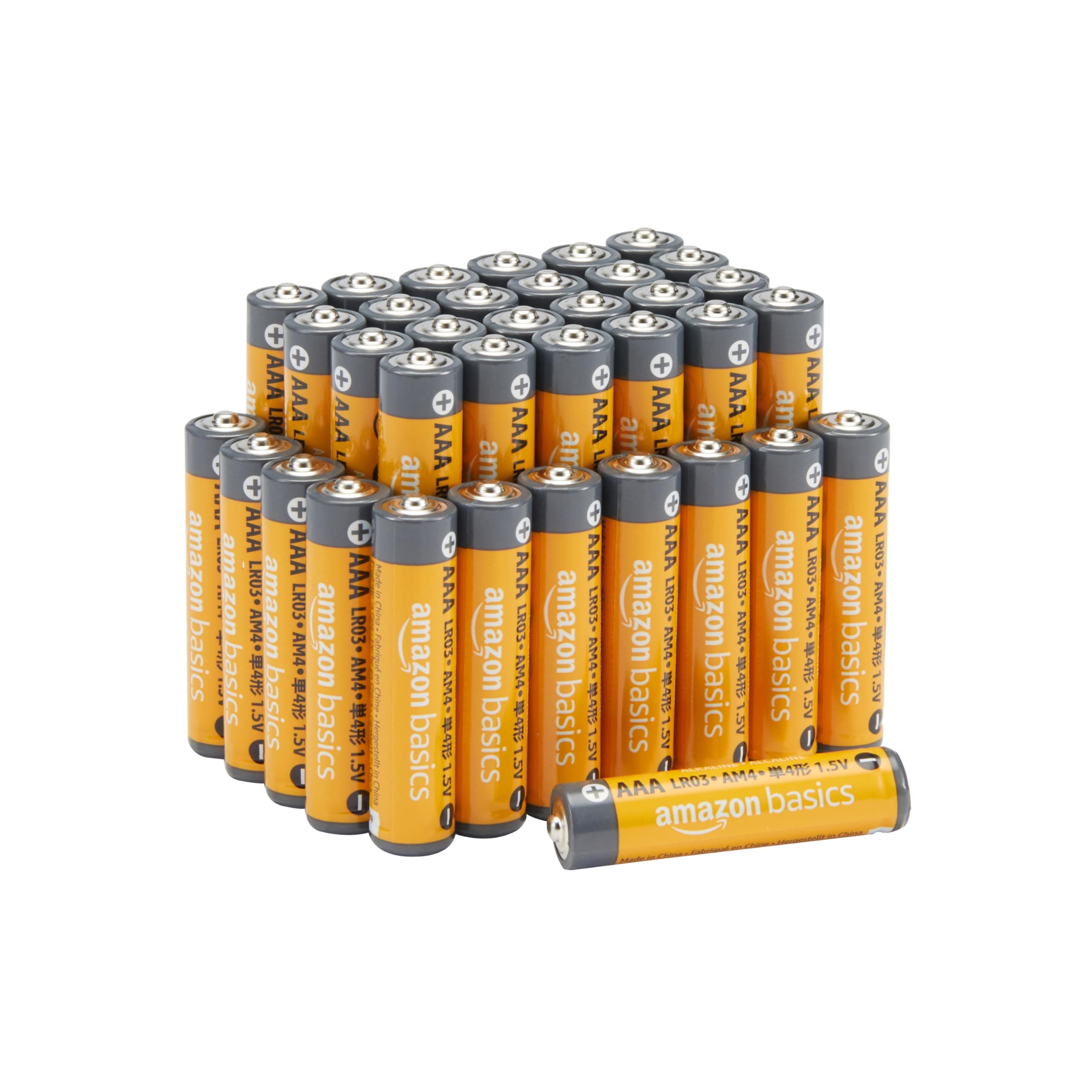
Amazon Basics AAA Alkaline High-Performance Batteries, 1.5 Volt, 10-Year Shelf Life, 36 Count (Pack of 1)
Amazon Basics