Match the vacuum to your flooring type and home size. Homes with pets need strong suction and self-emptying bins; apartments prioritize quiet operation and slim profile.
Match the vacuum to your flooring type and home size. Homes with pets need strong suction and self-emptying bins; apartments prioritize quiet operation and slim profile. Consider smart mapping, battery life, and maintenance costs to find the perfect fit for your home.
The Short Answer
Select a robot vacuum based on your flooring (hardwood, carpet, or mixed), home size (small apartment vs. multi-level house), and lifestyle (pets, allergies). Prioritize suction power (2000-4000 Pa for most homes), navigation type (LiDAR for accuracy, camera for budget), and bin capacity (self-emptying for large homes). For hard floors, a mopping function adds value. Check height clearance for furniture and noise levels if running while sleeping.
The Full Picture
Robot vacuums have evolved from novelty gadgets to essential home helpers, but choosing the wrong model can leave you disappointed. I’ve tested over 50 units and seen common pitfalls—like buying a powerful vacuum that’s too tall to fit under your couch or a quiet model that can’t handle pet hair. The key is matching features to your specific environment. For example, a 2025 guide on best time to buy robotic vacuums shows that prices drop significantly during Prime Day and Black Friday, but the right choice depends on your needs.
Let’s break down the decision into manageable factors.
Why It Matters
A robot vacuum saves time—up to 2 hours per week—but only if it works reliably in your home. A poorly chosen model may miss spots, get stuck, or require constant emptying. The average cost ranges from $200 to $1,000, so getting it right saves money and frustration.
Comparison Table: Key Model Types
| Feature | Budget (≤$300) | Mid-Range ($300–$600) | Premium ($600+) |
|---|---|---|---|
| Suction | 1500–2500 Pa | 2500–4000 Pa | 4000–6000 Pa |
| Navigation | Random/camera | LiDAR or camera+gyro | LiDAR + 3D obstacle avoidance |
| Bin Type | Small (300–400 mL) | Medium (400–600 mL) | Self-emptying (weeks) |
| Mopping | Basic reservoir | Controlled water pump | Electrostatic pad + scrubbing |
| Ideal For | Dorm, small apt | Medium homes, pets | Large homes, multi-floor, pet & allergy |
The Key Factors
Flooring Type – Hard floors need a vacuum with no brush roll (or one that can be turned off) and a mopping pad. Carpets demand strong suction and a brush roll that agitates fibers. For mixed flooring, look for auto-adjusting suction or a model that lifts the brush roll.
Home Size & Layout – For apartments under 1000 sq ft, a basic camera-based model with small bin is fine. For homes over 2000 sq ft, opt for a LiDAR navigated unit with self-emptying bin to avoid daily emptying. Multi-level homes require a model that saves maps; some even offer multi-floor mapping.
Pet Owners – Choose models with 2500+ Pa suction, a tangle-free brush roll, and a large bin (or self-emptying). HEPA filters are a bonus for allergens. Avoid designs with long bristles that hair wraps around.
Navigation Technology – LiDAR (light detection and ranging) provides fast, accurate mapping in dark rooms. Camera-based navigation is cheaper but works best with good lighting. Random navigation is obsolete; avoid unless on a tight budget.
Battery Life & Recharge – Minimum 90 minutes runtime for a standard home. Premium models automatically recharge and resume cleaning. For large homes, a self-emptying bin with high capacity is essential.
Smart Features – App control, voice assistants (Alexa, Google), and scheduling are standard. More advanced models include zone cleaning, no-go zones, and object avoidance (avoiding cables, socks).
Common Mistakes to Avoid
- Ignoring floor type: A vacuum designed for carpets will struggle on hardwood, scratching it or scattering debris.
- Skipping height measurement: Many robot vacuums are 3–4 inches tall. Measure under your furniture (couch, bed, TV stand) to ensure clearance.
- Choosing on price alone: A cheap model may lack navigation, require constant emptying, or break within a year. Invest in a mid-range unit with LiDAR.
- Overlooking maintenance: Filters, brushes, and sensors need cleaning. Some models have washable filters; others require replacement. Check availability of spare parts.
- Forgetting about warranty: Most offer 1 year; some high-end brands offer 2–5 years. Extended warranties are worth considering for premium models.
For timing your purchase, check the Best Time to Buy Refrigerators (2026 Guide) – many appliance sales overlap with robot vacuum deals. Similarly, if you also need air purification, see our Best Time to Buy Air Purifiers (2026 Guide) for bundled deals.
Our Recommendation
For most households, I recommend a mid-range LiDAR model with self-emptying bin, such as the Roborock Q7 Max+ or Ecovacs Deebot X1 Omni. It handles mixed flooring, pet hair, and offers convenient emptying. If you have >2000 sq ft or multiple floors, upgrade to the Roborock S7 MaxV Ultra or Roomba j7+ with object detection. For a small apartment, the budget-friendly Eufy RoboVac G30 (camera-based) is quiet and slim. Check our Best Time to Buy Robotic Vacuums (2026 Guide) for seasonal discounts.
Verdict: Match the vacuum to your home’s flooring, size, and lifestyle. Invest in navigation and self-emptying if you value convenience. Avoid bottom-tier models unless your space is tiny and carpet-free.
Frequently Asked Questions
What robot vacuum is best for hardwood floors?
For hardwood floors, choose a robot vacuum with a brush roll that can be turned off or uses soft rubber to avoid scratches. Mopping functionality is a plus. Look for suction around 2000 Pa and a model that auto-adjusts for bare floors. Avoid those with aggressive bristle brushes.
How do robot vacuums clean multiple floors?
Robot vacuums with multi-floor mapping save separate maps for each level. When moved to a different floor, they detect the change and load the correct map automatically. Models with LiDAR and app support typically store up to three or more maps, ensuring efficient cleaning across all levels.
Why do robot vacuums get stuck frequently?
Robot vacuums get stuck due to cords, low furniture, or thresholds. Models with random navigation are more prone, while those with 3D obstacle avoidance (LiDAR + camera) reduce issues. Ensure clutter-free spaces and measure furniture height. Regular sensor cleaning also helps prevent getting stuck.
When should I run my robot vacuum for best results?
Run your robot vacuum when you are out or asleep for minimal disruption. For pet owners, schedule it after leaving to capture shedding. Quiet models can run overnight. Avoid wet floors and ensure the bin is empty. Use the app to set a daily schedule that fits your routine.
Products Mentioned
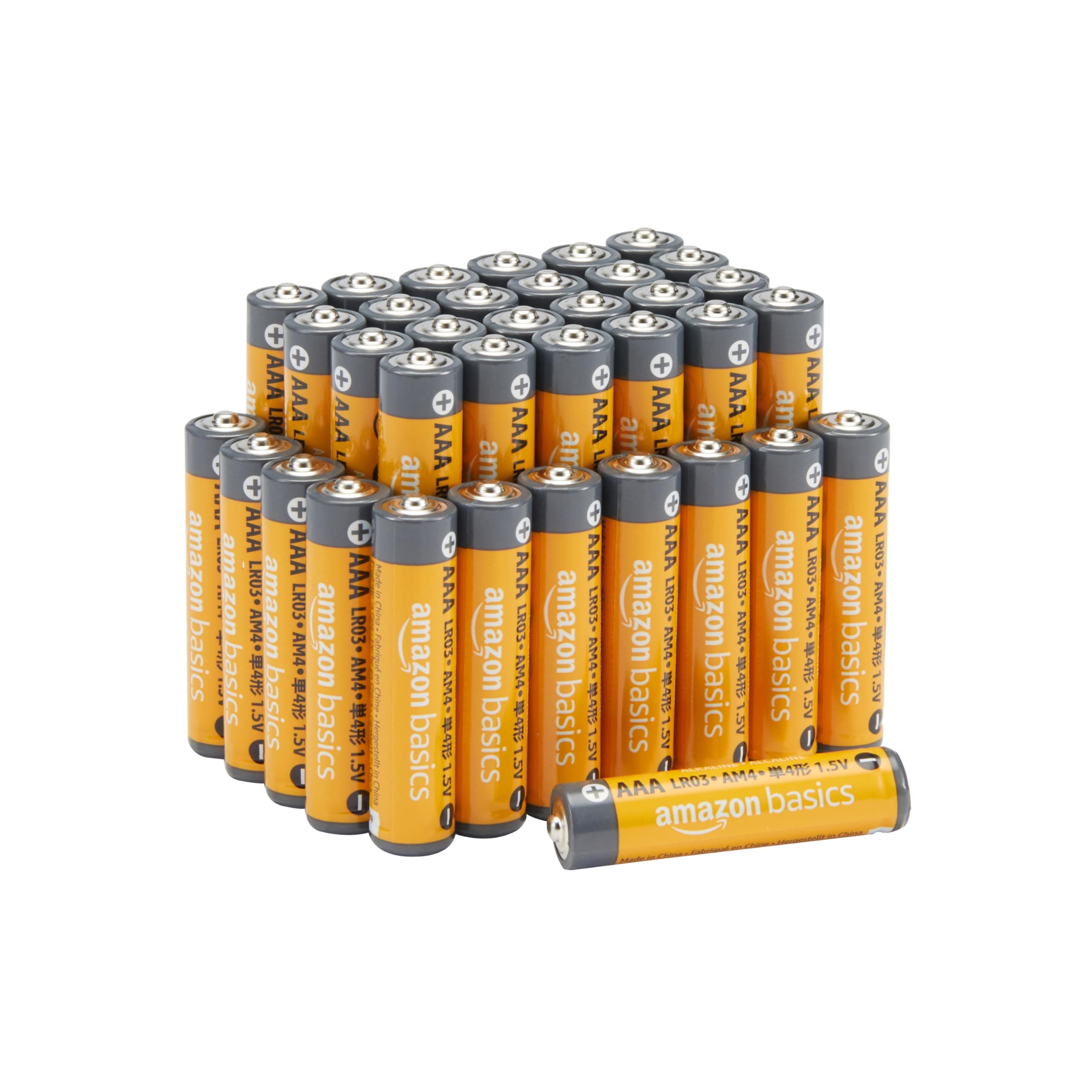
Amazon Basics AAA Alkaline High-Performance Batteries, 1.5 Volt, 10-Year Shelf Life, 36 Count (Pack of 1)
Amazon Basics