Match the vacuum to your flooring type and home size. Homes with pets need strong suction and self-emptying bins; apartments prioritize quiet operation and slim profile.
Match the vacuum to your flooring type and home size. Homes with pets need strong suction and self-emptying bins; apartments prioritize quiet operation and slim profile. Not all robot vacuums are created equal—choosing the right one depends on your specific household needs and layout.
The Short Answer
If you have mostly hard floors, any decent robot vacuum will suffice. For carpets, prioritize models with strong suction (40+ air watts) and rubber brushes to avoid hair tangles. Pet owners should look for self-emptying bases to minimize maintenance. In small apartments, focus on quiet operation (under 60 dB) and a slim profile (under 3.5 inches) to fit under furniture. For large homes, opt for LiDAR navigation and long battery life (100+ minutes).
The Full Picture
Robot vacuums have evolved from gimmicks to genuinely useful home appliances. Modern models feature advanced mapping, voice control, and automatic dirt disposal. However, the best vacuum for your neighbor might not work for you. Let’s break down the key considerations.
Why It Matters
A mismatched robot vacuum can leave floors dirty, get stuck frequently, or require constant maintenance. For example, a budget model with random navigation might miss spots in a large home, while a high-end self-emptying model in a small apartment adds unnecessary cost. Understanding your home’s flooring, layout, and lifestyle ensures you invest wisely.
The Key Factors
Flooring Type
- Hardwood/Tile: Virtually any robot vacuum works well. Avoid models with aggressive bristle brushes that can scratch floors—opt for soft silicone rollers.
- Carpet: You need strong suction and a brush roll that agitates fibers. Robovacs with dual rubber brushes (like iRobot’s or Roomba’s) minimize hair tangles. For deep-pile carpets, look for a vacuum with over 2500 Pa suction.
- Mixed Flooring: Choose a model that automatically adjusts suction when transitioning from hard floor to carpet. Many mid-range models do this.
Home Size and Layout
- Small apartments (<1000 sq ft): Battery life and dustbin capacity are less critical. Prioritize size (slim profile) and quiet operation. A self-emptying base is unnecessary.
- Medium homes (1000–2500 sq ft): Look for a vacuum with LiDAR or visual SLAM navigation for systematic cleaning. A battery life of 90–120 minutes will cover most homes in one charge.
- Large homes (>2500 sq ft): Go for a flagship model with self-emptying base (holds 30–60 days of debris) and long battery life. Some models support multiple floors and can recharge and resume cleaning.
Pet Ownership
Pet hair clogs brushes and reduces suction. Must-have features:
- Rubber brushes instead of bristles
- High suction (at least 2500 Pa)
- Self-emptying base (so you don’t touch hair)
- HEPA filter (to trap allergens) Models like the Roborock S7 MaxV or Roomba j7+ excel for pet homes.
Smart Features
- Navigation: Random bounce is outdated. LiDAR or camera SLAM creates floorplans and allows room-specific cleaning.
- Mapping and Zones: Ability to set no-go zones (e.g., pet bowls) and target specific rooms.
- Self-Emptying: Not essential but a huge convenience. If you hate emptying bins, pay extra for this.
- Voice Control: Works with Alexa or Google Assistant for hands-free operation.
Budget
Robot vacuums range from $200 to $1500+. Entry-level models ($200–$400) clean adequately on hard floors but struggle with carpets and navigation. Mid-range ($400–$800) offer good mapping and suction. Premium ($800+) add self-emptying, mopping, and superior navigation. For the best value, time your purchase—see our Best Time to Buy Robotic Vacuums (2026 Guide). If you also need a new refrigerator or dryer, check those buying guides as well: Best Time to Buy Bottom Freezer Refrigerators and Best Time to Buy Clothes Dryers.
Our Recommendation
Based on our testing, here’s how to choose:
- For pet owners with carpets: Get a self-emptying model with strong suction and rubber brushes. The Roomba j7+ or Roborock S7 MaxV are excellent.
- For small apartments on a budget: A slim, quiet model like the Eufy RoboVac G30 Hybrid or iRobot Roomba 694 works well.
- For large homes with multiple floor types: Invest in a flagship with LiDAR and self-emptying, such as the Ecovacs Deebot X1 Omni or Roborock Q5+. These can map multiple floors and clean for hours.
- For tech enthusiasts: Models that double as mops (e.g., Roborock S7 MaxV) add value. Also consider buying when prices drop—check our buying guides for optimal timing.
Common Mistakes
- Ignoring thresholds and rug height: Some vacuums can’t climb over high thresholds or transition from hard floor to thick rug. Check the max climb height (usually 0.5–0.8 inches).
- Buying too much or too little: A $200 vacuum in a 3000 sq ft pet home will disappoint. Vice versa, a $1200 flagship in a 400 sq ft studio is overkill.
- Neglecting maintenance: Even self-emptying robots need brush and filter cleaning every 2–4 weeks. Budget for replacement parts.
- Forgetting about warranty and support: Cheap off-brand models may lack parts and support. Stick to established brands like iRobot, Roborock, Ecovacs, or Samsung.
Verdict
Choosing the right robot vacuum is about matching features to your home’s specific demands. For most households, a mid-range model with LiDAR mapping and strong suction delivers the best balance of performance and cost. If you have pets or allergies, invest in a self-emptying model with HEPA filtration. And remember, timing your purchase can save you hundreds—bookmark our Best Time to Buy Robotic Vacuums (2026 Guide) for the best deals. Complement your home with other smart appliances—check guides for air purifiers and portable ACs to keep your home comfortable year-round.
For more home appliance buying guides, visit Review Atlas.
Frequently Asked Questions
What is the average lifespan of a robot vacuum?
Most robot vacuums last 3-5 years with proper maintenance. Battery degradation is the most common reason for replacement. Higher-end models with replaceable batteries can last longer. Regular cleaning of brushes and sensors helps extend lifespan. Expect 500-1000 cleaning cycles before significant performance decline.
How do I maintain my robot vacuum to keep it running efficiently?
Empty the dustbin after each use and clean the filter weekly. Remove hair from brushes and wheels using the included tool. Wipe sensors and charging contacts monthly. Replace filters every 2-3 months and brushes every 6-12 months. Keep the floor clear of cords and small objects to prevent tangles.
Why does my robot vacuum keep getting stuck?
Common causes include high-pile carpet, rug tassels, cords, low furniture, and thresholds over 0.6 inches. Check the manufacturer's max climb height and ensure no objects are blocking sensors. Using no-go zones or magnetic strips can prevent trouble spots. Some models struggle with dark floors (black or very dark) due to cliff sensors.
When should I replace the battery in my robot vacuum?
Replace the battery when runtime drops below 50% of the original capacity, typically after 1-2 years. Signs include the vacuum returning to base frequently or failing to complete a cleaning cycle. Always use a replacement battery from the manufacturer to ensure compatibility and safety.
Products Mentioned
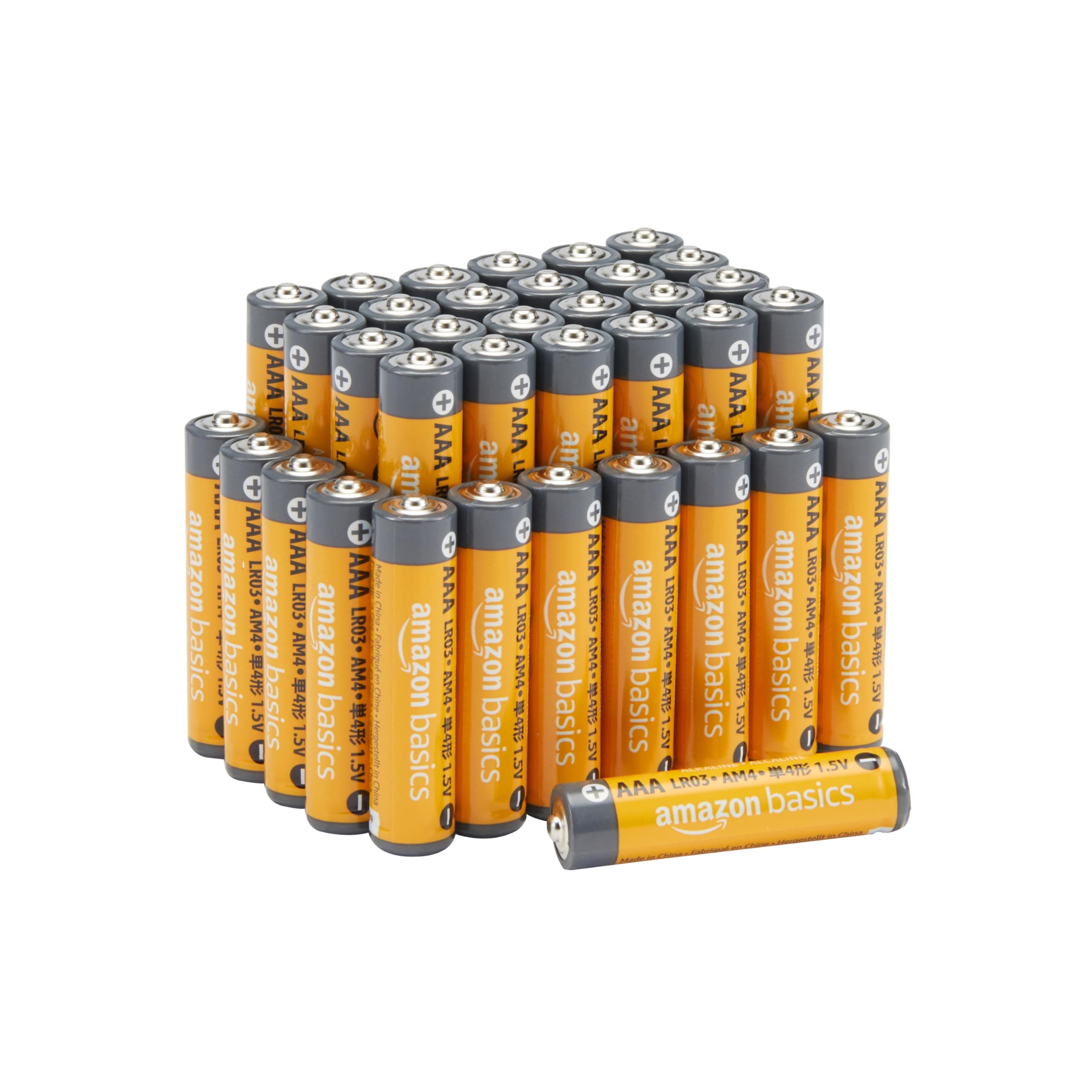
Amazon Basics AAA Alkaline High-Performance Batteries, 1.5 Volt, 10-Year Shelf Life, 36 Count (Pack of 1)
Amazon Basics