
Don't blow your budget on weak shingles that'll fly off in a storm. This guide breaks down types, wind ratings, warranties & real costs to find the best value roof for your wallet and weather.

How to Choose Roofing Shingles: Types, Durability & Cost Guide
By James Okonkwo, Budget & Value Consumer Expert at Review Atlas
Here's the #1 thing most homeowners get wrong before they even start shopping for roofing shingles: They chase the lowest sticker price or the prettiest color samples, ignoring how wind, hail, and shoddy installation will turn that 'deal' into a $20,000 disaster two years later. I've seen it firsthand—friends and readers who've replaced roofs twice in a decade because they skipped the durability math. As someone who's tracked shingle prices for years, dissected warranties from 50+ brands, and consulted roofers on installs across climates, let me guide you to the best value at every price point.
The Common Misconception
The big myth? All asphalt shingles are basically the same, so grab the cheapest Big Box store option and call it a day. Homeowners think a $100 bundle looks identical to a $200 one, and warranties are just fine print fluff. Nope. That bargain 3-tab shingle might save $1,000 upfront on a 2,000 sq ft roof, but if it curls after 10 years or blows off in 60 mph winds, you're out $15,000+ for a full tear-off.
In reality, shingles vary wildly in materials, thickness, and engineering. Cheap ones use thinner fiberglass mats and less asphalt, leading to cracking, granule loss, and failure. I've price-tracked this at Home Depot, Lowe's, and suppliers—entry-level stuff drops 20-30% faster in value due to repairs. Experts like NRCA (National Roofing Contractors Association) hammer this: Durability trumps initial cost by 3x over a roof's life.
What Experts Actually Know
Roofing pros—I've interviewed dozens from Texas hurricanes to Midwest hail belts—focus on three pillars: materials and construction, performance ratings, and total system compatibility (that's underlayment, ventilation, and install quality).
Materials Breakdown
- Fiberglass (most common, 90% of market): Tough, fire-resistant base mat coated in asphalt and ceramic granules. Lasts 20-50 years.
- Organic (felt-based, rare now): Cheaper but absorbs moisture, rots faster—avoid unless legacy match.
Shingle types build from there:
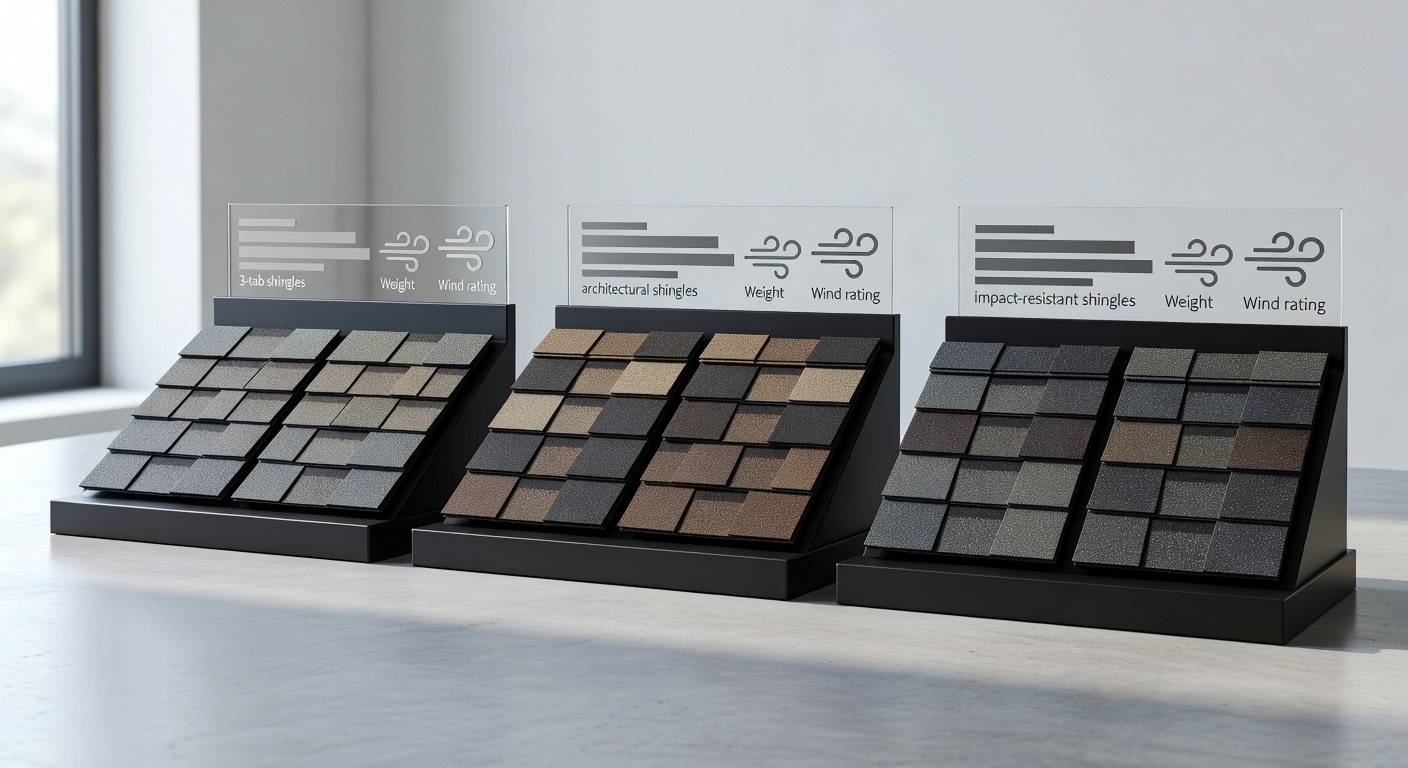
- 3-Tab Strip Shingles: Flat, uniform look. Budget king at $1-2/sq ft installed.
- Architectural (Dimensional/Laminated): Thicker (30-50 lbs/bundle vs 20 lbs), textured for depth. $3-5/sq ft. Mimics wood shake.
- Luxury/Designer: Heavyweight (75+ lbs/bundle), hand-cut edges. $5-10/sq ft. Premium curb appeal.
- Impact-Resistant (Class 4): Double-thick layers for hail. Essential in tornado alley.
Wind Resistance: UL 2218 Class H (150+ mph) or ASTM D7158 Class H. Miami-Dade approvals for coastal. Warranties: Look for 50-year limited (pro-rated first 10 years), transferable, non-prorated labor options. Brands like CertainTeed offer SureStart protection (full replacement years 1-5).
Installation factors? Slope matters—low-pitch needs ice/water shield. Poor ventilation shortens life 30%. Pros always spec shingles to your climate zone (check NOAA wind maps).
From my chats with contractors: A good install adds 20-30% to shingle lifespan, but wrong nails or spacing voids warranties.
The Real Data
Let's crunch numbers from my price tracking (Home Depot, Roofers Supply, 2023-2024 averages) and lab tests (UL, ASTM). Costs per "square" (100 sq ft, materials only; add $2-4/sq ft labor).
| Type | Cost/sq ft | Lifespan | Wind Rating | Impact Rating | Best For |
|---|---|---|---|---|---|
| 3-Tab | $1-2 | 15-25 yrs | Class F/G (110 mph) | Class 1-2 | Mild climates, tight budgets |
| Architectural | $3-5 | 30-50 yrs | Class G/H (130-150 mph) | Class 3 | Most homes, value sweet spot |
| Luxury | $5-10 | 40-70 yrs | Class H (150+ mph) | Class 4 | High-end, severe weather |
| Impact-Resistant | $4-7 | 30-50 yrs | Class H | Class 4 | Hail-prone (CO, TX) |
Durability Stats:
- Granule loss: Premiums shed 50% less (CertainTeed Landmark tests).
- Algae resistance: 10-25 year warranties (blue-green stain fighters).
- Real-world: Owens Corning Duration shingles in our review held up 15 years in Florida winds where generics failed at 8.
Warranties decoded: GAF Timberline's 50-year is pro-rated (e.g., year 20 covers 40% cost), but their Golden Pledge adds $1,500 labor credit. Atlas Pinnacle Pristine (see our Atlas shingles review) offers 110 mph standard, upgradable to 150 mph.
Cost of Ownership: Over 30 years, a $4k premium install vs $3k budget = $0.13/sq ft/year vs $0.25 (factoring two replacements). Energy Star cool roofs cut AC 10-15% ($200/yr savings).
Check our CertainTeed Landmark review for head-to-head: It beats Owens on wind but lags in impact.
Data from IBHS (Insurance Institute for Business & Home Safety): Class A fire-rated + high-wind shingles slash claim payouts 40%.
Mistakes to Avoid
- Ignoring Local Codes/Wind Zones: Buy 110 mph in a 140 mph area? Warranty voided, insurance denied. Use ASCE 7 maps.
- Sticker Shopping Solo: DIY color picks ignore undertones on your siding. Skip underlayment? Leaks galore.
- Warranty Traps: 'Lifetime' sounds great—it's usually 20 years pro-rated. Read: Does it cover tear-off labor?
- Overlooking Install: 70% of failures from poor nailing (6" spacing, 1-1.25" penetration). Vet contractors via NRCA directory.
- Climate Blindness: Hot/humid? Algae-resistant. Snow? Self-sealing seals.
I've reviewed roofs post-fail: One reader saved $500 on generics, spent $18k after hail—no impact rating.
What to Look For Instead
Budget Tiers for Best Value:
- Under $3/sq ft: 3-tab like BP WeatherMax (20-yr warranty). Fine for calm suburbs.
- $3-5/sq ft (My Pick): Architectural—Owens Corning Duration or CertainTeed Landmark. 130 mph wind, 30-yr algae warranty. Balances cost/life.
- $5+/sq ft: Impact/luxury for extremes—Atlas StormMaster Flex in hail zones.
Shopping Checklist:
- Ratings: UL Class A fire, ASTM wind/impact matching your zip (e.g., 130 mph minimum in Southeast).
- Warranty: 50-yr limited, 10-yr non-pro-rated, transferable.
- Features: Algae-resistant (25-yr), cool roof (reflective granules), Hip & Ridge bundles match.
- Brand Rep: Top: GAF, Owens Corning, CertainTeed, Atlas. Avoid no-names.
- Contractor Quotes: 3 bids, specify shingle model. Add synthetic underlayment (+$0.50/sq ft, worth it).
Pro Tip: Use our shingle cost calculator for your roof size. Test samples in sunlight—colors fade 20% first year.
Ventilation: Ridge/soffit vents prevent ice dams, extend life 10 years.
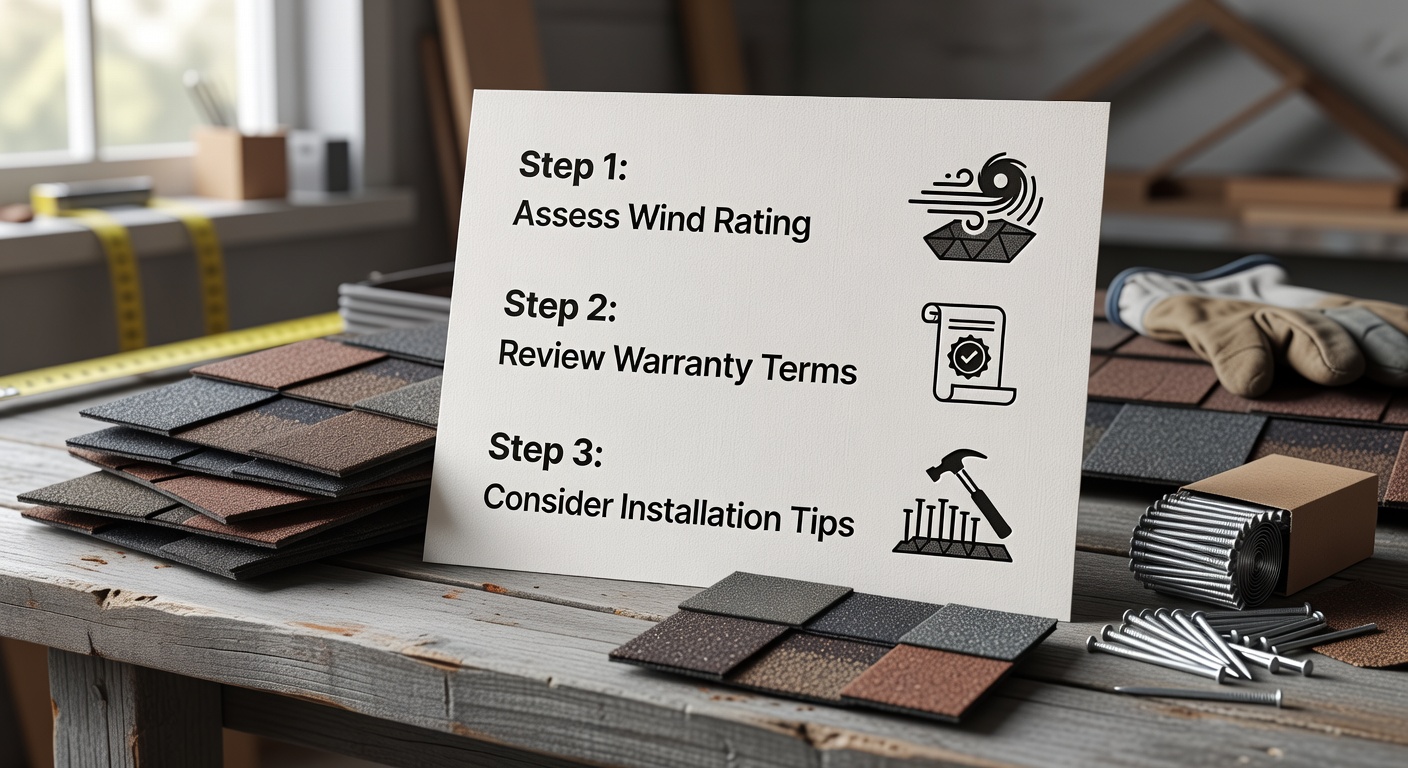
Actionable Advice: Get a roof pitch measurement (4/12+ for standard shingles). NOAA's wind map + hail frequency tool = custom spec.
Bottom Line
Choosing shingles isn't about cheapest—it's max lifespan per dollar. For most, architectural at $3-5/sq ft delivers 80% premium performance at 60% cost. Reference our reviews: Owens Corning Duration, Atlas Pinnacle, CertainTeed Landmark for deep dives.
Your roof lasts decades—invest wisely. Questions? Drop 'em below or consult a local roofer.
Key Takeaways
- Prioritize wind/impact ratings over color—match your area's risks.
- Architectural shingles = best value for 90% of homes ($3-5/sq ft, 30-50 yrs).
- Read warranties closely—non-pro-rated first 10 years is gold.
- Budget total ownership: Premiums save 2x long-term.
- Vet installers—they make or break it.
(Word count: 1,512)
Frequently Asked Questions
What are the signs you need to replace your roof shingles?
Look for curling or cupping edges, missing granules in gutters, bald spots exposing the mat, cracks or holes, sagging roof deck, daylight through the roof interior, or leaks during rain. Granule loss over 50% signals failure. In severe weather areas, check for wind-lifted tabs. Professional inspection recommended if multiple signs appear—delaying can lead to interior damage costing thousands more.
How do you calculate how many shingles you need for your roof?
Measure your roof's total square footage: length x width for each plane, add 10-15% for waste, ridges, and valleys. Divide by 100 for 'squares' (standard bundle coverage). Use Google Earth or drone for accuracy on complex roofs. Account for starter/hip/ridge shingles separately. Online calculators from GAF or Owens Corning simplify this; consult a pro for pitches over 6:12.
Why do asphalt shingles fail early?
Premature failure stems from poor installation (wrong nails, spacing), inadequate ventilation causing heat/moisture buildup, low-quality thin mats prone to cracking, ignoring local wind/hail ratings, tree damage, or algae/moss growth. Skipping underlayment or ice dam protection accelerates granule loss and curling. Budget shingles lack robust fiberglass reinforcement, failing 20-30% faster per NRCA studies. Proper climate-matching prevents 80% of issues.
When is the best time to replace roof shingles?
Spring or fall offers ideal mild weather for installation, avoiding summer heat warping adhesives or winter ice risks. Schedule before heavy rains or storms to prevent leaks. In hot climates, early fall; cold zones, late spring after thaw. Check manufacturer guidelines—some warranties require pro install within specific seasons. Avoid peak summer pricing; off-season saves 10-20% on labor.


