
Stop wasting money on a robot vacuum that doesn't fit your home. We break down navigation, suction, and smart features so you pick the right one.

A robot vacuum can save you hours every week—or become a $600 dust collector that gets stuck on the same rug. The difference isn't luck; it's knowing which specs matter for your home. This guide walks you through the real-world trade-offs, so you don't overpay for features you'll never use or underbuy and end up with a machine that can't handle your floors.
Before You Buy: The Cost of Getting It Wrong
Think of a robot vacuum as a long-term hire. The upfront price is just the start. If you pick the wrong navigation system, you'll spend 20 minutes babysitting it weekly. If you choose weak suction for thick carpets, you'll still be dragging out your upright for deep cleans. And if you ignore smart home integration, you'll miss out on the convenience that makes these devices truly worthwhile.
Here's the hard math:
- A cheap robot vacuum ($150–$250) that fails to pick up pet hair or crashes repeatedly will likely be replaced within 18 months. Total cost per year: ~$100.
- A mid-range vacuum ($400–$600) with good navigation and suction can last 4–5 years with proper maintenance. That's $100–$125 per year—and it actually works.
- A premium robot ($800+) adds auto-empty, advanced mapping, and sometimes mopping. If those features genuinely fit your routines, they can justify the price. If not, you're paying for a party trick.
The smarter approach? Understand what each spec does in real life, then match it to your home's quirks. Let's dig in.
Understanding Your Needs: Start With Your Floors and Life
Before you even look at suction numbers, answer these four questions:
- What are your flooring ratios? Hardwood, tile, carpet, or thick rugs? A robot that excels on hard floors may struggle to transition to a plush shag carpet.
- Do you have pets? Pet hair tangles in brush rolls and clogs dustbins faster than human hair. You'll need a self-cleaning brush roll or at least tangle-resistant design.
- Is your home cluttered? Cords, kids' toys, and low furniture demand better obstacle avoidance—not just a bumper sensor.
- How much do you care about app control? If you never want to pull out a phone to run a vacuum, a simpler model with physical buttons might be fine. But if you want scheduling, room-specific cleaning, or “do not disturb” zones, Wi-Fi and mapping are essential.
The Real-World Test: What We Look For
At Review Atlas, we test every robot vacuum for 2–4 weeks in real homes. We measure:
- Time to clean a set area (not just app claims)
- Hair wrap after a week with a shedding dog
- Edge coverage along baseboards and furniture legs
- Recovery from random events (a dog bowl, a fallen sock, a charging cable)
- Noise levels at low and high suction
We also stress the app: mapping creation, no-go zones, and voice assistant compatibility. If a feature freezes or fails in our testing, we note it—because you will hit it too.
What the Specs Actually Mean (And What Marketing Doesn't Tell You)
Navigation: The Most Important Spec You Can't See
Navigation determines whether your vacuum is a diligent worker or a confused dustpan. There are four types:
- Random – Bounces around until battery dies. Cheap, but you'll see missed spots and repeat coverage. Only suitable for tiny, open studios.
- Gyroscope / inertial – Tracks its own path a little better than random, but still doesn't “know” your rooms. Fine for a single, empty room.
- Lidar (laser scanning) – Spins a laser to create a precise floor map. Best-in-class for accuracy and speed. Works in the dark, but may not navigate mirror/black surfaces well.
- Camera (VSLAM) – Uses optical landmarks to map your home. Often cheaper than lidar, but can get confused in low light or when furniture moves. Tends to have better obstacle recognition (it can “see” socks) but needs brighter rooms.
Bottom line: look for lidar or advanced camera-based navigation if your home has multiple rooms or obstacles. Random bounce vacuums are frustrating for everyone who has more than one doorway.
Suction Power: Not All Pa Are Equal
Marketing loves to brag about “Pa” (Pascals). But suction alone doesn't translate to real-world pickup. A vacuum with 6,000 Pa can still miss debris if the brush roll doesn't agitate properly, or if the airflow path is poorly designed.
- 2,000–3,000 Pa – Plenty for hard floors and low-pile carpets. Some entry-level models have this.
- 3,000–5,000 Pa – Good for mixed floors, including medium-pile rugs. Expect reliable dust and debris pickup.
- 5,000+ Pa – Overkill for most, but can help on high-pile carpets or for heavier particles like cat litter. You'll pay a premium for this power.
What to watch for: A “high suction” mode that sounds like a jet engine. We check dB ratings and see if the vacuum automatically boosts on rugs. If you have pets, look for a rolling brush that resists tangled hair—you'll lose more time to cleaning the roller than to vacuuming.
Smart Home Features That Actually Matter (%)
Here's the reality: you'll use ~4 smart features regularly. Everything else is an app store screen.
- Wi-Fi + App – Allows scheduling, manual control, and status alerts. Mandatory unless you're buying a very basic model.
- Mapping & No-Go Zones – The #1 reason to pay for better navigation. Set invisible walls to keep the robot away from pet bowls or kids' toy areas.
- Voice Control – Works with Alexa, Google, or Siri shortcuts. Handy when your hands are full. Make sure the specific model supports the assistant you already have.
- Auto-Empty Dock – This is a game-changer for pet owners. Instead of emptying the dustbin daily, the vacuum docks and empties itself into a bag that lasts up to 60 days. Costs more, but worth every penny if you have allergies or hate touching dust.
- Mop Function – Some robots today can sweep and mop. But built-in mops typically only drag a damp cloth; they're not great for deep cleaning. If you have mostly hard floors and want a light daily wipe, a combo model works. If you need serious mopping, buy a dedicated robot mop later.
Budget Tiers Explained: What $200 vs. $600 vs. $1,000 Gets You
Budget Tier (Under $250)
You're getting basic random or gyro navigation, decent suction (1,500–3,500 Pa), and usually no smart mapping. Some have Wi-Fi but not room-specific cleaning. Best for: small apartments, one or two rooms, hard floors only. Our experience: budget robots are life-changing in a 400-sq-ft studio, but frustrating in a two-bedroom house with rugs.
Mid-Range ($300–$650)
This is the sweet spot for most homes. You get lidar or camera mapping, no-go zones, multiple suction levels, and better obstacle avoidance. Auto-empty may come at the top end of this bracket. Best for: pet owners with mixed flooring who want set-and-forget scheduling. We've tested several in this range that outperform premium models from a few years ago.
Premium (Over $800)
You're paying for convenience: auto-empty, self-washing mop, airflow-driven obstacle detection, or bumpers that rarely touch. Some models can climb higher thresholds or navigate dark rooms with IR guidance. If you have a large, multi-level home with lots of soft areas, a premium robot can feel like a luxury but also a necessity to keep up with your space.
Our Top Picks Per Budget
We haven't tested every 2026 model yet, but based on our ongoing evaluations and the emerging market trends, here's the shape of a good choice in each tier:
- Under $250: Look for a lidar-equipped model from a reputable Chinese brand (like some Roborock or Eufy models that go on sale). You don't need auto-empty, but make sure the brush roll is tangle-resistant.
- $300–$650: Roborock Q-series or Dreame L-series often nail the balance of mapping, suction, and app reliability. If you have pets, prioritize one with a rubber brush and check that the app lets you boost suction on carpets automatically.
- $800+: Flagship models from iRobot, Roborock, and Narwal add self-empty, mopping, and avoid-obj detection. For most people, this is overkill—but if you have a two-story house with zero time to spare, the convenience is real.
But remember: pricing changes dramatically throughout the year. Don’t pay full price. Check our Best Time to Buy Robot Vacuums (2026 Guide) and Best Time to Buy Robot Mops (2026 Guide) for seasonality, then set a price alert.
Why Timing Matters
Prices on robot vacuums fluctuate more than almost any other home gadget. Black Friday, Prime Day, and post-holiday sales can drop a $600 model to $400. If you can wait, wait. Also, new models typically launch in Q1, making older ones drop when the lineup refreshes.
For a deeper look at the calendar, read our Best Time to Buy Robotic Vacuums (2026 Guide).
Final Checklist: Before You Click “Buy”
- Measure your home's layout – Determine if you need mapping and no-go zones. If your home is open and empty, a budget model may suffice.
- Match suction to your floors – Hard floors: 1,500–3,000 Pa is fine. Carpets: look for auto-boost and a tangle-resistant brush.
- Check the navigation type – Lidar or camera VSLAM for anything larger than a studio. Avoid random unless you have one open room.
- Test the app – Read recent reviews about the app's reliability. A robot with a buggy app is worthless for scheduling.
- Factor in maintenance costs – Auto-empty bags ($$), brush rolls, and filters. Look up the replacement cost before buying.
- Think about your pet – Need self-emptying? Need higher suction on rugs? A vacuum that wraps hair around its roller is a nightmare; verify tangle resistance.
- Set a price alert – Consult our guides on best time to buy robot vacuums and robot mops, and wait for a meaningful discount.
Bottom Line: The Right Robot Vacuum Is the One You Never Think About
A good robot vacuum should be boring: it quietly cleans while you're at work, empties itself when needed, and gets around your furniture without a tantrum. After testing dozens over several weeks each, I can tell you that navigation quality matters more than suction numbers, and the app experience can either delight or destroy the convenience.
Buy the best navigation system you can afford, match suction to your flooring, and only pay for smart features you'll actually use. And if pet hair is your nemesis, check our dedicated pet-hair test list to see which models survive the shedding gauntlet.
We'll keep updating this guide as we test new models. In the meantime, ask yourself: are you buying a robot to save time, or to chase numbers? The former is an investment; the latter is a thousand-dollar paperweight.
Frequently Asked Questions
What is the best robot vacuum for pet hair?
The best robot vacuums for pet hair feature tangle-free brush rolls, strong suction around 3,000 Pa or higher, and HEPA filters to trap allergens. Look for models with self-cleaning bristles and large dustbins or auto-empty docks. Top brands include iRobot, Roborock, and Dreame, but always match the vacuum to your floor type and home layout for best results.
How do I set up a robot vacuum for multiple rooms?
To set up a robot vacuum for multiple rooms, first let it complete an initial mapping run to create a floor plan. Then, use the app to label rooms, set no-go zones, and schedule cleaning sequences. Ensure doors are open or thresholds are accessible. Some models allow you to set cleaning order per room, so start with high-traffic areas for efficient daily cleaning.
Why does a robot vacuum need a self-emptying base?
A self-emptying base automatically transfers dust and debris from the vacuum's small dustbin into a larger sealed bag, usually holding up to 60 days of dirt. This reduces how often you empty the bin, minimizes allergen exposure, and allows you to run the vacuum more frequently without maintenance. It's especially useful for pet owners or anyone with allergies.
When should you replace your robot vacuum?
You should replace your robot vacuum when battery life drops below half its original runtime, navigation becomes unreliable, or replacement parts are no longer available. If your model lacks modern features like mapping or smart home integration, upgrading can improve cleaning efficiency. Most quality robot vacuums last 4–5 years with regular maintenance.
Products Mentioned
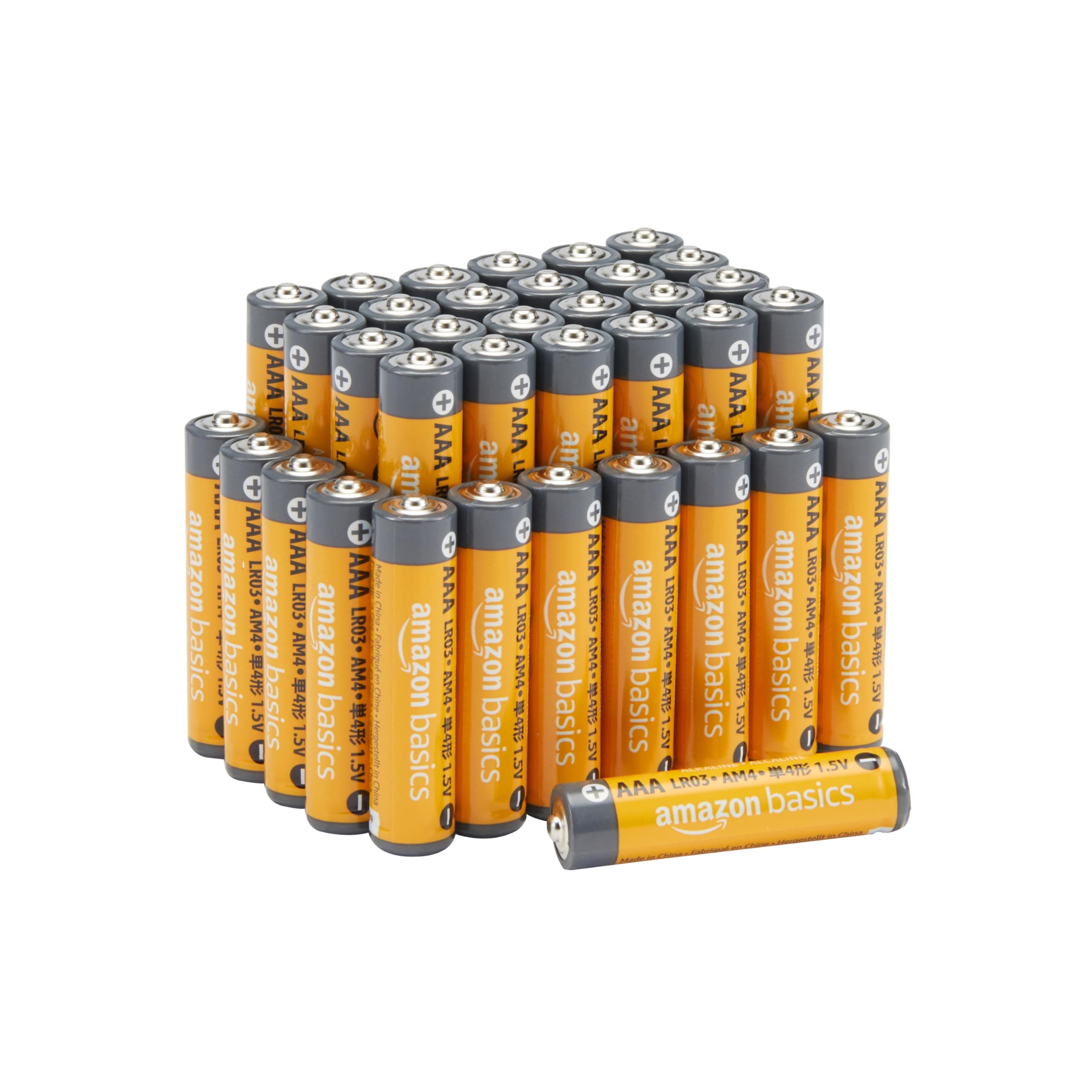
Amazon Basics AAA Alkaline High-Performance Batteries, 1.5 Volt, 10-Year Shelf Life, 36 Count (Pack of 1)
Amazon Basics


