Get the App
Better experience on mobile
From budget-friendly to premium, these mats keep you grounded when the room hits 105°F.
The biggest mistake you can make when buying a hot yoga mat is treating it like a regular yoga mat. Unlike a standard practice, hot yoga is a battle against moisture: within a few minutes, sweat pools under your palms, and a mat with a smooth PVC or a surface with poor moisture-wicking will turn into a slip-and-slide that throws off every balancing pose. The best hot yoga mats are designed to grip more as they get wet, not less. This means carefully choosing the surface material—whether it's an open-cell natural rubber that soaks up sweat or a closed-cell polyurethane top that meets you halfway.
In this guide, we've narrowed down the field to six mats that handle heat and humidity, ranging from budget-friendly picks to premium options used by studio regulars. We've based our recommendations on published expert reviews, manufacturer specifications, and aggregated buyer feedback from major retailers. We also considered durability, weight, and how each mat handles the inevitable post-class cleanup. You'll learn what to look for in a hot yoga mat, including how to choose between thickness, weight, and material, plus answers to common questions like whether you need a towel and how to break in a slippery new mat.
From the alignment-friendly Liforme to the budget-conscious Gaiam, each mat here earned its spot because it solves a specific problem hot yogis face: staying put when everything else is soaking wet. Whether you're a fresher who only hits a monthly heated class or a daily vinyasa artist who drips buckets, there's a pick that matches your needs and your wallet.
Liforme combines a naturally grippy polyurethane surface with a supportive 4.2mm natural rubber base, plus a unique alignment grid that keeps your form on track even in the sweatiest class. The main trade-off is price and the fact that it shows soap residues and marks more easily than textured PVC mats.
Main limitation: The top layer can show streaks from oils and body toner, so it requires regular, careful cleaning.
Skip if: You shouldn't buy this if you need a mat that can be machine-washed or left in a hot car, as polyurethane can degrade.
Gaiam's DryGrip delivers a surprisingly grippy, quick-drying surface for a fraction of the premium price, and the 5mm cushioning is comfortable for joint support. It's not as durable as natural rubber mats, and the printed top layer can begin to crack after heavy use.
Main limitation: The polyurethane-like top is actually PVC with a coating; it wears out faster than natural rubber and can develop cracks within a year of daily practice.
Skip if: If you practice more than three times a week or want a mat to last several years, the Gaiam DryGrip is not a long-term investment.
B-MAT Strong is engineered for hot power vinyasa, with a specially textured natural rubber surface that improves its grip as you sweat. It's lightweight and portable, but the rubber has a strong smell that lingers for weeks and requires a bit more care than PVC mats.
Main limitation: The natural rubber surface can be squeaky when new, and the initial odor is strong enough to need airing out for several days.
Skip if: Skip this if you're sensitive to rubber smells or need a mat with extra cushioning for sensitive knees.
JadeYoga's Harmony mat is made from natural rubber with a non-toxic, biodegradable construction that provides a reliable grip even in challenging poses. It's one of the most eco-conscious choices, but the rubber surface absorbs moisture and can get slippery once soaked with sweat.
Main limitation: The open-cell rubber texture absorbs sweat quickly, making the mat heavier and potentially more slippery in a hot practice.
Skip if: If you sweat profusely or practice in a very humid studio, this mat's absorbent surface will require frequent wiping and may not suit your needs.
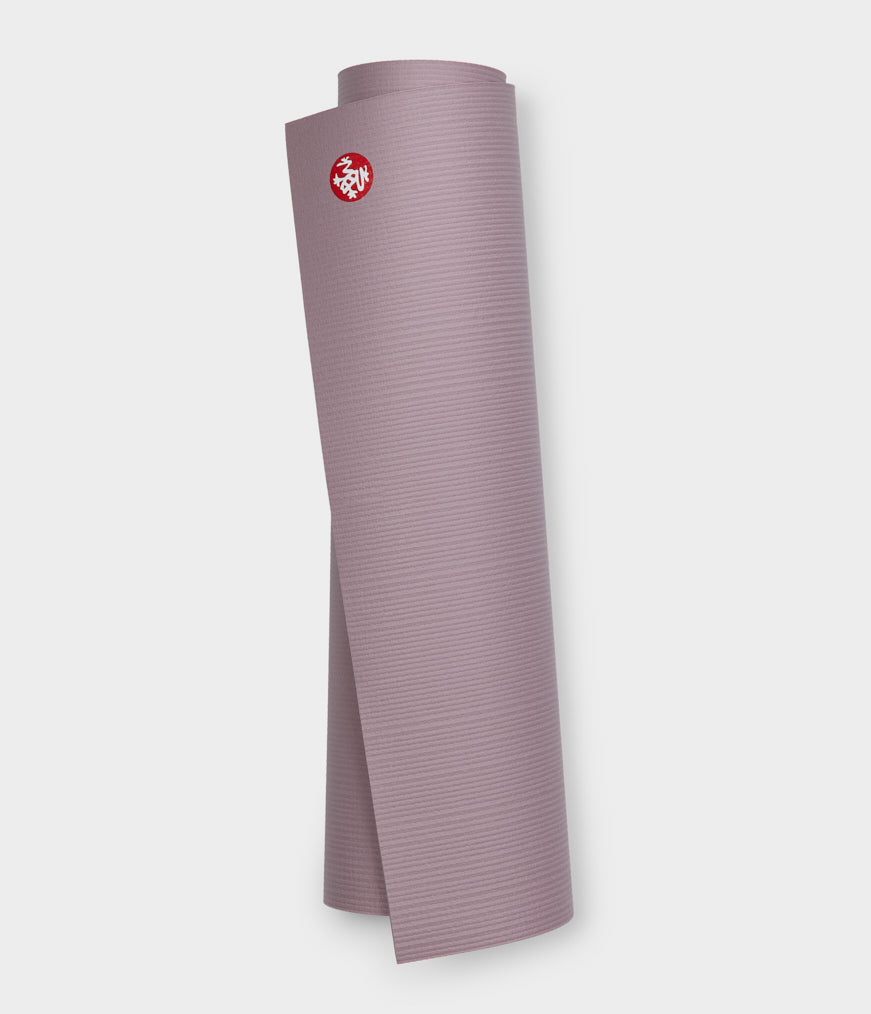
Manduka PRO is the workhorse of the yoga world, offering unmatched cushioning and a closed-cell surface that won't soak up sweat or odors. It comes with a lifetime warranty, but the smooth surface is notoriously slippery when wet until it's properly broken in.
Main limitation: The initial 'slick' phase can last several months, and at 7+ pounds, it's a heavy mat to haul to the studio.
Skip if: Skip if you need immediate slip resistance in your first class—this mat requires a break-in period and salt/texture treatment.
Alo Warrior offers plush 5mm cushioning with a smooth polyurethane top that provides grip in moderate sweat conditions. It's a great choice for hot yoga classes that include floor work and longer seated stretches, but the deeper cushion can make balance poses feel slightly less stable.
Main limitation: The polyurethane top can stain from sweat and body oils, and it tends to get slippery once moisture builds up in a very sweat-heavy class.
Skip if: You should skip it if you're a hot yoga newbie prone to slipping—look for a mat with a more aggressive texture if you're drenched by the end of the sequence.
Compare key specs and features of all our recommendations side-by-side
| Product | Recommendation | Rating | Price |
|---|---|---|---|
Liforme Yoga Mat (Original, 4.2mm) Rank #1 | 🏆 Top Pick | 9.3/10 | $145–$160 Check current price → |
Gaiam DryGrip Yoga Mat Rank #2 | 💰 Budget Pick | 7.8/10 | $35–$50 Check current price → |
B-MAT Strong Yoga Mat (3.5mm) Rank #3 | ⭐ Editor's Choice | 8.5/10 | $70–$85 Check current price → |
JadeYoga Harmony Mat (3/16") Rank #4 | — | 8.0/10 | $80–$95 Check current price → |
Manduka PRO Yoga Mat 6mm Rank #5 | — | 8.2/10 | $155–$170 Check current price → |
Alo Warrior Yoga Mat (5mm) Rank #6 | — | 7.5/10 | $105–$130 Check current price → |
Common questions buyers have about this category.
For hot yoga, a 4mm to 6mm mat is ideal. Thicker mats (5–6mm) offer more cushioning for your knees and joints, but they can make balancing poses feel less stable. If you have sensitive knees, opt for 5mm or 6mm; if you prioritize grip and stability, go with a 4mm mat.
Many hot yoga practitioners use a microfiber towel to cover the mat and absorb sweat. Even with a grippy mat, a towel can provide extra traction and keeps your mat from getting drenched. If your mat stays slippery or you're a heavy sweater, a towel is highly recommended.
Most mats can be wiped down with a mild soap and water solution (a few drops of dish soap or a specialized yoga mat cleanser). Avoid harsh detergents, and never machine wash unless the manufacturer explicitly allows it. Natural rubber mats like JadeYoga or B-MAT should be aired out to prevent mildew.
Natural rubber mats (like JadeYoga and B-MAT) are biodegradable and provide excellent grip, but they absorb sweat and can have a rubbery smell. PVC mats (like Manduka PRO) are more durable, water-resistant, and provide better cushioning, but they are less eco-friendly and often slippery when new. Your choice depends on your priorities: grip vs. longevity.
The Manduka PRO has a smooth closed-cell surface that needs to be 'broken in.' You can accelerate the process by scrubbing it with a mixture of coarse salt and water or using a textured cleaning pad. After several sessions (or a salt treatment), the surface develops a slight texture that improves traction with sweat.
Manduka PRO is renowned for its lifetime guarantee and closed-cell PVC construction, making it one of the most durable mats you can buy. B-MAT Strong and Liforme are also built to last several years, but the open-cell rubber versions (like JadeYoga) may wear out faster because they absorb sweat and break down more quickly.
Cork mats offer a natural grip when dry, but once you sweat, the cork can become slippery and absorbs moisture, making it heavier. They also tend to flake over time due to intense cleaning. Unless you prefer a specific texture, polyurethane-topped mats are a more effective choice for hot yoga.
Products we evaluated but did not recommend — and why.
