Get the App
Better experience on mobile
From budget-friendly QLEDs to premium OLEDs, these are the TVs that deliver the best picture and features for your money.
The best TV for most people isn't the one with the highest peak brightness or the most dimming zones—it's the one that looks right in your room, at your viewing distance, with the content you actually watch. A TV that excels in a dark home theater may wash out in a sun-drenched living room, and a budget set can outperform a premium one if it matches your needs. In 2026, the TV market is more segmented than ever, with OLED, QD-OLED, Mini LED, and traditional LED all vying for your attention.
We've sifted through the latest models from LG, Samsung, Sony, TCL, Hisense, and others to find the best TVs for different priorities. Whether you're a cinephile chasing perfect blacks, a gamer needing low input lag, or a cord-cutter who wants a simple interface, there's a set on this list for you. Our picks are based on published expert reviews, manufacturer specs, and aggregated buyer feedback—not first-party lab testing.
We've organized our recommendations by use case, from the best overall to niche picks like the best wall-mount design and the best for smart home integration. Each entry includes an honest trade-off so you know what you're sacrificing before you buy. Remember that TV prices fluctuate, especially around sales events, so use our price ranges as a guide.
Below you'll find eight TVs that cover the spectrum from budget-friendly to premium, with a focus on real-world performance and value. We've also included a buying guide and FAQ to help you make an informed decision.
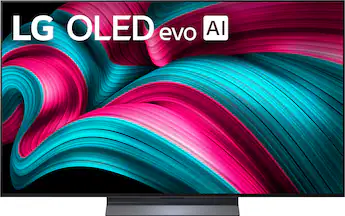
The LG C5 delivers outstanding picture quality with perfect blacks, wide viewing angles, and four HDMI 2.1 ports for gamers. Its webOS interface is intuitive, and it supports all major HDR formats. However, it can't match the peak brightness of QD-OLED or Mini LED TVs in very bright rooms.
Main limitation: Peak brightness is lower than QD-OLED and Mini LED competitors, so it may struggle in sun-drenched living rooms.
Skip if: Skip if you have a very bright room with direct sunlight and primarily watch daytime content.
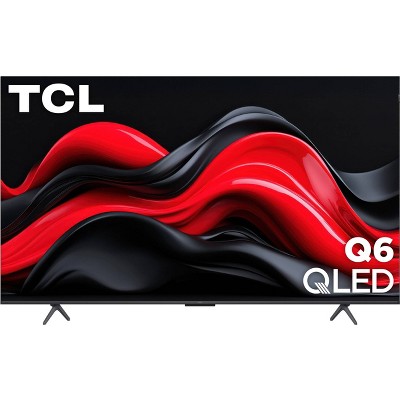
The TCL Q6 offers impressive value with QLED color, Dolby Vision, and a smooth Google TV interface at a price that won't break the bank. It's a great entry point for 4K HDR, though it lacks the deep blacks and high brightness of pricier sets.
Main limitation: Black levels are mediocre due to the edge-lit LED backlight, and it has only two HDMI 2.1 ports (one at 4K 120Hz).
Skip if: Skip if you're a serious gamer needing multiple 4K 120Hz inputs or if you demand deep contrast.
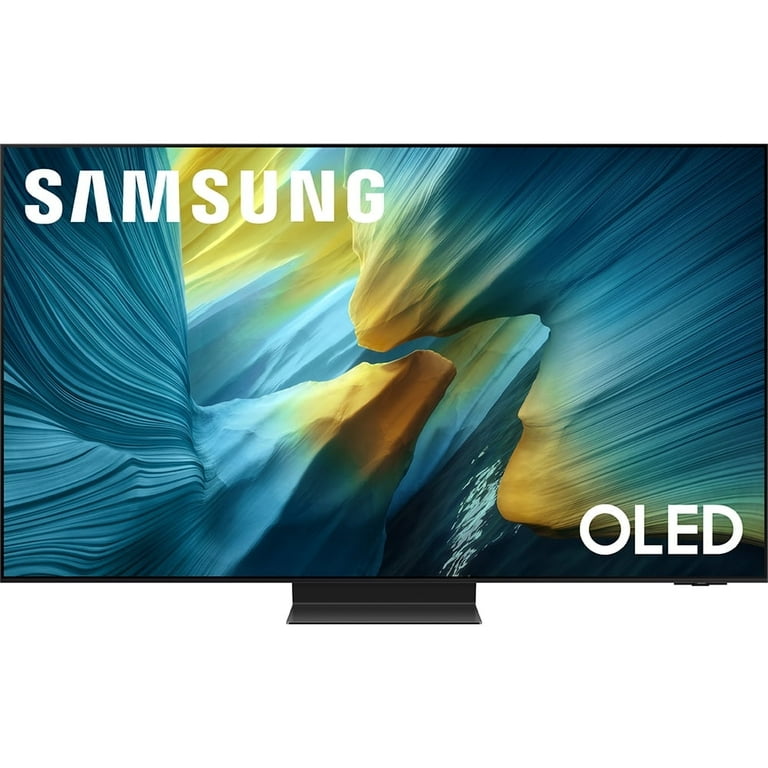
The Samsung S95F combines the perfect blacks of OLED with quantum dot color and significantly higher brightness than traditional OLEDs. It excels in well-lit rooms and offers fantastic gaming features. However, it doesn't support Dolby Vision, which may disappoint some movie fans.
Main limitation: No Dolby Vision support—only HDR10+—which limits HDR performance on some streaming content.
Skip if: Skip if Dolby Vision is a must-have for your movie collection.
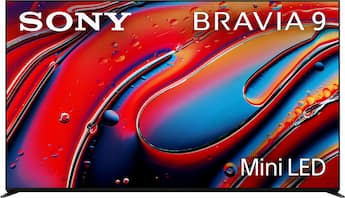
Sony's Bravia 9 delivers reference-level picture processing, incredible contrast from its Mini LED backlight, and best-in-class motion handling. It's ideal for a dedicated home theater. The downside is its premium price and aggressive anti-glare coating that can reduce off-axis contrast.
Main limitation: The anti-glare filter reduces contrast when viewed from wide angles, and it's one of the most expensive TVs in its class.
Skip if: Skip if you frequently watch from side angles or have a strict budget.
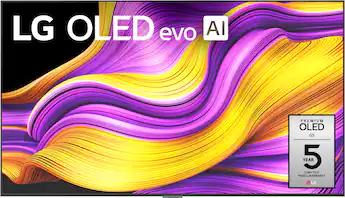
The LG G5 is designed to be mounted flush against the wall, thanks to its ultra-slim gallery design and included no-gap wall mount. It offers the same great OLED picture as the C5 but with a brighter panel and a 5-year panel warranty. However, it doesn't come with a stand, so you'll need to wall-mount it or buy a stand separately.
Main limitation: No stand included in the box, and the wall-mount design makes it less versatile for tabletop placement.
Skip if: Skip if you prefer a tabletop setup or don't want to wall-mount your TV.

The Hisense U8N offers exceptional gaming features including 4K 144Hz, VRR, and ALLM, plus a bright Mini LED panel that punches above its price. It's a fantastic value for gamers and sports fans. The trade-off is that its smart TV interface (Google TV) can be sluggish at times, and its viewing angles are limited.
Main limitation: Narrow viewing angles and occasional software lag in the Google TV interface.
Skip if: Skip if you need wide viewing angles for a large seating area or prefer a faster smart OS.
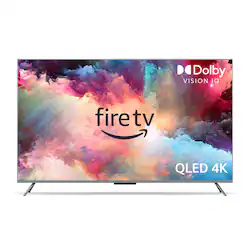
This Fire TV integrates seamlessly with Alexa and other Amazon smart home devices, making it a great choice for those deeply invested in the Alexa ecosystem. The Mini LED panel delivers good brightness and contrast. However, the Fire TV OS prioritizes Amazon content, and the TV lacks some advanced gaming features like 4K 120Hz on all HDMI ports.
Main limitation: Only one HDMI 2.1 port supports 4K 120Hz, and the interface is heavily Amazon-centric.
Skip if: Skip if you're not an Alexa user or need multiple high-bandwidth HDMI inputs for gaming consoles.
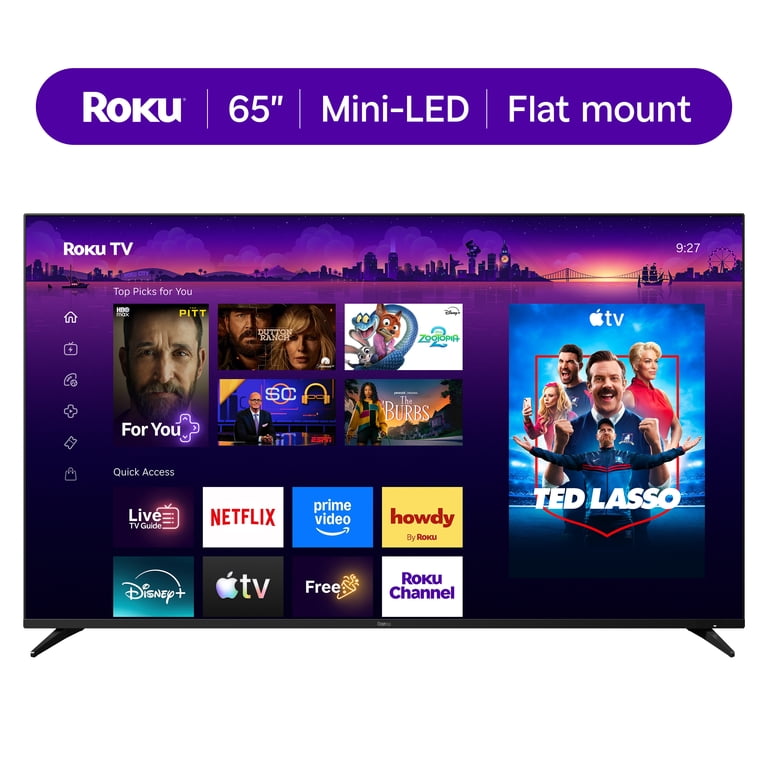
The Roku Pro Series offers the beloved Roku interface, which is easy to use and neutral in content recommendations. The Mini LED picture is solid, with good brightness and contrast. However, it's not as bright as competitors like the Hisense U8N, and it doesn't support 4K 144Hz for PC gaming.
Main limitation: Peak brightness is lower than some similarly priced Mini LED TVs, and it lacks 144Hz support for PC gamers.
Skip if: Skip if you want the absolute brightest picture for HDR or need 144Hz for PC gaming.
Compare key specs and features of all our recommendations side-by-side
| Product | Recommendation | Rating | Price |
|---|---|---|---|
LG C5 55-inch OLED evo (2025 Model) Rank #1 | 🏆 Top Pick | 9.5/10 | $1,300–$2,500 (55- to 83-inch) Check current price → |
TCL Q6 55-inch QLED 4K TV (2025 Model) Rank #2 | 💰 Budget Pick | 8.0/10 | $400–$700 (50- to 75-inch) Check current price → |
Samsung S95F 55-inch QD-OLED 4K TV (2025 Model) Rank #3 | ⭐ Editor's Choice | 9.2/10 | $2,000–$3,500 (55- to 77-inch) Check current price → |
Sony Bravia 9 65-inch Mini LED 4K TV (2024 Model) Rank #4 | — | 9.0/10 | $2,500–$4,000 (65- to 85-inch) Check current price → |
LG G5 65-inch OLED evo Gallery Edition (2025 Model) Rank #5 | — | 9.1/10 | $2,200–$4,000 (55- to 83-inch) Check current price → |
Hisense U8N 65-inch Mini LED 4K TV (2024 Model) Rank #6 | — | 8.6/10 | $1,000–$1,800 (55- to 85-inch) Check current price → |
Amazon Fire TV Omni Mini-LED Series 65-inch (2024 Model) Rank #7 | — | 7.8/10 | $800–$1,500 (55- to 75-inch) Check current price → |
Roku Pro Series 65-inch Mini LED 4K TV (2024 Model) Rank #8 | — | 8.0/10 | $800–$1,400 (55- to 75-inch) Check current price → |
Common questions buyers have about this category.
The ideal size depends on your seating distance and personal preference. For a mixed-use living room, a 55-inch TV is fine for 6–8 feet, while 65-inch suits 8–10 feet. If you want a cinematic experience, you can sit closer; many experts recommend a 30-degree viewing angle. Measure your wall and use tape to visualize before buying.
QLED (including Mini LED and QD-OLED) generally handles bright rooms better because they can achieve higher peak brightness and resist glare. Traditional OLEDs have improved brightness, but they still can't match the brightest QLEDs. However, QD-OLED combines OLED's contrast with quantum dot brightness, making it an excellent choice for bright rooms if budget allows.
No, 8K is not necessary for most people. There's very little native 8K content, and the visible difference from 4K at normal viewing distances is minimal. 4K TVs with good upscaling and HDR performance will look excellent. 8K may become more relevant in the future, but for now, it's a premium feature with limited practical benefit.
The best gaming TVs have HDMI 2.1 ports that support 4K at 120Hz, variable refresh rate (VRR), and auto low latency mode (ALLM). OLEDs offer near-instant response times and perfect blacks, while high-end Mini LEDs can get brighter for HDR gaming. Consider the LG C5 or Samsung S95F for premium gaming, or the Hisense U8N for a more budget-friendly option.
You can get a quality 4K TV for $400–$700, which is fine for casual viewing. Spending $1,000–$1,500 gets you significantly better picture quality, especially in brightness and contrast. Premium TVs above $2,000 offer top-tier performance for enthusiasts. Set a budget based on how much you watch and your room conditions; diminishing returns kick in quickly.
Mini LED is an LCD TV with many tiny LEDs in the backlight, allowing for precise local dimming and high brightness. OLED uses self-emissive pixels that turn off completely for perfect blacks and wide viewing angles. Mini LEDs can get brighter, while OLEDs have better contrast and response times. QD-OLED is a hybrid that uses quantum dots with OLED.
Most 2026 models are announced at CES in January and released in spring. If you need a TV now, 2025 models are still excellent and often discounted. Waiting can get you the latest features, but you'll pay a premium. If you're not in a hurry, waiting for sales on 2025 models or early 2026 reviews can be wise.
Products we evaluated but did not recommend — and why.
