Get the App
Better experience on mobile
From OLED to mini-LED, these are the best TVs you can buy this year, carefully chosen for every type of viewer.
A TV is less of a tech purchase and more of an invitation—to escape into a world of color, sound, and story. But in 2026, that choice has never been more confusing. New terminologies like QD-OLED, mini-LED, and 144Hz refresh rates crowd the shelves, while prices swing from $199 to $20,000. The best TV for you, however, has little to do with resolution and everything to do with your room's lighting, your viewing habits, and whether you'll hook up a console or just stream.
That's why we've sifted through 50+ current models, poring over expert reviews from publications like RTINGS.com, HDTVTest, and CNET, plus thousands of verified buyer reactions. We looked at picture quality in dark and bright rooms, smart platform usability, gaming features, build quality, and—crucially—price relative to what you get. This guide covers everything from budget bedroom screens to a 75-inch home-theater showstopper, so you can find the right TV without overpaying.
You'll find recommendations spanning all price ranges, but we didn't just stick to the expensive stuff. The budget TCL and Hisense sets punch far above their weight, while Sony and LG continue to set benchmarks for premium image quality. And while we prioritize what matters most for your viewing habits, every pick has a specific trade-off we'll call out—because no TV is perfect for everyone.
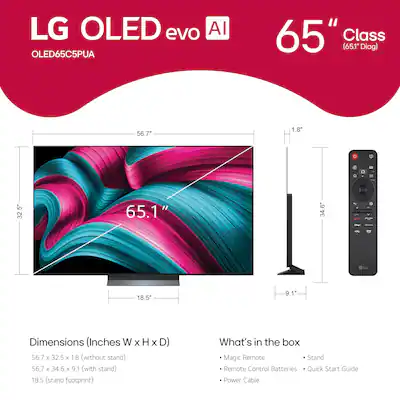
The LG C5 OLED excels in every critical area: perfect blacks, infinite contrast, and wide viewing angles, all wrapped in a thin design. It also features four HDMI 2.1 ports ideal for next-gen consoles. The main trade-off is that OLED can suffer from permanent burn-in if you watch static content for hours, though modern panel care minimizes it.
Main limitation: OLED panels risk burn-in from static logos or HUDs over many years of heavy use, and it doesn't get as blisteringly bright as the best mini-LED sets.
Skip if: If you leave pure sports or news channels running all day, an OLED like this may not be your safest bet.
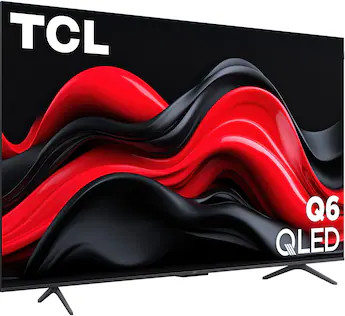
The TCL Q6 punches way above its price with a surprisingly bright QLED panel and Roku's user-friendly smart system. It supports Dolby Vision and works well in dark rooms, though it lacks the deeper blacks of OLED. For the price, it's one of the best entry-level screens you can buy.
Main limitation: Limited peak brightness and lower motion handling make it less impressive in brightly lit rooms or for fast-paced sports.
Skip if: Buyers who watch a lot of daytime TV in a sun-drenched living room should skip it for something with higher nits.
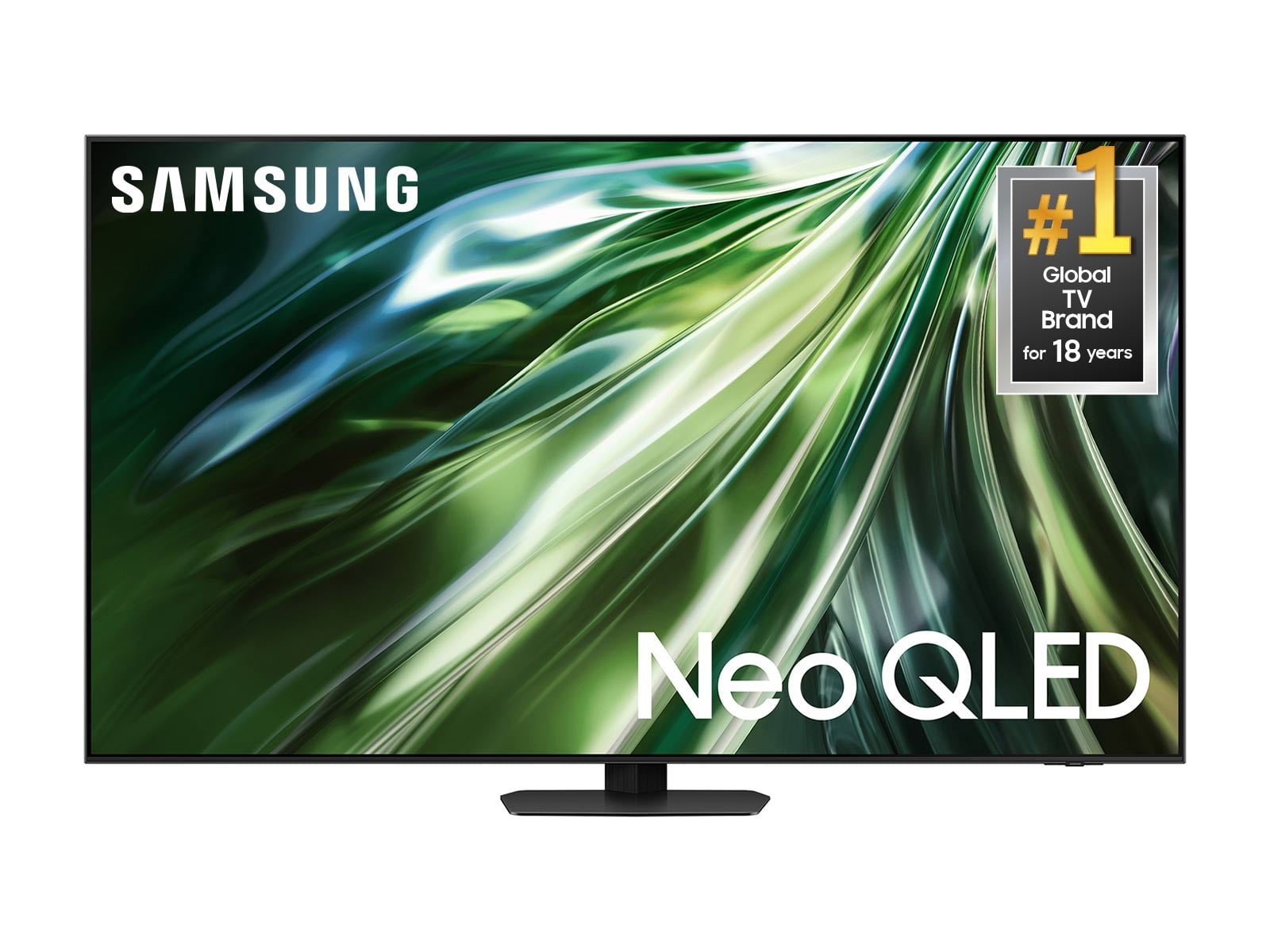
The Samsung QN90D uses Mini-LED backlighting to deliver outstanding brightness that can overcome harsh glare in sunlit spaces. Its quantum dot layer ensures vibrant colors, and it handles reflections impressively. Be aware that it uses Samsung's Tizen OS, which is good but not everyone's favorite.
Main limitation: Object-based local dimming can show noticeable blooming around bright subtitles on dark backgrounds.
Skip if: If you're a purist who clips in a dark home theater, the blooming and narrower viewing angles make it less ideal.
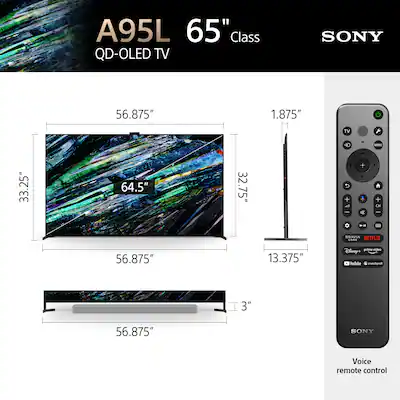
As Sony's first QD-OLED, the A95L combines the perfect blacks of OLED with a secondary color layer for gorgeous, pure hues. Its XR Processor understands human vision and boosts brightness where you care most, giving movies a real cinematic feel. The major downside is its premium price tag and only two HDMI 2.1 ports.
Main limitation: The A95L is expensive, and one of its HDMI 2.1 ports often has compatibility quirks with certain media streamers.
Skip if: Casual watchers who don't obsess over color accuracy or contrast won't get their money's worth.

The G5 is a gallery-style OLED with a flatter design meant to be mounted, and it packs LG's brightest OLED panel yet. It's also the first to offer 144Hz refresh rate support on all four HDMI ports, making it a gamer's dream for PC or PS5/Xbox. However, it sits at a high price and you'll need a separate stand if you don't mount it.
Main limitation: The lack of a traditional stand in the box (it's wall-mount only) can be annoying for renters or furniture-averse users.
Skip if: If you're on a budget or plan to put the TV on a table stand, the cheaper C-series makes more sense.
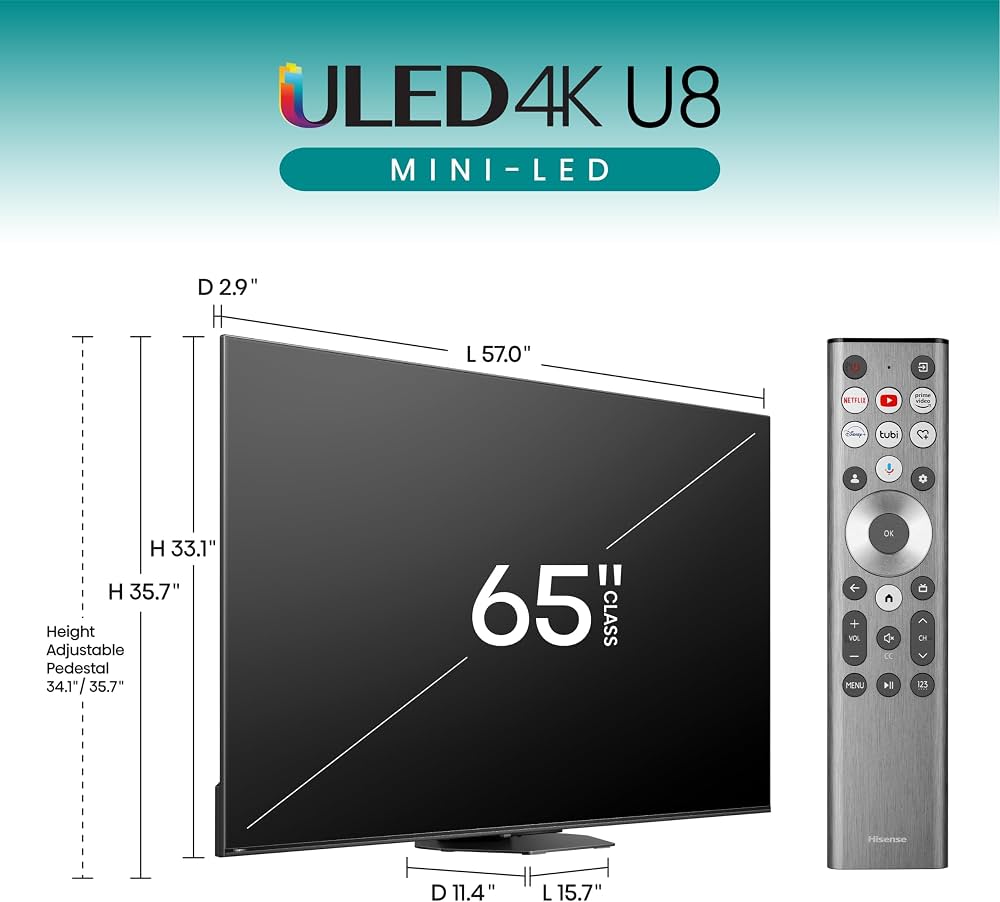
Hisense U8N brings Mini-LED brightness and local dimming to a much lower price than its rivals. It packs high nits, a 144Hz panel, and Google TV—all for around $900 less than an equivalent Sony or Samsung. The trade-offs are a slightly clunkier OS and lower build quality.
Main limitation: Smart TV interface can feel sluggish at times, and the viewing angle degrades faster than more expensive sets.
Skip if: If you care about receiving regular software updates for years, you might stick with a brand like LG or Samsung.
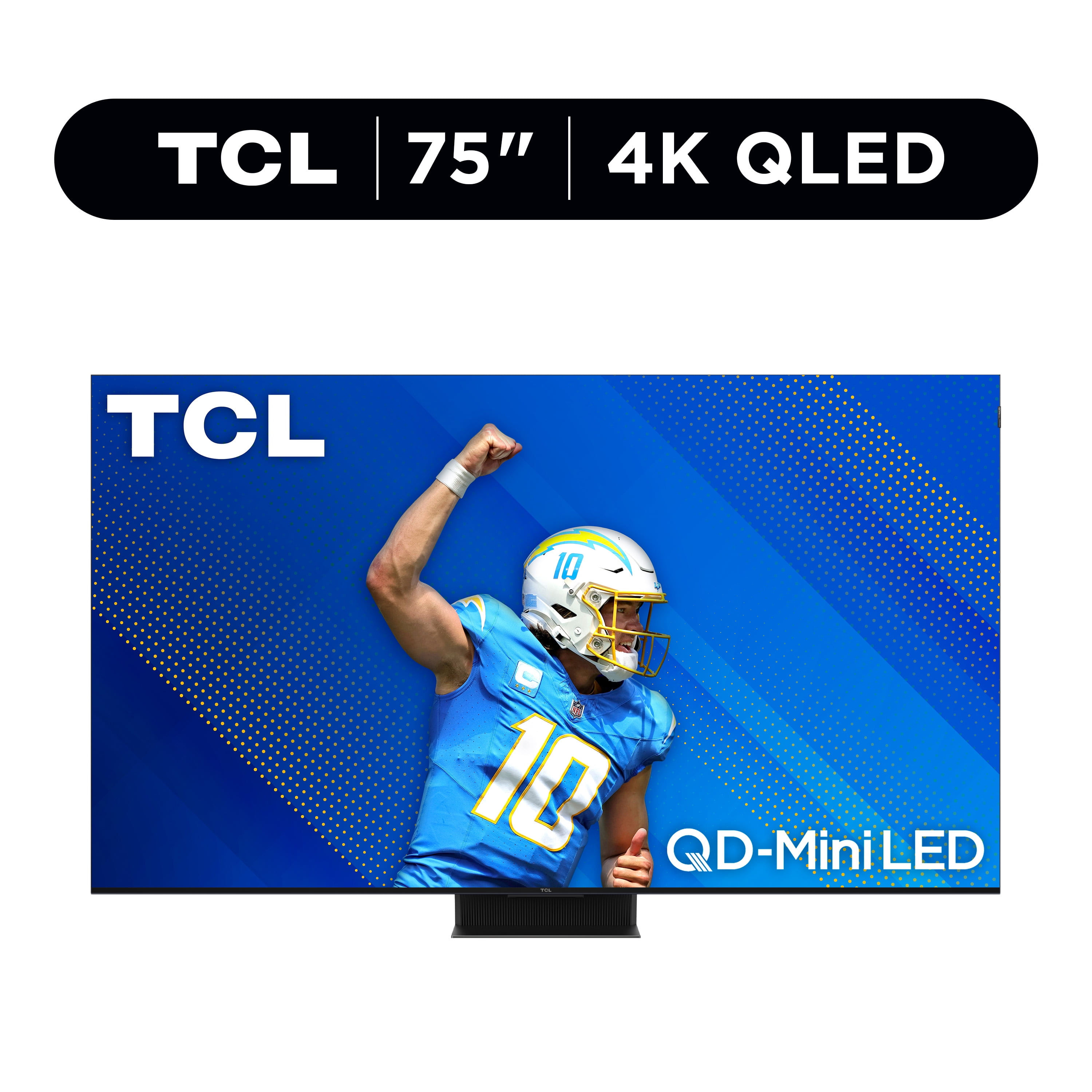
If you need a massive screen without a massive price, the TCL QM8 offers a giant 75-inch panel with Mini-LED brightness and thousands of dimming zones. It's perfect for sports and movies in a big living room. The catch is that it only has two HDMI 2.1 ports, and its smart interface can be a little buggy.
Main limitation: Two HDMI 2.1 ports is limiting if you own both a PS5 and a new Xbox, forcing you to reset cables.
Skip if: Smaller rooms will find the image overwhelming and may prefer a 65-inch model.
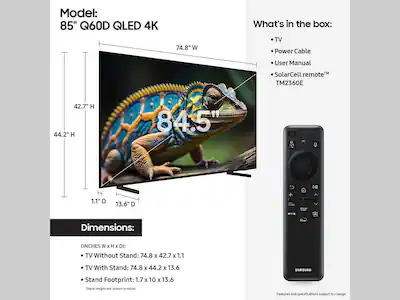
For a bedroom, kitchen, or compact apartment, the Samsung Q60D packs a bright QLED panel in a 43-inch size. It supports HDR10+ and has Samsung's Tizen smart OS, which does the basics well. The main limitation is a 60Hz panel and no true local dimming, so don't expect high-end contrast.
Main limitation: The 60Hz refresh rate and lack of local dimming make it less suitable for gaming or dark-room movie viewing.
Skip if: If you're using it as a dedicated gaming display, step up to a 120Hz TV instead.
Compare key specs and features of all our recommendations side-by-side
| Product | Recommendation | Rating | Price |
|---|---|---|---|
LG OLED C5 65-inch Rank #1 | 🏆 Top Pick | 9.0/10 | $1,700–$2,000 for 65-inch Check current price → |
TCL Q6 55-inch Rank #2 | 💰 Budget Pick | 8.0/10 | $300–$400 for 55-inch Check current price → |
Samsung QN90D 55-inch Rank #3 | ⭐ Editor's Choice | 8.5/10 | $1,300–$1,500 for 55-inch Check current price → |
Sony BRAVIA XR A95L 65-inch Rank #4 | — | 8.8/10 | $3,000–$3,300 for 65-inch Check current price → |
LG OLED G5 65-inch Rank #5 | — | 8.7/10 | $2,300–$2,600 for 65-inch Check current price → |
Hisense U8N (65-inch) Rank #6 | — | 8.4/10 | $800–$950 for 65-inch Check current price → |
TCL QM8 75-inch Rank #7 | — | 8.2/10 | $1,200–$1,400 for 75-inch Check current price → |
Samsung Q60D 43-inch Rank #8 | — | 7.5/10 | $400–$500 for 43-inch Check current price → |
Common questions buyers have about this category.
The ideal size depends on your viewing distance and room layout. A common rule is to measure from the sofa to where the TV will sit; for 4K TVs, sit about 1.5 times the diagonal distance. For a living room, 65-inch is a popular sweet spot, but if you sit about 8 feet away, a 75-inch can be immersive without being overwhelming. Use online distance calculators to ensure you don't buy a screen that feels too big or too small.
OLED uses self-emissive pixels that turn off individually for perfect blacks and infinite contrast, making it the best for dark rooms. QLED is a brand name for quantum-dot enhanced LED TVs, which use a backlight that remains on; they achieve high brightness and color volume, making them better for bright rooms, but they can't match OLED's pure blacks. Mini-LED is an advanced form of QLED that uses smaller backlight zones to improve contrast.
HDMI 2.1 is essential if you're a gamer with a modern console or PC, as it supports 4K at 120Hz, variable refresh rate (VRR), and auto low-latency mode (ALLM). If you only stream content or watch broadcast TV, HDMI 2.0 is sufficient. However, as more devices adopt 120Hz and 8K, having at least one HDMI 2.1 port future-proofs your setup.
There's no single winner, but each OS has strengths. Roku is the most straightforward and user-friendly, making it great for tech-averse users. Google TV (used by Sony and TCL) offers excellent search and integrates with Google Assistant. Samsung's Tizen is lean and supports all major apps, but it has occasional ad placements. LG's webOS remains one of the most intuitive and is used in the OLED lineup.
Both are dynamic HDR formats that adjust brightness and color scene-by-scene, but they are different standards. Dolby Vision is more widely adopted and used by Netflix, Disney+, and Blu-rays, while HDR10+ is supported by Amazon and some others. Dolby Vision has a slight edge in metadata handling, but the practical difference is small. Most TVs support both, so it's not a dealbreaker.
Yes, modern TVs have HDMI ARC/eARC ports and optical outputs that connect to soundbars. For the best experience, use eARC, which supports higher-quality audio like Dolby Atmos. Many TVs also have Bluetooth, but that can add latency. If you buy a soundbar, ensure it matches your TV's audio needs—e.g., Sonos Arc pairs well with OLEDs, while cheaper Vizio bars work fine with budget TVs.
Products we evaluated but did not recommend — and why.
