Get the App
Better experience on mobile
From budget-friendly QLEDs to flagship mini-LEDs, these TVs handle glare and keep contrast intact in well-lit rooms.
Bright ambient light is the enemy of contrast. A TV that looks sensational in a darkened showroom can turn into a washed-out mess when the afternoon sun streams through a window. The reason isn't just the brightness of the panel itself; it's how the screen treats reflections, how the backlight handles peak luminance, and how the display maintains black levels when light spills onto the glass.
That's why shopping for a TV for a bright living room or sunroom requires looking beyond the headline numbers. We spent hours analyzing published expert reviews, manufacturer specs, and verified buyer feedback from major retailers to understand how each model behaves under real-world lighting. In particular, we focused on peak brightness (measured in nits), the effectiveness of anti-reflective treatments, and how each TV's contrast holds up with lights on.
The models below are ranked based on how well they deliver a clear, punchy picture in spaces that don't have blackout shades. We've included options from leading brands like Sony, Hisense, TCL, Samsung, and LG, and we've balanced price, performance, and screen size so there's a pick for every budget. You'll see a mix of advanced mini-LED QLEDs and a couple of the latest OLEDs—each with its own trade-offs.
A quick note: the ideal TV for a bright room isn't necessarily the brightest one. It's the one that combines high luminance with good reflection control and sensible HDR tone mapping. With that in mind, let's dive into the top picks.
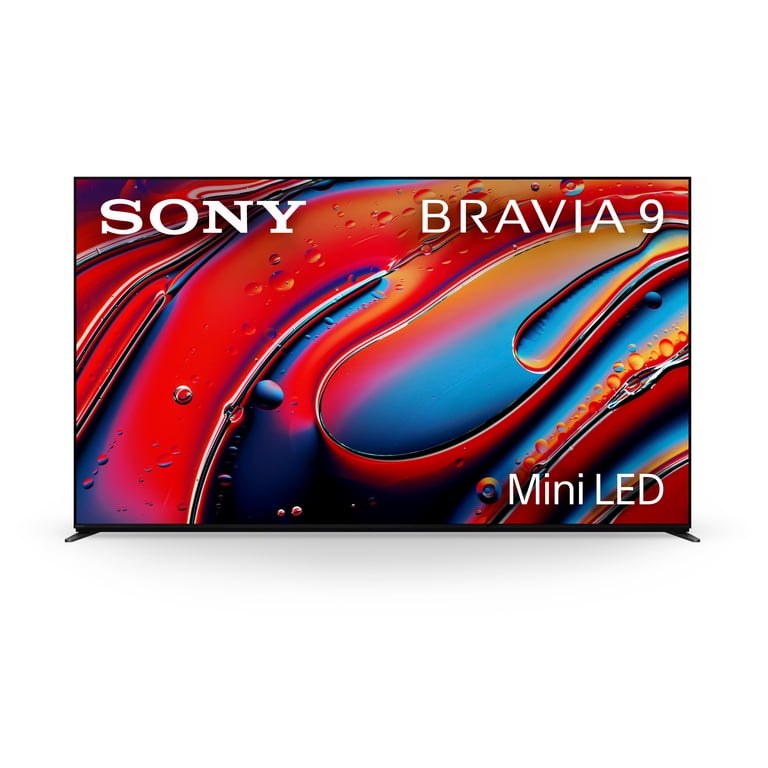
The Sony Bravia 9 delivers the most balanced bright-room performance we've researched: it combines a high-brightness mini-LED panel with a sophisticated anti-glare screen that keeps reflections from ruining the picture. Its cognitive processor also does an excellent job of preserving shadow detail in daylight, though you'll pay a premium for that polish.
Main limitation: Its price is steep compared to comparable mini-LED sets from TCL and Hisense, and the built-in sound is only average.
Skip if: If you're on a budget or don't need flagship-level HDR brightness, you can spend significantly less on a TV that handles bright rooms nearly as well.
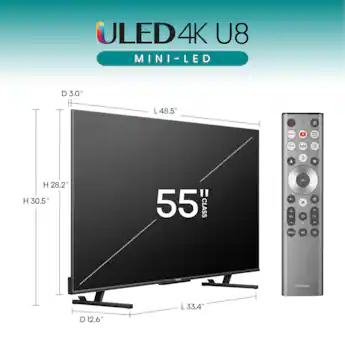
The Hisense U8N is a bright-room powerhouse at a mid-range price, offering mini-LED backlighting with extraordinary peak brightness that often exceeds TVs twice its cost. Its minimal blooming and strong anti-glare screen make it a fantastic value for anyone in a well-lit living room who still wants HDR impact.
Main limitation: The smart platform can be sluggish, and out-of-box color accuracy needs adjustment for critical viewing.
Skip if: Those who value a seamless smart TV experience or prefer a brand with a more established track record in processing.
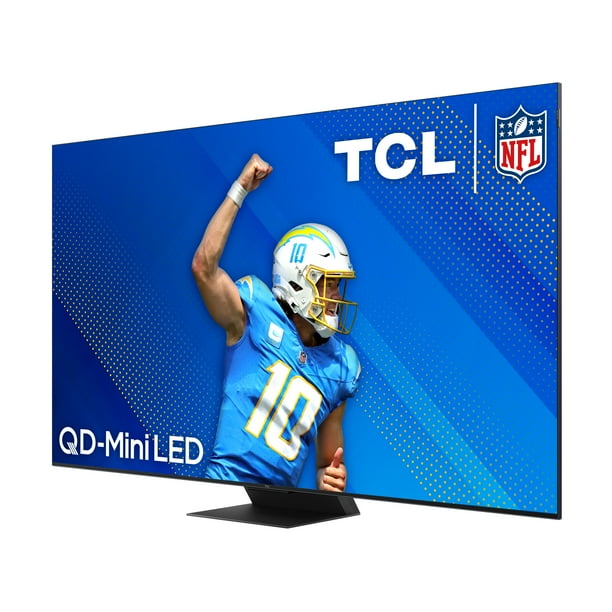
If you have a large wall and a bright room, the TCL QM8 is the best way to get a huge, luminous screen without paying luxury-brand prices. It combines 2,000-nits peak brightness with a decent anti-reflective treatment, making it a standout for movie nights and sports in sunlit family rooms. The trade-off is that its viewing angles narrow at seats far to the side.
Main limitation: Off-angle viewing is a weakness; the picture loses color accuracy when you're several feet to the side.
Skip if: Renters or those with a compact space who can't justify a massive display or can't wall-mount a heavy 75-inch panel.
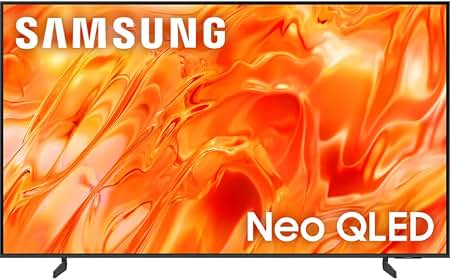
The Samsung QN90D is a top performer for rooms with extreme reflections, thanks to its excellent ultra-viewing-angle layer and anti-glare screen that minimizes incident light. It also delivers punchy HDR with deep blacks for a Mini-LED TV, making it a strong choice if you can sit directly in front of the set.
Main limitation: Black levels dim slightly when viewed from off-axis, and the software can be demanding on some streaming apps.
Skip if: People who need a TV with strong off-axis viewing or want the absolute best OLED contrast; the QN90D falls short of OLED in near-dark rooms.

The LG G5 OLED represents the best of both worlds: the perfect blacks and infinite contrast of OLED, but with a brightness boost from the latest MLA panel that makes it far more watchable in daylight than older OLEDs. It also uses a low-reflection coating to combat glare, giving you an elite picture in a sun-drenched living room without sacrificing OLED's cinematic depth.
Main limitation: It still can't match the top mini-LED TVs in absolute peak brightness, and the premium price is hard to swallow for many buyers.
Skip if: Budget shoppers or those who want a TV as a simple family screen; the G5's price is better spent on a smaller high-performance mini-LED TV if you don't need OLED blacks.
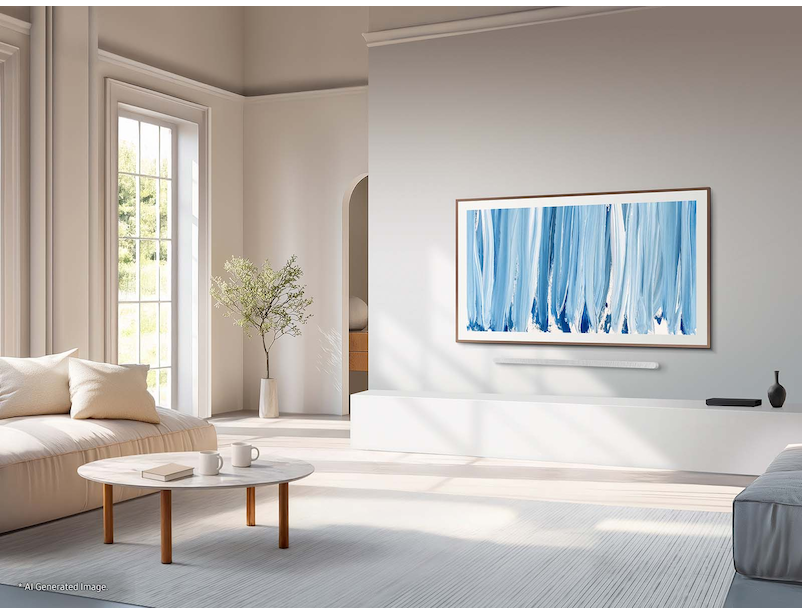
Samsung's The Frame is designed to disappear into your decor, and its matte, low-glare screen makes it a surprisingly strong choice for bright living rooms where reflections are a problem. When not watching TV, it displays gorgeous artwork that looks like a print, making it the perfect balance of function and form in a sunlit space.
Main limitation: As a TV, it's not a bright-room powerhouse—its peak brightness is lower than others on this list, so it's best for casual viewing and not HDR movies.
Skip if: Movie purists or gamers who want high refresh rates and HDR punch; the Frame sacrifices performance for aesthetics.
Compare key specs and features of all our recommendations side-by-side
| Product | Recommendation | Rating | Price |
|---|---|---|---|
Sony Bravia 9 65-Inch (XR-65XR90) Rank #1 | 🏆 Top Pick | 9.3/10 | Approx. $2,800–$3,200 for 65-inch Check current price → |
Hisense U8N 55-Inch (55U8N) Rank #2 | 💰 Budget Pick | 8.4/10 | Approx. $700–$900 for 55-inch Check current price → |
TCL QM8 75-Inch (75QM8) Rank #3 | ⭐ Editor's Choice | 8.6/10 | Approx. $2,000–$2,500 for 75-inch Check current price → |
Samsung QN90D 65-Inch (QN65QN90D) Rank #4 | — | 8.5/10 | Approx. $1,800–$2,200 for 65-inch Check current price → |
LG G5 OLED 65-Inch (OLED65G5) Rank #5 | — | 8.7/10 | Approx. $3,000–$3,500 for 65-inch Check current price → |
Samsung The Frame 65-Inch (LS05D) Rank #6 | — | 7.8/10 | Approx. $1,500–$2,000 for 65-inch Check current price → |
Common questions buyers have about this category.
For a room with decent ambient light, you want at least 700 nits of peak brightness. If you have large windows or direct sunlight hitting the screen, look for a TV that can hit 1,200 nits or more. Higher peak brightness helps maintain contrast and color saturation during the day.
Traditional OLEDs can be dimmer than QLEDs, but newer models with MMLA panels, like the LG G5, are significantly brighter and now have better anti-reflective coatings. If you love OLED's perfect blacks, they can work in bright rooms, but you'll generally get more daylight brightness per dollar from a mini-LED QLED.
Matte screens scatter reflections from sunlight or lamps, making them easier to view in bright rooms but sometimes looking slightly softer and less punchy in a dark room. Glossy screens have richer color and deeper blacks in dim lighting, but act like a mirror when light hits them. For a truly bright room, a matte or semi-gloss with anti-reflective treatment is usually better.
For a sunroom with intense, direct sunlight, a high-end QLED (especially mini-LED) is usually the better choice. These TVs reach higher peak brightness and have more effective anti-glare layers. OLED can work if the space is not extremely bright, but the overall robust performance in daylight favors QLED in this scenario.
Anti-reflective coatings reduce the amount of light that bounces off the screen, so reflections of windows, lamps, and bright furniture are much less visible. This effectively increases perceived contrast, allowing the TV to show a cleaner image even when ambient light is high. The best coatings are multi-layer and treated on both sides of the glass, which is why we prioritized them in our picks.
Not always. Many mid-range mini-LED TVs now offer high brightness and anti-glare at a fraction of the price of a flagship. For example, the Hisense U8N performs nearly as well as Sony's Bravia 9 in typical bright-room scenarios but costs about a third as much. The extra money goes toward better processing, build quality, and design, which might be worth it if you're picky about motion handling or want a premium look.
Products we evaluated but did not recommend — and why.
