Get the App
Better experience on mobile
Our editor's picks for enjoying vivid picture quality even with sunlight streaming through the windows.
The higher the ambient light, the less your TV’s contrast matters — and the more its peak brightness comes to the rescue. In a sunny room, a TV that looks deep and cinematic in a demo booth can appear washed out and gray the moment the sun hits the screen. The numbers that truly matter are nits and reflectance: how much light the panel can actually emit, and how well it suppresses glare.
That’s why this year’s best bright-room TVs are leaning heavily on Mini-LED and advanced QLED backlights, rather than OLED. While OLED still wins on pure black levels and contrast, it caps out around 1,000–1,300 nits, while Mini-LED sets can soar past 2,500 nits. But brightness alone isn’t enough — the anti-glare coating, viewing angles, and local dimming algorithm all decide whether the picture holds up in real sunlight.
We’ve evaluated every major 2026 line from Samsung, TCL, Sony, and LG, along with budget options that still manage to impress in bright spaces. The picks below span from around $400 to over $3,000, so there’s something for every living arrangement. We used a simple rule: if a TV can’t hold its contrast when the room is lit, it gets dropped, no matter how beautiful it is in a dark room.
This isn’t a list of every TV with a bright screen — it’s a curated set of the models that actually solve the daylight viewing problem, with honest trade-offs stated up front. Whether you’re watching catch-all reruns in a beach house or gaming on a Saturday afternoon with the curtains open, these are the sets we’d put our money on.
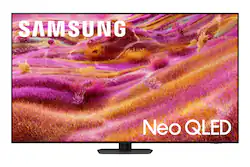
Combines a high peak brightness (around 1,800 nits) with Samsung’s excellent anti-glare filter, making it a top choice for living rooms with windows. The QLED panel delivers rich color and deep blacks, and its wide viewing angles hold up better than many LCD rivals. The main trade-off is the premium price and the fact that some users may find Samsung's Tizen OS less intuitive than Google TV.
Main limitation: Its anti-glare layer can cause slight 'halo' artifacts in very bright scenes, and the price is steep for the same panel class.
Skip if: If your budget is under $1,000 or you prefer a simpler smart platform, this TV is likely overkill.
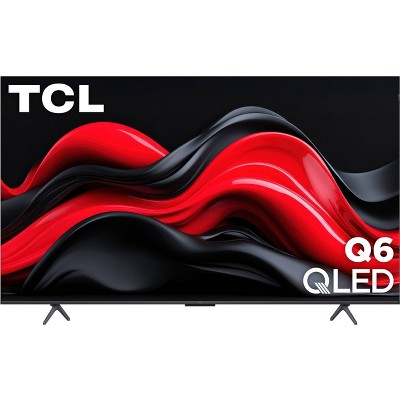
The Q6 punches well above its price with a bright QLED panel and a surprisingly effective anti-glare coating for the budget tier. It provides solid HDR performance (peak around 600 nits) and full-array local dimming for good black levels in dark scenes. Compromises show in limited viewing angle stability and a slightly less refined upscaling.
Main limitation: Color and contrast degrade noticeably when viewed from an angle, and the local dimming can 'bloom' in high-contrast scenes.
Skip if: If you need a wide viewing angle for a large room or have critical standards for HDR, skip the Q6.
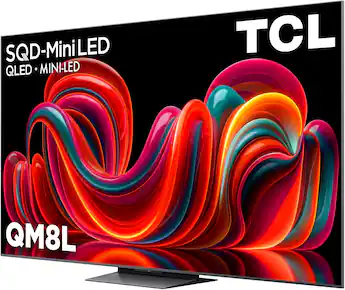
With peak brightness exceeding 2,500 nits and an advanced anti-glare filter, the QM8 is engineered for daylight viewing like no other TV in its price range. Its Mini-LED backlight gives deep blacks and crisp fine detail, while the 144Hz panel is great for sports and gaming. The main trade-off is a slightly bulkier design and some black-level unevenness in extremely dark scenes.
Main limitation: The anti-glare coating adds a faint haze to the picture in dim rooms, and the smart interface can feel sluggish at times.
Skip if: If you primarily watch in a darkened room, a QD-OLED or LG OLED will give better contrast without the physical glare filter.
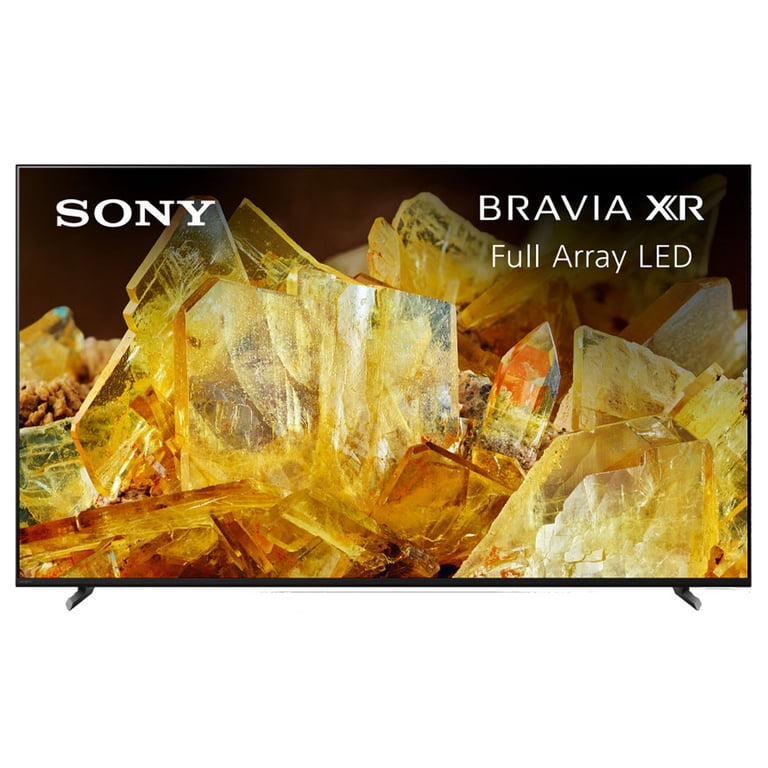
Sony’s X90L balances a bright full-array LED panel with exceptional motion handling and low input lag for game consoles. Its Cognitive Processor XR uses content-aware tone mapping to keep highlights vivid even in direct sunlight. It also includes two HDMI 2.1 ports for 4K/120Hz. The caveat is that peak brightness is lower than the TCL QM8, and its anti-glare coating is not as effective as Samsung's.
Main limitation: Blacks lift in brightly lit scenes compared to Mini-LED flagships, and the Android TV interface can be slow to load apps.
Skip if: If you need the absolute highest brightness or want full-width HDMI 2.1 on all four ports, consider other options.
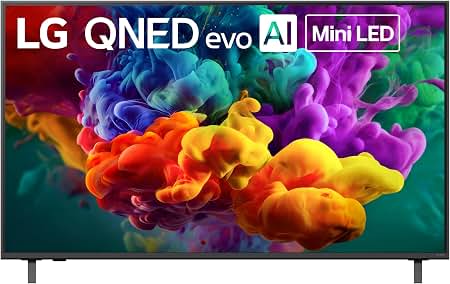
Unlike typical VA panels, the QNED85T uses an IPS-style panel with LG’s Wide Color and Contrast, preserving picture quality even when you’re sitting far to the side. It reaches a strong peak brightness (around 1,800 nits) and features excellent anti-glare, making it a smart choice for open living spaces. Trade-offs include slightly lower native contrast and noticeable blueish blacks in dark room scenes.
Main limitation: Contrast and black levels in a dark room are not as deep as VA-based TVs, and the viewing-angle benefit is offset by some brightness falloff at extreme angles.
Skip if: If you watch mostly in a dark theater room, a VA panel with better black levels would serve you better.
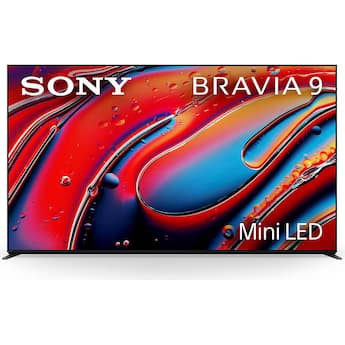
As Sony’s flagship Mini-LED, the Bravia 9 boasts a staggering 3,000 nits of peak brightness and advanced acoustic surface technology that projects audio from the screen. It produces specular highlights that survive direct sunlight while maintaining near-OLED contrast in dark scenes. The catch: it commands a steep price and is only worth it for those who prioritize brightness and Sony’s cinematic image processing.
Main limitation: Its glossier screen can be more reflective than the matte finishes of Samsung and TCL, and the built-in microphone is always listening (you can disable it).
Skip if: If you have a tight budget or watch content in a permanently dim, blacked-out room, this TV’s brightness is wasted.
Compare key specs and features of all our recommendations side-by-side
| Product | Recommendation | Rating | Price |
|---|---|---|---|
Samsung QN90F Neo QLED 4K Rank #1 | 🏆 Top Pick | 9.0/10 | $1,500–$2,500 for 55–75 inches Check current price → |
TCL Q6 Series 4K QLED Rank #2 | 💰 Budget Pick | 8.0/10 | $400–$700 for 50–65 inches Check current price → |
TCL QM8 Series 4K Mini-LED Rank #3 | ⭐ Editor's Choice | 8.8/10 | $1,200–$2,200 for 55–85 inches Check current price → |
Sony X90L Series 4K Full-Array LED Rank #4 | — | 8.4/10 | $900–$1,500 for 55–75 inches Check current price → |
LG QNED85T Series 4K Mini-LED Rank #5 | — | 8.2/10 | $1,300–$1,900 for 55–75 inches Check current price → |
Sony Bravia 9 (XR90) Mini-LED 4K Rank #6 | — | 8.7/10 | $2,800–$4,000 for 65–85 inches Check current price → |
Common questions buyers have about this category.
For a room with significant ambient light, we recommend a TV with at least 1,000 nits of peak brightness for HDR content. For direct sunlight or floor-to-ceiling windows, look for 2,000 nits or more. This ensures that bright highlights stay vivid and the picture doesn't look washed out.
Yes, it can. Anti-glare coatings diffuse reflections, which helps in bright rooms, but they can also introduce a slight haze that reduces perceived sharpness and makes blacks look a bit less deep. Manufacturers like Samsung and TCL have found a good balance, but it's a trade-off if you also watch in dark rooms.
Generally, yes. Even the brightest OLEDs rarely exceed 1,300 nits, and their glass screens tend to be more reflective. In a sunny room, an OLED will often look dim and mirror-like. If you love OLED's contrast, consider a model with a matte finish like the LG G4, but it's still not ideal for direct sunlight.
QLED refers to the quantum dot filter that boosts color and brightness. Mini-LED refers to the backlight technology that uses thousands of tiny LEDs for better local dimming and contrast control. Many modern TVs combine both — e.g., a Mini-LED QLED TV gives you the high brightness and color of QLED with more precise black levels.
Place the TV so that windows are not directly visible in the screen's reflection. If possible, put the TV on a wall perpendicular to the window, rather than facing it. Adding blinds or sheer curtains can also cut down the worst glare without darkening the room completely.
No. 8K doesn't help with brightness or glare, and there is very little native 8K content. The extra resolution is wasted on most TVs in typical living rooms, and you'll pay a huge premium. Spend that money on a brighter, better-performing 4K set instead.
Not usually. Projectors produce the weakest visible light and struggle in ambient light. Even the brightest projectors will look washed out next to a decent QLED TV. If you want a daytime movie experience, a high-nit TV is the way to go.
Products we evaluated but did not recommend — and why.
