Get the App
Better experience on mobile
From budget-friendly LEDs to premium OLEDs, these 4K TVs fight glare and hold their detail when the sun is pouring through your windows.
Bright-room TV buyers are often sold on specs that don't matter. The manufacturer might boast about vivid colors, but the real test is this: can you still see the action when sunlight pours through a west-facing window? Many 1,400-nit TVs look washed out and hazy because their screens reflect the entire room, while a small number of 600-nit TVs with superb matte coatings are actually easier to watch at noon.
This guide focuses on the two things that fix daytime viewing: raw luminance and reflection suppression. We looked at trusted review-measurement data and thousands of buyer reviews on major retail platforms to narrow down the models that consistently earn praise in sunlit spaces. We then classified them by how they perform in direct sunlight, in bright ambient rooms, and with off-angle seating.
You'll see both LED/LCD and OLED picks below. For years, OLED was assumed to be a poor fit for bright rooms, but advances in anti-reflective coatings and brightness-boosting microlens arrays have made premium OLEDs genuinely usable in daylight. That said, the most reliable choice for a seating area facing a bank of windows remains a high-brightness QLED with an excellent semi-gloss finish.
Every recommendation below spans price points from under $600 to over $3,000, and screen sizes from 50 to 75 inches. We also point out the trade-offs you need to accept—because no TV is perfect when the sun's out, and knowing the difference between a glossy screen with a great anti-glare filter and a matte screen with poor black levels can save you real money.
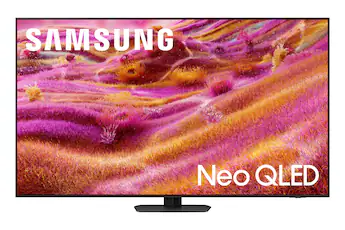
With a mini-LED backlight and Peak brightness around 2,000 nits in HDR, the QN90F is the most complete bright-room TV most people can buy. Its Ultra Viewing Angle anti-glare layer keeps reflections subtle and colors stable even when sunlight hits the screen, while the Quantum Matrix driver handles HDR highlights with authority. The main trade-off is that you get better black levels and dimming control from a high-end OLED, but for a sun-filled living room, this QLED is the best all-around performer.
Main limitation: On certain scenes, especially when small bright objects are surrounded by near-black, the local dimming can produce a faint halo or bloom effect.
Skip if: If you're a movie purist who demands perfect blacks in a light-controlled home theater, consider an OLED instead.
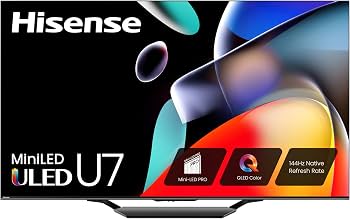
The U7N manages a claimed 1,500 nits of peak brightness and a full-array mini-LED backlight at a price many mid-range sets can't match. For sun-drenched living rooms on a budget, it delivers surprisingly solid HDR punch and an anti-reflective layer that limits (though doesn't eliminate) glare. Just don't expect high-end build quality or the strongest black levels in the lowest price tier.
Main limitation: At wider viewing angles, contrast and brightness drop noticeably, and the smaller 55-inch version appears to have a more reflective screen than larger sizes.
Skip if: If you need wall-to-wall viewing from extreme side angles or have a strict sub-$500 budget, this isn't the most bang for your buck.

LG's fifth-gen OLED evo pairs a micro-lens-array backplate with a new anti-reflective coating that remarkably cuts reflected light—earlier OLEDs were nearly unusable opposite a sunny window. Combined with up to 3,000 nits of peak brightness on HDR content, the G5 finally makes OLED viable in many bright rooms. The premium price, however, puts it out of reach for most shoppers.
Main limitation: The glossy screen still shows more reflections than the best matte QLEDs, and the wall-hugging design may require a separate stand if you're not mounting it.
Skip if: Skip this if you're budget-conscious or want a standard tabletop stand—the G5 is meant to be wall-mounted.
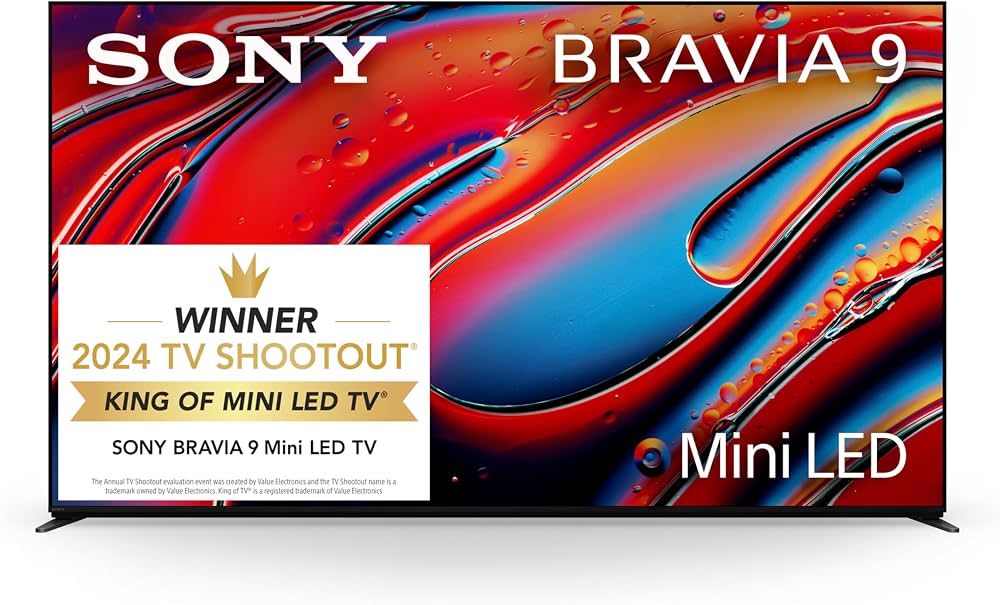
Sony's Bravia 9 uses a new XR backlight with local dimming and wide-angle layers that keep contrast and brightness stable when you're sitting at a 40-degree angle. Its good anti-glare filter and 1,800-nit peak output make it an outstanding pick for large, sun-baked living rooms with sofa seating on three sides. The main trade-off is a higher price and a slightly heavier cabinet than equivalent Samsung/TCL options.
Main limitation: Dolby Vision is not supported on the Bravia 9, and the built-in feet sit wider apart, which may not fit narrow TV stands.
Skip if: If you don't have off-axis viewers or you're on a tighter budget, the Sony Bravia 9 may be overkill.
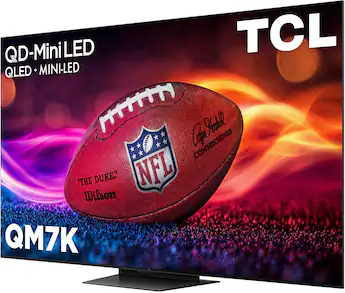
The TCL QM7 packs a full-array mini-LED backlight and around 1,200 nits of peak brightness into a sub-$1,000 package, making it the best value for a family room that gets plenty of daylight. Its matte anti-glare screen catches less reflection than most glossy QLEDs, and the Roku platform is refreshingly easy to use. The trade-off is that its dimming algorithm sometimes struggles with small bright objects in dark scenes, causing halos.
Main limitation: Local dimming handles large highlights well, but bright subtitles against a black background can produce visible light bleeding.
Skip if: If you're a stickler for flawless black levels or you need advanced gaming features like 144Hz, this TCL won't satisfy you.
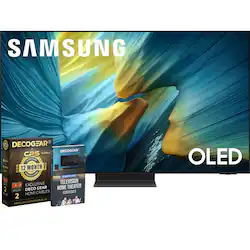
Samsung's S95F is the first QD-OLED that truly shrugs off bright-room glare—it pairs a two-panel blue OLED layer with quantum-dot color and a new anti-reflection filter. In HDR, it jumps to around 1,800 nits, giving it a fantastic blend of deep black and saturated colors that many QLEDs can't match. It's also one of the most expensive displays in this guide, and its near-infinite contrast can make lower-bitrate streams look blocky.
Main limitation: The screen has no matte finish, so direct sunbeams can still wash out bright highlights if the TV is placed opposite a window.
Skip if: Skip this unless you demand near-perfect color accuracy and you can keep direct sunlight off the screen.
Compare key specs and features of all our recommendations side-by-side
| Product | Recommendation | Rating | Price |
|---|---|---|---|
Samsung QN90F Neo QLED 4K Smart TV (2025 Model) Rank #1 | 🏆 Top Pick | 9.0/10 | $1,500–$2,500 for 55–65-inch sizes Check current price → |
Hisense U7N 4K Mini-LED Google TV (2024 Model) Rank #2 | 💰 Budget Pick | 8.2/10 | $550–$850 for 55–65-inch sizes Check current price → |
LG G5 OLED evo (2025 Model) Rank #3 | ⭐ Editor's Choice | 8.8/10 | $2,000–$3,200 for 55–65-inch sizes Check current price → |
Sony Bravia 9 Mini-LED 4K HDR (2025 Model) Rank #4 | — | 8.5/10 | $2,300–$3,800 for 55–75-inch sizes Check current price → |
TCL QM7 Series 4K HDR Mini-LED Roku TV (2025 Model) Rank #5 | — | 8.0/10 | $600–$950 for 55–65-inch sizes Check current price → |
Samsung S95F QD-OLED 4K TV (2025 Model) Rank #6 | — | 8.7/10 | $2,600–$3,600 for 55–65-inch sizes Check current price → |
Common questions buyers have about this category.
A useful rule is at least 1,000 nits of peak brightness for HDR content, and ideally over 1,500 nits if you're sitting directly opposite a window. The anti-reflective coating matters just as much, because a 600-nit TV with a good matte finish can beat a 1,800-nit glossy model in diffuse sunlight.
Not necessarily—newer OLED models like the LG G5 and Samsung S95F feature special anti-glare filters and higher peak brightness (1,800–3,000 nits) that make them reasonably usable in daylight. Standard OLEDs with 700–800 nits and glossier screens still suffer significantly, so look specifically for newer MLA or QD-OLED panels.
QLED is an LED-backlit LCD with a quantum dot color layer; Mini-LED is an LCD backlight with thousands of tiny LEDs for tighter local dimming. QD-OLED combines an OLED panel with quantum dots to deliver OLED black levels and brighter, more saturated color. For bright rooms, Mini-LED QLEDs offer the best balance of high brightness and affordable price, while QD-OLED is the premium route.
Yes. Matte or semi-glossy screens scatter and diffuse reflections so you don't see direct window images on the panel. They're particularly useful in rooms with white walls and windows. However, matte coatings can sometimes introduce a slight grainy or 'dirty screen' effect in very even-light scenes, which is why some viewers prefer premium anti-reflective glossy screens.
A typical indoor TV can be used on a covered patio if it's completely protected from rain and direct sunlight, but temperature extremes and humidity can shorten its life. For an open-air space, you'll want a dedicated outdoor television with an IP56-rated enclosure, like a SunBriteTV, which can handle direct sun and dust.
Most living rooms benefit from a 55-to-75-inch screen depending on seating distance and wall space. In a bright room, bigger is generally better—the added brightness and screen area help overcome glare. Just remember that larger panels sometimes have more reflective glass, so check the coating on the specific size or opt for a matte finish.
Absolutely. Most modern sports broadcasts are in 60 Hz or lower, but a 120 Hz panel handles motion interpolation and reduces blur, and it's essential for next-gen console gaming. Combined with high brightness and good HDR, it'll make a sun-filled room feel much more immersive for action content.
Products we evaluated but did not recommend — and why.
