Get the App
Better experience on mobile
Get the best products related to our top picks
Traveling with a baby or toddler can be challenging, but the right travel stroller makes it manageable by providing portability, ease of use, and safety without sacrificing comfort. Travel strollers are designed for on-the-go parents, folding compactly for airplanes, trains, or car trunks, while supporting quick maneuvers through airports, city streets, or vacation spots. Choosing the wrong one can lead to frustration—think heavy, bulky designs that exceed airline carry-on limits or lack essential features like UV protection for sunny outings. This guide focuses on balancing mobility with functionality, helping you avoid common pitfalls.
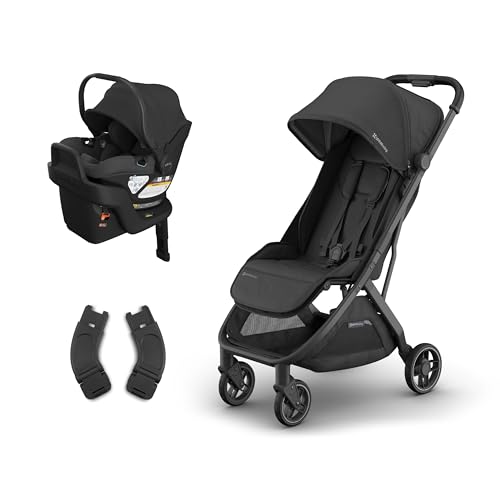
We'll compare budget-friendly options, like the affordable Gravity Folding Baby Stroller V2.0 at $179.99, which prioritizes lightweight simplicity for casual travelers, against premium travel systems such as the UPPAbaby Minu V3 Stroller + Aria V2 Infant Car Seat Combo in various colors (Jake in Charcoal, Greyson in Charcoal Mélange, Dillian + Callum in Stone Blue, and Savannah in Pearl Grey Jacquard), all priced at $989.97. The Gravity model offers one-hand folding and UV protection for everyday portability, while the UPPAbaby combos integrate a full car seat system with adapters, shields, and inserts for seamless transitions from car to stroller—ideal for frequent flyers or families needing versatility.
Budget approaches emphasize core essentials like foldability and low weight to keep costs down, often suiting short trips or older toddlers. Premium options, however, deliver superior build quality, expandability (e.g., car seat compatibility from infancy), and extras like bug shields, justifying the investment for long-term use or newborns. From this guide, you'll learn key features to evaluate, price-performance trade-offs, and tailored recommendations. By the end, you'll know which stroller fits your lifestyle—whether you're a solo parent navigating urban adventures or a couple planning international getaways—based on real specs like weight (under 15 lbs for most travel models) and fold dimensions (under 20 inches for carry-ons). (Word count: 278)
Selecting a travel stroller involves assessing your travel frequency, child's age, and storage needs. Prioritize models certified for airline use (e.g., under 22 lbs and folding to carry-on size) and check compatibility with your existing gear. Focus on durability for rough terrain like cobblestone paths, while ensuring safety standards like JPMA certification.
Weight and Foldability: Aim for under 15 lbs for easy carrying; one-hand folding (like the Gravity V2.0's automatic mechanism) saves time at gates. Compare folded dimensions—e.g., 20x18x8 inches fits most overhead bins.
Seat Recline and Adjustability: Full recline supports newborns (up to 180 degrees), while adjustable backrests (as in the Gravity) accommodate toddlers up to 50 lbs. Look for multi-position options to match nap times.
Canopy and UV Protection: UPF 50+ coverage is essential for outdoor travel; the Gravity's extendable canopy blocks 99% UV rays, outperforming basic shades.
Car Seat Compatibility: Travel systems like the UPPAbaby Minu V3 include adapters for direct attachment, allowing click-in from infant car seats (birth to 35 lbs). Standalone strollers may need separate adapters, adding cost.
Storage and Accessories: Basket capacity (at least 10 lbs) holds diapers and bottles. Premium kits like UPPAbaby's (with rain shields, bug nets, foot covers, and bases) enhance all-weather use versus basic models.
Maneuverability and Suspension: All-wheel suspension handles uneven surfaces; test wheel size (larger for better roll) and swivel front wheels for tight spaces like elevators.
Age/Weight Limits: Most support 6 months to 50 lbs, but systems like UPPAbaby start from birth with car seats, extending usability to 4 years.
Travel strollers span $100-$1,000, with tiers reflecting features and longevity. Entry-level ($100-200) like the Gravity V2.0 offers basics: 13-lb weight, one-hand fold, and UV canopy for occasional trips, but lacks car seat integration. Mid-range ($200-600) adds better suspension and storage, suiting weekly commuters. Premium ($600+) such as the UPPAbaby combos ($989.97) bundle a stroller (15.5 lbs, compact fold) with an Aria V2 car seat (4 lbs base), adapters, and shields—providing newborn-to-toddler versatility. At this price, you get GREENGUARD Gold certification for low emissions and a 3-year warranty, versus 1-year on budgets. Factor in extras: budgets may require $50-100 add-ons for rain covers, while premiums include them. For value, low-end saves upfront but may need replacement sooner; high-end amortizes over years via durability.
The sweet spot lies in mid-premium for most families—around $400-700—balancing portability with features, but our selection highlights extremes. The Gravity V2.0 ($179.99) excels in performance-per-dollar: its 13-lb frame and 12x22x33-inch fold rival pricier models for urban travel, scoring high on ease (one-hand fold in 3 seconds) without frills. However, it skips car seat compatibility, limiting newborn use. UPPAbaby Minu V3 combos ($989.97) justify the premium through seamless integration—stroller folds to 11.25x21.75x33 inches with seat attached, and the 7-lb car seat (plus 7-lb base) meets FAA standards for in-flight use. Performance shines in longevity (up to 50 lbs stroller, 35 lbs seat) and accessories, but the cost triples the Gravity for families not needing the full system. Overall, if travel involves driving/flying with infants, UPPAbaby's ecosystem outperforms; for toddlers on foot, Gravity delivers 80% of the utility at 18% of the price. Test in-store for feel—UPPAbaby's leatherette handles add luxury, but Gravity's fabric is lighter.
Overlooking Airline Restrictions: Many assume all strollers gate-check free, but verify sizes—e.g., UPPAbaby's fold fits Delta/United carry-ons, while bulkier ones incur fees.
Ignoring Child's Age/Size: Budget models like Gravity suit 6+ months; buying for newborns without recline or car seat adapters leads to unsafe hacks.
Neglecting Terrain Testing: Smooth wheels on premiums handle airports, but test suspension—Gravity's basic setup struggles on gravel versus UPPAbaby's all-terrain.
Skipping Accessory Compatibility: Don't buy standalone without checking add-ons; UPPAbaby's kit is inclusive, but Gravity users may pay extra for UV extensions.
Focusing Solely on Price: Cheapest isn't best—low-end fabrics fade faster; invest in warranties (UPPAbaby's covers defects comprehensively).
Gravity Folding Baby Stroller V2.0: Best for budget-conscious parents of toddlers (6 months-4 years) on light travel. At $179.99, its 13-lb weight and automatic fold make it ultra-portable for city walks or short flights, ideal for solo travelers avoiding bulk.
UPPAbaby Minu V3 + Aria V2 Combo (Jake in Charcoal): Top premium pick for new parents needing a complete system from birth. The $989.97 bundle's car seat integration and accessories suit frequent drivers/flyers, perfect for families prioritizing safety and convenience on long trips.
UPPAbaby Minu V3 + Aria V2 Combo (Savannah in Pearl Grey Jacquard): Great for style-focused couples with infants. Same robust features as above, but the neutral jacquard fabric appeals to those wanting a chic, versatile look for urban or resort travel without sacrificing performance. (Word count: 742)
Most travel strollers, including the ones reviewed, cater to infants and toddlers, but specifics vary. The Gravity Folding Baby Stroller V2.0 is suitable from 6 months to 50 lbs (about 4 years), with its adjustable backrest supporting upright to full recline positions—ideal for older babies but not newborns without additional inserts. In contrast, the UPPAbaby Minu V3 + Aria V2 combos start from birth thanks to the Aria car seat (4-35 lbs, rear-facing) and included infant insert, transitioning seamlessly to the stroller seat up to 50 lbs. Always check height limits (typically 40-44 inches) to ensure safety; for premature babies, consult pediatric guidelines on harness fit. These models meet JPMA standards, but verify with your child's growth chart for long-term use.
Portability is a hallmark of travel strollers, with all options designed for gates or carry-ons. The Gravity V2.0 shines here at 13 lbs and folding to 20x18x8 inches in one hand, easily fitting most airline overhead bins (e.g., under American Airlines' 22x14x9-inch limit) and qualifying for free gate-checking. The UPPAbaby Minu V3 folds to 11.25x21.75x33 inches (15.5 lbs stroller alone), which is carry-on compliant on major carriers like Delta, and the Aria car seat is FAA-approved for in-flight use with the base removed. However, the full combo weighs 22+ lbs, so detach the seat for lighter carry. Both include shoulder straps for backpack-style transport. Tip: Measure against your airline's policy—Southwest allows strollers up to 50 lbs free—and pack a travel bag to protect fabrics.
The core difference is scope: Gravity V2.0 is a standalone toddler stroller ($179.99) focused on simplicity—lightweight (13 lbs), automatic fold, UV canopy, and basic storage—perfect for 6+ months without extras. UPPAbaby Minu V3 + Aria V2 ($989.97) is a full travel system, bundling a versatile stroller with a newborn car seat, adapters, base, foot cover, bug/rain shields, and insert for birth-to-50 lbs use. UPPAbaby offers better suspension