Get the App
Better experience on mobile
We've sorted through the year's top travel backpacks to help you find the right balance of comfort, organization, and carry-on convenience.
The best travel backpack is the one that becomes invisible to you — the one that fits in the overhead bin without a fight and carries its weight without digging into your shoulders. But in a market saturated with 35L to 45L options, 'invisible' is harder to find than you think. Manufacturers love to boast about capacity and pockets, but the real test is how a pack performs in the chaotic, cramped world of modern travel.
A poorly designed travel pack can turn a dream trip into a daily frustration, from broken zippers to backaches. The best packs make moving through airports, train stations, and cobblestone streets feel effortless. They also unpack smoothly at the hotel, keeping your gear organized and accessible. That's why we didn't just look at specs — we pored over expert reviews, user feedback, and manufacturer documentation to see which packs hold up in the field.
Our criteria were simple: carry-on compliance (does it fit airline sizers?), harness comfort (can it handle a loaded 30-pound carry?), organization (is it easy to find your laptop?), and durability (will it survive a year of travel?). We also considered value, because a $300 pack is only worth it if it genuinely outperforms a $160 option. We came away with seven picks that cover the spectrum — from budget-friendly duffel hybrids to premium modular systems.
Whether you're a weekend wanderer, a one-bag minimalist, or a remote worker hopping between cities, there's a travel backpack here that fits your style. We've flagged the trade-offs honestly, so you know exactly what you're giving up when you make your choice.
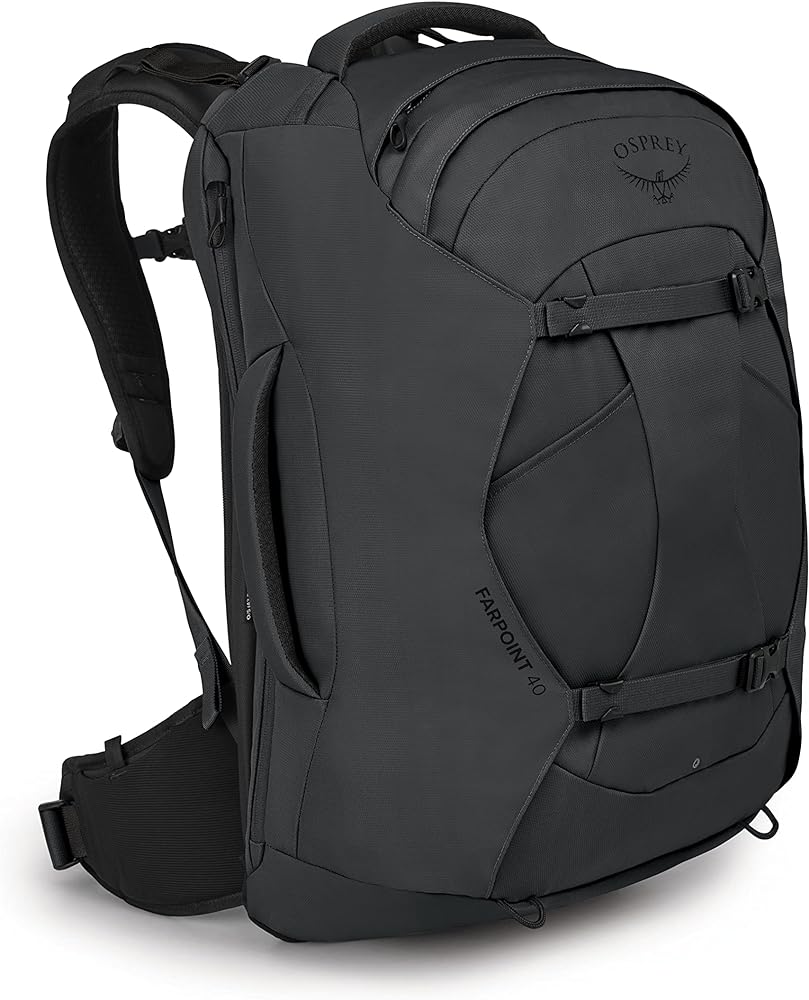
The Osprey Farpoint 40 is the gold standard for carry-on travel backpacks, offering a comfortable suspension system, a clamshell opening that packs like a suitcase, and a removable daypack-style hip belt. It fits most major airlines’ carry-on restrictions, making it a reliable one-bag choice for trips from a long weekend to several weeks. The trade-off is a thin laptop sleeve and limited external organization, which may frustrate quick-grab travelers.
Main limitation: The laptop compartment is basic and sits against your back, which can create pressure points when the bag is fully loaded.
Skip if: Anyone who needs quick access to a dedicated laptop from an side zip, or who packs dense camera gear, should look elsewhere.
The REI Co-op Ruckpack 40 delivers a durable, carry-on-friendly pack at half the price of premium competitors, with a well-ventilated back panel and a stuffable hip belt for lighter loads. Its simple, clamshell design keeps packing straightforward, and the exterior pockets offer enough organization for most travelers. The main trade-off is a less refined harness and minimal weather resistance, making it better suited for urban trips than heavy backcountry trekking.
Main limitation: The fabric is treated with a water-resistant finish that won't stand up to a downpour, and the shoulder straps are lightly padded for heavy loads.
Skip if: Long-haul travelers who plan to consistently carry 30+ pounds should invest in a pack with a more robust suspension.
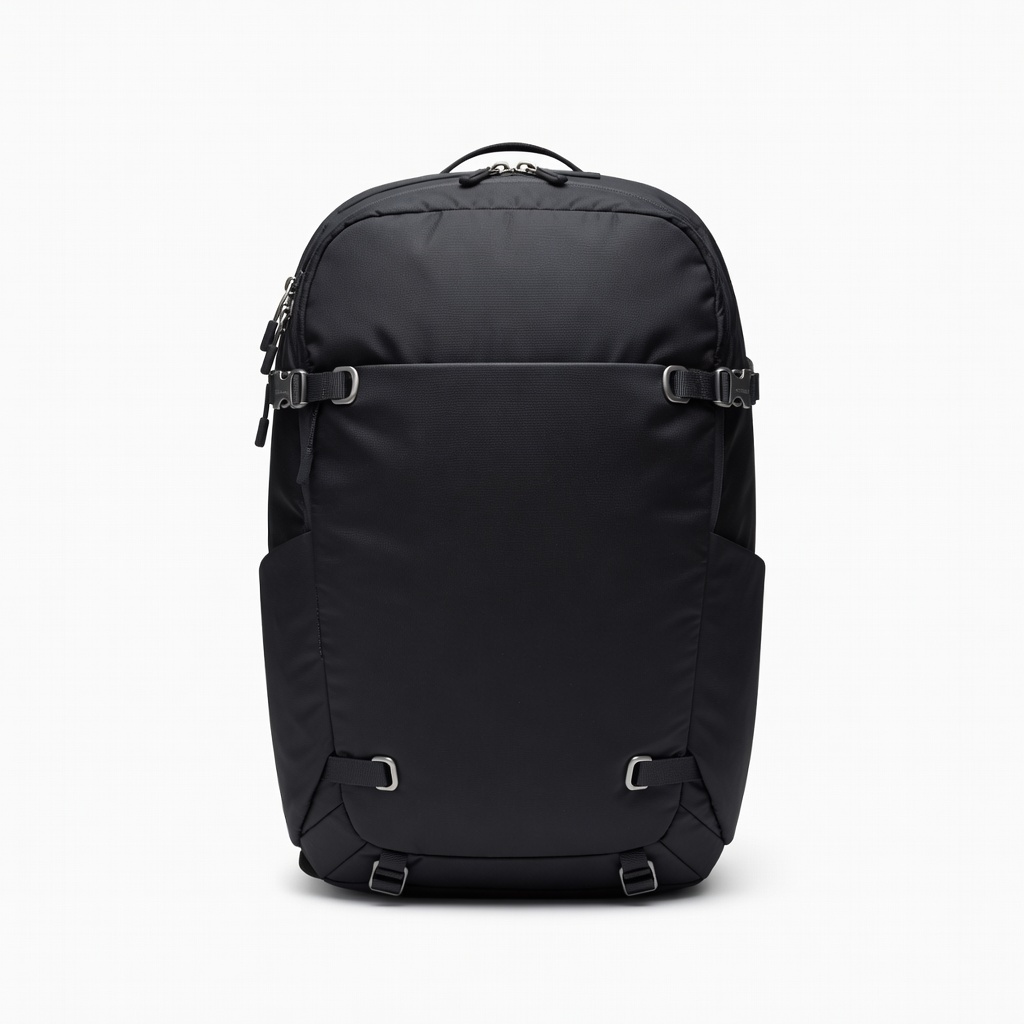
The Peak Design Travel Backpack expands and compresses between 35L and 45L, letting you adjust capacity to your itinerary, and its suitcase-style opening with fold-out dividers works beautifully with the brand's packing cubes. The entire panel loads from the back, making it easy to access gear at the airport or from a car trunk. Its weatherproof shell and magnetic buckles are polished, but the price is steep and the bag's structure makes it heavy even when empty.
Main limitation: At just over 4.5 pounds, this pack is heavier than many competitors, and the sternum strap can feel restrictive when fully loaded.
Skip if: Ultralight travelers who count every ounce should skip the Peak Design; the weight penalty isn't worth it unless you need the camera-cube compatibility.
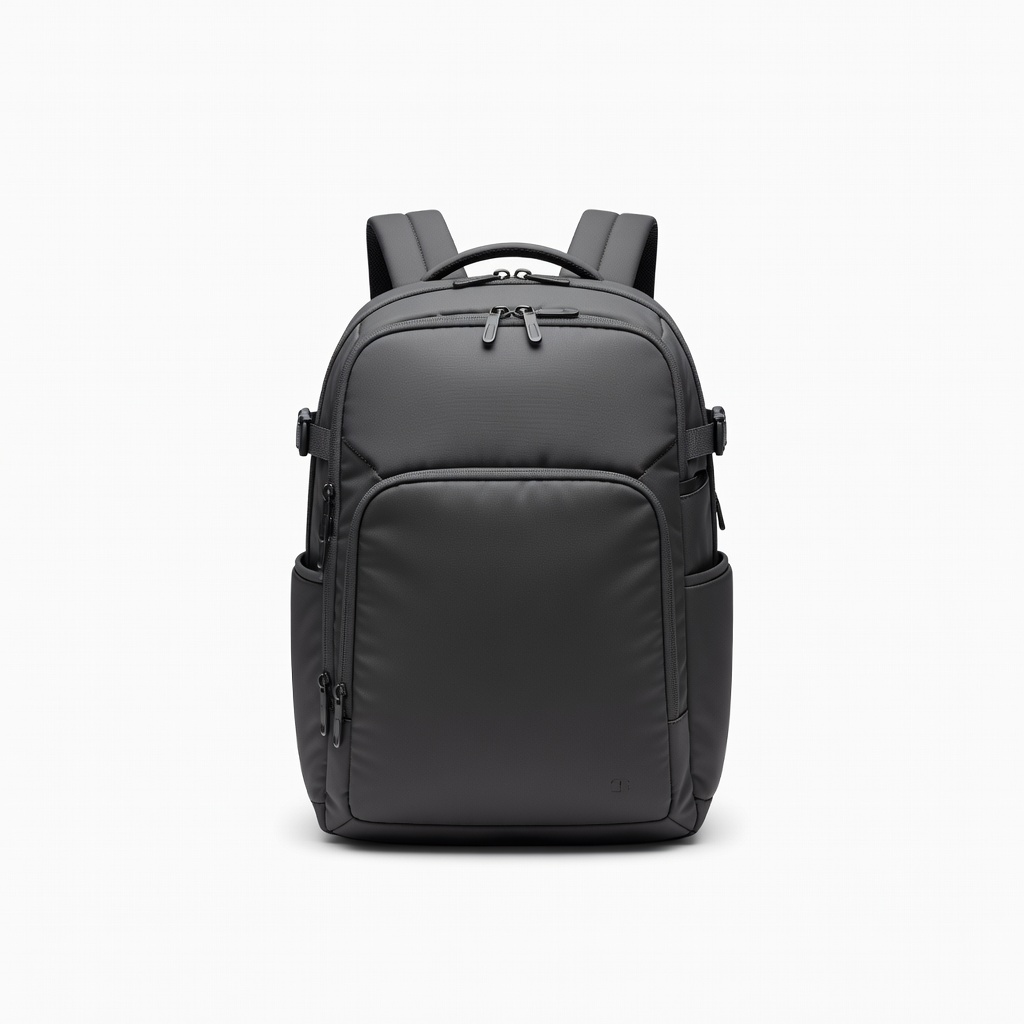
The Aer Travel Pack 3 looks like a sleek urban backpack, but it's built for travel with a dedicated 16-inch laptop compartment, a suspended sleeve that protects your device, and a clamshell opening that lays flat for packing. Its 35L capacity is a smart middle-ground for daily office carry and weekend getaways, and the water-resistant exterior handles commuter weather. The trade-off is that it's not quite carry-on sized for some budget airlines, and the interior pockets are tighter when the bag is full.
Main limitation: The 35L capacity is smaller than most dedicated travel bags, and the sleek nylon fabric scuffs more easily than ballistic options.
Skip if: Travelers who overpack or need a strict 40L+ capacity for long trips will find the Aer too restrictive.
The Nomatic Travel Backpack 40L is a tangle-free organizer with over a dozen pockets, a dedicated laptop sleeve, and a passport pocket that's all neatly packed into a stylish, waterproof shell. It expands from 30L to 40L via a zipper, giving you flexibility for light and heavy trips. That much organization comes with a learning curve, and the tight main compartment can make packing larger items tricky.
Main limitation: The many pockets and dividers shrink effective packing space, and the 30L base capacity may feel cramped for bulky clothing.
Skip if: Minimalists who prefer a single open bin will find the Nomatic's compartmentalization overwhelming and inefficient.
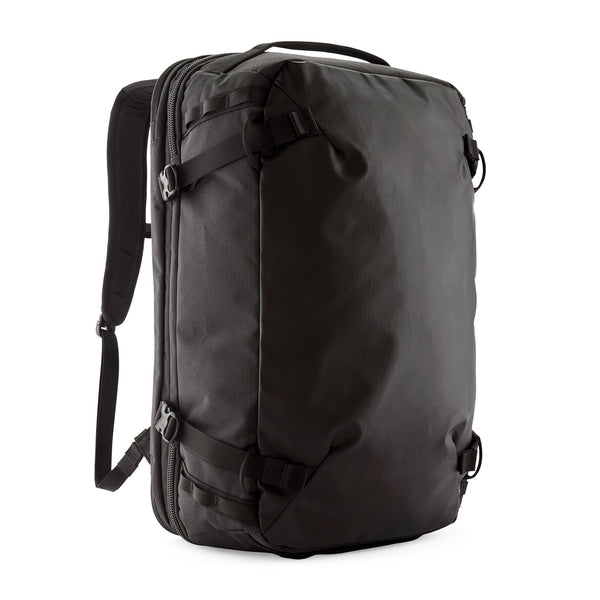
The Patagonia Black Hole MLC (Maximum Legal Carry-On) is a 45L hybrid that opens like a duffel and carries like a backpack, with padded shoulder straps that stow away when you're checking in or using it as a suitcase. Its weatherproof TPU-coated fabric shrugs off rain, and the simple, rugged design has minimal fuss. The trade-off is a less structured back panel and no dedicated laptop sleeve in the main compartment, so a padded case is essential.
Main limitation: The shoulder straps are not as padded as dedicated backpacks, and the pack's top-loading duffel entry makes it hard to organize smaller items.
Skip if: Anyone who needs a comfortable carry for heavy loads over long distances, or who wants a dedicated laptop compartment, should look at a more structured travel pack.
The Cotopaxi Allpa 42 is a colorful, well-organized travel pack with a clamshell opening, a padded laptop sleeve, and a hip belt that stows neatly — it's ideal for long weekends and short jaunts. The 42L capacity fits a surprising amount, and the TPU-coated polyester is highly weather-resistant. The trade-off is that the pack's boxy shape and bright colors may not appeal to those seeking a professional or understated look.
Main limitation: The fully packed 42L can push the limits of some airline carry-on sizers, and the top handle is less comfortable for quick lifts.
Skip if: Travelers who need a sleek, office-friendly pack or who frequently fly with strict budget airlines should choose a smaller or more low-profile option.
Compare key specs and features of all our recommendations side-by-side
| Product | Recommendation | Rating | Price |
|---|---|---|---|
Osprey Farpoint 40 Travel Backpack Rank #1 | 🏆 Top Pick | 9.0/10 | $270–$290 Check current price → |
REI Co-op Ruckpack 40 Travel Backpack Rank #2 | 💰 Budget Pick | 8.0/10 | $159–$180 Check current price → |
Peak Design Travel Backpack 45L Rank #3 | ⭐ Editor's Choice | 8.5/10 | $299–$349 Check current price → |
Aer Travel Pack 3 Rank #4 | — | 8.5/10 | $249–$270 Check current price → |
Nomatic Travel Backpack 40L Rank #5 | — | 8.0/10 | $299–$329 Check current price → |
**Patagonia Black Hole MLC 45L** Rank #6 | — | 8.0/10 | $249–$280 Check current price → |
Cotopaxi Allpa 42 Travel Backpack Rank #7 | — | 7.5/10 | $219–$240 Check current price → |
Common questions buyers have about this category.
Most major airlines enforce a carry-on size limit of approximately 22 x 14 x 9 inches (56 x 36 x 23 cm), including wheels and handles. A 40–45L travel backpack typically falls within this range when not overstuffed, but budget carriers like Ryanair and Spirit have stricter limits—often around 18 x 14 x 8 inches. Always check your airline's specific dimensions before flying, and consider a pack that can compress or a separate personal-item bag for strict routes.
A hip belt is crucial if you plan to carry your pack for long distances or with loads over 15–20 pounds. It transfers weight from your shoulders to your hips, preventing strain and fatigue. For urban travel where you'll be setting the bag down frequently, a removable or stowable hip belt offers the best of both worlds—you can tuck it away when it's not needed and use it on longer treks. If you're only moving from taxi to hotel, a minimal belt may be fine.
Look for packs with lockable zippers (either with small padlocks or built-in locking sliders) and RFID-blocking pockets for passports and credit cards. When moving through crowded areas, keep the bag on your front or use a wire mesh lock for the zipper pulls. Avoid packing valuables in easily accessible exterior pockets, and consider a pack with hidden compartments near your back. For peace of mind, always keep your bag within sight in overhead bins and attach a TSA-approved lock if you're checking it.
Start with heavy, dense items (like shoes or a toiletry kit) closest to your back, near the middle of the pack, to keep the center of gravity stable. Use packing cubes to compress clothing and separate dirty items, and roll your clothes instead of folding to save space. Place your laptop in the dedicated sleeve last, and keep any items you need during the flight—like a book or headphones—in exterior quick-access pockets. Avoid overstuffing, as it makes the pack harder to carry and can strain zippers.
Many travel backpacks are too large for comfortable day-use, but some hybrids (like the Aer Travel Pack 3) double as commuter bags. If you want a single bag for both purposes, choose a 30–35L model with a well-designed laptop compartment and minimal bulk. Otherwise, it's worth packing a lightweight packable daypack (weighing under 1 pound) inside your main travel backpack for excursions. That way, you leave the big bag at the hotel and walk light.
Budget options from brands like REI start around $150 and offer decent durability and comfort for occasional travelers. Mid-range packs from $200–$300 (Osprey, Cotopaxi, Patagonia) provide better harnesses, weather resistance, and organization, making them a good long-term investment. Premium packs over $300 (Peak Design, Nomatic) add modular organization and polished details, but you're paying for brand features and aesthetics. Ultimately, buy the best harness and build quality you can afford—it's cheaper than buying a second bag in a year.
Not necessarily—40L is the sweet spot for one-bag travelers who plan to carry everything for trips of two weeks or more. However, if you're a light packer who sticks to weekends, a 30–35L pack will be easier to fit overhead and less heavy on your back. For long-term travel, 40L forces you to be disciplined, but it's manageable if you use packing cubes and do laundry on the road. Just verify your airline's size limits, as some budget carriers reject 40L bags at the gate.
Products we evaluated but did not recommend — and why.
