Get the App
Better experience on mobile
Get the best products related to our top picks
Tankless water heaters, also known as on-demand water heaters, have revolutionized hot water delivery by heating water directly as it flows through the unit, eliminating the need for storage tanks. This design provides endless hot water supply without the energy waste of keeping a tank heated 24/7, making them ideal for energy efficiency, space savings, and consistent performance. Choosing the right one matters because mismatched units can lead to inadequate hot water for your needs, higher energy bills, or safety issues like overheating or improper venting. For instance, in small setups like RVs, cabins, or point-of-use applications such as kitchen sinks, a poorly selected heater might struggle with flow rates below 1.5 GPM, resulting in lukewarm water during peak use.
In this guide, we compare budget-friendly options under $50, which are typically compact electric models suited for light-duty tasks like handwashing or small appliances, against more robust propane-powered units in the $150-180 range. These propane models offer higher flow rates and portability for outdoor or off-grid scenarios but require fuel management and venting. Budget picks prioritize affordability and ease of installation but may lack power for multiple outlets, while premium (in this range) propane heaters provide better temperature control and durability for demanding uses like camping showers.
Readers will learn key features to evaluate, such as flow rate (GPM), power source, safety mechanisms, and installation requirements; budget breakdowns to match spending with needs; performance analyses to find value sweet spots; and common pitfalls to avoid. We'll review five specific models: the GASLAND Outdoors Tankless Water Heater Propane 1.58GPM in White ($169.99), Blue ($179.99), and Red ($169.99) variants; the Electric Tankless Water Heater 110V 4000W ($38.99); and the 3000W Instant Electric Water Heater ($49.99). By the end, you'll have the tools to select a heater that fits your lifestyle, whether for RV adventures, home point-of-use, or portable camping setups, ensuring reliable hot water without unnecessary costs. (Word count: 278)
Selecting a tankless water heater involves assessing your usage scenario—whether it's for a single sink, RV shower, or cabin setup—and matching it to the unit's specs. These models are primarily portable or point-of-use, not whole-house systems, so focus on flow capacity for 1-2 outlets. Prioritize units with CSA or ETL certifications for safety, and consider your power source: electric for simplicity (plugs into standard outlets) or propane for off-grid power without electricity draw.
Fuel Type (Electric vs. Propane): Electric models like the 110V 4000W unit use household power, ideal for indoor, low-flow needs without venting. Propane versions, such as the GASLAND 1.58GPM models, burn gas for higher output but require a propane tank and exhaust venting to avoid carbon monoxide risks. Electric is easier for beginners; propane suits remote locations.
Flow Rate (GPM): Measured in gallons per minute, this determines simultaneous hot water uses. The GASLAND propane heaters deliver 1.58 GPM, enough for a shower or sink at 37-104°F rise. Electric options like the 4000W model handle about 0.5-1 GPM, fine for one faucet but not multi-tasking. Aim for at least 1 GPM for versatility.
Temperature Range and Control: Look for adjustable settings; the 3000W electric offers 68-126°F via touch/remote, while GASLAND propanes hit up to 131°F with manual knobs. Digital displays on electrics provide precision, reducing scalding risks compared to analog propane controls.
Safety Features: Overheating protection is standard in all reviewed models, but check for flameout sensors (propane) or dry-fire prevention (electric). GASLAND units include anti-freeze and auto-ignition; electrics add IPX4 waterproofing for bathroom use.
Installation and Portability: Wall-mounted electrics install in minutes with basic tools. Propane models need hose connections and venting kits (often included). All are compact (under 15 lbs), but GASLAND's portable design shines for RVs with carry handles.
Power/Wattage and Efficiency: Electrics range 3000-4000W, drawing 25-35A—verify circuit capacity. Propane efficiency is 80-85%, using 20,000 BTU for quick heating without grid reliance. Energy Star ratings are rare in portables, but low standby loss is key.
Build Quality and Accessories: Stainless steel heat exchangers in GASLAND prevent corrosion; electrics use copper elements. Included remotes, batteries, or showerheads add value—e.g., the Blue GASLAND comes with a full kit.
In the $38.99-$179.99 range, tiers break down as follows:
Under $50 (Entry-Level Electric): Models like the $38.99 110V 4000W and $49.99 3000W offer basic instant heating for point-of-use. You get digital controls and safety features, but limited to 0.5-1 GPM and single-outlet use. Ideal for apartments or supplemental sinks, saving 20-30% on energy vs. tank models, but expect shorter lifespans (3-5 years) due to basic components.
$150-$180 (Mid-Range Propane Portables): The GASLAND series provides 1.58 GPM for showers, portability for camping/RVs, and robust builds. At this price, you gain higher BTU output, included accessories (e.g., hoses, regulators), and better durability (5-8 years). They cost more upfront but reduce fuel bills in off-grid setups by efficient on-demand operation.
No true "premium" here exceeds $180, as these are niche portables. Factor in extras: propane tanks ($20-50) or electrical upgrades ($100+). Overall, budget electrics suit urban/light use; propane justifies cost for mobility.
The sweet spot lies in balancing output with cost—propane GASLAND models at $169.99-$179.99 deliver the best value for performance, offering 1.58 GPM that handles a 5-minute shower at 105°F from 50°F inlet water, outperforming electrics' 0.8 GPM max. For $40-50, electrics provide quick 86-131°F heat for sinks but falter under demand, dropping to 90°F. If your need is occasional (e.g., cabin handwashing), the $38.99 electric edges out on savings; for reliable RV use, propane's higher flow justifies 4x the price via endless supply without recharges. Efficiency-wise, propane saves $50/year in energy for heavy users, per DOE estimates, making it a performance winner despite initial cost.
Ignoring Fuel Compatibility: Buying propane without a tank or venting leads to hazards; electrics overload weak circuits, tripping breakers.
Undersizing Flow Rate: A 0.5 GPM electric won't suffice for showers—calculate needs (e.g., 2 GPM for bath) to avoid cold surprises.
Neglecting Installation Site: Propane requires outdoor/vented spaces; indoor electrics need GFCI outlets. Skipping this risks moisture damage or CO poisoning.
Overlooking Maintenance: Forgetting annual descaling in hard water areas shortens life—propane needs filter checks, electrics element cleaning.
Assuming Whole-House Capability: These portables are for 1-2 points; mistaking them for home systems causes inconsistent heat.
Our top pick is the GASLAND Outdoors Propane Tankless Water Heater Blue ($179.99), best for RV/camping enthusiasts needing portable 1.58 GPM power with full accessories—ideal for off-grid showers.
Runner-up: GASLAND White ($169.99), for budget-conscious cabin users wanting reliable propane without extras, suiting basic outdoor setups.
Third: Electric Tankless Water Heater 110V 4000W ($38.99), perfect for apartment dwellers or kitchen sinks seeking affordable, plug-and-play electric heat for light tasks. (Word count: 712)
Electric models, like the 110V 4000W ($38.99) or 3000W ($49.99) units, plug into standard outlets and heat via resistance elements, offering simplicity for indoor, low-flow (0.5-1 GPM) uses such as sinks. They require no fuel storage but draw significant amperage (25-35A), potentially needing electrical upgrades, and perform best with warm inlets (above 50°F). Propane versions, such as the GASLAND 1.58GPM series ($169.99-$179.99), use a burner for higher output (1.58 GPM), ideal for showers in RVs or cabins, providing off-grid independence with 20,000 BTU efficiency. However, they need a propane tank (5-20 lbs), venting to exhaust fumes, and initial setup for regulators. Electrics are cheaper and easier to install but limited in power; propane excels in portability and flow but adds $20-50/year in fuel costs. Choose electric for urban convenience, propane for mobility.
No, the reviewed models are portable or point-of-use designs, not sized for entire homes. With flows of 0.5-1.58 GPM, they support 1-2 outlets max, like a single shower or kitchen, per ASHRAE standards requiring 5+ GPM for households. The GASLAND propanes handle RV/cabin demands but


Compare key specs and features of all our recommendations side-by-side
| Product | Recommendation | Rating | Price |
|---|---|---|---|
 GASLAND Outdoors Tankless Water Heater Propane 1.58GPM, Overheating Protection, Easy to Install, Use for RV Cabin Barn Camping Boat, White Rank #1 | 🏆 Top Pick | — | |
 GASLAND Outdoors Propane Tankless Water Heater,1.58GPM 6L Portable Gas Water Heater, Overheating Protection, Easy to Install, Use for RV Cabin Barn Camping Boat, Blue Rank #2 | — | ||
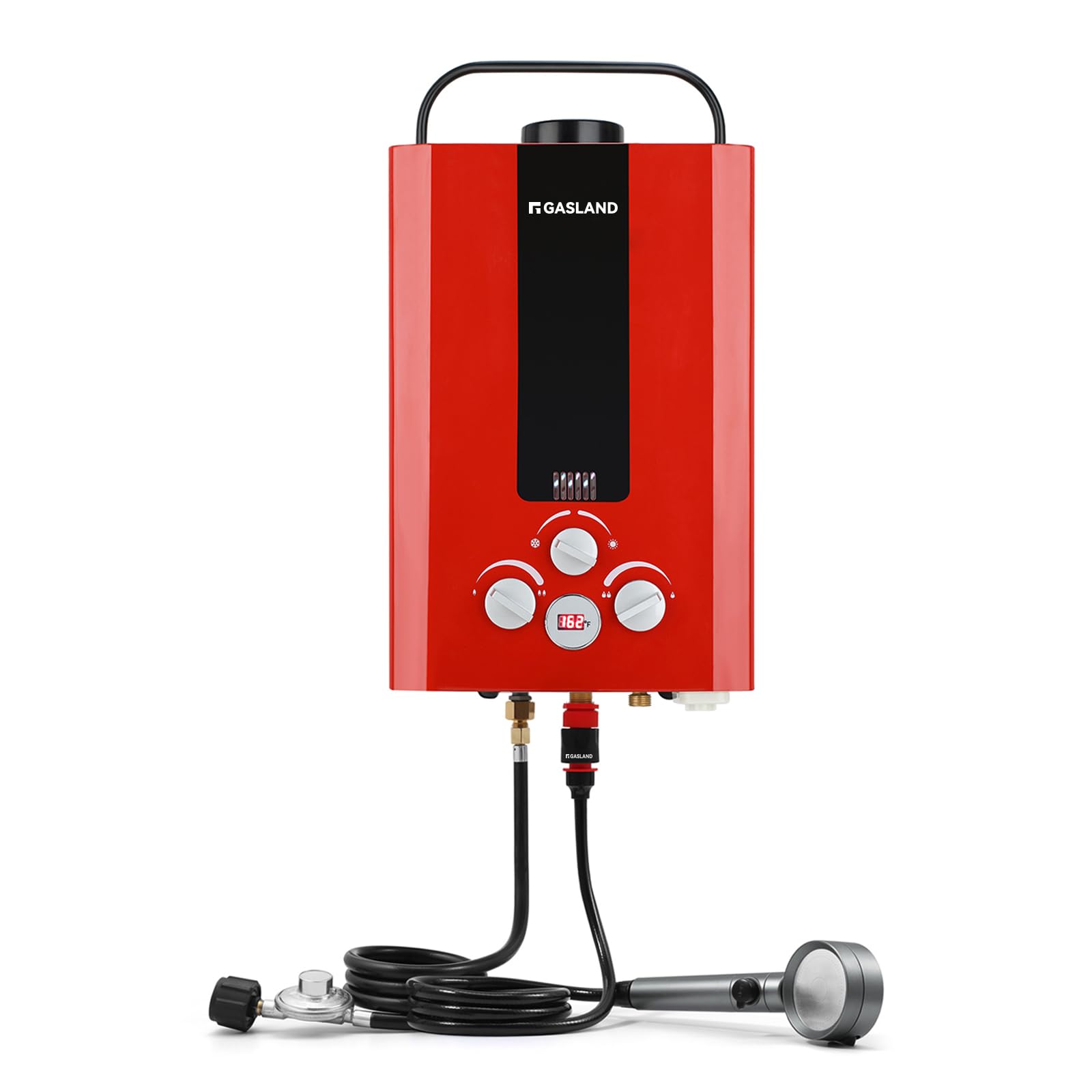 GASLAND Outdoors Tankless Water Heater Propane,1.58GPM 6L Portable Gas Water Heater, Overheating Protection, Easy to Install, for RV Cabin Barn Camping Boat, Red Rank #3 | — | — | |
 Electric Tankless Water Heater, 110V 4000W Instant On-Demand Hot Water System with Digital Display & Remote Control 86-131℉ Constant Temperature for Kitchen Laundry Sink Bathroom Rank #4 | — | — | |
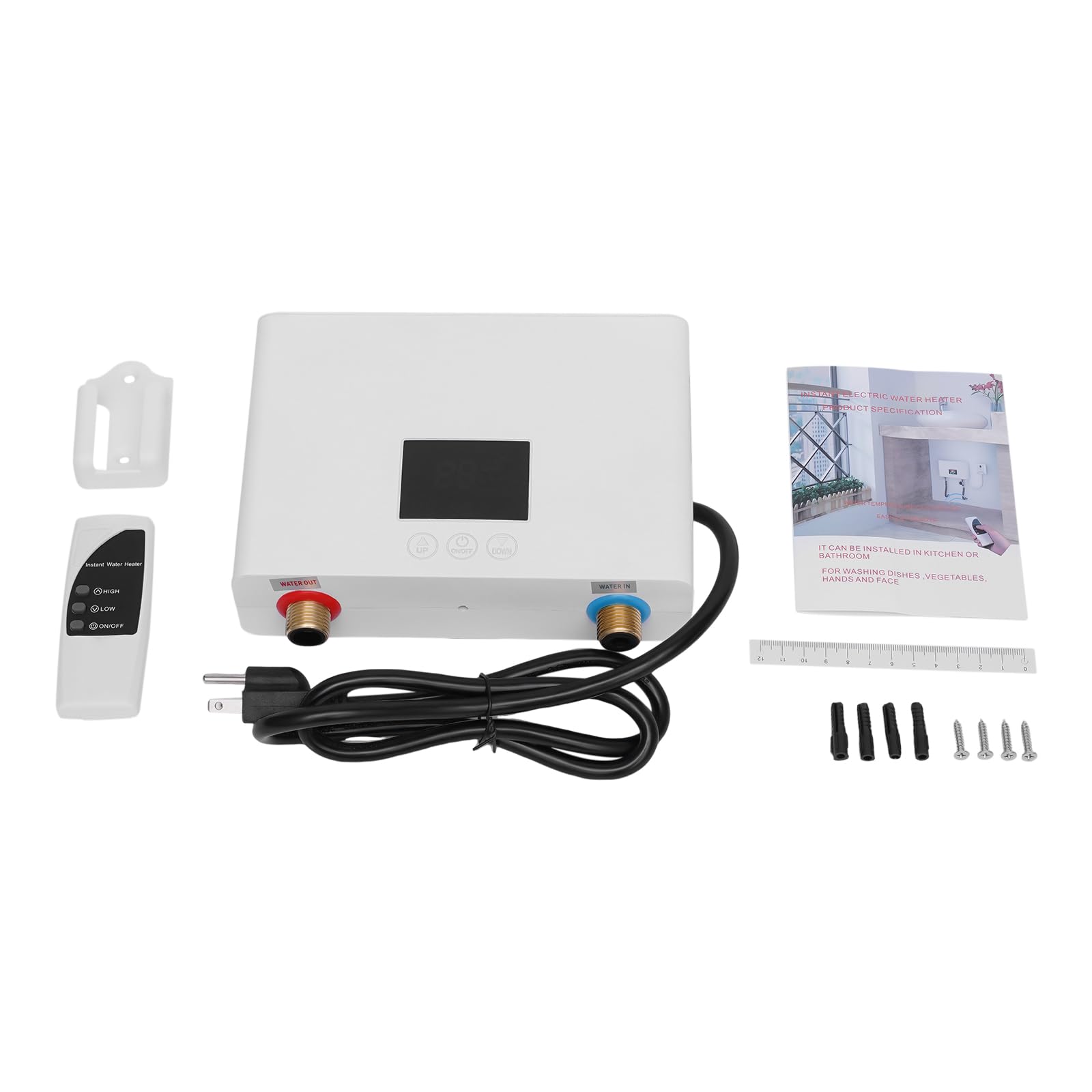 3000W Instant Electric Water Heater – Tankless Hot Water Heater with Remote/Touch Control (68-126℉), IPX4 Waterproof Wall-Mounted for Kitchen/Bathroom Rank #5 | 💰 Budget Pick | — |
