Get the App
Better experience on mobile
From a $110 hardside spinner with a 10-year warranty to a $1,500 aluminum icon, here's what's actually worth buying — and the trade-off behind each pick.
Ask someone whose suitcase failed mid-trip what broke, and the answer is almost never the shell. It's the wheels, the telescoping handle, or the zipper — the three components that decide whether a bag survives five years of baggage handlers or five trips. That's why a $130 polycarbonate case from a brand with a 10-year warranty often outlasts a $400 bag from a fashion label that publishes no warranty terms at all.
Luggage is one of the few purchases where the specs that matter are boring and measurable: shell material, wheel type, empty weight, warranty length, and exact external dimensions. Those numbers — not the marketing copy — determine whether your bag fits an overhead bin, whether you get hit with a gate-check fee, and whether a cracked wheel means a $20 repair or a whole new suitcase. Airlines also treat damage claims very differently depending on whether the issue is a broken wheel (often covered) or a scuffed shell (almost never covered).
This guide covers seven suitcases spanning roughly $110 to $1,600: a budget hardside spinner with an unusually long warranty, a softside carry-on built on the same design DNA flight crews buy for themselves, a lifetime-warranty workhorse, an organization-focused roller for overpackers, a lightweight checked bag for weight-limited airlines, and a German-engineered aluminum icon that holds its value better than almost anything else in the category.
Every pick below comes with the trade-off you're accepting, because in this category there is no bag that wins on weight, protection, capacity, and price simultaneously. Our analysis draws on manufacturer documentation, published expert reviews, and aggregated verified buyer feedback — not first-party lab testing — so treat the ratings as editorial judgment about value and fit, not measured performance results.
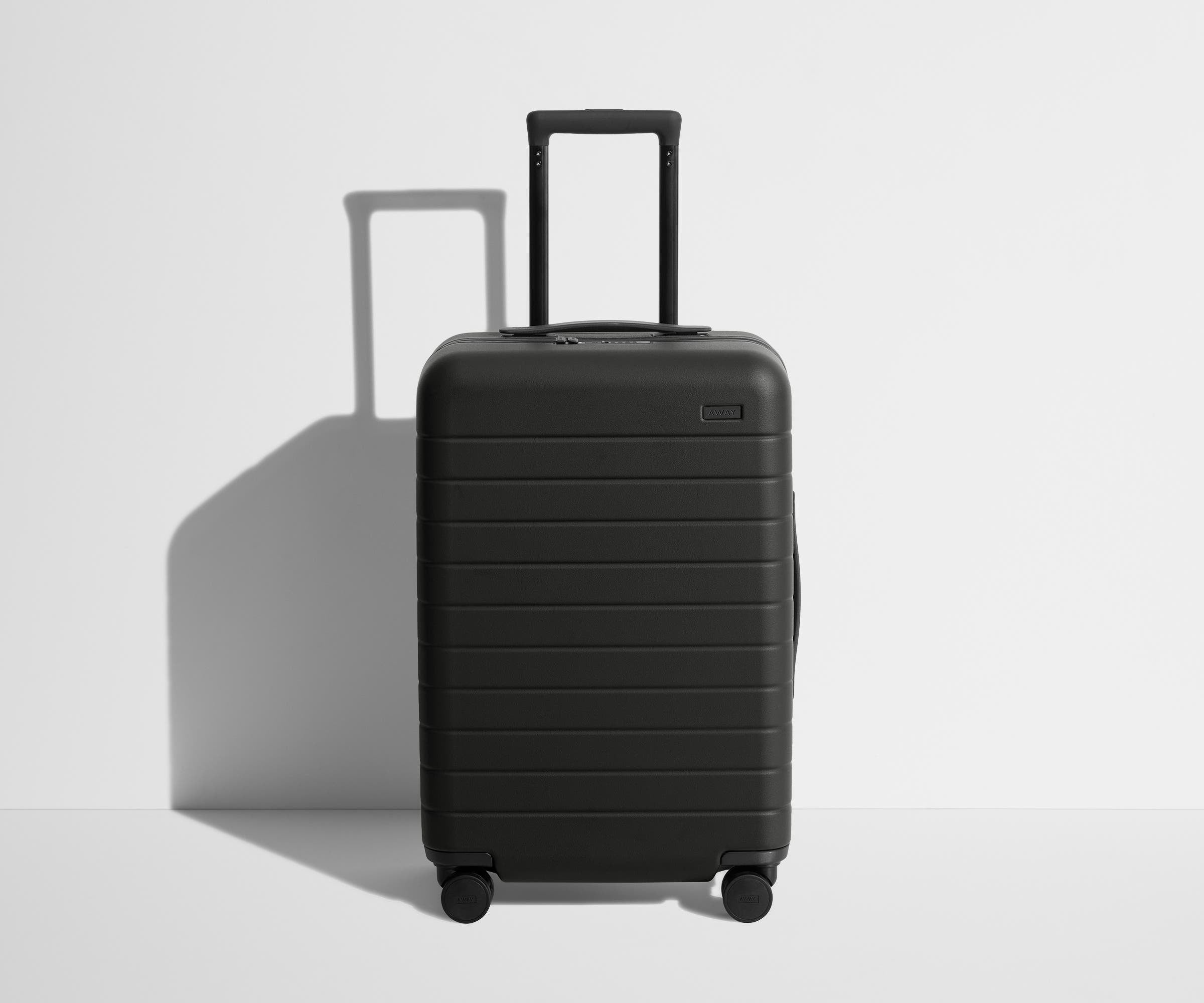
Away's Bigger Carry-On nails the middle of the market: a polycarbonate hard shell, smooth 360-degree spinner wheels, a built-in TSA combination lock, and a limited lifetime warranty, all for roughly half what premium legacy brands charge. The interior compression system and included laundry bag make it easier to pack than most competitors at this price, and replacement parts are easy to order direct. The trade-off is dimensional — at about 22.7 x 14.7 x 9.6 inches it slightly exceeds the strictest US airline carry-on sizer, so it isn't guaranteed to stay in the cabin on smaller regional aircraft.
Main limitation: Its external dimensions exceed the 22 x 14 x 9-inch sizer some airlines use, so it can be gate-checked on stricter carriers or regional jets.
Skip if: Skip it if you fly budget carriers with strict sizers most of the time, or if you prefer a softside bag with exterior pockets for last-minute items.
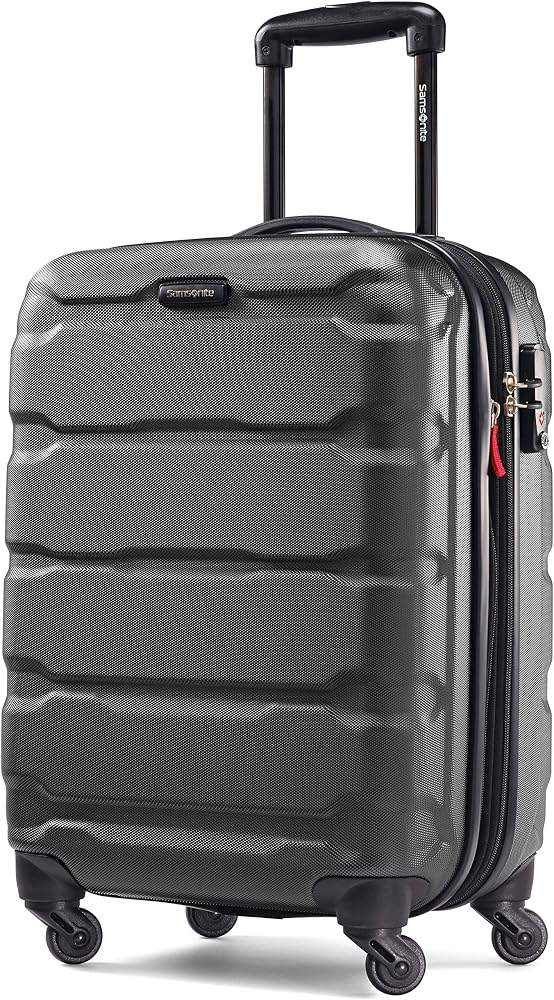
The Omni PC is the rare budget suitcase that uses polycarbonate instead of brittle ABS plastic and backs it with a 10-year limited warranty — two things almost no sub-$100 bag offers. The micro-diamond texture hides scratches well, the TSA lock is integrated into the side, and it's frequently discounted well below its listed price. It won't roll as quietly or track as smoothly as premium bags, and the telescoping handle has more wobble than you'd want for weekly travel.
Main limitation: The spinner wheels are noticeably louder and less smooth than premium models, and the telescoping handle has more play than pricier bags.
Skip if: Skip it if you fly weekly and need wheels and handles engineered for constant airport abuse.
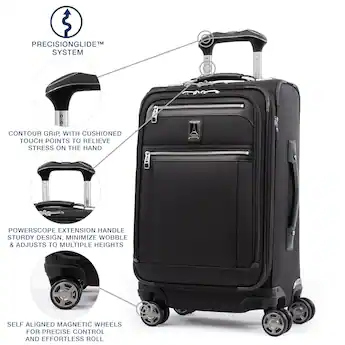
Travelpro designs its Platinum Elite line around the people who fly most — airline crews — and it shows in the details: a ballistic nylon exterior, the PrecisionGlide wheel system, and a PowerScope extension handle that locks at multiple heights to cut down on wobble. Two inches of expansion and multiple exterior pockets add flexibility a hard shell simply can't match, and the limited lifetime warranty covers defects for the original owner. It costs more than most softside carry-ons, and the fabric will show staining and abrasion over years of use in a way polycarbonate won't.
Main limitation: Softside fabric can snag, stain, and hold moisture, and it offers less protection for fragile or crushable contents than a hard shell.
Skip if: Skip it if you need maximum protection for electronics or fragile items, or if you want a wipe-clean exterior.
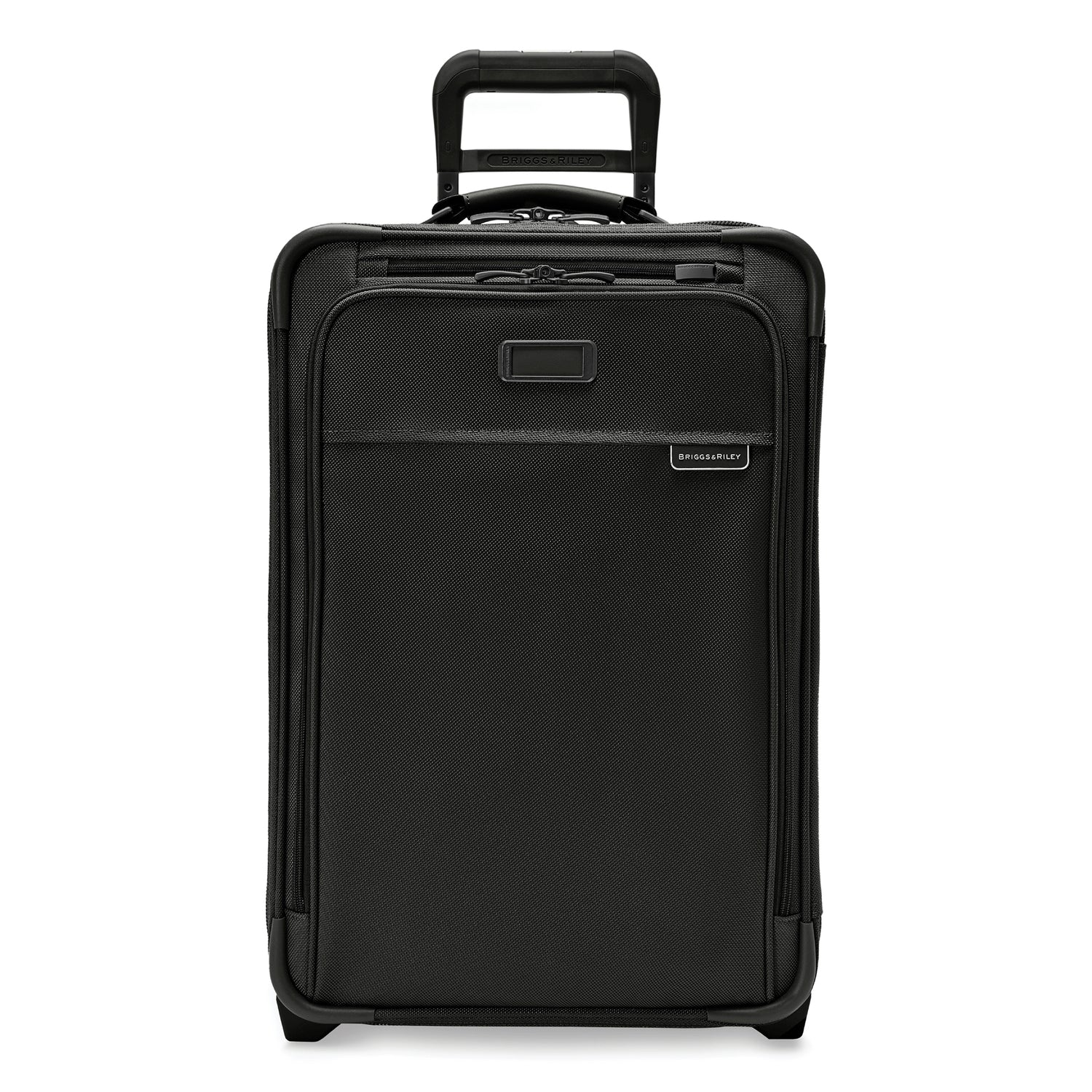
Briggs & Riley's Simple As That warranty repairs functional damage — including damage caused by airlines — for the life of the bag, which changes the math on a suitcase that costs roughly double a comparably sized Away. The CX expansion-compression system lets you expand the bag to pack, then compress contents back down, and the ballistic nylon build is among the most durable in the category. The catch is weight and upfront price: it's one of the heavier carry-ons here, and the value only materializes if you actually keep it for a decade or more.
Main limitation: It's heavy for a carry-on, and the upfront cost is high enough that the lifetime warranty has to be worth real money to you.
Skip if: Skip it if you want a lightweight bag for short trips or aren't willing to pay a premium for long-term repair coverage.

The Original Cabin is the aluminum case the rest of the category gets compared to: grooved anodized panels, a rigid metal frame, and a rolling feel that polycarbonate bags don't replicate. It's a genuine design object that tends to hold resale value better than almost anything else in luggage, and Rimowa's repair network is unusually extensive for a premium brand. But it's also the heaviest and most expensive bag on this list, the aluminum scratches and dents visibly in normal airline handling, and the interior is deliberately spare — no compression panel or built-in organization at this price.
Main limitation: The anodized aluminum records scratches and dents from routine baggage handling, and its empty weight is high for a carry-on.
Skip if: Skip it if you check bags regularly or want a suitcase that still looks factory-new after a few years of use.
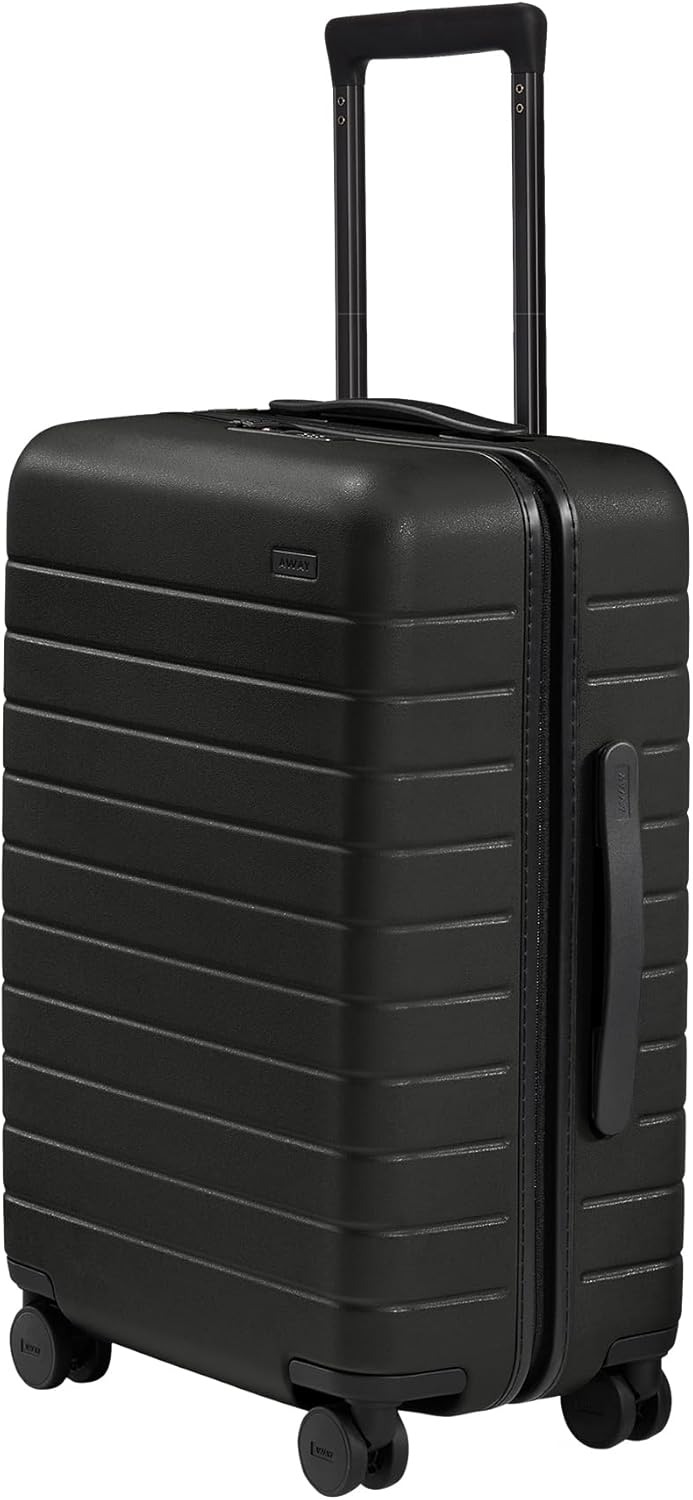
Béis built its following on organization, and the Carry-On Roller is the clearest expression of that: a built-in weight indicator in the handle, an interior compression panel, and a divider that keeps packed items from shifting. At roughly $220 it undercuts most premium direct-to-consumer hardside bags, and the weight indicator is genuinely useful on airlines that enforce cabin weight limits. The shell flexes more than the best polycarbonate bags in this price band, and the warranty is shorter than the lifetime coverage offered by its main competitors.
Main limitation: The shell has more flex than premium polycarbonate competitors, and warranty coverage is shorter than the lifetime terms offered by Away and Briggs & Riley.
Skip if: Skip it if your priority is the stiffest possible shell or the longest warranty for the money.
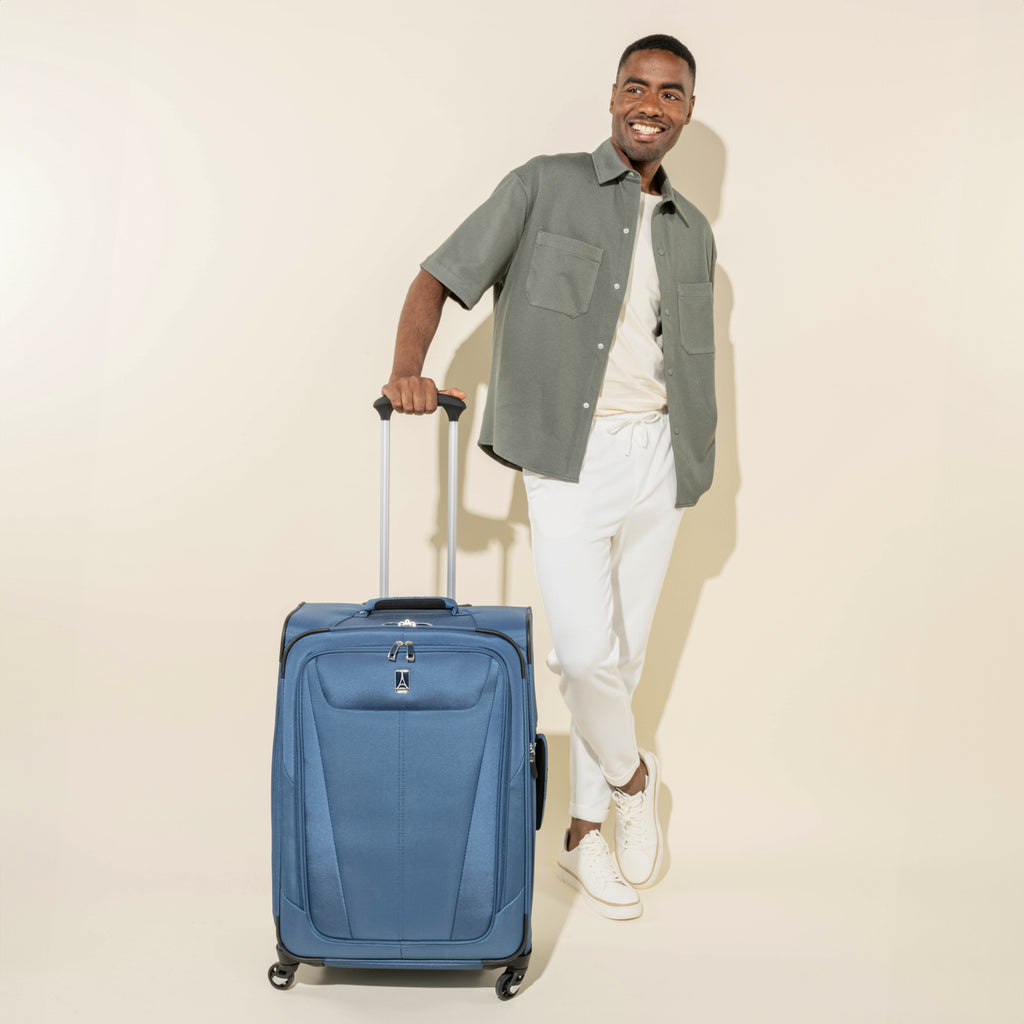
At under 7 pounds empty, the Maxlite 5 25-inch is one of the lightest checked bags you can buy — and empty weight matters more than most shoppers realize, since every pound of bag is a pound you can't pack before hitting an airline's weight limit. It expands about two inches, rolls better than most softside bags in its class, and carries Travelpro's limited lifetime warranty. The trade-off is protection: a lighter frame and fabric exterior offer less crush resistance in the cargo hold than a hard shell.
Main limitation: The lightweight construction means less rigidity, so it won't protect fragile contents as well as a hardside checked bag.
Skip if: Skip it if you routinely check fragile items or want a hard shell that resists being crushed or rained on in the hold.
Compare key specs and features of all our recommendations side-by-side
| Product | Recommendation | Rating | Price |
|---|---|---|---|
Away The Bigger Carry-On Rank #1 | 🏆 Top Pick | 9.0/10 | $295–$325 Check current price → |
Samsonite Omni PC Hardside 20-Inch Spinner Rank #2 | 💰 Budget Pick | 8.0/10 | $110–$160 Check current price → |
Travelpro Platinum Elite 21-inch Expandable Spinner Rank #3 | ⭐ Editor's Choice | 8.8/10 | $330–$420 Check current price → |
Briggs & Riley Baseline Essential 22-inch Carry-On Expandable Spinner Rank #4 | — | 8.7/10 | $650–$750 Check current price → |
 Rimowa Original Cabin Rank #5 | — | 3.4 3.4 | $1,300–$1,600 Check current price → |
 Béis The Carry-On Roller Rank #6 | — | 4.4 4.4 | $200–$240 Check current price → |
Travelpro Maxlite 5 25-Inch Expandable Spinner Rank #7 | — | 8.2/10 | $180–$240 Check current price → |
Common questions buyers have about this category.
Most major US airlines allow roughly 22 x 14 x 9 inches for a cabin bag, but sizer boxes vary by carrier and budget airlines are typically stricter. Measure your bag with wheels, handles, and any expansion unzipped, because manufacturers frequently list the case body only — a difference that can turn a compliant carry-on into a gate-checked bag.
Hard shells protect fragile items, wipe clean, and resist crushing in the cargo hold, which makes them the safer choice for checked bags and electronics. Softside bags are usually lighter, offer exterior pockets and expansion, and flex to squeeze into tight overhead bins or sizers — but they stain, absorb moisture, and offer less impact protection.
Four-wheel spinners are easier on your wrist and let you roll the bag upright beside you through airports, which is why they dominate the category. Two-wheel inline bags track straighter over rough pavement and curbs and have fewer exposed components to damage, so if you frequently walk long distances outdoors, inline wheels can be the more durable choice.
Expect to pay roughly $110 to $160 for a solid budget hardside with a multi-year warranty, $250 to $400 for a well-built carry-on from a direct-to-consumer or legacy brand, and $650 or more for premium lines with lifetime repair coverage. Spending more mainly buys better wheels and handles, stronger warranty terms, and lighter materials rather than dramatically more packing space.
Most warranties cover manufacturing defects such as failed zippers, cracked handles, and broken wheels for the original owner, but they typically exclude airline damage, cosmetic scratches, and general wear and tear. A small number of premium brands will repair airline damage free or for a fee, so read whether the term is "limited lifetime" — which means the covered parts list is restricted — or a fixed number of years.
Polycarbonate is a flexible, impact-resistant plastic that flexes on impact and returns to shape, making it the best value for most travelers. Aluminum is more rigid and premium-feeling but dents, scratches visibly, and weighs more, while ABS is a cheaper, more brittle plastic prone to cracking that typically appears on the least expensive bags.
Yes. If a bag doesn't fit the gate sizer, many carriers will require you to check it, and on some budget airlines that comes with a gate-check fee that can exceed the original ticket add-on price. Check your specific airline's published dimensions before buying, and remember that regional aircraft often have smaller overhead bins than the airline's stated limit suggests.
Products we evaluated but did not recommend — and why.
